Immersion Baptism: What It Is, How It Works, and Its Significance
Immersion Baptism: What It Is, How It Works, and Its Significance
Immersion baptism, often described as baptism by immersion or immersion baptism, is a ritual act in which a person is submerged in water as a public profession of faith. This form of baptism emphasizes the symbolic death, burial, and resurrection with Christ, and it is practiced by a wide variety of Christian traditions around the world. While the act itself is simple in its physical form—being placed under water and raised again—the theological meanings, historical development, and practical applications are rich and diverse. In this article, we explore what immersion baptism is, how it works, and its significance across different denominations, cultures, and eras. We will use variations of the term immersion baptism to highlight nuances and to reflect how different communities describe the practice.
At its most basic level, immersion baptism is a rite that uses water as a symbol of spiritual transformation. In the phrase baptism by immersion, the word immersion conveys a movement from one state into another: from death to life, from a former way of living to a new allegiance to Christ. The core elements include:
Identification with Christ—the believer identifies with Jesus’ death, burial, and resurrection as described in Scripture.
Public testimony—it is typically performed in a church setting or a community gathering to publicly declare faith.
Covenantal sign—it marks entrance into the life of the Christian community and often accompanies an intentional turning away from sin and toward obedience to God.
Visible symbolism—the water acts as a tangible sign of spiritual realities: cleansing, renewal, and new life.
Although the syntax of the rite is simple, the range of meanings attached to immersion baptism is broad. In some traditions, the act is primarily a believer’s baptism—a conscious choice by an individual who has come to confess a personal faith in Christ. In others, the practice may be integrated with a larger pattern of infant baptism or child baptism, where the child’s parents and the faith community make a vocational commitment to raise the child in the Christian faith. Across traditions, the recurring thread is that water is not an empty symbolic gesture; it is a meaningful action that communicates the gospel in an accessible, tangible way.
How immersion baptism works
Preparation and instruction
Preparation for immersion baptism typically includes instruction in the basic evangelical or confessional beliefs of the community. For some churches, the process involves a personal testimony, catechetical lessons, or a consent from a parent or guardian in the case of infant immersion. In adult baptism contexts, candidates are often asked to articulate their conversion experience, understand the symbolic meaning of the rite, and agree to live in accordance with the community’s moral and theological standards.
Catechesis or instruction about the gospel, repentance, faith, and the significance of baptism.
Eligibility criteria defined by the church: belief in Jesus as Lord, evidence of ongoing faith, and a willingness to participate in the life of the church.
Logistical planning: choosing a location (a baptistery, a pool, a river, or a man-made tank), arranging timing, and coordinating with pastors or elders.
The rite itself
The formal act of immersion typically unfolds in three movements, each rich with meaning:
Presentation of the candidate—the believer stands before the congregation, making or reaffirming a profession of faith.
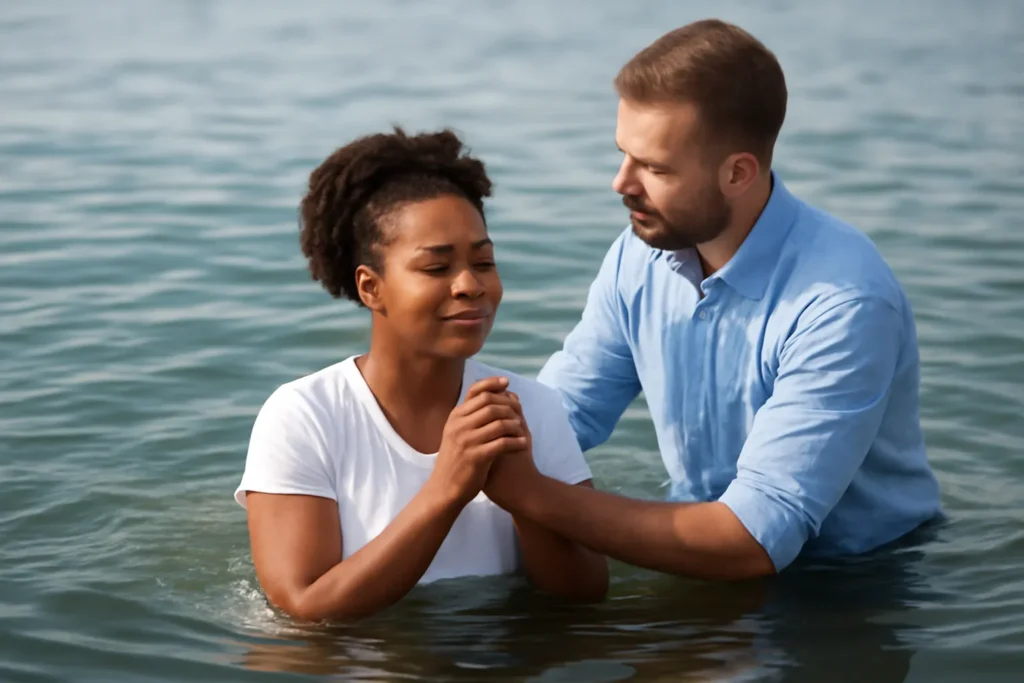
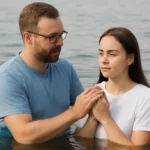
Immersion—the candidate is fully or partially submerged in water, symbolizing burial with Christ in death and rising to new life in him. The degree of immersion may vary by tradition or local custom.
Announcement and blessing—the church pronounces the blessing and welcomes the newly baptized person into the fellowship, often followed by pastoral exhortation and a liturgical prayer or benediction.
In some settings, the immersion may occur in a rolling sequence, with a brief statement, the immersion, and then an ascent that visually completes the rite. The location can be a traditional baptistery, a portable font, a church pool, or a river. Safety considerations, such as water temperature, depth, and accessibility, are typically addressed by the hosting church to ensure the process is both safe and dignified.
Post-baptismal steps
Practices after immersion baptism vary. Common elements include:
Congregational welcome—the new member is publicly welcomed into the church body.
Testimony sharing—some communities invite the newly baptized to share their faith story a second time or to speak about life after conversion.
Discipleship and integration—membership in small groups, involvement in Bible study, and a commitment to spiritual growth and service.
While immersion is the core rite, many churches pair it with accompanying sacraments or rites of passage, depending on their theological tradition. For example, some traditions view baptism and the Lord’s Supper as connected practices within the broader life of faith, while others treat baptism as the initial step in a lifelong process of discipleship.
The practice of immersion baptism has roots in the ancient church, where immersion was a common method for baptism in many regions due to the available water sources and local customs. Early church writers acknowledged immersion as a meaningful means of symbolizing repentance and new life. Over centuries, church leaders and theologians discused the mode of baptism in relation to baptism’s meaning, sometimes advocating for immersion, sometimes for pouring or sprinkling as suitable signifiers of grace, depending on practical constraints and doctrinal emphasis.
Key biblical texts
Advocates of baptism by immersion often cite several New Testament passages to illustrate the symbolism and practice of the rite. Notable references include:
Romans 6:3-4—speaks of being united with Christ in his death and resurrection through baptism, a language that resonates with the imagery of burial and rising to life.
Colossians 2:12—describes being buried with Christ in baptism and raised through faith, reinforcing the idea of a spiritual rebirth enacted through water.
Acts 2:38—Peter’s call to repentance and baptism in the name of Jesus for the forgiveness of sins, a foundational text for evangelical baptismal practice.
Critics of immersion sometimes point to passages where baptism is described with pouring or sprinkling, but many scholars argue that the verb baptizein in Greek can encompass multiple submersion forms depending on historical and cultural context. The central emphasis across texts remains the conversion experience and the public proclamation of a new allegiance to Christ.
Differences among traditions
Across Christian traditions, views on immersion baptism range from strict to flexible. Some churches insist on full-immersion baptism as the only proper mode, while others permit partial immersion or pouring when immersion is impractical or dangerous. Theological differences often hinge on:
Church authority and confessional standards—which doctrinal statements govern baptismal practice.
Pastoral concerns—the safety and well-being of candidates, especially infants or individuals with health issues.
Symbolic emphasis—whether baptism primarily signifies death and resurrection, cleansing from sin, or incorporation into the local church.
Variations and denominational practices
Believer's baptism by immersion
The practice most commonly associated with evangelical and Baptist traditions is believer’s baptism by immersion. In these communities, baptism is reserved for those who have consciously professed personal faith in Christ. The rites emphasize a voluntary commitment and a personal testimony, often including:
Testimony given by the candidate detailing how faith in Christ has transformed life.
A public act that announces conversion to the community and signals entry into the life of the church.
A strong emphasis on discipleship—the baptism marks the beginning of a journey of following Christ.
In many Baptist and non-denominational churches, immersion as the mode is considered essential to accurately symbolizing identification with Christ’s death and resurrection, as described in Romans 6.
Infant immersion debates
In traditions that practice infant baptism, there are debates about whether immersion is appropriate for infants or whether pouring or sprinkling is more suitable. Proponents of infant immersion may argue that the outward sign should be administered to the child to symbolize cleansing and incorporation into the covenant community, sometimes in conjunction with parental faith commitments. Critics may argue that infants cannot profess faith and thus cannot consent to the symbolic death and resurrection central to the rite. These debates often reflect deeper theological questions about the nature of baptism, covenant language, and church membership.
Adult baptism and the conversion experience
Many churches that perform adult baptism require a period of instruction, a personal conversion narrative, and a public profession of faith. In these settings, immersion is often the climactic moment of the conversion experience, offering a tangible, communal confirmation of spiritual transformation. The ongoing implications involve joining a faith community, committing to regular worship, and pursuing a life shaped by biblical teachings.
Immersion baptism conveys several deeply held convictions in many Christian communities:
Death and resurrection—the candidate is seen as dying to an old life and rising to a new life in Christ, echoing the historical pattern of Jesus’ own death and resurrection.
Grace through faith—the rite communicates faith in Christ as the means by which sin is forgiven and a new spiritual relationship with God is established.
Identification with the church—the act ties the believer to the local church body and to the universal body of Christ, aligning personal faith with communal practice.
Public testimony—immersion is a public declaration that faith has become a guiding force in one’s life, inviting accountability and support from the faith community.
Symbolic and liturgical significance
In terms of symbolism, immersive baptism uses water as a concrete sign of inner transformation. The ritual is often framed liturgically with prayers, scripture readings, and congregational affirmation. For many believers, the ritual fosters spiritual memory, helping the community remember and reinforce the gospel message. The rite also anchors future spiritual milestones—for instance, baptism can serve as a reference point when recalling one’s faith journey during difficult seasons or times of doubt.
Covenant and ecclesial identity
Beyond personal faith, immersion baptism is frequently understood as a covenant sign linking God, the believer, and the local church. In many denominations, baptism becomes the official gateway to church membership and a formal invitation to participate in the ongoing life of the community—worship, ministry, service, and evangelism. This view frames baptism not only as a personal decision but as a communal commitment to mutual accountability and shared mission.
Practical considerations and logistics
Locations and settings
Immersion baptism can take place in a variety of settings, depending on the tradition and the context. Commonly used locations include:
Baptisteries inside church buildings, designed to accommodate the ritual safely.
Swimming pools or large tanks in gymnasiums or athletic facilities.
Rivers or lakes in outdoor environments, a practice that reflects historical settings in which baptism often occurred in natural waters.
Portable fonts that can be set up and stored as needed for temporary venues or special events.
Safety, accessibility, and inclusivity
Ensuring safety and accessibility is essential for any immersion service. Churches address concerns such as:
Water temperature and depth appropriate for participants, including infants and elderly members.
Supervision and support by trained leaders, including lifeguards or assistants when necessary.
Accessibility for people with disabilities, including step-free access, seating, and adaptable vessels.
Environmental considerations—keeping natural spaces safe and respectful when outdoor settings are used.
Practical steps in the ceremony
In many churches, the sequence of steps is standardized for pastoral ease and liturgical unity:
Invitation to the candidate and confirmation of readiness.
Confession and assurance of faith, often articulated through a brief statement or a creed.
Immersion ceremony performed with a pastor or elder, sometimes with a brief scriptural reading or prayer.
Discipleship commitments announced or discussed after immersion, highlighting the ongoing path of growth.
Contemporary debates and ecumenical perspectives
Pedobaptism vs credobaptism
One of the central debates surrounding immersion baptism concerns whether infants should be baptized (pedobaptism) or baptism should be reserved for those who profess personal faith (credobaptism). Proponents of credobaptism emphasize individual confession of faith as the essential prerequisite for baptism and argue that immersion best reflects the conscious acceptance of the gospel. Proponents of pedobaptism argue that infants are already included in the covenant community and that baptism—whether by immersion, pouring, or sprinkling—signifies grace extended to the next generation and marks entry into the church family. The disagreement touches on broader doctrines about baptism’s relationship to salvation, covenant theology, and church membership.
Mode and theology in ecumenical contexts
Within and across denominations, there is increasing conversation about how flexible or fixed the mode of baptism should be. Some congregations maintain strict adherence to full-immersion baptism as a non-negotiable symbol of union with Christ. Others adopt a more flexible approach, allowing immersion, pouring, or sprinkling depending on the local context, safety concerns, or theological nuance. This flexibility often reflects a broader ecumenical posture that values shared faith while respecting distinct liturgical identities. For many believers, the core question is not so much the specific mode as the faith in Christ that the rite proclaims and the community that it nourishes.
Common questions about immersion baptism
Is immersion baptism required for salvation?
In most traditions, baptism is not viewed as a meritorious act that earns salvation, but rather as a response to grace and a public demonstration of faith. The question of salvation typically hinges on personal faith in Christ and God’s grace, not solely on the physical act of immersion. For many Christians, baptism is a meaningful step in the process of discipleship rather than a salvific mechanism in itself.
Can immersion be performed on infants?
Some communities practice infant immersion, while others reserve immersion for those who can profess faith. The decision often depends on theological frameworks about covenant theology, the meaning of baptism, and the role of the family and church in spiritual upbringing. When infants are involved, the rite may be paired with a separate profession of faith by the child later in life or be accompanied by a sprinkle or pour tradition—depending on the denomination’s practice.
Safety and environmental stewardship are practical concerns for immersion ceremonies. Churches and communities balance respect for water sources, potential impact on local ecosystems, and the safety of participants. In indoor settings, pools and baptisteries are designed to meet safety standards, and outdoor ceremonies consider weather and water quality. When outdoor immersion occurs, organizers may coordinate with local authorities to ensure compliance with health and safety guidelines.
What is the difference between immersion and other baptismal modes?
Baptism by immersion involves submerging the entire person under water (or at least a significant portion) to symbolize death to sin and new life in Christ. By contrast, pouring or sprinkling involves water being poured over the head or sprinkled on the body. Some traditions consider the distinction essential for doctrinal reasons, while others treat the difference as primarily practical or symbolic in nature. The key question in many discussions is not just the method, but the meaning attributed to baptism and how it relates to faith, grace, and community membership.
Glossary of terms
Baptism by immersion — baptism performed by fully submerging the candidate in water.
Believer’s baptism — baptism administered to someone who professes personal faith in Christ.
Infant immersion — immersion baptism applied to infants, sometimes debated in terms of theology and practice.
Pedobaptism — baptism of infants or young children within certain church traditions.
Credobaptism — baptism of those who confess faith in Christ (often aligned with believer’s baptism).
Baptistery — a designated space (usually in a church) for performing baptisms.
Symbolic death and resurrection — the central theological image of baptism representing dying to sin and rising to new life in Christ.
Conclusion: the ongoing significance of immersion baptism
Immersion baptism remains a defining rite for many Christian communities because it offers a concrete and communal way to respond to the gospel. The practice embodies a robust fusion of personal faith, spiritual symbolism, and ecclesial belonging. While the precise mode, timing, and theological emphasis may differ among traditions, the essential idea remains consistent: water as a sign that God’s grace creates a new identity in Christ, a new direction for life, and a new belonging within the community of faith. For many believers, the immersion ceremony is a memorable, transformative moment that invites ongoing discipleship, public witness, and a lifelong commitment to following Jesus.





Leave a Reply