Lord's Supper — Biblical Meaning, Significance, and Practices Explored
Lord's Supper — Biblical Meaning, Significance, and Practices Explored
Bible Dictionary · prácticas
Lord's Supper — Biblical Meaning, Significance, and Practices Explored
prácticas Lord's Supper
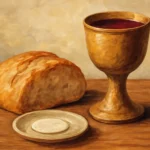
The Lord's Supper, also known as Communion or the Eucharist, is a sacred Christian sacrament instituted by Jesus Christ during the Last Supper with his disciples. It involves the symbolic sharing of bread and wine to commemorate Christ's death and resurrection, serving as a spiritual bond among believers. This practice reflects Jesus’ command to remember his sacrifice and to proclaim his death until he returns. The Lord's Supper is foundational for understanding salvation, reconciliation, and Christian unity within biblical faith.
The term 'Lord's Supper' originates from the Latin 'Cena Domini' and the Greek 'Koinonia,' meaning fellowship or communion. The Greek word 'Deipnon' was used in early Christianity to refer to communal meals, which later became formalized into the Eucharist. The phrase 'Lord's Supper' emphasizes the act as a memorial instituted directly by Jesus, highlighting its importance as a sacred fellowship and remembrance within Christian worship traditions. Over centuries, its meaning evolved from a simple meal to a profound sacrament signifying Christ's sacrifice.
Key Bible Verses
Matthew 26:26-28
Jesus took bread, gave thanks, broke it, and gave it to his disciples, telling them it was his body; similarly, he took the cup and said it represented his blood poured out for many.
This passage records Jesus instituting the Lord's Supper, making it the foundational scriptural basis for the practice.
1 Corinthians 11:23-26
Paul recounts the Lord's Supper, emphasizing its significance as a tradition received from Jesus, urging believers to participate in it worthily and to remember Christ's death.
This epistle clarifies proper conduct and the spiritual meaning of the communion for early Christian communities.
Luke 22:19-20
Jesus took bread, broke it, and gave it to his followers, saying it represented his body; he then shared the cup, symbolizing his blood of the covenant.
Luke’s account reinforces the symbolism of the bread and wine as representing Jesus’ sacrifice and the new covenant.
Theological Significance
Theologically, the Lord's Supper signifies the new covenant established through Christ's sacrifice, underpinning the salvation narrative in Scripture. In the Old Testament, sacrifices and communal meals foreshadow the significance of communion, pointing toward Christ as the ultimate sacrifice. In the New Testament, the practice is central to Christian identity and worship, symbolizing participation in Christ’s death and resurrection. It affirms the believer's communion with Christ and with fellow believers, reflecting both individual faith and the collective body of Christ. The Lord's Supper encapsulates themes of redemption, reconciliation, and hope for Christ’s return, making it integral to Christian salvation history.
Across Christian Traditions
Catholic doctrine views the Eucharist as transubstantiation, where bread and wine become Christ’s actual body and blood. Protestant traditions, like Lutherans and Anglicans, often see it as a real presence but not necessarily transubstantiation, emphasizing remembrance and spiritual presence. Orthodox Church considers the Eucharist a mystical transformation, emphasizing the mystery of Christ’s presence. Evangelical and many Reformed churches typically emphasize the symbolic or memorial aspect, focusing on remembrance and proclamation. Each tradition understands the Lord's Supper's significance differently but recognizes it as a vital act of worship and community.
Application in Christian Life
Christians apply the Lord's Supper as a weekly or regular spiritual renewal, reflecting on Christ’s sacrifice and their own faith. It encourages believers to examine themselves, seek forgiveness, and affirm their commitment to Christ. Many partake in communion as a way to unite with fellow believers, fostering community and shared faith. It also serves as a reminder to live out Christ’s teachings in daily life, promoting forgiveness, humility, and service. Practically, believers may prepare spiritually beforehand and approach the sacrament with reverence, gratitude, and reflection on their spiritual journey.
The earliest known Christian communion practices date back to the 2nd century, where archaeological findings reveal that early Christians held communal meals similar to the Lord's Supper in private homes. The term 'Eucharist' derives from Greek, meaning 'Thanksgiving,' emphasizing gratitude as central to the ritual’s origin.
Frequently Asked Questions
What is the purpose of the Lord's Supper?
The purpose is to commemorate Christ’s sacrifice, reaffirm faith, and foster unity among believers, symbolizing his body and blood as a new covenant (1 Corinthians 11:24-26).
How often should Christians participate in the Lord's Supper?
Practices vary: some churches observe weekly, others monthly or quarterly, but all see it as a meaningful act of worship and remembrance.
Is the bread and wine literally transformed during communion?
Interpretations differ: Catholics believe in transubstantiation, while Protestants see it as symbolic or spiritual presence, emphasizing different understandings of Christ’s real presence.