The Lord’s Supper meaning and why Christians observe it
The Lord’s Supper meaning and why Christians observe it
If you have watched a church service pass bread and a cup from person to person, you may have wondered what the ritual actually means. Is it simply a memorial meal, a symbol of faith, or something more mysterious? The answer depends partly on Christian tradition, but the central meaning is shared: the Lord’s Supper remembers Jesus Christ’s death and expresses the church’s faith in him.
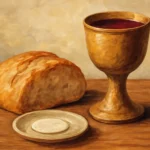
Also called Communion or the Eucharist, the Lord’s Supper uses bread and wine, or grape juice, to point to Jesus’ body given and blood poured out for humanity. Christians receive it as an act of worship, gratitude, self-examination, fellowship, and hope. It is not merely a snack added to a service; it is a deliberate practice shaped by Jesus’ final meal with his disciples.
At its heart, the Lord’s Supper is a visible way for Christians to respond to the gospel. The bread and cup direct attention away from the worshiper and toward Jesus’ self-giving love, his death on the cross, and the salvation Christians believe God provides through him.
The practice carries several connected meanings rather than just one. A congregation may be remembering a past event, confessing present faith, strengthening its relationship with other believers, and looking forward to Christ’s promised return at the same time.
Remembering Jesus: The meal recalls his death and the meaning Christians attach to it.
Proclaiming the gospel: Receiving Communion publicly announces faith in Christ’s saving work.
Sharing fellowship: The gathered church expresses that believers belong to one spiritual family.
Receiving God’s grace: Many traditions regard the meal as a means through which God nourishes faith.
Anticipating the future: The Supper points toward Christ’s return and the fulfillment of God’s kingdom.
Because of these meanings, the Lord’s Supper is usually treated with reverence and care. The outward actions are simple, but Christians understand them to communicate something profound about forgiveness, covenant, sacrifice, community, and hope.
Central idea: The Lord’s Supper is not meant to be a performance that earns God’s favor. It is a worshipful response to what Christians believe God has done through Jesus.
Where the Lord’s Supper began in the Bible
The practice began during Jesus’ final meal with his disciples before his crucifixion. The accounts in Matthew 26, Mark 14, Luke 22, and 1 Corinthians 11 describe Jesus taking bread, giving thanks, breaking it, and connecting it with his body. He then took the cup and connected it with his blood and God’s covenant.
Jesus was eating in the setting of Passover, the Jewish festival that remembered how God delivered Israel from slavery in Egypt. That background matters because Passover involved a commemorative meal, sacrifice, deliverance, and a community gathered around God’s saving action.
By using this setting, Jesus gave his death a meaning that reached beyond the meal itself. Christians understand him as presenting his coming sacrifice as the basis of a new covenant, or a renewed relationship between God and his people. The bread and cup therefore connect the story of Israel with the Christian message about Jesus.
Luke 22 records Jesus telling his disciples to continue the practice in remembrance of him. Paul repeats this instruction in 1 Corinthians 11 while teaching the church at Corinth how to observe the meal responsibly. The command is not presented as a private devotional exercise; it belongs to the life of the gathered Christian community.
The early church continued sharing meals and breaking bread together. Acts 2 describes believers devoting themselves to teaching, fellowship, communal meals, and prayer. Although the New Testament uses different descriptions for these gatherings, the picture is of faith expressed through shared worship and shared life.
What the bread and cup symbolize
The bread points to Jesus’ body, meaning his real human life offered for others. It reminds Christians that salvation is not based only on an abstract idea or a set of teachings. In Christian belief, God’s love was made visible through Jesus’ life, suffering, death, and resurrection.
The cup points to Jesus’ blood and the covenant established through his death. In the Bible, blood can signify life given up in sacrifice and the serious cost of reconciliation. The cup therefore reminds worshipers that forgiveness is not treated as cheap or casual within the Christian story.
The elements also have a communal meaning. A congregation receives from the same loaf or from bread representing one loaf, and drinks from a shared cup or receives individual cups from the same service. These practices point toward one people united in Christ, even when the participants differ in background, age, personality, or social position.
The materials themselves do not have the same meaning in every church. Some communities use leavened bread, while others use unleavened wafers. Some use wine, and others use grape juice, often to accommodate conscience, health concerns, or local custom. The meaning rests primarily in the church’s use of the elements in obedience to Jesus, not in a particular brand or shape.
How remembrance works in the Lord’s Supper
When Jesus tells his followers to remember him, the instruction means more than recalling a fact from the past. Biblical remembrance often involves bringing a saving act into present awareness so that people respond with faith and gratitude. The Lord’s Supper helps the church repeatedly return to the center of its message.
People can become distracted by guilt, pride, busyness, conflict, or anxiety. Communion creates a set time to remember that Christian identity is grounded in Christ rather than in personal success or failure. The bread and cup give the worshiper a physical point of focus while the church hears the gospel again.
Remembrance also protects the meaning of Christian worship from becoming vague. The Supper is not a general celebration of kindness or a symbolic expression of togetherness disconnected from Jesus. Its focus is specifically his death, his covenant, and his promise.
At the same time, remembrance is not intended to trap Christians in grief. The Lord’s Supper looks back at the cross while also resting on the resurrection. Christians celebrate the meal because they believe Jesus was raised and remains alive, not because they are simply preserving the memory of a respected teacher who is gone.
How the Lord’s Supper proclaims the gospel
Paul says in 1 Corinthians 11 that the church proclaims the Lord’s death when it eats the bread and drinks the cup. This means the Supper is a form of public testimony. The church is declaring what it believes about Jesus even when no one gives a spoken sermon.
The message includes several claims: Jesus gave himself for sinners, his death establishes a new covenant, forgiveness comes through God’s grace, and believers are called into a changed way of life. Receiving Communion does not replace verbal teaching, but it gives that teaching a concrete and memorable form.
The practice also makes a claim about dependence. Bread and drink are ordinary necessities, and the ceremony uses them to express the belief that people depend on Christ for spiritual life. Christians do not come to the table announcing their moral perfection. They come acknowledging their need for mercy and their trust in God’s provision.
Because the action is visible, it can communicate across generations and language barriers. A child may not understand every theological explanation, but can see that the church treats Jesus’ death as central. An adult who has heard the gospel many times can still receive a powerful reminder through the same simple actions.
Why unity and fellowship matter at Communion
The word Communion highlights shared participation. Christians do not observe the Lord’s Supper only as isolated individuals having private thoughts about Jesus. They receive it as members of a gathered body, which is why the condition of relationships within the church matters.
The church in Corinth shows why. Some wealthy members were eating their own meals while others had little or nothing, turning a supposedly unified gathering into a display of social inequality. Paul’s correction in 1 Corinthians 11 connects responsible participation with recognizing the body and treating fellow believers with care.
This does not mean every disagreement must be solved before anyone can receive Communion. Churches contain people at different stages of maturity, and Christians will not agree on every issue. It does mean that deliberate contempt, exploitation, and refusal to reconcile should not be treated as irrelevant to worship.
The meal can therefore challenge both individualism and exclusion. It asks believers to remember that faith creates obligations toward other people. A congregation that celebrates Communion while tolerating humiliation, favoritism, or neglect is contradicting part of what the meal is meant to express.
What “examine yourself” means before receiving
In 1 Corinthians 11, Paul tells Christians to examine themselves before eating the bread and drinking the cup. This instruction is sometimes misunderstood as a demand to become completely sinless or to search endlessly for hidden faults. The emphasis is better understood as honest, repentant self-examination.
Before Communion, you might ask whether you are trusting Christ, taking the meaning of the meal seriously, and treating other people as members of the same body. You may also confess known sin, seek forgiveness, or decide to pursue reconciliation where you have caused harm.
Self-examination should lead to humility, not despair. The Lord’s Supper is not reserved for people who have no weakness. It is received by people who acknowledge their need for grace and are willing to turn toward God. A troubled conscience can be a reason to seek pastoral help, not automatically a reason to assume you are beyond forgiveness.
Churches differ in how they explain who should receive. Some invite all baptized Christians, some invite those who profess faith in Christ, and some restrict participation to members or to people within a particular tradition. If you are unsure, listen to the church’s stated guidance or ask a pastor before the service.
How Christian traditions understand Christ’s presence
Christians agree that the Lord’s Supper is connected with Jesus, but they explain his presence in different ways. These differences developed through centuries of theological reflection and remain significant in Catholic, Orthodox, Anglican, Lutheran, Reformed, Baptist, and other communities.
Catholic teaching: The Eucharist is understood as a sacrament in which Christ is truly present, with the bread and wine changed in their deepest reality while their outward appearances remain. The Mass is connected with Christ’s once-for-all sacrifice, not viewed as a separate replacement for it.
Eastern Orthodox teaching: The Eucharist is treated as a holy mystery in which believers truly receive Christ. Orthodox churches generally emphasize worship, mystery, and participation rather than trying to reduce the sacrament to a purely intellectual explanation.
Lutheran teaching: Lutherans affirm Christ’s real presence with the bread and wine, while explaining that the elements remain genuinely bread and wine. The Supper is received as God’s promise and gift.
Reformed and Presbyterian teaching: Many Reformed churches emphasize a real spiritual participation in Christ through faith. The Supper is more than a bare memorial, even though Christ is not understood to be physically present in the elements.
Baptist and other memorial traditions: Many Baptist, evangelical, and free church communities emphasize remembrance and public obedience. The bread and cup symbolize Christ’s body and blood and help believers proclaim their faith.
These descriptions are broad, and individual churches may use different language. The main practical lesson is that the same ceremony can carry different theological explanations. Visitors should not assume that every congregation means exactly the same thing by “Communion.”
Practical question: If you are visiting a church, check its Communion policy before the service. Some congregations welcome all baptized or professing Christians, while others ask visitors to refrain unless they belong to that church or tradition.
How often churches celebrate the Lord’s Supper
The New Testament does not give every congregation one required schedule. Some churches celebrate weekly, some monthly, and some at other regular intervals. The frequency often reflects a church’s history, theology, and worship pattern.
A weekly service can keep the gospel visibly central and provide a regular opportunity for thanksgiving and repentance. A less frequent service may receive more preparation and emphasis within a congregation’s tradition. Neither schedule automatically makes a church more faithful; the quality of worship and the meaning given to the practice matter more than a calendar formula.
Some churches celebrate Communion during a formal service with prayers, Scripture readings, and music. Others use a quieter arrangement. In some traditions, an ordained minister or priest presides; in others, pastors, elders, or authorized leaders distribute the elements. These differences do not erase the shared connection to Jesus’ command.
Practical ways to participate thoughtfully
You do not need to create an elaborate private ritual to approach the Lord’s Supper seriously. A few focused actions can help you participate with attention and understanding.
Listen to the church’s instructions. Find out who may receive, when to come forward, and whether you should remain seated while the elements are distributed.
Recall the gospel. Reflect on Jesus’ life, death, resurrection, and promise rather than treating the moment as a routine interruption.
Give thanks. Consider God’s mercy, Christ’s sacrifice, and the faith that brought you into the gathered church.
Confess honestly. Bring known sins, harmful attitudes, and broken relationships to God without pretending that you are self-sufficient.
Receive with faith. Trust the promise your church teaches, whether it describes the meal as sacramental presence, spiritual participation, or memorial obedience.
Remember other believers. Pray for unity, patience, justice, and practical love within the congregation.
Respond after the service. Let the meaning of Communion affect how you speak, forgive, serve, and treat people during the week.
For someone who is not ready to receive, remaining seated can still be a respectful choice. You can listen, pray, or speak with a church leader afterward. No one should be pressured to take the elements without understanding the church’s practice or feeling able to participate in good conscience.
Common mistakes that obscure the Lord’s Supper’s meaning
The ceremony can lose its purpose when people reduce it to a habit or attach expectations that the Bible and their church do not teach. The following mistakes are common across different Christian settings.
Treating it as a magical object: The bread and cup are not charms that protect a person or provide automatic forgiveness apart from faith and repentance.
Assuming it is only a snack: Even traditions that call it a memorial regard the practice as an act of worship, not an ordinary refreshment break.
Using it to judge other Christians: Differences about frequency, grape juice, wine, or Christ’s presence should be discussed carefully rather than used casually to insult fellow believers.
Ignoring the congregation: Communion is personal, but it is also communal. Private devotion should not erase the call to love and honor other members of the church.
Receiving under pressure: You should not take Communion simply because everyone around you does. Learn what the church believes and participate freely and thoughtfully.
Focusing only on personal guilt: Repentance belongs here, but so do gratitude, hope, forgiveness, and the assurance that Christian faith rests on Christ rather than human performance.
Separating worship from daily life: The meal should influence conduct after the service, especially how you handle conflict, generosity, and care for vulnerable people.
A further mistake is assuming that one explanation settles every Christian question. The Lord’s Supper has a shared center and genuine differences at the edges. Learning those distinctions can help you participate respectfully when visiting another church or speaking with Christians from a different tradition.
How the Lord’s Supper points to the future
The meal is not limited to looking backward. Paul writes that Christians proclaim the Lord’s death “until he comes,” meaning the practice carries an expectation of Christ’s return. The church remembers a completed act while waiting for God’s promised future.
This future dimension gives Communion a note of hope. Christians believe death, sin, injustice, and separation will not have the final word. Each observance becomes a reminder that the story of salvation is moving toward complete restoration and fellowship with God.
The Lord’s Supper can also shape how believers live in the present. People who expect a future kingdom of justice are called to practice justice now. People who receive a meal expressing reconciliation should pursue reconciliation now. People who share one table should resist contempt and exclusion now.
For that reason, the Lord’s Supper is both comfort and responsibility. It comforts Christians by directing them to Christ’s grace, and it challenges them to become a community whose relationships reflect the grace they proclaim.
Why the Lord’s Supper remains meaningful
The Lord’s Supper remains meaningful because it joins belief and action. Christians do not merely say that Jesus gave himself for them; they receive bread and drink in a practice designed to make that claim tangible. They do not merely say that the church is a family; they gather and share one sacred meal.
Its simplicity is part of its strength. The practice can be observed in a large cathedral, a small rural church, a home gathering, or a hospital room, although each setting may follow different rules. Its meaning does not depend on an impressive building or an elaborate presentation.
For Christians, the Lord’s Supper is ultimately a repeated invitation to remember Christ, trust his grace, love his people, and hope for his return. The bread and cup do not tell a different story from the gospel; they place the gospel in the hands and before the eyes of the worshiping church.
Frequently asked questions
Is the Lord’s Supper the same as Communion?
Yes. “The Lord’s Supper,” “Communion,” and “the Eucharist” are common names for the Christian practice involving bread and wine or grape juice. The terms can carry different emphases: “Lord’s Supper” highlights Jesus’ command and the meal, “Communion” highlights shared fellowship, and “Eucharist” comes from a word associated with thanksgiving.
Do Christians believe the bread and wine become Jesus’ body and blood?
Christians do not all answer this question the same way. Catholic and Orthodox churches affirm a real sacramental presence, while many Protestant churches describe spiritual participation or symbolic remembrance. Your congregation’s teaching will explain its view, so ask a pastor if the practice is unfamiliar.
Can someone take Communion if they are not baptized?
Policies vary by church. Some churches invite baptized Christians, others invite anyone who personally professes faith in Jesus, and some limit Communion to members of that tradition. If you are not baptized or are visiting, follow the congregation’s instructions rather than assuming that every church has the same practice.
What should I do if I do not feel worthy to receive?
Christians are not expected to approach Communion because they have achieved moral perfection. The practice is connected with grace and repentance. You can confess honestly, receive in faith if your church welcomes you, or remain seated and speak with a pastor if your concern involves serious sin, uncertainty, or a need for reconciliation.










Leave a Reply