Communion — Biblical Meaning, Practice, and Significance Explained
Communion — Biblical Meaning, Practice, and Significance Explained
Bible Dictionary · prácticas
Communion — Biblical Meaning, Practice, and Significance Explained
prácticas Communion
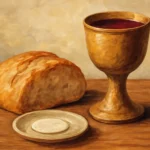
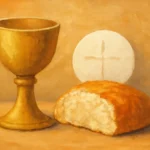
Communion is a sacred Christian practice that commemorates Jesus Christ's Last Supper with His disciples. It involves partaking of bread and wine, symbolizing His body and blood, to remember His sacrifice for humanity's salvation. The practice emphasizes unity among believers and their participation in Christ's divine life. Biblically, it is rooted in Jesus' instructions and serves as a meal of remembrance, reverence, and fellowship within the body of Christ.
The term 'communion' comes from the Latin 'communio,' meaning 'fellowship' or 'sharing,' derived from 'communis,' meaning 'common.' This Latin term was influenced by the Greek word 'koinonia,' which signifies fellowship, partnership, or sharing. The Greek 'koinonia' appears frequently in the New Testament to describe the deep spiritual bond among believers and their shared participation in Christ. Over time, 'communion' evolved to specifically refer to the liturgical act of sharing bread and wine as a remembrance of Christ's sacrifice.
Key Bible Verses
Luke 22:19-20
Jesus took bread, gave thanks, broke it, and gave it to His disciples, saying, 'This is my body, which is given for you; do this in remembrance of me.' Likewise, He took the cup, saying, 'This cup is the new covenant in my blood, which is poured out for you.'
This passage records the institution of the Lord's Supper, making it central to understanding Christian communion as a memorial of Christ’s sacrifice.
1 Corinthians 11:23-26
The Apostle Paul recounts Jesus' instructions on sharing the bread and wine, emphasizing remembrance, proclamation of the Lord's death, and spiritual unity among believers during communion.
This passage underscores the importance of proper conduct and the spiritual significance of communion within the early church.
John 6:53-56
Jesus describes eating His flesh and drinking His blood as necessary for eternal life, symbolizing deep union with Him.
This teaching highlights the spiritual nourishment and unity that believers receive through communion, illustrating its profound theological meaning.
Theological Significance
Biblically, communion symbolizes believers’ union with Christ and each other, rooted in His sacrificial death. In the Old Testament, the concept of shared meals foreshadows the covenant relationship between God and His people. The New Testament develops this idea, emphasizing that participation in communion is both a memorial of Jesus’ sacrifice and a participation in His divine life. The practice encapsulates key doctrines of salvation, such as redemption, reconciliation, and the new covenant. It functions as an ongoing spiritual linkage that sustains believers in their faith journey and ecclesial unity.
Across Christian Traditions
Catholics view communion as both a memorial and a real presence of Christ through the doctrine of transubstantiation, emphasizing the sacrament’s divine nature. Protestants generally see it as a symbolic act of remembrance, emphasizing personal faith and fellowship, with some denominations also believing in Christ’s real presence, as in Lutheran teaching. Orthodox Christians maintain the tradition of the Eucharist as a mystical transformation, emphasizing the mystery of Christ’s presence. Evangelicals often focus on communion as a symbolic act that proclaims Christ’s death until He comes, stressing personal faith and community fellowship over doctrinal specifics.
Application in Christian Life
Christians incorporate communion into their spiritual life by participating regularly in church services, reflecting on Jesus’ sacrifice. They are encouraged to examine their hearts beforehand, fostering repentance and renewal. The practice also serves as a reminder to live in unity and love with others, embodying Christ’s teachings in daily relationships. Additionally, believers often use communion as a time for prayer, gratitude, and reaffirming their commitment to follow Jesus.
The practice of communion dates back to the early 1st century and was originally a common meal shared among the early Christian community. Interestingly, the Latin term 'Eucharist,' meaning 'Thanksgiving,' became widely used in the Western Church to refer to this sacrament, emphasizing gratitude for Christ’s sacrifice.
Frequently Asked Questions
What is the significance of communion in Christianity?
Communion is a symbolic act that commemorates Jesus’ sacrifice, signifies unity among believers, and affirms participation in His divine life, as explained in 1 Corinthians 11:26.
Can non-Christians participate in communion?
Typically, communion is reserved for believers who have confessed faith in Christ, as it is a sacred act representing their spiritual union with Him (1 Corinthians 11:27).
How often should Christians observe communion?
The frequency varies among denominations—from weekly to monthly or quarterly—but it always serves as a meaningful reminder of Christ’s sacrifice and ongoing fellowship.