Bible Verse About Communion: Essential Scriptures on the Lord's Supper
Bible Verse About Communion: Essential Scriptures on the Lord's Supper
Bible Verse About Communion: Essential Scriptures on the Lord's Supper — a thoughtful guide to the biblical foundations, meanings, and practical applications of the Lord's Supper in Christian faith. This article gathers key verses from the Bible that Christians turn to when reflecting on communion, including accounts of the institution, apostolic teaching, and Jesus’ own words about eating and drinking in remembrance of him. It also offers variations in wording to broaden understanding while staying true to the core message: that the Lord's Supper is a sacred remembrance, a proclamation of the new covenant, and a spiritual nourishment for believers.
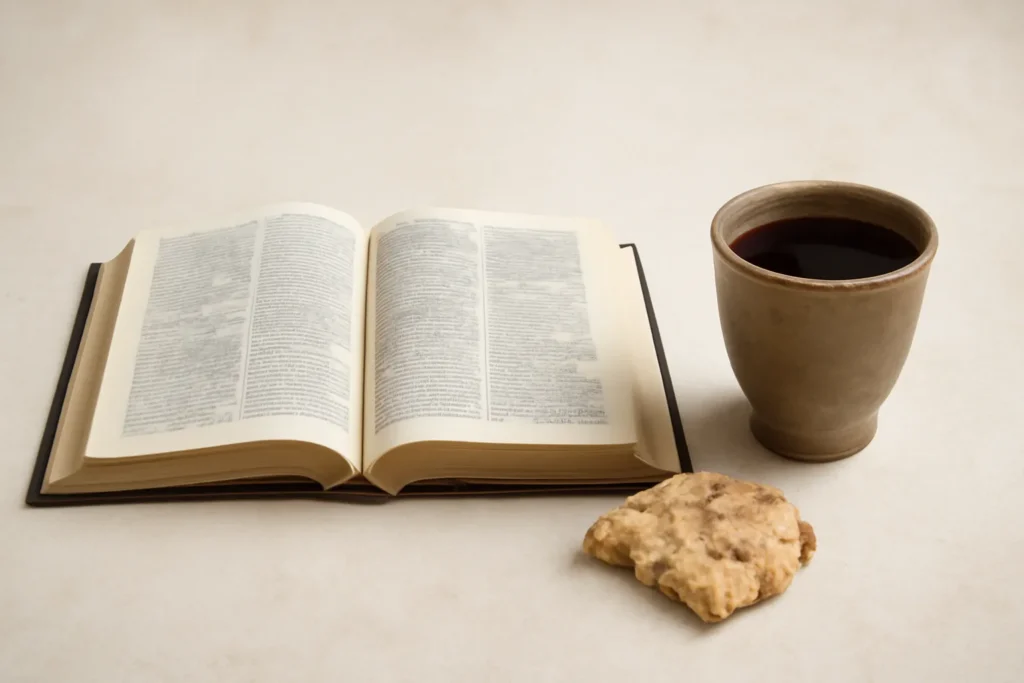
Communion, also called the Lord's Supper or Eucharist in different Christian traditions, is a ritual command and a powerful symbol that binds the church to Christ and to one another. It draws its meaning from Jesus’ actions at the Passover meal and his subsequent instruction to his followers. In its essence, communion involves two elements—bread and the cup (wine or grape juice)—that stand as signs of inner realities: Christ’s body given for us and his blood shed for the forgiveness of sins. While practices around frequency, mode, and interpretation vary among denominations, the core biblical memory is consistent: remembering Christ, proclaiming his death, and anticipating his return.
Essential Scriptures on the Lord’s Supper
This section surveys foundational verses that Christians cite when teaching or reflecting on the Lord’s Supper. The passages include accounts of the institution, apostolic exhortations, and Jesus’ own teaching about eating and drinking in a sacred sense.
Institution of the Lord's Supper
The primary gospel accounts describe Jesus instituting the meal on the night he was betrayed, a moment that forever marked the ritual practice for his followers. The wording in the King James Version (KJV), a public-domain translation, is quoted here for accuracy and historical resonance.
Matthew 26:26-28 (KJV) — And as they were eating, Jesus took bread, and blessed it, and brake it, and gave it to the disciples, and said, Take, eat: this is my body. And he took the cup, and gave thanks, and gave it to them, saying, Drink ye all of it; For this is my blood of the new testament, which is shed for many for the remission of sins.
Luke 22:19-20 (KJV) — And he took bread, and gave thanks, and brake it, and gave unto them, saying, This is my body which is given for you: this do in remembrance of me. Likewise also the cup after supper, saying, This cup is the new testament in my blood, which is shed for you.
Mark 14:22-24 (KJV) — And as they did eat, Jesus took bread, and blessed, and brake it, and gave to them, and said, Take, eat: this is my body. And he took the cup, and when he had given thanks he gave it to them: and they all drank of it. And he said unto them, This is my blood of the new testament, which is shed for many.
From these passages, a few themes emerge clearly: bread as his body, the cup as the new covenant in his blood, and the act of remembrance that the community is to enact together. The wording differs slightly among the gospels, but the message remains consistent: the Last Supper is a shared meal that memorializes Jesus’ atoning work and binds his followers to a new covenant in his blood.
Paul's Teaching on Communion
In addition to the gospel records, the apostle Paul provides elaborate instruction about the meaning and practice of the Lord’s Supper for the early church. Paul emphasizes both the hopeful significance and the sober expectation that participants ought to discern the body of Christ properly. The following passages are central to understanding the theological depth of communion in the New Testament era and continue to guide Christian practice today.
1 Corinthians 11:23-26 (KJV) — For I have received of the Lord that which also I delivered unto you, That the Lord Jesus the same night in which he was betrayed took bread; And when he had given thanks, he break it, and said, Take, eat: this is my body, which is broken for you: this do in remembrance of me. After the same manner also he took the cup, when he had supped, saying, This cup is the new testament in my blood: this do ye, as often as ye drink it, in remembrance of me. For as often as ye eat this bread, and drink this cup, ye do shew the Lord's death till he come.
1 Corinthians 11:27-29 (KJV) — Wherefore whosoever shall eat this bread, or drink this cup of the Lord, unworthily, shall be guilty of the body and blood of the Lord. But let a man examine himself, and so let him eat of that bread, and drink of that cup. For he that eateth and drinketh unworthily, eateth and drinketh damnation to himself, not discerning the Lord's body.
In these verses, Paul grounds the practice in tradition ("I received of the Lord") and links participation with proper reverence and self-examination. The admonition to discern the body of the Lord highlights the communal dimension of the meal: the church is called to consider itself as one body in Christ, and to approach the Table with humility and unity.
Remembrance and Proclamation
Across the gospel accounts and Paul’s teaching, two motifs appear repeatedly: remembrance and proclamation. The act of remembering Jesus’ death is not a passive recollection; it is a proclamation that Jesus is the Messiah who accomplished redemption, and his return will be realized in full. The language of remembrance and proclamation helps believers understand why the Lord's Supper is more than a symbol—it is a meaningful confession of faith that anchors the church in the past, reorients the present, and points toward future hope.
Here are a couple of paraphrase-style statements that capture the sense of these biblical themes in contemporary language:
“This is my body, given for you; do this in remembrance of me.” — A faithful reformulation of the invitation to remember Christ through the bread.
“This cup is the new covenant in my blood.” — A reminder that the believer’s relationship with God rests on the blood of Christ, inaugurating a new era of grace.
“As often as you eat this bread and drink this cup, you proclaim the Lord’s death until he comes.” — An expression of the church’s ongoing mission in the world.
Christ the Bread of Life
In the Gospel of John, Jesus makes a striking statement about himself in the context of faith and nourishment that has often been connected to the symbolism of the Lord's Supper. While John’s account does not present a direct institution narrative like the Synoptic Gospels, it deepens the theology of communion by linking eating with eternal life.
John 6:53-58 (KJV) — Then Jesus said unto them, Verily, verily, I say unto you, Except ye eat the flesh of the Son of man, and drink his blood, ye have no life in you. Whoso eateth my flesh, and drinketh my blood, hath eternal life; and I will raise him up at the last day. For my flesh is meat indeed, and my blood is drink indeed. He that eateth my flesh, and drinketh my blood, dwelleth in me, and I in him.
The passage from John emphasizes communion as more than a ritual; it speaks to intimate union with Christ. Many churches interpret this language as symbolic of faith, union with Christ by faith, and participation in the life of Christ through the Spirit. The Johannine literature invites believers to reflect on the depth of belonging that comes through Christ—a belonging that communion helps narrate and experience.
Variations in Wording and Their Theological Implications
Because different Bible translations render these verses with nuanced differences in emphasis, it can be helpful to compare variant wordings to gain a fuller semantic breadth. The following list shows how core phrases appear across translations and how those wordings can shape understanding without altering the essential meaning.
“This is my body” — Emphasizes the bread as a symbol of Jesus’ physical sacrifice; the body stands for his humanity as well as his redemptive work.
“This cup is the new covenant” — Highlights the blood shed for a new covenant relationship between God and humanity, fulfilling prophetic expectation.
“Do this in remembrance of me” — Focuses on memory, ritual remembrance, and corporate identity.
“Ye do shew the Lord's death till he come” (older wording) — Points to a forward-looking dimension: the crucifixion proclaimed until Jesus returns.
“Examine yourselves” — Paul’s instruction to ensure worthy participation, stressing self-reflection and communal fairness.
These variations are not about changing doctrine but about appreciating how Scripture invites believers to approach the Table with different devotional angles—reverence, gratitude, anticipation, and unity. Reading several translations can enrich understanding while anchoring believers in the core claims: Christ’s sacrifice, the new covenant, and the call to remember him together as a people.
Practical Implications: How to Observe Communion Today
Beyond theological reflection, the Bible’s teachings on communion carry practical implications for church life. The following considerations summarize common, biblically informed practices that many Christian communities adopt when gathering for the Lord’s Supper.
Frequency and Setting: Churches observe communion at various frequencies—monthly, quarterly, or on special occasions. The biblical core is that the meal is a regular practice that keeps the church oriented toward Christ’s death and resurrection. The setting should be orderly, reverent, and inclusive to all who confess faith in Christ and are part of the local community.
Preparation and Self-Examination: Following Paul’s admonition, many congregations encourage a moment of introspection before partaking. This is not about condemnation but about recognizing the seriousness of participation and approaching the Table with repentance, gratitude, and faith.
Acknowledging the Body: The gathering is inherently communal. The imagery of the body highlights unity and mutual care among believers. It is a time to practice charity, forgive grievances, and pursue reconciliation if needed.
Inclusivity and Respect for Tradition: Different traditions may exercise varied practices around the elements, the order of service, and the meaning of the memorial. Respect for differing interpretations while remaining faithful to core biblical claims is a hallmark of healthy Christian communities.
Teaching and Reflection: Sermons or meditations before or after the meal often center on the gospel—the broken body, the shed blood, and the ongoing significance of Christ’s atonement and grace.
When churches approach the Lord’s Supper with a robust understanding of the biblical text, they are equipped to cultivate biblical reverence, pastoral care, and church unity. The objective is not merely to perform a rite but to engage in a meaningful act that deepens faith and strengthens the bonds among believers.
To help readers navigate common questions, here are concise answers grounded in Scripture and historic Christian teaching. Each answer points back to the verses discussed above and to the overarching themes of remembrance, proclamation, covenant, and unity.
What is the central meaning of the Lord’s Supper? It is a sacred remembrance of Christ’s death, a proclamation of his redemptive work, and a sign of the new covenant established through his blood.
Who should participate? Traditionally, participants are those who profess faith in Jesus Christ and participate in the life of the local church. Paul’s warning against unworthy participation emphasizes personal faith, confession, and discernment of Christ’s body.
How often should believers observe communion? There is no single mandated frequency in Scripture; practices range from weekly to quarterly. The important aim is diligence, reverence, and communal unity rather than the mere cadence of the ritual.
Why is self-examination important? Self-examination helps believers approach the table with humility, acknowledging sin, appreciating grace, and recognizing the community’s unity in Christ.
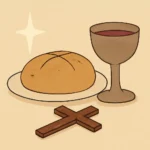
What does the bread and cup symbolize? The bread symbolizes Christ’s body given for believers, and the cup symbolizes the new covenant in his blood poured out for many for the forgiveness of sins.
Historical and Theological Context
Across church history, the Lord’s Supper has been a focal point of worship and catechesis. In the early church, these meals served as a tangible expression of Christians’ unity and shared life in Christ. Over the centuries, theologians have wrestled with questions about the presence of Christ in the elements, the meaning of “in remembrance of me,” and the pastoral responsibilities that come with communion. While debates continue in different Christian traditions, the biblical foundation remains the same: the meal is a sign of grace and a call to faithful obedience, a shared meal that binds the community to the crucified and risen Lord.
For individuals and small groups seeking to deepen their understanding of biblical communion, here is a practical, scripture-centered reading plan. It blends narrative, theology, and practice to help readers internalize the significance of the Lord’s Supper.
Read the Gospel Accounts (Matthew, Mark, Luke) side by side to notice the similarities and differences in each narrative of the institution. Focus on the actions of Jesus, the words spoken over bread and cup, and the command to remember.
Study Paul’s Letters (1 Corinthians 11) to grasp the apostolic interpretation, the admonitions against self-examination, and the communal call to discern the body. Reflect on what it means to participate in a worthy manner.
Examine John’s Wording (John 6) to explore the deeper spiritual nourishment associated with Christ, beyond ritual signs, and what it means to be “in him” as a source of life.
Reflect on Modern Practice and consider how your local congregation’s practice aligns with biblical principles: reverence, unity, self-examination, proclamation, and hope in the coming of Christ.
Conclusion: The Richness of the Lord’s Supper in Scripture
The Bible presents the Lord's Supper as a divinely instituted practice that weaves together memory, proclamation, covenant, and communal life. From the intimate farewell of Jesus’ disciples at the Last Supper to Paul’s rebukes and exhortations about worthiness, to John’s deepening image of nourishment in Christ, the biblical witness is rich and coherent. When Christians gather to share bread and the cup, they do more than observe a ritual; they enact the miracle of grace that binds them to Christ and to one another. They rehearse the gospel—the body given for us, the blood shed for the forgiveness of sins—and they anticipate the fullness of God’s future in the world to come.
Whether you are new to reading the Bible or seeking to deepen your understanding of Christian worship, the verses and themes presented here offer a solid foundation for thinking about communion with seriousness, joy, and hope. May this study of essential scriptures on the Lord’s Supper encourage you to cherish the gift of grace, to participate with discernment, and to live out the unity to which Christ calls his followers.





Leave a Reply