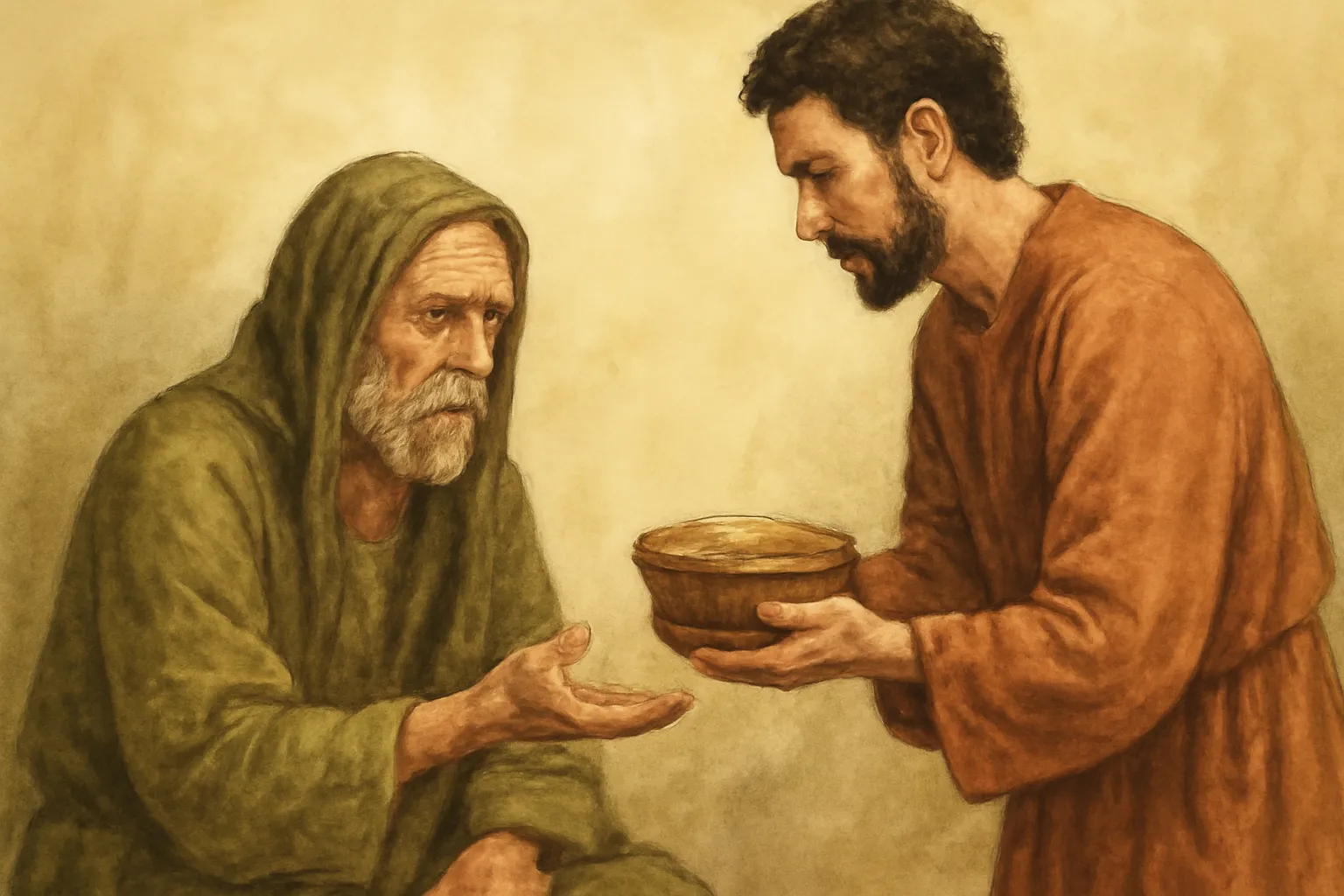
Introduction: Why a Bible Verse About Taking Care of the Poor Matters Today
Across the biblical witness, the instruction to take care of the poor recurs as a foundational ethical signal rather than a peripheral command. It appears in a diversity of forms—exhortations to generosity, mandates to justice, and invitations to embody mercy. For readers and communities seeking to understand the meaning and context of these verses, the topic is not merely about charitable acts but about how a people oriented around God’s love lives in the world. This article offers a broad, careful survey of key verses and their implications, tracing their historical roots, their theological emphases, and their practical applications for individuals, churches, and wider society.
Foundations in Scripture: Core Verses and Their Meanings
The Bible speaks of caring for the poor in varied genres—wisdom literature, prophetic warnings, narrative episodes, and exhortations from the apostles. While not every verse uses the exact phrase «taking care of the poor,» the underlying call remains consistent: to recognize human need, to respond with generosity, and to pursue justice that honors God and dignifies every person.
Key verses that frame the conversation
Proverbs 19:17 — “Whoever is kind to the poor lends to the Lord, and he will reward them for what they have done.”
Proverbs 14:31 — “Whoever oppresses the poor shows contempt for their Maker, but whoever is kind to the needy honors him.”
Psalm 82:3-4 — “Defend the weak and the fatherless; uphold the cause of the poor and the oppressed.”
Deuteronomy 15:11 — “There will always be poor people in the land; therefore I command you to be openhanded toward your fellow Israelites who are poor and needy.”
Leviticus 19:9-10 — “When you reap the harvest… you shall not reap to the very edges of your field or gather the gleanings of your harvest. Leave them for the poor and the alien.”
Proverbs 22:9 — “A generous person will himself be blessed, for they share their food with the poor.”
Luke 4:18 — Jesus announces good news to the poor, a foundational proclamation of his mission: to preach the gospel to the poor.
Old Testament Foundations: Law, Covenant, and Social Obligation
In the Old Testament, concern for the marginalized sits at the center of covenant faith. The people of Israel were formed by a covenant that insisted on hospitality, fairness in economic life, and continual care for those who could not fully participate in typical market life. This section highlights how the law and wisdom literature shape the baseline expectations for dealing with poverty and need.
Law and social obligation
Deuteronomy 24:14-15 — “Do not exploit a hired worker who is poor and needy… Pay them their wages each day before sunset.”
Leviticus 25:35-37 — Commands to help the neighbor in need and to support the vulnerable with generosity rather than exploitation.
Deuteronomy 15:7-8 — If there is a poor person among you, you shall open your hand and lend what they need; there is a moral economy at work here—care for the neighbor as an extension of the covenant community.
Proverbs 11:24-25 — A contrastive wisdom for those who “give freely and become wealthier,” showing that generosity often yields broader flourishing.
Proverbs 28:27 — “Those who give to the poor will lack nothing, but those who close their eyes to them receive many curses.”
Psalm 82:3-4 (again) — A call to defend the vulnerable within the civil and civic order.
New Testament Teachings: Jesus, the Apostles, and Early Christian Practice
The arrival of Jesus and the formation of the early church reshaped how the people of God understood generosity and social justice. The New Testament expands the horizon beyond ritual purity to a lived ethic of care for the hungry, the naked, and the imprisoned. The following sections highlight central statements and episodes that illuminate the ongoing call to help the poor.
Jesus’ mission and teaching on the poor
Luke 4:18 — Jesus proclaims the fulfillment of the prophetic mission to bring good news to the poor, release to the captives, sight to the blind, and freedom to the oppressed.
Luke 6:20-21 — “Blessed are you who are poor” in a kingdom-centered, counter-cultural call to value the poor in God’s sight.
Matthew 25:35-40 — The assessment of the nations rests on whether the hungry, thirsty, stranger, naked, sick, and imprisoned were cared for: “Truly I tell you, whatever you did for one of the least of these brothers and sisters of mine, you did for me.”
Ethics of generosity and community life
Luke 12:33-34 — “Sell your possessions and give to the poor.” A call to radical generosity as a way of treasuring heavenly rather than earthly wealth.
Acts 20:35 — The apostle Paul quotes Jesus: “It is more blessed to give than to receive.” This has shaped early Christian charitable practice.
2 Corinthians 8-9 — A sustained teaching on generosity, giving, and the cheerful support of a relief fund for believers in need, highlighting the integrity and joy in giving.
Practical exhortations and tests of faith
James 2:14-17 — Faith without works is dead; aiding the needy is a living expression of faith, not merely a private virtue.
1 John 3:17 — If someone has material possessions and sees a brother or sister in need but refuses help, how can the love of God be in that person?
Hebrews 13:16 — Do not neglect to do good and share with others, for such sacrifices are pleasing to God.
Thematic Perspectives: Charity, Justice, and the Dignity of the Poor
The Bible presents care for the poor not merely as a charitable act but as a matter of justice, dignity, and priority in God’s economy. Different biblical authors emphasize different facets—compassion, right relationship, communal responsibility, and right treatment of workers—but all converge on the basic claim that helping the impoverished is a faithful response to who God is.
Charity and personal virtue
Acting with generosity as a virtue that reflects the character of God.
Addressing individual need through acts of mercy, hospitality, and shared resources.
Justice, structure, and systemic care
Recognition that poverty is not only an individual condition but also a matter of systemic injustice and social structures.
Advocacy for fair wages, humane work conditions, and protection for vulnerable groups within the community.
Care for the poor as an expression of the image of God in every person.
Hospitality to the alien, the widow, and the orphan seen as obedience to God’s heart for the vulnerable.
Historical and Theological Context: How Different Traditions Read These Texts
The biblical call to care for the poor has been interpreted in varied ways across different Christian traditions, historical periods, and cultural contexts. Some emphasize the charitable imperative—personal acts of kindness, almsgiving, and generosity—while others stress the justice-oriented imperative—structural reform, social equity, and public advocacy for the needy. Historically, communities have balanced personal acts of mercy with organized forms of care, such as communal alms, hospitals, and food distribution networks. Theological reflections often explore how the Old Testament law foreshadows Gospel mercy, and how Jesus’ life embodies a lived economy of grace toward the marginalized.
From covenant to gospel: continuity and transformation
The moral intuition behind care for the poor remains constant: God cares for the vulnerable and calls God’s people to mirror that care.
In the New Testament, the fulfillment of the law in Christ reframes generosity as a response to grace received, not a mere obligation.
Practical church history and charity
Early Christian communities practiced shared possessions and regular relief for the needy (Acts 2:44-45; 4:32-37).
Medieval and Reformation-era traditions developed hospices, alms houses, and famine relief networks as expressions of faith in action.
Practical Applications: Living Out the Biblical Call Today
How should individuals, families, churches, and communities translate these verses into concrete actions? The answer varies by context, yet the core aims remain: to care for those in need, to honor the image of God in every person, and to pursue justice that reflects God’s reign.
Personal life: habits of generosity
Regularly budgeting for charitable giving and acts of service to the needy.
Practicing discernment in how to help—listening to the needs of others and offering sustained support where appropriate.
Combining almsgiving with education and empowerment—helping others become self-sustaining rather than fostering dependency.
Church and community life: organized care
Creating or supporting food banks, clothing closets, and emergency relief funds that align with local needs.
Partnering with social services to address root causes—housing, healthcare access, job training, and fair wages.
Encouraging open-handed stewardship among members while maintaining accountability and dignity for recipients.
Public policy and social testimony
Advocating for policies that protect workers, reduce hunger, and expand safety nets while preserving human freedom and responsibility.
Speaking out against exploitation and systems that marginalize vulnerable populations, always with humility and a desire for the common good.
Manifesting love in action: everyday examples
Paying for a neighbor’s groceries or utilities in financial distress.
Mentoring a young person from a disadvantaged background or providing job-connected networks.
Opening one’s home or resources to those who are traveling, poor, or isolated.
Variations and Semantic Breadth: Phrasing the Call to Care
The phrase “taking care of the poor” can be rendered in many semantic shades without losing essential meaning. To cultivate a broader, more robust understanding, here are variations you might encounter in biblical study and teaching, each highlighting different dimensions of the same core obligation.
Paraphrases and related formulations
Providing for the needy as a faithful response to God’s mercy.
Defending the vulnerable within the social order, ensuring justice for those without voice.
Loving one’s neighbor through practical aid—feeding the hungry, clothing the naked, and sheltering the stranger.
Sharing resources as a spiritual discipline that shapes character and community life.
Living out covenant obligation by generosity that reflects God’s generosity toward humanity.
Mercy and justice are two sides of the same coin in the biblical witness.
Hospitality to the stranger is part of the broader care for the vulnerable, including the poor, widows, and orphans.
Economic ethics in Scripture often centers on fair treatment of workers, honest weights and measures, and generosity toward those with the least means.
How should modern Christians distinguish between personal charity and systemic justice?
What does it mean to give without enabling dependence?
How should communities respond when needs outstrip available resources?
Challenges, Nuances, and Responsible Application
Reading biblical calls to care for the poor involves navigating complexities. The Bible speaks to love, mercy, and generosity, but it also invites wisdom about how best to allocate resources, how to pursue justice, and how to balance freedom with responsibility. Thoughtful interpretation recognizes that “care” can look different in different contexts—evangelical, mainline, Catholic, Orthodox, and non-denominational communities may emphasize certain aspects (charity, justice, or community development) more than others—yet all converge on the central claim that God desires flourishing for all people.
Balancing mercy with dignity
Care should honor the dignity and agency of recipients, avoiding paternalism or coercive dependence.
Mercy and justice are not opposed: mercy without justice risks enabling harm, while justice without mercy can become cold and unwelcoming.
Addressing root causes without denying immediate aid
Strategies for relief must be paired with efforts to address systemic issues such as poverty, unemployment, and lack of access to education and healthcare.
The church and faith-based groups can be witnesses to holistic care—providing both relief and pathways toward lasting empowerment.
Contextual humility
Interpretation should heed historical and cultural context when applying ancient texts to contemporary social systems.
Practical application should be guided by local needs, accountability structures, and a posture of love toward all involved.
Conclusion: The Bible’s Living Call to Care for the Poor
The biblical call to care for the poor remains a powerful, multidimensional invitation to people of faith. It encompasses personal generosity, communal responsibility, and public justice, all rooted in the belief that God cares for the vulnerable and invites humanity to mirror that care. From the ancient laws that protected workers and the marginalized to Jesus’ mission to proclaim good news to the poor and the church’s early generosity, the scriptural witness presents a cohesive vision: a life shaped by mercy, justice, and practical acts of love that dignify every person. As you study these verses and reflect on their meanings, consider how your own life, your community, and your wider society can better embody this sacred calling—today and in the days to come.
For further study, you might map these verses into a personal or communal study guide, comparing Old Testament instructions with New Testament ethics, and then translating that synthesis into concrete programs of care. Whether through a single act of kindness or through sustained, systemic efforts, the Bible’s language of care invites us to participate in God’s ongoing work of healing, justice, and restoration for the poor.

 Por Laura Jara