Bible scrolls: History, meaning, and how they were made
Bible scrolls: History, meaning, and how they were made
A Bible scroll is a handwritten manuscript in which biblical text is arranged in columns on joined sheets of parchment or papyrus and rolled for storage.
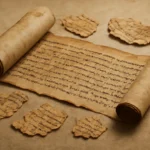
The word scroll describes the physical form of a manuscript, not a separate kind of Bible. Before books with bound pages became common, Jewish and early Christian communities preserved sacred writings on long sheets that were rolled around one or two rods. A reader exposed the text gradually by unrolling one side and rolling the other.
A scroll could contain one biblical work, part of a work, or several shorter writings. The size depended on the material available, the length of the text, and the purpose of the manuscript. A scroll intended for public reading might be carefully prepared and generously spaced, while a personal or working copy could be smaller and less ornate.
Ancient scribes normally wrote in vertical columns rather than across the full width of the sheet. This arrangement made long texts easier to handle and helped keep the reader’s attention on a manageable portion. Writing usually ran from right to left for Hebrew and Aramaic texts, while Greek manuscripts followed the writing direction of Greek.
Scrolls were stored rolled, often in protective containers or cloth coverings. Rolling helped reduce exposure to light, dust, and handling, although repeated use still caused wear. A damaged scroll might be repaired, copied, or retired. In Jewish practice, worn sacred manuscripts have traditionally received respectful treatment rather than being discarded as ordinary waste.
Core idea: A Bible scroll is both a text and a physical object. Its materials, handwriting, column layout, and signs of use can reveal how a community preserved and read Scripture.
The scroll format also shaped the experience of reading. A reader could not view an entire book at once, as you can on a printed page or screen. Moving through the text required deliberate handling, and a public reader often needed training to find a passage accurately.
Materials: papyrus, leather, or parchment were used at different times and places.
Writing surface: prepared sheets were joined into a continuous roll.
Text layout: lines were organized into columns with margins and spacing.
Storage: the completed roll was wound around a rod or rods and protected from damage.
Use: scrolls served public worship, study, copying, teaching, and private reading.
Which materials ancient scribes used for Bible scrolls
The most familiar materials for ancient biblical scrolls are papyrus and animal skin. Papyrus was made from the stalk of a water plant that grew especially well in Egypt. Thin strips were placed in layers, pressed together, dried, and smoothed. The resulting sheets could be joined to form a long writing surface.
Papyrus was relatively light and useful for many kinds of documents, including literary works and letters. It did not survive equally well in every climate. Dry conditions could preserve it for centuries, while damp environments encouraged decay. This is one reason discoveries from exceptionally dry regions have been so valuable to historians.
Animal skin was prepared to make parchment, a durable writing material often associated with important manuscripts. The skin was cleaned, stretched, dried, and scraped until it formed a suitable surface. The quality varied according to the animal, the preparation method, and the skill of the craftspeople.
In Jewish religious tradition, a Torah scroll is written on specially prepared animal skin by a trained scribe. The writing is done with ink and a pen, commonly made from a reed or another suitable material. The scribe follows established rules for the letters, columns, spacing, and treatment of the sacred text.
Not every ancient manuscript had the same religious status as a synagogue Torah scroll. A biblical text copied for study, a fragment found in a private collection, and a scroll used in formal worship may all preserve Scripture, but they served different purposes. Their physical features can help researchers distinguish among those settings.
Ink was usually made from carbon-based material or other pigments mixed with a liquid and a binding substance. Over time, ink could fade, flake, or react with the writing surface. Scribes sometimes used a different color for headings, corrections, or decorative details, although many manuscripts were written in one primary color.
How scribes prepared and copied the text
Producing a scroll required more than writing each letter. A scribe had to prepare the surface, mark or estimate the column boundaries, copy a model, and check the result. Mistakes could be corrected in different ways depending on the material and the manuscript tradition. Some errors were scraped away, while others were marked or left visible.
Copyists worked from an existing manuscript or from a dictated text. The process could introduce mistakes, including skipped words, repeated lines, spelling differences, and changes in word order. Many variations are minor, but comparing manuscripts helps scholars identify how a text was transmitted over time.
Hebrew manuscripts also present special challenges because early Hebrew writing generally recorded consonants more fully than later vowel-pointing systems did. Readers learned pronunciation through tradition, and later scribes added marks to represent vowels and chanting patterns. Those marks are not part of the earliest layers of every biblical manuscript.
A careful copyist might count letters or words, compare columns, and use visual checks to reduce errors. These methods did not make every manuscript identical, but they show that copying sacred texts was treated as a serious responsibility. The surviving differences are evidence of a long transmission history rather than proof that every copy was produced casually.
How scrolls shaped the biblical world
Scrolls were central to the religious and literary life of ancient Israel and the wider Jewish world. Biblical passages refer to writings being read, copied, stored, or carried, although the word “Bible” describes a collection assembled over time rather than one original ancient volume. Individual books existed as separate works before they were gathered into later collections.
The Hebrew Bible contains several references to written documents and scrolls. Jeremiah describes a scroll on which the prophet’s messages were written and read aloud to the king, in Jeremiah 36. In another passage, Psalm 40 presents the speaker as responding to what is written in a scroll. Isaiah 34 uses a scroll as an image for a text that is carefully consulted and fulfilled.
These references show that a scroll could represent more than a storage device. It could stand for authority, memory, a public record, or a message that demanded a response. Reading from a scroll in a community setting connected the spoken word with a carefully preserved written tradition.
In the synagogue, the public reading of the Torah became a defining practice. The Torah scroll was treated with great respect because it represented the written foundation of Jewish religious life. A reader would handle it with care, use a pointer rather than touch the writing directly, and follow established customs for opening, closing, and carrying it.
The New Testament also presents Jesus and other Jewish teachers as reading or discussing Scripture in a synagogue setting. Luke 4 describes Jesus reading from the prophet Isaiah and explaining the passage to those present. The account reflects a world in which biblical writings were encountered through scrolls and public reading rather than through mass-produced bound books.
Scrolls were not limited to religious buildings. Individuals, schools, scribal workshops, royal administrations, and libraries also used them. A household could possess a small collection of writings, while an institution might preserve many rolls in storage areas or reading rooms.
Why scrolls mattered for public reading
Reading from a scroll made the act of presenting Scripture visible. The reader had to unfold the manuscript, locate a passage, and pronounce the words before a community. This physical process reinforced the connection between the written text, the reading voice, and the gathered audience.
Public reading also made preservation a communal responsibility. Listeners could hear the text, teachers could explain it, and scribes could produce additional copies. A scroll was therefore part of a wider system of memory, education, worship, and interpretation.
The format had limitations. A long scroll was difficult to search quickly, and rolling it back and forth could strain the material. Bound codices, with pages attached along one edge, eventually became more convenient for locating passages and comparing multiple sections. Even so, scrolls continued to hold special importance in Jewish worship.
What the Dead Sea Scrolls reveal about biblical manuscripts
The Dead Sea Scrolls are among the most significant manuscript discoveries for the study of the Hebrew Bible. They were found in caves near the ancient settlement of Qumran, close to the Dead Sea, beginning in the late 1940s. The collection includes biblical manuscripts, Jewish religious writings, community rules, poems, commentaries, and other documents.
The manuscripts were written mainly in Hebrew and Aramaic, with some Greek material. They date from several centuries before the common era into the first century CE. Their condition varies widely: some survive as substantial scrolls, while others exist only as small fragments that must be examined with great care.
Among the best-known manuscripts is the Great Isaiah Scroll, which preserves nearly the entire book of Isaiah. It is especially valuable because it is much older than the medieval Hebrew manuscripts that were previously the primary witnesses for the text. Comparing it with later copies shows both substantial continuity and some differences in wording, spelling, and arrangement.
The Dead Sea Scrolls did not produce a completely new Bible. Instead, they expanded the evidence available for understanding how biblical texts were copied and transmitted. Some manuscripts are close to the later Masoretic tradition, while others reflect readings that resemble the Hebrew basis behind ancient Greek translations or other textual forms.
Differences may involve spelling, grammar, a short phrase, the order of words, or a larger passage. Each variation must be considered in context. A single manuscript may preserve an earlier reading in one place and a scribal error in another, so researchers compare many witnesses rather than treating one document as automatically superior.
The collection also shows that Jewish communities in the Second Temple period read more than the books later included in the Bible. Their writings reveal debates about worship, purity, law, calendar observance, angels, the end of history, and the interpretation of earlier Scripture. The scrolls provide a broader picture of the religious environment in which early Judaism and Christianity developed.
How to read the evidence: The Dead Sea Scrolls are not a single, uniform edition of the Bible. They are a library of manuscripts whose agreements and differences help scholars reconstruct the history of biblical texts.
Researchers study the scrolls through several kinds of evidence. They examine handwriting styles to estimate dates, analyze the language and spelling, identify the materials, and compare the wording with other ancient manuscripts. Modern imaging has also made it possible to read some damaged fragments that are difficult to see with ordinary light.
The scrolls matter beyond questions of wording. They place biblical manuscripts in the hands of real communities that copied, read, interpreted, and preserved them. Their physical traces—seams, ink, margins, repairs, and writing styles—show that the history of Scripture is also a history of people and institutions.
How a Torah scroll is used today
A modern Sefer Torah is a handwritten scroll containing the five books of Moses: Genesis, Exodus, Leviticus, Numbers, and Deuteronomy. It is used in Jewish synagogue worship and is prepared according to detailed religious rules. The scroll is written on parchment panels that are sewn together and attached to wooden rollers.
The text is written without the vowel marks and musical notation found in many printed Hebrew editions. A reader learns the traditional pronunciation and chanting from instruction or from a separate reference text. During services, a pointer called a yad may be used to follow the line without placing a finger on the parchment.
A Torah scribe, known as a sofer, must have specialized training. The work requires accurate letter formation, careful spacing, and attention to the order and structure of the text. If a serious error affects a letter or word, the manuscript may need correction before it can be used for public reading.
The scroll is dressed and stored respectfully. Depending on the community, it may be covered with a cloth mantle or placed in a protective case. Decorative elements such as a breastplate, crown, or finials can be used, but these are not part of the written text itself.
When a Torah scroll becomes too worn for ordinary use, Jewish communities do not simply throw it away. The precise practice varies, but sacred texts are generally placed in respectful storage or burial according to Jewish custom. This treatment expresses the continuing religious significance of the written name and words.
How a synagogue reading differs from ordinary Bible reading
Reading a Torah scroll in a synagogue is a communal religious act rather than merely a way to access information. The text is read according to a recurring schedule, and members of the congregation may be called to participate in the reading or its blessings. The scroll’s handling follows traditions developed over many generations.
A printed Bible or digital edition is usually easier to search, compare, and annotate. It can include translations, footnotes, vowel marks, cross-references, and multiple books in one volume. A Torah scroll, by contrast, emphasizes the continuity of a handwritten Hebrew text and the ritual relationship between the community and the manuscript.
Both forms can support study, but they serve different purposes. A printed edition is practical for detailed comparison and personal reading. A Torah scroll is a sacred object used within a living tradition of worship, copying, public reading, and communal identity.
How to identify and care for a Bible scroll
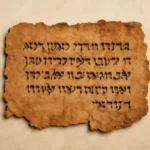
Images and objects described as “Bible scrolls” vary widely. Some are authentic historic manuscripts, some are modern Torah scrolls, and others are decorative replicas made for display. Age, appearance, and handwritten lettering alone cannot establish authenticity.
A genuine ancient manuscript should have documented ownership and a credible chain of custody. Specialists may examine the writing system, language, ink, skin or papyrus, sewing, damage patterns, and provenance. Scientific testing can contribute useful information, but a test of the material does not by itself prove that the text or object has a legitimate history.
If you encounter a scroll offered for sale, treat dramatic claims with caution. A seller’s statement that an object is “biblical,” “from the Dead Sea,” or “thousands of years old” needs independent support. Some fragments on the antiquities market have uncertain origins, and modern forgeries can imitate old materials or writing.
Ask for a clear description of the manuscript’s language, text, material, and dimensions.
Request provenance records rather than relying on a verbal story.
Look for an assessment by a qualified manuscript specialist or established institution.
Do not use age alone as proof of religious or historical importance.
Check whether the object can legally be owned, exported, imported, or sold.
Handling an old scroll requires care because parchment and papyrus can be fragile. Keep it away from direct sunlight, heat, moisture, food, liquids, and unstable storage conditions. Do not flatten a tightly rolled manuscript, apply household cleaners, repair it with tape, or touch the writing surface unnecessarily.
Museums and archives use custom supports, controlled environmental conditions, and conservation materials suited to the object. If you own or inherit a suspected historic scroll, consult a conservator who works with manuscripts before attempting to open or clean it.
For a modern Torah scroll, follow the guidance of the synagogue or Jewish community that uses it. Religious handling is not the same as museum handling, and a trained sofer is the appropriate person to evaluate questions about kosher status, repairs, or fitness for public reading.
Seeing a Bible scroll in person can make the history of Scripture more tangible. The rolled form explains ancient reading practices, the handwritten columns reveal the labor of scribes, and the surviving repairs show how communities valued the text enough to preserve it. Whether the scroll is ancient or modern, its significance comes from the relationship among material, words, readers, and tradition.
Frequently asked questions
Is a Bible scroll the same thing as a Torah scroll?
No. A Bible scroll is a broad description for a scroll containing biblical material. A Torah scroll is a specific Jewish sacred manuscript containing the five books of Moses and prepared according to religious laws and scribal traditions. Other scrolls may contain prophetic books, historical writings, Psalms, or nonbiblical works, and they may not have the same ritual status as a Torah scroll.
Were the original books of the Bible written on one large scroll?
Generally, no. The biblical books were produced and copied as separate works, often on separate scrolls. Different communities later gathered these writings into collections. The modern bound Bible combines many books in one volume, while ancient readers normally handled individual scrolls or smaller groups of texts.
Are the Dead Sea Scrolls older than the Bible?
The Dead Sea Scrolls are not older than the biblical traditions they preserve. They are ancient copies and related writings, produced centuries after many biblical texts were composed. Their value comes from providing early manuscript evidence that helps scholars compare wording, spelling, and textual forms with later copies and ancient translations.
Can I buy an authentic ancient Bible scroll?
Authentic ancient manuscripts are rare, expensive, and often subject to legal and ethical restrictions. A credible object needs documented provenance and expert examination; an attractive appearance is not enough. Modern Torah scrolls and replicas are more commonly available, but they should be described honestly and purchased through reputable religious, educational, or cultural institutions.




Leave a Reply