What Language Were the Dead Sea Scrolls Written In? An In-Depth Guide
What Language Were the Dead Sea Scrolls Written In? An In-Depth Guide
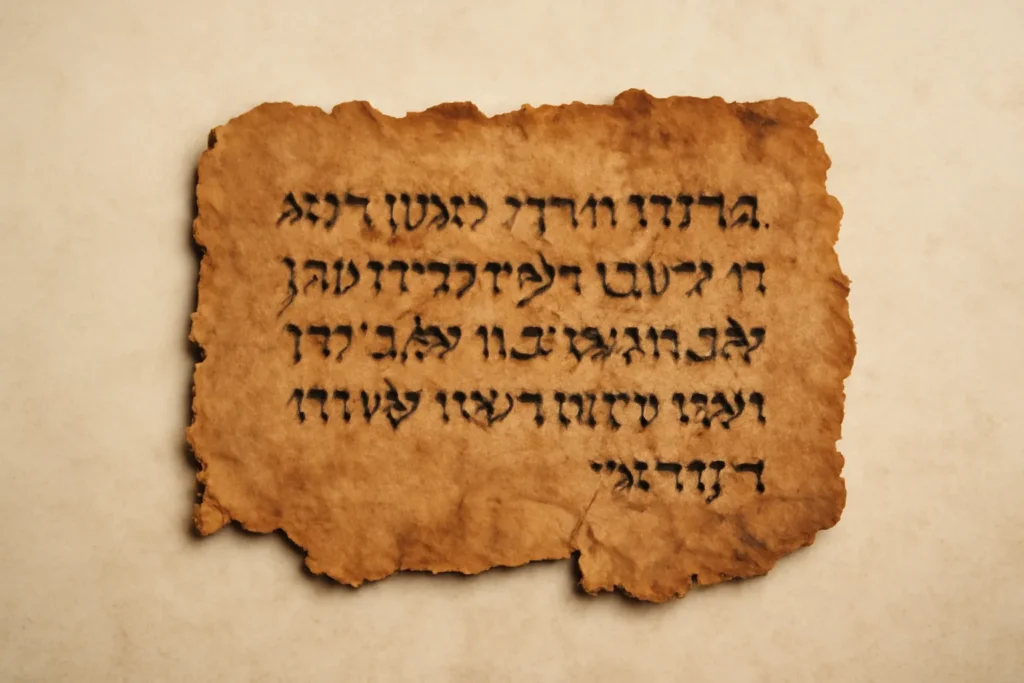
The Dead Sea Scrolls, discovered in the caves near Qumran starting in 1947 and uncovered over subsequent decades, are among the most important archaeological and textual finds in the study of Judaism and the broader biblical world. They comprise a diverse collection of manuscripts, including biblical texts, apocryphal writings, rulebooks, liturgical pieces, and sectarian commentaries. A central question for readers and scholars alike is: what language were these scrolls written in? The answer is nuanced. While Hebrew forms the backbone of the corpus, Aramaic appears in substantial and significant portions, and a small number of texts show Greek influence or presence. In addition, a few items preserve the Paleo-Hebrew script, reflecting earlier scribal traditions. This in-depth guide explores the linguistic landscape of the Dead Sea Scrolls, explains how scholars categorize the language of the scrolls, and considers what the linguistic mix tells us about the world that produced them.
Overview: the three main linguistic streams in the scrolls
In broad terms, the Dead Sea Scrolls draw primarily on Biblical Hebrew, with a robust but smaller component in Aramaic, and a trace presence of Greek texts or Greek fragments. Some scholars also note the use of Paleo-Hebrew script on select items. To understand the language question, it helps to distinguish between the languages as written text and the script used to render that text, as well as the sociolinguistic context in which the manuscripts were produced and copied.
Hebrew as the dominant language of the scrolls
By far the largest portion of the surviving scrolls is written in Hebrew, specifically forms of Biblical Hebrew as encountered in the Hebrew Bible. This includes not only canonical scriptures but also numerous non-biblical compositions—poetic works, biblical commentaries, and sectarian writings—that leverage Hebrew as their primary vehicle of religious and legal discourse.
What makes Hebrew here distinctive is not merely the lexical stock but the way the language is used in a way that scholars sometimes describe as a bridge between the Biblical text tradition and a later, sectarian literary culture. Key features include:
Archaisms and distinctive vocabulary that preserve forms and expressions that have older ancestry in biblical or proto-biblical Hebrew.
Orthographic variants and occasional spelling peculiarities, including alignments with the scribal conventions of the Qumran community.
Texts that present ritual, legal, and liturgical material in Hebrew, underscoring Hebrew’s central role in defining religious life and communal identity at Qumran.
Among the Hebrew-language corpus, there are important clusters of works such as:
The Rule of the Community (1QS) and other sectarian scrolls that articulate the life, rules, and expectations of the community using Hebrew terminology and syntax.
The Temple Scroll (11Q19) and other liturgical or legal texts that articulate ritual practices and priestly concerns in Hebrew.
Poetic or wisdom-oriented works, including the Hodayot (Thanksgiving Hymns) and other poetic compositions that are primarily Hebrew in diction and cadence.
Scholars often emphasize that Hebrew in the Dead Sea Scrolls is not merely a historical artifact but a living scholarly language for the community. The language conveys theology, law, and community memory in a way that aligns the Qumran world with earlier Israelite religious traditions while also signaling distinctive interpretive aims.
Aramaic: a major secondary language with clear scope and function
Beyond Hebrew, Aramaic plays a substantial role in the Dead Sea Scrolls. Aramaic in the scrolls is not rare but is a carefully circumscribed component of the corpus. It appears in full texts or large sections in some manuscripts, and in embedded passages within otherwise Hebrew compositions.
Two broad patterns characterize Aramaic within the scrolls:
Long-form Aramaic texts such as the Genesis Apocryphon (occasionally identified as 1QapGen or 4QapGenesis), a retelling of Genesis that is largely in Aramaic and written to resemble a narrative expansion of the Hebrew Bible story. This text demonstrates the capacity of the community to compose substantial prose in Aramaic while adopting biblical themes.
Aramaic passages within Hebrew documents—including non-biblical works and some biblical comments—where Aramaic words, phrases, or clauses serve as transitional devices, technical terms, or glosses. In these cases, Aramaic functions as a secondary language embedded within primarily Hebrew literature.
In addition to Genesis Apocryphon, other Aramaic material includes biblical passages where the author uses Aramaic as the language for certain portions of the text, notably within the biblical book of Daniel (2:4b–7:28). In the wider scholarly picture, this Aramaic chunk stands out as an instance where the scrolls reflect the biblical book’s own Armenian? Not Armenian—the Aramaic language—rather than the Hebrew-only frame, showing the ancient Near Eastern multilingual reality.
Aramaic in the scrolls is typically biblical Aramaic in its syntax and word stock, with occasional regional or community-specific phrases that mark Qumran as a Jewish site in which Aramaic served as a lingua franca for certain genres of writing, notably narrative expansions, legal matter, or interpretive commentary. The function of Aramaic here is linguistic versatility—an adaptable tool for conveying history, law, or exegesis in a region where Aramaic was widely used in daily life and administration.
Greek: a limited but meaningful presence
While the scrolls are overwhelmingly Hebrew and Aramaic, there are Greek-language fragments present in a small subset of the corpus. Greek appears not as the main language of the scrolls but rather as a minor strand within the broader linguistic ecosystem of Second Temple Judaism in the region. The Greek materials found among the Dead Sea Scrolls tend to be fragmented, isolated, or embedded within otherwise Hebrew or Aramaic manuscripts, suggesting translations, glosses, or textual borrowings rather than full-length Greek texts copied in the Qumran script.
Scholars emphasize that the presence of Greek reflects the cultural and intellectual milieu of the period, when Greek was a dominant language of commerce, scholarship, and Hellenistic influence across the eastern Mediterranean. However, because the scrolls’ core liturgical, legal, and esoteric genres are predominantly Hebrew or Aramaic, Greek appears as a secondary layer—an indicator of contact with wider Hellenistic currents rather than a primary vehicle for most of the community’s writings.
Paleo-Hebrew script: a reverence for older scripts in select items
In a few cases, the Dead Sea Scrolls preserve Paleo-Hebrew script rather than the later square script that eventually became standard for Hebrew writing. Paleo-Hebrew—the archaic script that preceded the square Aramaic-style script—appears in selected texts or fragments, offering a window into scribal practices and manuscript traditions that predate the fully developed Masoretic text era. The use of Paleo-Hebrew in the scrolls signals a deliberate connection to earlier Hebrew writing traditions, a feature that has intrigued philologists and paleographers who study the material culture of ancient Hebrew literacy.
It is important to note that Paleo-Hebrew usage in the scrolls is not uniform across all texts but is concentrated in a restricted subset. This suggests that the scribal culture at Qumran retained some older conventions for specific purposes, perhaps tied to liturgical or ceremonial associations, or to an intentional archaism in certain texts.
Dialects and scribal practice: how language works in the Qumran world
The question of language in the Dead Sea Scrolls is inseparable from questions of dialect, scribal culture, and community identity. The texts demonstrate a blended linguistic environment in which Hebrew remains the primary medium for religious and legal discourse, while Aramaic functions as a versatile secondary tongue for certain narratives and interpretive materials. A few points illuminate this complex linguistic ecology:
Diverse Hebrew register—Many Hebrew texts in the scrolls show a form of Biblical Hebrew that includes archaisms, but they also contain textual variants and vocabulary that reflect a distinct community tradition, sometimes described as Qumran Hebrew.
Strategic Aramaic insertions—Aramaic phrases or larger Aramaic blocks occur in contexts such as narrative expansions, legal documents, and interpretive commentaries, suggesting a bilingual or bidialectal habit among scribes and authors.
Script and script-usage—The script used for writing differs by manuscript and date, with many texts in Hebrew square script and some showing Paleo-Hebrew script. This variation reveals the continuity and change in scribal conventions over the period of production.
Scholars emphasize that “language” in the Dead Sea Scrolls cannot be reduced to a single, monolithic system. Rather, it reflects a milieu where language use was shaped by function, audience, and the scribal school’s goals. Some texts were meant for the internal edification and governance of the community, others for outreach to broader Jewish readers, and still others for ritual or liturgical use. The linguistic choices—whether in Hebrew or Aramaic, and whether in a particular script—often reveal the intended audience and doctrinal emphasis of a given scroll.
What does this multilingual landscape tell us about the community and its world?
The Dead Sea Scrolls illuminate a world in which multilingualism was not incidental but integral to religious life, education, and memory. The languages used in the scrolls map onto social, geographical, and historical realities of Second Temple Judaism, including:
Regional linguistic practices in Judea and surrounding areas, where Hebrew served as a holy language of scripture and liturgy and Aramaic functioned as a common tongue in daily life and in certain scholarly genres.
Textual transmission networks that crossed linguistic lines, with Aramaic and Hebrew manuscripts coexisting and interacting within a shared tradition of interpretation and law.
Religious identity and group cohesion expressed through the careful selection of language for doctrinal statements, ritual instructions, and communal rules.
In practical terms, the multilingualism of the scrolls demonstrates that the Qumran community operated in a culturally and linguistically plural setting. Their texts offer a window into how they understood authority, scripture, and communal life in ways that could accommodate Aramaic-speaking neighbors or readers who encountered Aramaic in other facets of life. The scrolls also show how scribal culture preserved older forms while incorporating contemporary linguistic features, thus creating a bridge between ancient scriptural traditions and later interpretive frameworks.
Why the language of the scrolls matters for scholars and students
Knowing which language or languages the Dead Sea Scrolls employ is not merely a matter of linguistic curiosity. It bears directly on issues of textual criticism, dating, interpretation, and the history of Jewish thought in the late Second Temple period. Several implications follow from the scrolls’ linguistic profile:
Textual relationships—The strong Hebrew component aligns the scrolls with the canonical Hebrew Bible tradition, while Aramaic segments reveal interpretive practices, exegetical methods, and perhaps cross-cultural exchange with Aramaic-speaking communities.
Dating and provenance clues—Linguistic features, such as specific archaisms, syntax patterns, and script forms, contribute to dating manuscripts and identifying the scribal schools that produced them.
Publication and translation considerations—When editors decide how to translate or annotate a scroll, recognizing the language’s function in each text helps produce accurate renderings and interpretive notes.
Interdisciplinary access—For historians, linguists, and theologians, language data from the scrolls offers a bridge between philology, archaeology, and religious studies, enabling a fuller reconstruction of the intellectual world of the time.
Frequently encountered language categories in the scroll corpus
To summarize the linguistic landscape, here is a concise catalog of the language categories most often encountered in the Dead Sea Scrolls, along with brief notes on their typical contexts:
Hebrew texts — Primary language for canonical and many non-canonical works; used for liturgy, law, poetry, and exegesis.
Aramaic texts — Present in substantial blocks or as embedded sections; includes narrative expansions like Genesis Apocryphon and Daniel portions; reflects bilingual or bidialectal scribal culture.
Greek fragments/texts — Limited and fragmentary; evidence for cultural contact with the wider Hellenistic world; not a dominant literary mode within the scrolls.
Paleo-Hebrew inscriptions/script — Occasional use in a subset of manuscripts, highlighting archaism or particular scribal preferences.
Examples and representative cases (without exhaustive catalog)
While the Dead Sea Scrolls comprise hundreds of manuscripts, a few representative cases help illustrate the language dynamics at work:
Genesis Apocryphon — A major Aramaic text that retells the early biblical narratives with expanded material, showing how Aramaic could be used to develop mythic and historical memory beyond the Hebrew text.
Rule texts and Temple-related literature — Many of these are Hebrew in diction and syntax, reflecting the religious and communal life of the Qumran settlement through ritual and governance language.
Daniel fragments — Demonstrate the known Biblia Daniel in Aramaic (2:4b–7:28) within a Dead Sea Scroll context, underscoring the political-religious and linguistic layering of the period.
How to approach the study of language in the Dead Sea Scrolls
For students and researchers approaching the topic systematically, several methodological notes help navigate the language issues:
Text-critical comparison—Compare the Hebrew and Aramaic portions of texts that exist in multiple manuscripts to identify linguistic variations and interpretive divergences.
Paleography and dating—Examine the script and orthographic practices to approximate dating windows and scribal affiliations, especially when Paleo-Hebrew is present.
Contextual reading—Read language choice in light of genre (liturgical, legal, apocalyptic, or narrative) and the community’s self-understanding.
What modern readers should carry away about the Dead Sea Scrolls’ languages
The language question is not merely technical; it shapes our understanding of the scrolls’ place in history and their relationship to other ancient Jewish texts. The dominant Hebrew layer confirms the centrality of Hebrew Bible traditions for this community, while the Aramaic components reveal a multilingual, interconnected culture with access to broader Near Eastern linguistic currents. The Paleo-Hebrew usage, though sporadic, hints at a reverent connection to earlier scriptural forms, suggesting both conservatism and a layered memory of Jewish textual practices. Finally, the very limited Greek presence attests to contact with Greek-speaking spheres without allowing Greek to displace the Hebrew-Aramaic core of the corpus.
Glossary of terms related to language in the scrolls
To aid readers, here is a quick glossary of terms frequently encountered when discussing the Dead Sea Scrolls’ languages:
Biblical Hebrew — The form of Hebrew used in the Hebrew Bible, here represented in a sequence of scrolls that preserves ancient spellings and forms while also displaying regional and scribal variations.
Aramaic — The language found in substantial portions of the scrolls, including long-form Aramaic texts and embedded Aramaic passages within Hebrew manuscripts.
Greek fragments — Small, sporadic Greek-language pieces or phrases found among the scrolls, indicating contact with Greek culture and language but not serving as the primary manuscript language.
Paleo-Hebrew — The old Hebrew script, used on a limited set of items, reflecting archaism or special scribal conventions.
Qumran Hebrew — A scholarly label for the Hebrew language features that appear in the Qumran texts, often characterized by archaisms and distinctive lexical choices.
Further reading and exploration
For readers who wish to dive deeper into the linguistic dimensions of the Dead Sea Scrolls, the following themes and sources are especially fruitful:
Textual criticism and philology of Hebrew Bible manuscripts as preserved in the Dead Sea Scrolls, with attention to orthographic variants and semantic shifts.
In-depth studies of Genesis Apocryphon and its Aramaic narrative expansions, which illuminate Aramaic storytelling conventions in the scroll world.
Scholarly treatments of Qumran Hebrew as a distinct scribal and linguistic phenomenon, including discussions of archaisms and community-specific lexicon.
Interdisciplinary analyses combining linguistics, archaeology, and religious studies to explain how multilingualism shaped the Qumran community’s interpretation of scripture and law.
In summary, the Dead Sea Scrolls present a rich, multilingual tapestry. While Hebrew provides the major thread—carrying scripture, law, and liturgy—and Aramaic supplies a significant secondary channel—especially in narrative expansions and interpretive writings—Greek remains a secondary but telling presence, and Paleo-Hebrew gestures toward older scribal traditions. The result is not a single language story but a nuanced portrait of a Jewish community that lived across linguistic boundaries, using languages as tools to preserve, reinterpret, and transmit its religious and cultural heritage.









Leave a Reply