Was the Last Supper a Seder? Exploring Passover Rituals in the Bible
Was the Last Supper a Seder? Exploring Passover Rituals in the Bible
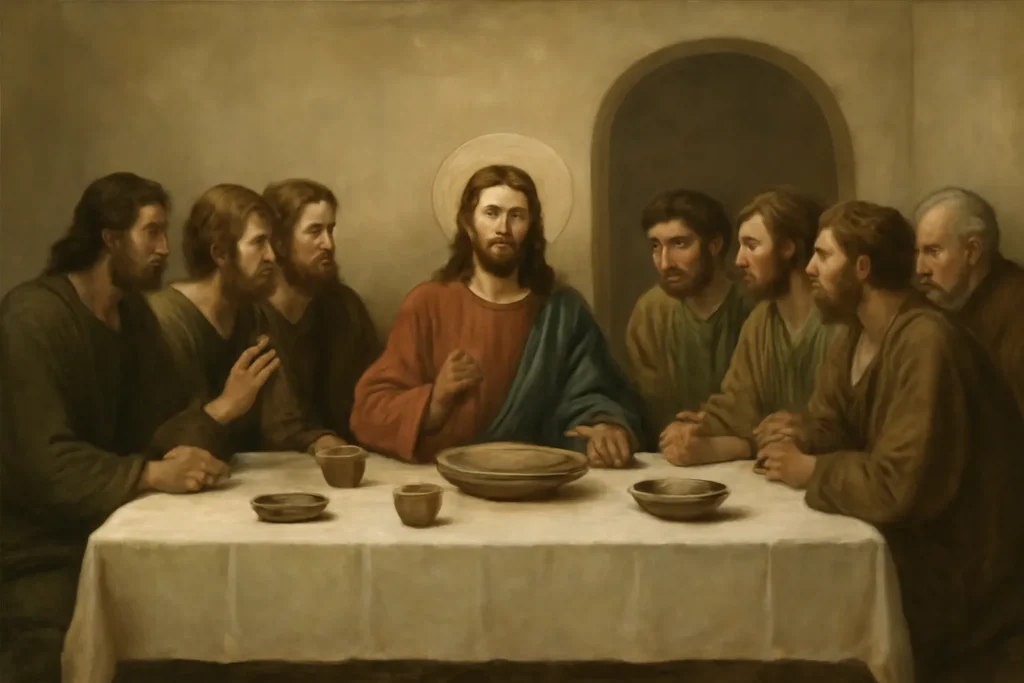
The question Was the Last Supper a Seder? or, more broadly, Was the Last Supper a Passover meal invites careful study of biblical texts and Jewish practice. This article surveys what the Bible says about Passover rituals, what a traditional seder involves, and how the gospel accounts portray the meal Jesus shared with his disciples. It also looks at the historical and theological layers that shape the common, but nuanced, claim that the Last Supper was either a seder in form or a Passover meal that carried new meaning for early Christians. The aim is not to settle every detail with medieval exactness, but to illuminate how these pieces fit together in ancient Jewish and early Christian contexts.
To understand whether the Last Supper resembled a seder, it helps to know what a traditional Passover seder is. A seder is a structured, ritual meal conducted on the first two nights (or one night in Israel and among some reform traditions) of Passover, the festival that commemorates God’s deliverance of Israel from slavery in Egypt. The word seder means “order,” because the meal follows a fixed sequence of steps designed to tell and relive the Exodus story. The order is anchored in the Haggadah, the liturgical text that guides participants through the narrative, prayers, and symbolic foods.
A typical seder features a set of elements that repeatedly surface in discussions of biblical celebration:
Kadesh — a blessing over a cup of wine to sanctify the occasion.
Urchatz — ritual washing of the hands.
Karpas — dipping a vegetable (often parsley) in saltwater to recall sorrow and the springtime renewal.
Yachatz — breaking the middle matzah, with the larger piece set aside as the afikomen (a half-hidden piece that will be eaten later as a dessert in some families).
Maggid — the telling of the Exodus story, often including debates about the meaning of redemption and ritual questions from children.
Rachtzah and Motzi— the washing and blessing over the matzah; the reading and eating of matzah (unleavened bread).
Maror and Charoset — bitter herbs with a sweet fruit-and-nut paste to symbolize bitterness and joy, respectively, and to remember the suffering and the sweetness of liberation.
Korech — a sandwich of matzah and maror on one plate, uniting bitter memory with the ritual bread.
Shulchan Orech — the festive meal itself, often with seder plate symbols placed at the center of the table.
Tzafun — the tasting of the afikomen, sometimes as the final bite of the meal.
Barech and Hallel — blessings after the meal followed by psalms of praise; and finally Nirtzah or similar closing prayers signaling hope and restoration.
In sum, a seder is both ritual and pedagogy: it teaches a moral and spiritual history through food, ritual actions, liturgical words, and communal memory. A key feature is that the food itself is symbolic: matzah recalls the haste of the Israelites leaving Egypt, bitter herbs evoke the bitterness of slavery, and charoset represents the mortar used by the enslaved people. While all Jewish households do not perform the exact same steps, the structure and symbolism of the seder make it one of the most deeply ritualized meals in biblical and post-biblical Jewish practice.
The Last Supper in the Gospels
The Synoptic Perspective: Matthew, Mark, and Luke
In the Synoptic Gospels—Matthew, Mark, and Luke—the account of Jesus sharing bread and wine with his disciples is interwoven with Passover language. The framework is that Jesus and his followers were assembled during the festival period, and Jesus uses the meal to inaugurate a new meaning for the bread and the cup.
Mark 14:22-26 and parallel passages in Matthew 26:26-29 and Luke 22:19-20, where Jesus takes bread, blesses it, gives it to the disciples, and says, “This is my body given for you; do this in remembrance of me.” Then he takes a cup, saying, “This cup is the new covenant in my blood, which is poured out for many.” The ritual language and the shared meal are central to the moment.
The setting is described as a gathering for the Passover, with the meal shared among the disciples before Jesus’ crucifixion. Some features of the meal align with Passover symbolism—the bread, the cup, and the expectation of a covenantal sign—but the narrative also emphasizes Jesus’ reinterpretation of the elements in light of his own mission.
In the Synoptic tradition, then, the Last Supper almost certainly takes place within the Passover frame, and the act of institutionalizing the bread and the cup becomes a foundational Christian rite—the Eucharist or Lord’s Supper—that later shapes Christian worship. The ritual language surrounding the bread, wine, and covenant is a key point of contact between Passover and early Christian reverence for Jesus’ sacrifice.
The Gospel of John: A Different Chronology and Emphasis
The Gospel of John presents a somewhat different chronology and set of emphases. John places significant emphasis on events that occur around the same time but with different timing. In some passages, John suggests a different ordering: Jesus performs the Passover-related miracle and discourse with the context of a supper, but the exact timing of the meal is not described in the same way as in the Synoptic Gospels. Notably, John emphasizes the teaching and the act of washing the disciples’ feet (John 13) as a model of servant leadership and communal purity, rather than focusing on the ritual elements of a Passover meal per se.
Because of these differences, many scholars say that the Last Supper in John is not framed as a Passover seder in the way the later Rabbinic seder would be. Yet, the imagery of light, bread, and a washing ritual carry strong symbolic resonance for Christian readers who see Jesus’ life and teaching as a continuous revelation tied to the Passover theme of liberation and covenant faithfulness.
Was the Last Supper a Seder? An In-depth Analysis
The central question—Was the Last Supper a Seder or a seder-like meal—has generated careful scholarship and lively discussion. Several lines of analysis help illuminate the issue without reducing it to a simple yes or no.
Textual alignment with Passover language: In Luke 22:7-8, the narrative states, “Then came the day of Unleavened Bread on which the Passover lamb had to be sacrificed. Jesus sent Peter and John, saying, ‘Go and prepare the Passover for us.’” This suggests a preparation for a Passover feast. If the meal the disciples shared was the Passover meal itself, then it is reasonable to connect it with a seder in broad terms, even if the full Rabbinic seder form is not described.
Lamb, bread, and ritual content: The biblical accounts emphasize bread that is meaningful in a Passover context, and Jesus’ words about the cup and the bread take on new theological significance. However, the lamb is not explicitly presented at the table in the Gospel narratives. Since the Passover lamb institutionally centers on the Temple sacrifice in Jerusalem, some argue that the family’s Passover meal would have involved various symbolic elements, which may or may not be explicitly listed in the text.
Clarity of the ritual order: A defining feature of a seder is its ordered sequence of steps. The Gospel narratives do not present a complete seder liturgy with all its components and readings. Instead, they highlight Jesus’ actions and words in the moment of the meal, focusing on transmission of meaning rather than cataloging ritual steps.
Timing and chronology: In John, the Last Supper is described as taking place before the Passover, which has led some to argue that Jesus celebrated a meal on the day of Preparation that coincided with Passover but was not a full Passover feast in the Rabbinic sense. In the Synoptic Gospels, the wording places the meal within the Passover frame. This chronology matters for how one defines the meal’s ritual identity.
Historical-cultural context: First-century Judaism encompassed diverse practices, from temple service to household rituals. A seder as a fixed liturgy developed later in Rabbinic Judaism. It is possible that Jesus and his disciples observed Passover in a form that was familiar to them and yet did not map perfectly onto the later formal seder. This means that while the Last Supper may be Passover-oriented and even seder-like in spirit, it may not be a canonical, full-fledged formal seder as known in later centuries.
Taken together, a nuanced answer emerges: Was the Last Supper a Seder in the strict sense of a Rabbinic, post-Temple ritual with a fixed liturgy? Probably not in the technical sense, especially given the lack of a complete seder structure in the texts. Was it, at minimum, a Passover meal that shared meal elements with a seder and used Passover symbolism to articulate Jesus’ mission? Most scholars would affirm this broader view: the event sits at a Passover table, and it reinterprets Passover imagery in light of Jesus’ crucifixion and the formation of Christian ritual practice.
Historical and Theological Context
Why does this distinction matter beyond antiquarian curiosity? The answer lies in the way first-century Judaism and early Christianity understood salvation, covenant, and ritual memory. The Passover festival is a story of liberation—deliverance from oppression, a reframing of identity, and the call to faithful gratitude. When Jesus gathers with his disciples and speaks of bread as his body and the cup as his blood of the covenant, he is able to recast the Passover event into a forward-looking liturgical act that binds the community to his person and mission. In Christian worship, the bread and wine come to symbolize ongoing participation in Christ’s life, death, and resurrection, a move that has profoundly shaped Christians’ practice of the Eucharist or Lord’s Supper for two millennia.
From a Jewish perspective, the Passover seder embodies covenant faithfulness, collective memory, and a pedagogy of gratitude. The absence or presence of explicit lamb symbolism and the lack of a fully detailed seder ritual in the Gospel accounts do not erase the strong echoes of Passover imagery in Jesus’ actions and words. In other words, the Last Supper can be understood as a Passover meal that carries unique Christian interpretive weight, rather than a canonical, fully realized seder in the Rabbinic sense.
Passover Rituals in Biblical and Jewish Tradition
To appreciate what the Last Supper can or cannot be, a quick survey of biblical Passover rituals helps. The original Passover instruction is given in Exodus 12, with commands about consuming the sacrifice, eating unleavened bread, removing leaven from homes, and the importance of sanctifying the festival. In the biblical text, the Passover meal centers on a sanctified sacrifice (the Passover lamb), the roasted meat, the unleavened bread, and bitter herbs—designed to tell the story of slavery and liberation in vivid, tactile terms.
Exodus 12:1-28 — The institution of Passover, the sacrificial lamb, and the ritual meal with unleavened bread and bitter herbs.
Exodus 12:14-20 — Commands to observe the festival as a lasting ordinance, including the avoidance of leaven for seven days and the eating of unleavened bread.
Leviticus 23:5 and Numbers 9:11 — Additional references to the timing of Passover alongside other sacred seasons and the setting apart of the festival for holiness.
Deuteronomy 16:3-4 — Emphasizes the eating of the unleavened bread with the feast, and the sense of urgency and remembrance associated with escape from bondage.
In the biblical narrative, elements that later become central to the classical seder—such as the concept of asking questions, telling the Exodus story, and the ritual symbolism of bitter herbs and unleavened bread—are present in seed form. The seder as a fixed, classroom-like liturgy is a post-biblical, Rabbinic development, crafted through centuries of interpretation, debate, and refinement. When we study Was the Last Supper a Seder, we are examining a moment in which these strands meet: a meal that sits at the intersection of Passover memory and Christian re-interpretation, within a first-century Jewish context that is dynamic and diverse.
Implications for Interfaith Understanding
The question of whether the Last Supper was a seder has implications beyond theology. It illuminates how religious communities understand shared roots and divergent paths. For Christians, the Bible’s articulation of bread and cup as symbols of the new covenant reframes Passover memory in light of Jesus’ life, death, and anticipated resurrection. For Jews, Passover remains a festival of liberation, covenant, and memory that preserves an ancient liturgical framework—one that grew into the elaborate seder known in post-biblical times.
Several practical takeaways emerge for readers and students of the Bible:
Shared imagery exists across traditions, even if the liturgical forms diverge. The bread (or matzah) and wine (or cup) are not merely meals; they signal covenant relationship and shared memory.
Context matters—the historical setting of Jesus, the Jerusalem festival culture, and the temple’s ritual life all shape how we read the texts. The Last Supper sits inside this complex matrix in a way that invites careful comparison rather than simple parallelism.
Language matters—whether the Gospel writers are using Passover language or reframing it around Jesus’ mission influences how we categorize the meal. Calling it a seder in the modern sense can be helpful for discussion but may oversimplify the text’s original nuance.
Ethical and liturgical heritage—the movement from Passover memory to Christian Eucharist opens up questions about ritual integrity, tradition, and how communities interpret sacred meals across generations.
Was the Last Supper a Passover Seder? A Summary
In sum, the data suggests a nuanced answer: Was the Last Supper a Seder in the strict Rabbinic sense? Probably not, given the absence of a complete seder’s formal structure and explicit elements such as the full seder plate, specific readings from a Haggadah, or the chewing of a roasted lamb at the table as described in later sources. Was it a Passover meal that bore strong Passover symbolism and occurred within the festival’s timeframe? Most scholars would affirm that. The Last Supper appears to have occurred during Passover observance and used that framework to inaugurate a new Christian rite. The meal becomes a theological turning point: bread as the body, cup as the new covenant in blood, and a call to a community shaped by sacrifice, remembrance, and hope.
For readers exploring this topic, a careful phrase to hold is that the question is framed by two different traditions’ needs: a Jewish tradition that preserves a fixed order of ritual steps, and a Christian tradition that reinterprets those elements through the lens of Jesus’ life and mission. The enduring value of this inquiry lies in recognizing how ancient texts, liturgical practices, and theological interpretations interact to create living religious memory. Whether one calls it a seder, a Passover meal, or a Passover celebration with distinctive Christian meaning, the Last Supper remains a pivotal moment that invites ongoing study, reflection, and dialogue.
Terminology and Variations: How People Talk About It
Because language matters in discussions like this, it can help to note several common phrases that scholars and educators use to describe the topic. Some variations you might encounter include:
Was the Last Supper a Passover meal? — Emphasizes the festival context and the meal’s content as a Passover observance.
Was the Last Supper a seder? — Focuses on whether the meal followed the formal seder structure or resembled it closely enough to be described in similar terms.
Last Supper as eucharistic precursor — Highlights the Christian interpretation in which the meal inaugurates the Eucharist, with bread and wine becoming symbols of covenant and sacrifice.
John’s chronology vs. the Synoptics — Draws attention to the differing timelines that affect how one understands the meal’s nature in the different Gospels.
Across these terms, the aim is to convey what the texts say, what they do not specify, and how later traditions interpreted the moment. This approach helps prevent overstatement and invites a richer understanding of ancient worship life, interfaith exchange, and the shaping of Christian liturgy as a continuation of biblical memory.






Leave a Reply