Advent Candle Lighting Order: How to Light the Advent Candles Week by Week
Advent Candle Lighting Order: How to Light the Advent Candles Week by Week
Advent is a season of waiting, preparation, and longing for the coming of Christ. One of the most enduring and visual practices that families, churches, and individuals observe during this time is the use of an Advent wreath with candles. The Advent candle lighting order provides a rhythm for each week, turning the act of lighting into a meaningful ritual that invites reflection, prayer, and conversation. In this article, you will find a comprehensive guide to the lighting sequence for Advent candles, including variations used around the world, practical tips for home ritual, and ideas for incorporating prayers and themes for each week. Whether you are new to this tradition or seeking to deepen an established practice, the following sections will help you understand how to light the Advent candles week by week with clarity and intention.
Before we dive into the Advent candle lighting order, it’s helpful to recap what Advent is and how the wreath functions as a symbol. Advent is the four-week period leading up to Christmas, observed in many Christian denominations as a time of hopeful expectation, repentance, and preparation for the coming of Jesus. The Advent wreath is a circular arrangement of evergreen branches holding candles, often placed in homes or churches as a centerpiece for daily or weekly devotion.
Traditionally, the wreath holds four outer candles and, in many traditions, a central Christ candle that is lit on Christmas Eve or Christmas Day.
The outer candles are commonly lit in a sequence that mirrors the progression of Advent: hope, peace, joy, and love. The lighting order is designed to build anticipation with each successive Sunday.
In many traditions, the candles are arranged in a circular path, but some households place them in a square or other arrangement. What matters most is the symbolism: Prophecy/hope, Bethlehem/peace, Shepherds/joy, Angels/love, and finally the Christ candle.
Across the globe, there are legitimate variations in the candle colors and the precise naming of the themes. The essential idea remains the same: each week highlights a facet of the Advent season, and the act of lighting becomes a form of spiritual focus. In the sections below, you will find the standard sequence as well as several common variations you might encounter in churches or households around the world.
Traditional Advent Candle Colors and Their Meanings
Color plays a significant role in the symbolism of Advent candles. The purple (violet) candles stand for repentance, preparation, and expectation, while the pink (rose) candle is commonly associated with joy and Gaudete Sunday, the mid-Advent celebration. Some denominations use blue or vary the shades of purple, but the overarching meanings persist:
Hope (Prophecy candle): anticipates the coming of the Messiah and the promises of God’s faithfulness.
Peace (Bethlehem candle): reflects the peace that comes with God’s plan and the journey to the holy city.
Joy (Shepherds candle): recognizes joyful news of great joy for all people.
Love (Angels candle): expresses God’s love revealed in the world through the gift of Jesus.
Christ candle (center): lit on Christmas Eve or Christmas Day to signify the light that has come into the world.
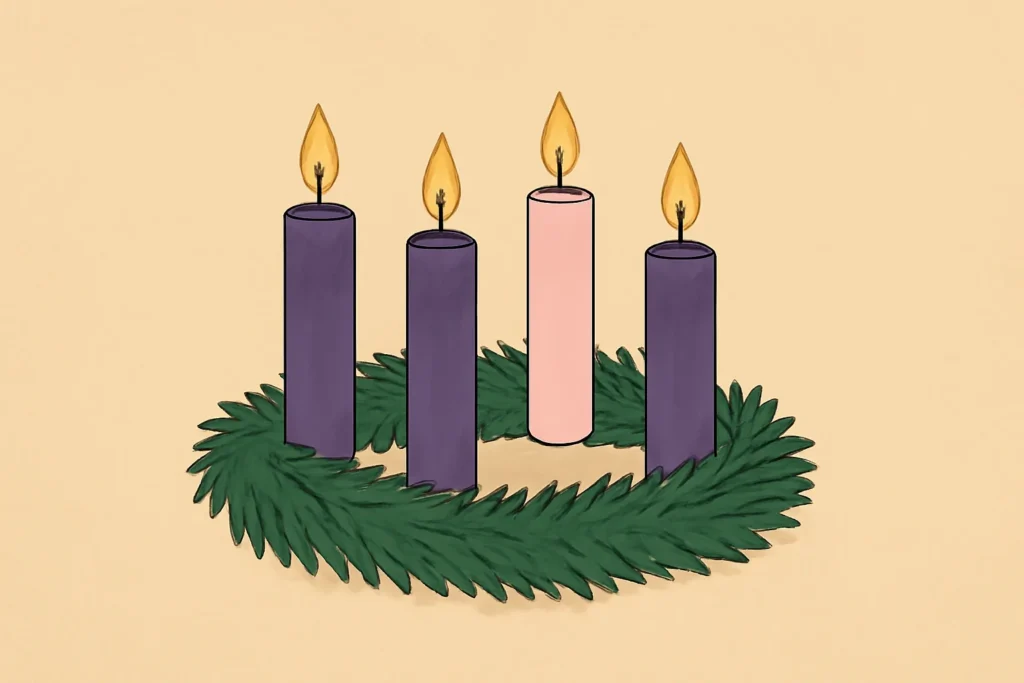
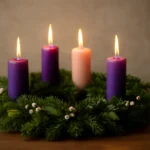
In many households, the outer four candles are a mix of purple and a single pink candle on the third week. The optional center candle—the Christ candle—is typically white and serves as a culmination of the Advent season. If your tradition uses different colors, the core idea remains: each candle marks a step toward the celebration of Christ’s birth.
Advent Candle Lighting Order: Week by Week
The heart of this article is the practical question: how do you light the Advent candles week by week? Below you will find a clear, week-by-week guide, followed by notes on customizations and common variations. The sequence described here reflects a widely used pattern in Western Christian observances, but you may adapt it to fit your family’s or congregation’s practice.
Overview of the sequence
Week 1: Light the Prophecy/Hope candle (purple).
Week 2: Light the Prophecy/Hope candle again plus the Bethlehem/Peace candle (purple).
Week 3: Light the Prophecy/Hope, the Bethlehem/Peace, and the Joy candle (pink).
Week 4: Light all four outer candles (Hope, Peace, Joy, and Love) and, if using a Christ candle, light the Christ candle on Christmas Eve or Christmas Day.
Note that some families light only one candle on the first Sunday, two on the second Sunday, and so on, while others light the full set on each adjacent Sunday. The important thing is to maintain a rhythm that helps participants reflect on the corresponding theme and to keep the lighting consistent from week to week.
Week 1: The Candle of Hope (Prophecy/Candle)
In the first week, you light one purple candle, traditionally called the Prophecy candle or the Candle of Hope. This candle stands as a reminder of the ancient prophets who spoke of God’s promises and the coming Messiah. When lighting this candle, you might reflect on the following ideas:
The anticipation of God’s promises and their fulfillment in Christ.
How hope sustains believers through darkness and waiting.
Prayer prompts: asking for patience, perseverance, and trust in God’s timing.
Typical practices for Week 1 include a brief reading from the Scriptures that highlights promises fulfilled in Jesus, followed by a short prayer or meditation. If your family uses a devotional guide, you can align the chosen passage with the theme of hope. The candle lighting ritual can be a peaceful opening to a family discussion about what you hope for in the coming year, both personally and in your faith community.
In the second week, you add the Bethlehem candle to the wreath, and you light two candles total (the Hope candle plus the Peace candle). The Bethlehem candle is commonly associated with peace and the journey to the holy city. It invites contemplation of the ways God’s peace is already at work in the world and the peace that Christ brings to human hearts. Reflections for Week 2 often focus on:
The idea of peace on earth and the possibility of reconciliation in communities.
The journey motif—how the path to Bethlehem mirrors the journeys people take toward faith and family.
Prayer prompts: seeking reconciliation, harmony in families, and peace in places of conflict.
Some families connect the Bethlehem candle with reflections on justice, social peace, or the needs of the marginalized. The lighting ceremony in Week 2 serves as a visual reminder that peace is pursued and enacted in daily life as well as in grand narratives of salvation.
Week 3: The Candle of Joy (Shepherds) and the Pink Candle
Week 3 is often the most celebratory in many traditions because the pink Candle of Joy is lit alongside the two purple candles. This week is commonly known as Gaudete Sunday, a term meaning "rejoice." The third week invites participants to consider the joy of God’s nearness and the glad news announced to the shepherds and all people at Christ's birth. Key points for Week 3 include:
How joy can coexist with longing and waiting, especially in the midst of challenges.
The symbolism of the pink candle as a break in the liturgical color to mark a moment of joy.
Prayer prompts: gratitude for God’s presence and the gift of Jesus, and prayers for times of joy to be shared with others.
In some traditions, the pink candle represents joy and celebration of Christ’s coming, highlighting the shift from penitence to anticipation. Families commonly use Week 3 to sing carols, share a joyful blessing, or offer hospitality as a reflection of the joy of the season.
Week 4: The Candle of Love (Angels) and the Christ Candle
In the fourth week, the final purple candle and the pink candle are lit, marking the completion of the outer ring's cycle. At many churches and homes, this week introduces the Love candle, often associated with the angels’ proclamation and God’s love revealed in Jesus. If your tradition includes a Christ candle in the center, it is typically lit on Christmas Eve or Christmas Day, signaling the fulfillment of Advent’s journey and the arrival of the Light of the World.
The Love candle emphasizes the Advent theme of divine love manifested in human history.
The Christ candle invites contemplation of the Word becoming flesh and the ongoing light that Jesus provides in the world.
Prayers and readings may focus on reconciliation, mercy, and the example of self-giving love.
In some households, the Christ candle is lit at the end of the fourth week or during Christmas Eve services, while others light it on Christmas Day as the central culmination. The specific timing may depend on local tradition, church calendar, and family preference, but the symbolic arc remains consistent: from hopeful expectation, through peace and joy, to love and light entering the world in Christ.
Prayers and Reflections for Each Week
Using prayers and contemplations during each Advent candle lighting helps transform the ritual from a simple activity into a meaningful spiritual practice. Here are sample prompts you can adapt for each week. You can tailor them to your faith tradition and family style.
Week 1 (Hope): Read a prophecy or promise from Scripture, then reflect on how God’s faithfulness has shown up in the past and how you hope to see God’s promises fulfilled in your life this year.
Week 2 (Peace): Consider places where peace is needed in your community or family. Pray for healing where there is strife, and commit to actions that promote peace in small and tangible ways.
Week 3 (Joy): Offer expressions of gratitude and celebrate the ways God’s joy has shown up in daily life. Share a joyful memory or carol that lifts your spirits and invites others to rejoice with you.
Week 4 (Love): Reflect on love—God’s love for humanity and the ways you can demonstrate love to others. Pray for relationships that need restoration and for the vulnerable in your circle to experience love and mercy.
Christ Candle (Christmas Eve/Day): Celebrate the Light entering the world. Meditate on how Jesus changes everything and how you can live as a light to others in the days following Christmas.
Practical Tips for Lighting and Caring for Your Advent Wreath
Creating a warm and safe Advent lighting practice requires a few practical considerations. The following tips help ensure your ritual is meaningful and safe for everyone at home.
Placement: Place the wreath on a sturdy, non-flammable surface away from drafts, curtains, and anything that could catch fire. Keep candles upright and never leave a lit wreath unattended.
Lighting routine: Choose a consistent time and day for lighting, such as Sunday evenings or after a family meal. Consistency helps establish a habit that children can anticipate and participate in.
Seasonal decor: If you use artificial candles or LED lights, you can maintain the visual cue while avoiding open flames. Some families mix real and LED candles depending on safety concerns and space.
Kids’ participation: Invite children to be part of the lighting ceremony by helping light the candles, reading a short verse, or sharing a moment of gratitude. It’s a teachable moment about patience, anticipation, and the meaning of Advent.
Practical storage: After the season, store the wreath in a cool, dry place. Keep extra matches or lighters out of reach of children and ensure that any leftover fuel (if using real candles in a spring or autumn setting) is disposed of safely.
Decoration and symbolism: You can add a small banner or card beside the wreath with the weekly theme (Hope, Peace, Joy, Love) to reinforce the spiritual focus for family members who participate at different times.
Variations on the Advent Candle Lighting Order
There is no single universal protocol for Advent candle lighting, and many traditions adapt the Advent candle lighting order to reflect local liturgies, cultural customs, and family preferences. Here are several common variations you might encounter, along with notes on how they affect the rhythm and symbolism of the season.
Variation 1: The Classic Four Purple Candles with a Rose/Pink Candle
The most widely recognized arrangement uses four outer candles, typically three purple and one pink candle, plus a central white Christ candle. In this model, the lighting order aligns with the sequence described earlier:
Week 1: Prophecy/Hope (purple)
Week 2: Bethlehem/Peace (purple)
Week 3: Shepherds/Joy (pink lights up)
Week 4: Angels/Love (purple) and, if reflected, the Christ Candle on Christmas Eve/Day
This variation emphasizes a balance between penitence and gladness, with the pink candle signaling a mid-Advent shift toward joy. It is common in Western liturgical calendars and is easy to implement at home.
Variation 2: Center Christ Candle Emphasized with Daily Lighting
Another popular approach places greater emphasis on the center Christ candle, especially in households that celebrate Christmas Eve or Christmas Day as the culmination of Advent. In this variation, the outer candles follow the standard order, and the Christ candle is lit either on Christmas Eve or Christmas Day, sometimes accompanied by a short, culminating prayer. Some families also light the Christ candle at the moment of a family Christmas worship, turning the Advent wreath into a focal point of the Christmas celebration itself.
For these households, a typical sequence might look like: Week 1 light one purple; Week 2 add the second purple; Week 3 add the pink; Week 4 light all outer candles and then measure the final act by lighting the Christ candle on Christmas Eve/Day. The main difference is a deliberate transition from Advent anticipation to Christmas proclamation, with the Christ candle providing a powerful, symbolic center.
Variation 3: Color Variations Across Traditions
Not every tradition adheres to the classic purple and pink palette. Some churches and homes use blue or lavender as the main color, especially in Catholic and Anglican contexts that adopt a different liturgical color scheme. Others blend purple and blue to communicate a sense of waiting, contemplation, and reverence. If you choose an alternative color scheme, keep the weekly meanings aligned with the same arc: hope, peace, joy, and love, with the center candle as the fulfillment of that journey.
Variation 4: Different Sequences and Themes
While the hope/peace/joy/love sequence is common, some communities assign different names to the weeks or switch the order to reflect local theological emphases. For instance, certain congregations may call the weeks Prophecy, Preparation, Bethlehem, and Angel or use themes like Expectation, Preparation, Celebration, and Fulfillment. The exact naming is less important than maintaining a consistent rhythm that invites reflection, prayer, and shared worship. If your tradition encourages it, you can swap the weekly themes while preserving the number and order of candles.
The Advent candle lighting order can differ depending on Christian denomination, cultural practice, and home tradition. Here are a few notes on how various contexts approach this ritual:
Roman Catholic and many Protestant churches often use the four outer candles with a white center candle, observing Gaudete and Laetare moments as appropriate to the calendar.
Anglican/Episcopal communities may place emphasis on the center Christ candle early in Christmas week or on Christmas Eve, depending on the parish calendar.
Lutheran and some evangelical traditions frequently maintain the classic purple/pink color scheme with a Christ candle, focusing on Advent as a season of penitence and expectant joy.
Non-liturgical households may use the Advent wreath as a family ritual with simple readings, songs, or a short devotional. The flexibility allows families to adapt the practice to fit their time constraints and spiritual goals.
Regardless of tradition, the Advent candle lighting order offers a deliberate structure that helps people slow down, reflect, and anticipate the celebration of Christmas. It creates a shared rhythm within households and congregations, helping people connect with the themes of hope, peace, joy, and love in meaningful ways.
Advent for Children and Families
For families with children, the Advent candle lighting order can be an engaging and educational experience. The ritual provides an opportunity to teach vocabulary related to the season, boost family worship, and foster a sense of anticipation. Here are practical ideas to involve kids in a way that remains accessible and enjoyable:
Storytime: Read a short Bible passage or a child-friendly Advent story before or after lighting the candle. Choose passages that align with the weekly theme.
Song and carols: Sing a carol or two that fits the week, linking the music to the candle’s meaning (e.g., “O Come, O Come, Emmanuel” for Hope; “Joy to the World” for Joy).
Creative prompts: Have children draw or color a picture representing the weekly theme or create a simple prayer card they can carry through the week.
Family commitments: Use the lighting moment to commit to small acts of kindness or service—like helping a neighbor, sharing food, or supporting a local charity—as a practical application of Advent love.
Involving children helps cultivate in them a sense of sacred time and tradition. It also makes the season more memorable, with the candle lighting becoming a routine that they come to anticipate and remember in years to come.
Beyond the core sequence, you can enrich your Advent lighting experience with a few simple additions that deepen meaning and community involvement. Consider these ideas:
Weekly readings: Add a short reading from Scripture, a devotional, or a quotation about the theme of the week to accompany the candle lighting.
Decluttering for charity: In Week 1 or Week 2, suggest choosing an object to give away or a small donation to a charity, tying the act of preparing for Christ’s coming with compassionate action.
Gratitude journals: Keep a weekly gratitude note near the wreath. Each week, family members can write something for which they are thankful within the Advent themes.
Community connection: If you attend a church or community group, coordinate a shared Advent wreath lighting for a neighborhood service or a family-friendly online gathering.
Setting up an Advent wreath is a simple, meaningful project that can become a cherished family tradition. Here are practical steps to get your wreath ready for the weeks ahead:
Choose or assemble your Advent wreath with four outer candles and, if desired, a center white Christ candle.
Arrange the candles in a circle or square, with enough space for a safe lighting environment.
Label the candles, if helpful, with the weekly theme (Hope, Peace, Joy, Love) to guide the family’s reflections.
Prepare a short devotional or reading for each week to accompany the lighting ritual.
Establish a lighting schedule and assign roles (who lights, who reads, who prays) to involve all family members.
Keep safety in mind: never leave a lit candle unattended; consider using a sturdy candle holder or a glass hurricane to protect surfaces.
With these steps in place, your Advent wreath becomes a reliable, gentle structure for reflection throughout the season. You can adapt the setup from year to year based on your family’s needs, but the core practice remains a steady, hopeful rhythm.
Here are answers to some common questions people have about Advent candle lighting orders and wreaths.
Q: Do all Advent wreaths have a central Christ candle?
A: Not all do. Some wreaths have just the four outer candles, while others include a center Christ candle that is lit on Christmas Eve or Christmas Day. It depends on tradition and preference.
Q: What if I miss lighting on a Sunday?
A: Life happens. If you miss a week, simply resume the pattern the next time you light. The overall arc remains meaningful, and you can discuss the delay as a reminder that life is not always predictable, but God’s light remains constant.
Q: Can we use LED candles instead of real candles?
A: Yes. LED candles are a safe alternative for households with children or pets, though some people prefer the traditional aroma and feel of real candles. If using real candles, ensure you have proper holders and supervision.
Q: How long should I light the candles each week?
A: A typical duration is 5–15 minutes, depending on your devotional time. The key is to maintain a calm pace that allows for reflection and prayer.
Q: Can I adapt the order for a non-Christian family member?
A: You can adapt the ritual to emphasize themes like light overcoming darkness, hope, generosity, and peace, even if you do not frame them explicitly within a Christian liturgical context. The practice can be a meaningful family observance about hopeful anticipation and shared light.
The Advent candle lighting order offers a powerful, tangible way to mark the passing of the weeks leading up to Christmas. By lighting candles in a deliberate sequence—often starting with Hope, moving toward Peace, then Joy, and finally Love—families and congregations participate in a story that invites contemplation, gratitude, and generosity. Whether you follow a strict liturgical pattern or adapt the tradition to your home, the central aim remains the same: to slow down, to reflect on the mystery of Advent, and to prepare your heart for the celebration of Christ’s birth. By embracing the various variations on the Advent candle lighting order, you can tailor the ritual to your culture, language, and customs while maintaining the essential rhythm that makes Advent spiritually enriching year after year.






Leave a Reply