Catholic Holy Day Obligation: What It Is and How to Observe
Holy Days of Obligation are special feasts in the Catholic Church on which Catholics are required to participate in Mass. They sit alongside Sundays as days set apart to worship God with particular solemnity and to honor key mysteries of the Christian faith, such as the birth of Christ, the motherhood of Mary, and the promise of eternal life. In this article, you will find a thorough explanation of what these days are, why they matter, how the obligation is understood in different regions, and practical guidance on how to observe them faithfully in daily life.
What is a Holy Day of Obligation?
The term Holy Day of Obligation refers to a feast day on which Catholics are obliged to attend Mass under penalty of sin, unless a grave reason prevents attendance. The obligation is rooted in the Catholic understanding that worship of God is central to human life and that the Church gathers the faithful on certain days to celebrate mysteries of the faith with particular emphasis. While Sundays are the primary day of obligation for Catholics worldwide, many places also observe additional holy days with the same required participation in the Eucharist.
It is important to note that the exact list of holy days of obligation and the way the obligation is applied can vary by country, rite (Latin or various Eastern rites), diocese, and local pastoral planning. The principle remains the same: these are occasions for deliberate worship, spiritual growth, and community solidarity, not merely “extra” days off. In practice, a Catholic is expected to plan ahead to attend Mass on these days, even if it means adjusting work schedules, travel, or family plans.
Why Holy Days of Obligation exist
The Church teaches that certain feasts are particularly important in revealing the mystery of Christ and the drama of salvation. Observing these days as sacred practices—especially through Mass, prayer, and community worship—helps the faithful:
Honor key mysteries of the faith, such as Christ’s birth (Christmas) or the Mary’s role in salvation history (e.g., the Immaculate Conception and the Assumption).
Form a shared Catholic identity by gathering allerted believers in common worship across parishes and dioceses.
Provide regular opportunities for confession, spiritual growth, and catechesis tied to the feast.
Foster a rhythm of life in which holy liturgy shapes daily living, family life, and charitable works.
Common Holy Days of Obligation in the Latin Church
The Latin Church (the largest portion of the Catholic Church) has historically celebrated several major feasts as holy days of obligation. The precise list varies by country and by episcopal conference, but some feasts are widely observed as obligatory. Here are the most commonly recognized days and a brief note on regional practice:
Christmas Day – December 25: The Nativity of the Lord, celebrated worldwide with Masses that mark the incarnation of Christ.
Mary, Mother of God (The Holy Motherhood of Mary) – January 1: A solemnity honoring Mary’s role as Mother of Christ and Mother of the Church in many places.
Immaculate Conception – December 8: The doctrine that Mary was conceived without original sin; observed as a holy day of obligation in many regions, though some places dispense or transfer it depending on pastoral needs.
Assumption of the Blessed Virgin Mary – August 15: The belief that Mary was assumed body and soul into heavenly glory; widely observed with liturgical celebrations.
All Saints’ Day – November 1: A day to honor all saints, known and unknown, and to pray for the faithful departed.
Corpus Christi – Thursday (or Sunday in many places): The Feast of the Body and Blood of Christ, celebrated with processions and Eucharistic devotion in some regions; in others, the obligation may be transferred to a Sunday.
Ascension – 40 days after Easter; in many places, the feast is transferred to the Sunday after Easter, and the obligation is celebrated on that Sunday rather than the Thursday itself.
Note: While these are the traditional candidates, the exact set and the transfer or time of celebration can differ. For example, in the United States, several of these feasts are observed with modifications to the obligation, and diocesan bishops may adjust schedules to fit local pastoral needs. In some countries, additional local feasts or patronal feasts may also carry the obligation.
Regional Variations: How the Obligation is Implemented
United States and Canada
In North America, the Catholic Church’s liturgical governance tends to emphasize the Sunday obligation while still maintaining several holy days of obligation on fixed dates. Historically, US Catholics observed several days as obligatory, but over time the bishops’ conference has refined the practice to fit practical life and pastoral care. Today, the most consistently observed obligatory feasts in the US include Christmas and Mary, Mother of God, with others sometimes observed depending on local policy and pastoral judgment. In practice, many people treat these as important, but the exact obligation may be described as “obligatory” in parishes rather than absolute in every circumstance.
Europe and Oceania
In many European nations, all the standard Catholic holy days tend to be observed with robust parish life, including Christmas, All Saints, the Assumption, and the Immaculate Conception in many places. Corpus Christi and Ascension are frequently observed with public liturgies or processions, sometimes with a Thursday schedule but often moved to a Sunday for convenience and to emphasize their connection with the weekend liturgy.
Africa, Asia, and Latin America
Across these regions, Catholic communities often celebrate the typical set of holy days of obligation with local customs and processions. In some places, the feasts of local patron saints, as well as regional Marian feasts, may overlap with the universal calendar, creating a vibrant mosaic of liturgical life. The obligation remains tied to attending Mass, while local pastors may offer more opportunities for devotion on feast days to engage families and neighborhoods.
How to Observe a Holy Day of Obligation
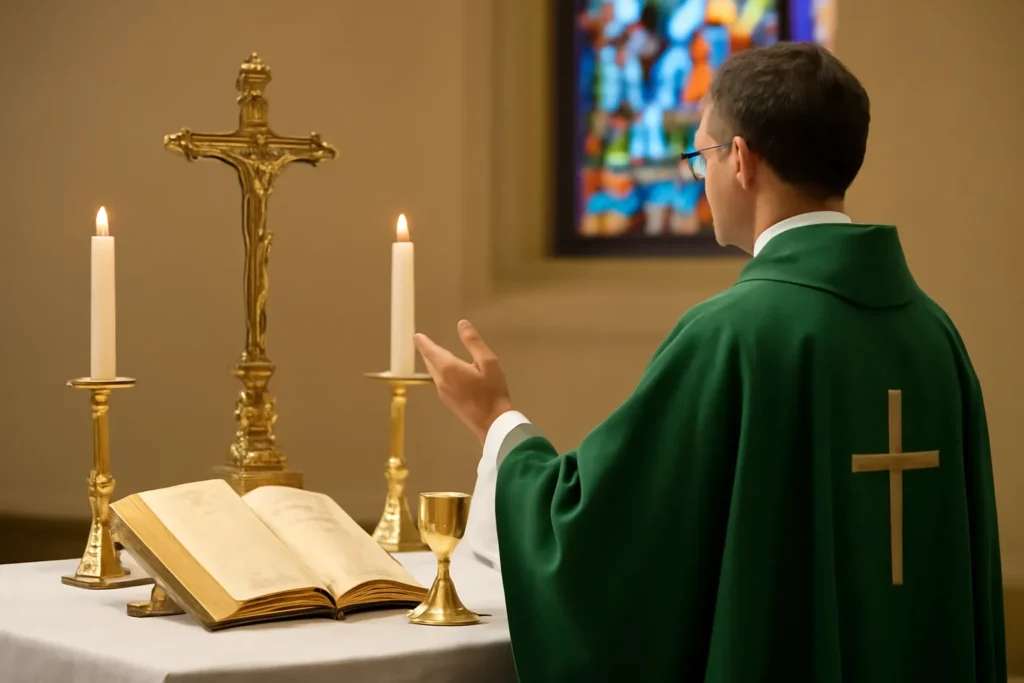
Observing a Holy Day of Obligation is not merely about meeting a listed duty. It is an invitation to deepen one’s relationship with Christ, to participate more fully in the worship of the Church, and to grow in virtue. Here are practical ways to observe these sacred days with intention and reverence:
Plan ahead by looking up the local Mass schedule at your parish or neighboring churches. Some communities offer multiple Masses on Holy Days of Obligation, including early morning or evening options to accommodate work and family life.
Attend Mass with reverence and prepare by prayerfully reading the Scripture readings of the day ahead of time. Bring a heart open to grace and a spirit of gratitude for the gift of the Eucharist.
Receive the Eucharist in a state of grace (the normal requirement for Holy Communion). If you are uncertain about your grace state, consider going to Confession in advance or after Mass if time allows.
Participate in additional devotional practices such as Eucharistic adoration, praying the Rosary, or attending a parish activity tied to the feast. These practices deepen the meaning of the day beyond mere attendance.
Involve family and community by inviting others to join you for Mass, sharing reflections, and perhaps organizing a simple act of charity in honor of the feast (for example, volunteering, donating to a cause, or visiting a sick neighbor).
Respect the day’s solemn character in your personal schedule. Where possible, reconcile work commitments so that the day is not consumed by routine tasks but set aside for worship and spiritual refreshment.
In addition to these practical steps, it’s helpful to understand exceptions and dispensations. The Church recognizes that certain circumstances—such as illness, care for the sick, or significant family duties—may prevent someone from attending Mass on a holy day. In such cases, the local bishop or ordinary can grant a dispensation or an alternative arrangement. The guiding principle is concern for the good of the faithful and the dignity of worship.
What counts as an “obligation” and what doesn’t
Two common misunderstandings deserve clarification:
The obligation is primarily about participating in the Eucharist by attending Mass, rather than performing a particular external ritual. The central act is receiving Christ in the Eucharist with the right disposition, familar prayers, and participation in the liturgy.
Not all feast days are universal obligations in every country. While the Church recognizes orienting feasts, the exact list and enforcement of the obligation can differ by episcopal conference and local pastoral policy.
When a Holy Day falls on a Sunday, the Sunday obligation usually remains, and believers are encouraged to attend Mass that day. In some regions, the Holy Day may be observed on the Sunday closest to the date, to maintain a strong weekly liturgical rhythm. The practical effect is that the faithful can fulfill the primary obligation on the Sunday liturgy, while still recognizing the significance of the feast day itself.
Preparation and spiritual formation around Holy Days
Beyond attendance, Holy Days provide an opportunity for spiritual preparation and formation. Here are several practices to help you prepare your heart and mind:
Read the Gospel or related Scripture readings for the feast beforehand to enter into the narrative with understanding and contemplation.
Learn the Marian or doctrinal themes associated with the feast. For instance, Mary, Mother of God invites reflection on God’s plan in salvation, while Christmas invites meditation on the Incarnation.
Consult sacred art and music related to the feast. Art, liturgical music, and iconography can illuminate mystery and invite prayerful attention.
Engage in acts of charity as a tangible response to grace received on Holy Days. A feast can become a catalyst for generosity toward those in need.
Involve children and catechumens by explaining the feast’s meaning in age-appropriate terms and inviting participation in simple devotions or family prayers.
History: How Holy Days of Obligation developed
The concept of dedicated feast days dates back to the early Church, when communities gathered in solemn liturgy to celebrate the mysteries surrounding Christ, the apostles, and the saints. Over centuries, the Church established a calendar that highlighted the most important mysteries and mysteries celebrated by the entire Church. The practice evolved through ecumenical councils, papal decrees, and episcopal conferences, culminating in a calendar that seeks harmony between universal feasts and local pastoral needs.
Canonical basis for the obligation comes from the Church’s law and liturgical norms. Canon Law, the Code of Canon Law, and liturgical regulations outline when the faithful are obliged to participate in the Eucharist on December 25, January 1, August 15, November 1, December 8, and other feast days depending on the jurisdiction. In practice, the obligation is framed as a duty of the faithful, coupled with pastoral support to facilitate participation, rather than as a punitive measure for non-attendance.
Common questions about Holy Days of Obligation
Q: If a Holy Day falls on a Sunday, must I attend Mass on both days?
A: Generally, the Sunday obligation suffices, but many parishes offer extra liturgies on the Holy Day itself. If you can attend both, it is a great way to honor the feast.
Q: Can I receive Communion on a Holy Day if I attended Mass elsewhere earlier in the day?
A: The important requirement is to be in a state of grace and to have proper disposition for reception. If you are able to receive once, you should be prepared for the Eucharist according to the norms of your diocese.
Q: What if I cannot physically attend Mass due to illness or caregiving?
A: You should seek other spiritual opportunities such as private prayer, the Rosary, or attendance at a Mass broadcast from a distance, and communicate with your pastor about possible dispensation or alternative arrangements.
Q: Are Holy Days of Obligation the same across all rites?
A: No. The Catholic Church includes several rites (Latin, Eastern Catholic Churches, etc.), and while many feasts are shared, some are observed differently in eastern rites or with distinct liturgical calendars.
Practical considerations for pastors and parish life
Pastors play a key role in making Holy Days meaningful beyond mere compliance. Effective pastoral practices include:
Clear communication about which days are obligatory in the local community and what times Mass is offered.
Accessible scheduling with multiple liturgies to accommodate families, workers, and students.
Pastoral care for the vulnerable by offering transportation assistance or home-bound possibilities when feasible.
Formation opportunities such as brief catechesis before or after Mass to deepen understanding of the feast.
Community service projects linked to the feast to translate liturgical observance into concrete love for neighbor.
How Holy Days of Obligation relate to the worship life of Catholics today
For many Catholics, the practice of observing these days is more than a rule; it is a spiritual rhythm that shapes family life and parish life. Holy Days offer:
A moment of grace to pause ordinary obligations and focus on God’s work in salvation history.
Opportunities for teaching and catechesis about central mysteries of the faith, such as the Incarnation, the dignity of Mary, and the communion of saints.
A chance to strengthen community by gathering with others in worship, prayer, and service.
A reminder of the Church’s universal nature and the connection between local parishes and the worldwide body of believers.
Key phrases to know when reading about Holy Days
When exploring resources about Catholic practice, you may encounter terms like liturgical calendar, solemnity, feast, devotion, and dispensation. Here is a quick gloss:
Liturgical calendar: The schedule of feasts and seasons guiding Catholic worship throughout the year.
Solemnity: A high-ranking feast that often carries a stronger liturgical emphasis than a simple feast day.
Feast: A day commemorating a mystery or event in salvation history, which may or may not be obligatory.
Devotion: A spiritual practice or form of prayer associated with a particular feast or saint.
Dispensation: A permission granted by a competent authority to omit or modify the obligation for a grave reason.
Conclusion: Embracing the Catholic Holy Day Obigation
In sum, the Catholic holy day of obligation is a substantial element of the Church’s life, inviting the faithful to a richer experience of worship, prayer, and community. While the exact list of obligatory feasts and the way the obligation is applied may vary by region and era, the underlying purpose remains the same: to deepen reverence for the mysteries of faith, to strengthen solidarity among believers, and to orient daily life toward God. By planning ahead, participating in Mass with a sincere disposition, and accompanying the liturgical celebration with prayer and acts of charity, Catholics can observe these days in a way that is meaningful and transformative. Whether you are a lifelong Catholic or someone exploring the faith, Holy Days of Obligation offer regular opportunities to encounter Christ in Word and Sacrament and to grow in holiness as part of the universal Church.







Leave a Reply