What Is the History of Baptism: Origins and Evolution
What Is the History of Baptism: Origins and Evolution
Baptism has long stood as one of the most contested and celebrated acts in the history of religion. What is the history of baptism? The answer spans millennia, crossing cultures from ancient purification rites to modern expressions in countless Christian communities. This article surveys the journey of baptism from its roots in ritual washings to its varied forms today, highlighting origins, continuities, and turning points that shaped its evolution.
Origins and antecedents: ritual washings, purity, and the seed of baptism
To understand the history of baptism, one must begin with the broader human habit of cleansing and initiation through water. Ancient Near Eastern and Mediterranean cultures practiced forms of purification that used water to symbolize cleansing from impurity, transition from one status to another, or entry into a sacred community. In the Jewish world, the mikveh—a ritual bath used for purification before worship, after ritual impurity, or for entry into certain religious statuses—offers a clear prehistory for Christian baptism. The mikveh was not a single Christian rite but a regularly employed Jewish practice that demonstrated how water rites could function as boundary markers between the common life and the sacred life of the covenant people.
Ritual washing in many ancient cultures served as a symbol of renewal, turning, or cleansing before approaching a holy presence or taking on a new vocation.
The mikveh shows how immersion, rather than sprinkling, could be the primary mode of ritual purity in a religious system with a strong sense of ritual boundary.
In some traditions, water rites were linked to covenant formation, forgiveness, or the formal entrance of a person into a religious group.
When one speaks of the history of baptism in the Christian sense, one must also note the way early Christian writers and communities negotiated continuity with these Jewish and broader Mediterranean water rites. The language of baptism—literally “immersion” in Greek—began to acquire new theological weight as early Christians described a person’s incorporation into the life, death, and resurrection of Jesus Christ. The first communities inherited a symbolic repertoire: water as cleansing from sin, a sign of new life, and a public confession of allegiance to the crucified and risen Lord.
The baptism of John the Baptist: a watershed moment in the history of baptism
John’s call to repentance and a baptism of renewal
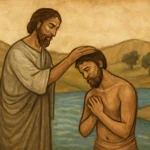
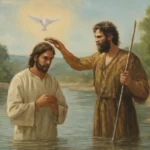
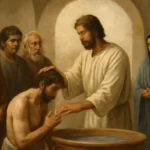
The historical watershed in the history of baptism is often placed at the ministry of John the Baptist. John’s preaching centered on repentance and the ethical demand that people prepare for the coming kingdom of God. His baptism, in the Jordan River, was a powerful symbol of turning away from sin and turning toward a new future. In the New Testament accounts, John’s baptism is described as a baptism of repentance, a ritual intention that prepared individuals for the imminent fulfillment of God’s promises in Jesus.
Baptism as a bridge to Christian meaning
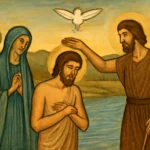
Crucially, John’s baptism became a bridge to a broader Christian understanding. Jesus himself was baptized by John, an event that many scholars see as inaugurating a new interpretive horizon for baptism: it is not only about personal purification but about identifying with the Messiah’s mission and the coming eschatological reality. The act is thus embedded in a story about God’s initiative, human response, and the inauguration of a new covenant community. The early church soon read John’s baptism in light of Jesus’ death and resurrection, turning it into a rite of entry into the life of the church and into union with Christ.
From renewal to initiation: the earliest church and baptism as entry into the Christian community
In the earliest Christian communities, baptism emerged as the primary rite of initiation into the body of Christ. The biblical book of Acts presents a pattern in which new converts hear the gospel, believe, repent, and are then baptized. The sequence is often accompanied by the laying on of hands, the reception of the Holy Spirit, and inclusion into the local church. The precise form of the rite varied among communities, but the thrust remained clear: baptism is the doorway into the Christian life, symbolizing cleansing from sin, dying with Christ, and rising to new life.
In the earliest periods, immersion was common, reflecting the symbolic meaning of death and burial with Christ and resurrection to new life.
Historically, some communities preferred affusion (pouring water over the head) or aspersion (sprinkling) in certain circumstances, including large-scale baptisms or cases of ill health.
The Trinitarian formula that would become standard in the Western church—“in the name of the Father, and of the Son, and of the Holy Spirit”—began to appear as a defining feature in some early texts, though variations existed in different communities.
In addition to the rite itself, early Christians developed a related formation process called the catechumenate. Adults desiring baptism underwent a period of instruction and discernment, usually lasting months or years, before receiving the sacrament. This process underscored a serious commitment to the Christian life and to the church community, thereby shaping baptism as both a personal transformation and a corporate initiation.
Patristic clarifications: the mode, the meaning, and the growth of the baptismal rite
The early centuries of the church, known as the Patristic era, produced substantial theological reflection on baptism. The Church Fathers wrote about the spiritual realities signified by baptism, such as remission of sins, rebirth, and incorporation into Christ and the church. They also discussed practical questions: the mode of baptism (immersion vs. affusion), the timing (infant vs. adult), and the relationship between baptism and faith.
Mode and meaning: immersion, pouring, and the evolving rite
There was not a single, universal approach to baptism in the ancient world. In the East, immersion remained a common method, especially among communities that preserved the practice of the catechumenate and baptism for those who could publicly profess faith. In the West, pouring became more common over time, particularly in contexts where large numbers of infants were baptized or where the climate and logistical realities of church life made full immersion impractical. The substantive meaning—purification from sin, union with Christ in his death and resurrection, and entrance into the church—remained central across these variations.
Prominent church fathers contributed to this conversation. For example, Tertullian in the Latin West argued for the validity and necessity of baptism, while also acknowledging ordinary variances in practice. Augustine, a towering figure in late antiquity, affirmed infant baptism and tied it to the doctrine of original sin, pricing baptism as a necessity for salvation in many contexts. The Orthodox world would later emphasize the fullness of the rite, often preserving a more symbolic and sacramental approach that includes post-baptismal anointing and other liturgical elements.
Infant baptism and the two-track trajectory: believers and infants
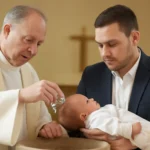
The question of whether baptism should be reserved for those who can consciously profess faith or extended to infants became a central axis of later Christian history. The practice of infant baptism gradually gained widespread acceptance in the Latin-speaking church, supported by theological claims about original sin, the promises made by God to the community, and the church’s responsibility to educate and nurture the baptized child. In many Eastern churches, infant baptism remained part of a longer sequence that includes chrismation (anointing with oil) and first reception of the Eucharist at an early age.
The infant baptism tradition argues that baptism is a means by which God’s grace is communicated to the child, regardless of personal faith at the moment of baptism.
The believer’s baptism tradition, popular among Anabaptists, Baptists, and some Pentecostal groups, emphasizes that baptism should follow a conscious confession of faith by the individual, thus requiring a personal decision and public testimony.
Councils and theologians across centuries weighed these practices, with regional differences persisting into the modern era. The debate continues in some circles even today.
The medieval and early modern church thus reflected a spectrum rather than a single uniform practice. Baptism was a central rite of initiation, but the participants, timing, and mode varied according to theology, culture, and ecclesial authority. This variability laid the groundwork for later reformers to challenge entrenched ideas about who could be baptized and what baptism accomplished.
Medieval practice to Reformation: rites, sacraments, and the changing role of baptism
During the Middle Ages, baptism was integrated into a broader sacramental theology in which the church’s rites were believed to convey grace. The baptismal ceremony was often embedded in a broader liturgical life, including exorcisms, anointing with oil, and the use of the baptismal font as a focal point in church architecture. The baptismal rite itself—whether by immersion, pouring, or sprinkling—was less about personal choice and more about ecclesial tradition and catechetical preparation.
In Western Europe, the practice of pouring water over the head gradually grew more common in many communities, partly for practicality with large infant baptisms and the need to baptize many people who could not be immersed.
Sound theological claims tied baptism to salvation, ecclesial membership, and the forgiveness of sins, reinforcing baptism as a necessary step in the journey of faith.
Alongside baptism, Christian life involved other sacraments like Eucharist and, in the East, chrismation and other rites that emphasized ongoing initiation and growth in grace.
As the theological landscape shifted with the Reformation, new questions about the nature of baptism emerged. Reformers did not uniformly reject baptism; instead they reinterpreted its meaning, role, and mode within different confessional frameworks. The very idea of what baptism signifies—whether as a sacrament that conveys grace ex opere operato (by virtue of the rite itself) or as an ordinance that signifies faith—became a point of division and debate that would shape centuries of Christian practice.
Reformation and the diversification of baptism: believers’ baptism, infant baptism, and the rise of confessional distinctives
The Reformation produced a remarkable diversification in baptismal theology and practice. While Martin Luther retained infant baptism in his system, emphasizing that salvation comes through faith but that baptism is a powerful means of grace, other Reformers took a sharper turn. Ulrich Zwingli and his successors in Zurich treated baptism as a sign of faith, to be administered to those who could profess belief. The radical wing of the Reformation, often called the Anabaptists, argued for believer’s baptism—administering baptism only to those who could articulate a personal faith in Christ. This stance sparked intense conflict and persecution in many parts of Europe, underscoring how baptism had become a symbol of broader disputes about church authority, civil allegiance, and the nature of salvation.
The emergence of Baptists and other groups that emphasized believer’s baptism created a lasting distinctiveness in the landscape of Western Christianity.
In Catholic and Orthodox traditions, baptism continued to be seen as an essential sacrament, frequently administered in infancy and integrated with catechesis and ecclesial life.
Throughout this period, questions about the mode (immersion vs pouring) persisted in various communities, even as the theological core of baptism remained focused on cleansing from sin, incorporation into Christ, and entry into the church.
In Catholicism and Orthodoxy, the sacramental framework persisted: baptism remains one of the sacraments (or in Orthodox terminology, a pivotal rite) through which God communicates divine grace to the believer. Catholic theology also connected baptism to the path of faith formation, church membership, and the reception of subsequent sacraments such as confirmation, the Eucharist, and reconciliation. The reconfigurations of baptism in the Reformation era did not erase its significance; they reframed its meaning within new doctrinal grammars.
Modern times: ecumenism, diversification, and contemporary practice
In the last two hundred years, the meaning and practice of baptism have been clarified, debated, and broadened in many Christian communities. The modern era has seen both continuity with earlier traditions and new experiments in mode, date, and catechetical pathway. The rise of global Christianity, migration, and ecumenical dialogue has helped many communities find common ground while also honoring their distinct identities.
In Catholic and Orthodox churches, baptism continues to be regarded as a sacred sacrament of initiation. The intimate link with catechetical formation—often through the RCIA (Rite of Christian Initiation of Adults) in the Catholic Church—emphasizes maturity and understanding alongside the rite itself.
In many Protestant denominations, baptism remains a contested yet central rite, centered on its meaning as a public confession of faith. Some traditions emphasize infant baptism as a sign of covenant community, while others emphasize believer’s baptism as a profession of faith.
Certain groups practice varied modes—immersion, pouring, or sprinkling—depending on theological emphasis, cultural preferences, and pastoral considerations.
Today, theologians and pastors often speak about baptism in terms of its symbolism, its role in community identity, and its ongoing significance in Christian discipleship. Debates continue about whether baptism effects grace ex opere operato, how baptism intersects with faith, and how to understand baptism in relation to the Holy Spirit’s activity. Yet across these debates, the core motifs persist: cleansing from sin, rebirth, identification with Christ’s death and resurrection, and incorporation into the life of the church.
Symbolism, theology, and the enduring meaning of baptism across cultures
From its ancient origins to modern practice, the baptismal act embodies a network of symbols and theological claims that have proven remarkably durable. Water stands at the center as a living symbol of life and renewal. Dying and rising with Christ is a key image that reappears in the rite, often described in the language of death to sin and new life in Christ. The community’s reception of the baptized person signals entrustment into a shared life—the church as a family united by grace.
Water as symbol of cleansing, renewal, and life.
Dying with Christ and rising to new life as the transformative core of the rite.
Entrance into the body of Christ and the mission to participate in the life of the church and the world.
Different Christian traditions have highlighted various facets of this symbolism in ways that reflect their broader theological commitments. In some traditions, baptism is primarily a conduit of grace and a sacramental sign of union with Christ. In others, it is primarily a public profession of faith and a sign of obedience to Jesus’ command. In still others, baptism is viewed as a covenantal rite that binds the believer to the community of faith and to the ongoing life of discipleship. These diverse emphases illustrate the breadth of the history of baptism while preserving a common thread: the rite is about transformation, belonging, and mission.
Key milestones in the history of baptism: chronology and landmarks
To summarize the long arc of baptism, here are some noteworthy milestones that scholars often highlight as turning points in the history of the practice:
Ancient purification rites and Jewish mikveh as the environment in which baptism emerged as a symbol of renewal and covenant entrance.
The baptism of John as a pivot point that reframed ritual immersion from a mere cleansing to a sign of anticipation for the coming Messiah.
The early Christian period, in which baptism becomes the primary initiation into the church, often accompanied by the Holy Spirit and community laying on of hands.
The patristic era's debates about mode (immersion vs pouring) and timing (infant vs adult), leading to regional variations in practice.
Medieval unity in the broad sacramental view of baptism, coordinated with the rest of the church’s rites and the education of new converts.
The Reformation, which produced enduring diversity: infant baptism continues in some traditions, while believers’ baptism becomes central in others, particularly among Anabaptists and Baptists.
Modern ecumenism and global Christianity, which seek common ground while recognizing legitimate differences in practice and belief about baptism’s meaning and effect.
What is the history of baptism? A panorama of ongoing dialogue
The question “what is the history of baptism?” does not yield a single narrative so much as a living tapestry. Across centuries and continents, the rite has adapted to changing social structures, theological horizons, and ecclesial authorities. Yet the core meanings—cleansing, new life, entry into the people of God, and commission to live as disciples—have endured. The history of baptism invites ongoing reflection about how a ritual can carry both ancient memory and contemporary relevance, how a practice can be both a personal experience and a communal act, and how a symbol of water can continue to speak to different generations in distinct cultural settings.
Cross-cutting themes in the history of baptism
Several themes recur across the long arc of baptismal history, helping to explain both continuity and change:
Grace and agency: baptism is often described as a vehicle of grace. At the same time, it frequently requires human response—faith, repentance, or decision.
Community and identity: baptism marks entry into a community with a shared story, mission, and ethical aims.
Mode and meaning: how water is applied—immersion, pouring, or sprinkling—reflects deeper theological commitments and practical realities.
The role of catechesis: the preparation for baptism, whether via the catechumenate in ancient times or contemporary RCIA and equivalent programs, shapes the meaning of the rite.
Infant vs adult baptism: the debate reveals different assumptions about salvation, covenant, and the nature of faith.
As the Christian world continues to wrestle with questions about baptism, it remains clear that the history of baptism is not merely a catalog of practices. It is a window into how communities understand sin and grace, how they welcome new members, and how they imagine the ongoing formation of lives shaped by the gospel. The evolution of baptism—through Jewish antecedents, the ministry of John, the life of the early church, medieval sacrality, Reformational reconfigurations, and modern ecumenical dialogue—offers a rich case study in how religious rites adapt to time while preserving their core significance.
For readers exploring the many shades of baptism, it can be helpful to consider three enduring questions that recur in discussions about its history: How does baptism relate to faith? What is the proper mode and administration of the rite in different contexts? And how does baptism express the relationship between grace, community, and mission in the life of the church?
In understanding the history of baptism, one sees not only a chronological sequence of changes but also a continuing conversation about what it means to be cleansed, reborn, and sent as witnesses to the faith. Whether practitioners emphasize the sacramental, the covenantal, or the evangelical dimensions, the history of baptism remains a living testament to the dynamic relationship between a ritual and a people, between divine grace and human response, and between ancient memory and contemporary practice.






Leave a Reply