When you read about a denarius, a widow’s two small coins, or thirty pieces of silver, it is natural to wonder what those amounts meant to people living in biblical times. The Bible mentions several coins and monetary units, but they did not all belong to the same currency system or carry the same value.
The most useful way to understand the coins of the Bible is to identify the coin, place it in its historical setting, and then ask what the passage emphasizes. Some coins represented a day’s pay, some were tiny offerings, and others were valuable enough to cover a major obligation. Their purchasing power varied by region and period, so modern dollar conversions can easily mislead.
Keep this distinction in mind: the Bible uses both actual coins and units of weight or accounting. A talent, mina, and shekel may describe money, but not every reference means a single minted coin.
People in biblical lands used several monetary systems at once. Greek coins circulated alongside Persian, Jewish, and Roman issues, while local cities sometimes produced their own bronze money. A coin’s value depended on its metal, weight, political authority, and the market where it was used.
Coins were generally made from gold, silver, or bronze. Silver was especially important for larger payments and taxes. Bronze coins handled everyday purchases, although the names used in the New Testament sometimes reflect Roman denominations, Greek terms, or local equivalents rather than one perfectly standardized system.
Before coins became common, people measured precious metals by weight. This explains why biblical money terms can sound confusing. The shekel, for example, began as a weight standard and later referred to coins associated with Jewish and other monetary systems. The word does not always indicate precisely the same coin in every passage.
Ancient wages also provide useful context. A common laborer’s daily pay is often associated with a denarius in the Roman period. That does not mean every worker everywhere earned exactly one denarius per day, but it helps explain why the coin appears in stories about wages, debt, taxes, and labor.
Money also carried a political message. A ruler’s portrait and title appeared on many coins, making currency a small but constant reminder of imperial power. This background helps explain the question about paying taxes to Caesar in the Gospels: the coin itself bore the emperor’s image and inscription.
Gold coins were used mainly for substantial wealth and major transactions.
Silver coins commonly served for wages, taxes, offerings, and larger purchases.
Bronze coins were more practical for small daily payments.
Weights and accounting units could describe an amount without identifying one specific minted coin.
The Bible’s money references are therefore best read as clues about social status, obligation, sacrifice, and value. A poor worshiper and a wealthy merchant could both give money, yet the economic meaning of their offerings could be entirely different.
Coins named in the Old Testament and Jewish history
The Old Testament often describes money by weight rather than denomination. The shekel is the most familiar example. In passages involving purchases, fines, offerings, or sanctuary contributions, the shekel can indicate a measured quantity of silver rather than one universally defined coin.
Abraham’s purchase of the burial field at Machpelah is described in Genesis 23 as a payment of four hundred shekels of silver. The passage emphasizes a substantial, publicly recognized purchase. It does not require us to picture four hundred identical coins of a later type.
The half-shekel appears in Exodus 30 as a contribution connected with the worshiping community. Later Jewish practice associated a half-shekel temple contribution with adult Jewish men. In the New Testament, the temple-tax question in Matthew 17 involves a payment that Jesus and Peter address through a coin called a stater.
During the Persian period, the daric and related Persian money may help explain references to gold or silver payments in the broader historical world of the Bible. The Old Testament itself does not always name a coin in a way that allows modern readers to identify one exact specimen with certainty.
After the return from exile and during the Hellenistic period, Greek monetary language became increasingly familiar in the eastern Mediterranean. Drachmas and related silver denominations circulated widely, while local authorities and cities issued their own coins. The monetary landscape was diverse rather than uniform.
Jewish rulers also minted coins, especially during periods of local independence. Coins from the Hasmonean and later Herodian eras often used modest designs and inscriptions compared with imperial coinage. Some Jewish coins avoided human portraits because of religious concerns, although practice varied across time and political circumstances.
The Tyrian shekel is particularly relevant to New Testament temple worship. Tyrian silver was widely valued for its reliable purity and was associated with the payment of the temple tax. This helps explain why money changers operated in the temple courts: pilgrims needed acceptable currency for offerings and payments.
When reading Old Testament money references, ask three questions:
Is the term a weight? A shekel or talent may describe the amount of precious metal.
Does the passage identify a political period? Persian, Greek, and later Roman settings used different money.
Is the focus financial or symbolic? A payment may reveal justice, wealth, devotion, ransom, or social standing.
New Testament coins and what they were worth
The New Testament names several coins more directly. Most appear in the Gospels, where money is used in ordinary stories about taxes, wages, debt, household savings, and religious giving. The precise modern value remains uncertain, but the relative scale is often clear.
The denarius represented a significant daily wage
The denarius was a Roman silver coin and one of the best-known coins in the New Testament. In the parable of the workers in Matthew 20, the agreed wage is one denarius for a day’s labor. The coin therefore represents meaningful household income, not a trivial amount.
Jesus’ question about the tribute coin in Matthew 22 refers to a denarius. The issue is not merely the coin’s spending power. Its image and inscription bring Roman political authority into the discussion, allowing Jesus to distinguish civic obligation from the claims owed to God.
The Good Samaritan gives two denarii to the innkeeper in Luke 10. That payment suggests an amount sufficient to begin caring for the injured traveler, with the Samaritan promising to cover additional expenses. The story uses money to portray practical mercy rather than to provide a complete medical bill.
In Revelation 6, a denarius is connected with the price of staple foods during a time of severe scarcity. The passage uses familiar economic language to portray hardship. Readers should not treat the figure as a fixed price list for every famine, but the coin makes the crisis concrete.
The drachma appears in a household story
The drachma was a Greek silver coin that was broadly comparable in value to the denarius in some periods. Luke 15 tells of a woman who loses one drachma, searches carefully, and celebrates after finding it. The point is not that the coin was the largest possible fortune, but that losing one mattered deeply to her.
The parable reflects the value of a small household reserve. A single coin could represent a meaningful portion of what a poor family possessed. The woman’s careful search shows that small amounts can carry real economic weight, especially for people living close to the edge.
The stater covered the temple-tax payment
Matthew 17 describes a stater, the coin found in the fish’s mouth, as sufficient for the temple tax owed by Jesus and Peter. The stater was commonly understood as a silver coin worth four drachmas, although the precise terminology could vary by context.
The passage also raises a theological question about freedom, obligation, and avoiding unnecessary offense. The coin functions within that conversation as a practical payment, while the narrative’s main emphasis concerns Jesus’ identity and relationship to the temple.
Small bronze coins show the scale of ordinary giving
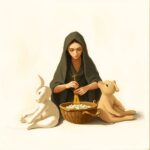
Mark 12 and Luke 21 describe a poor widow placing two lepta into the temple treasury. A lepton was a very small coin, usually associated with the lowest-value bronze money in circulation. The plural form is sometimes represented in English as “mites.”
Jesus says the widow has given more than the wealthy contributors in a moral and spiritual sense, because she gave from her poverty rather than from surplus. The passage does not claim that two tiny coins had greater purchasing power than large gifts. It evaluates sacrifice and proportion, not the face value of the offering.
Luke 12 mentions a quadrans, another small Roman coin, in a saying about settling with an adversary. The quadrans was a low-value denomination, commonly associated with a fraction of a denarius. The image communicates a relatively minor debt, though even a small obligation could become serious if left unresolved.
Matthew 10 refers to an assarion, translated in some Bibles as a small coin or penny. Two sparrows are sold for a small amount, and the passage uses that inexpensive purchase to emphasize God’s awareness of creatures and people who may seem insignificant to others.
Do not convert every biblical coin directly into modern dollars. A better comparison considers wages, food prices, taxes, and household budgets in the ancient setting.
Thirty pieces of silver, talents, and other large amounts
Thirty pieces of silver are associated with Judas’s betrayal in Matthew 26 and 27. The Gospel describes the payment as thirty silver pieces, but it does not settle every question about the exact denomination. They may have been silver shekels or another recognized silver currency, and the total may echo the compensation for a slave in Exodus 21.
The amount matters symbolically because it portrays Jesus as valued at a fixed payment that is neither presented as royal wealth nor as an enormous fortune. Matthew also connects the money with the prophetic tradition associated with Zechariah, though the quotation and its interpretation involve complex textual and theological questions.
The talent appears in several biblical passages, including the parable in Matthew 25 and the servant’s enormous debt in Matthew 18. A talent was fundamentally a large unit of weight, often used for precious metals. It was not simply a normal pocket coin.
Because a talent represented a very large amount, the servant’s debt in Matthew 18 is intentionally overwhelming. The story uses an unpayable obligation to communicate the scale of forgiveness. Reducing the talent to a neat modern currency figure can weaken the force of the comparison.
The mina is another substantial monetary unit. In Luke 19, servants receive minas and are evaluated according to how they use what has been entrusted to them. Like the talent, the mina is better understood as a significant accounting amount than as a tiny coin carried for daily shopping.
Old Testament passages also mention gold and silver by weight. A talent of gold, for example, describes a huge quantity of valuable metal. Such references can communicate royal wealth, tribute, military resources, or the scale of temple furnishings and offerings.
Large monetary amounts often serve one of three purposes in biblical storytelling:
They show the reach of power: rulers, armies, temples, and wealthy households could control vast resources.
They expose an impossible debt: an enormous amount can represent guilt or obligation beyond ordinary repayment.
They test stewardship: entrusted money reveals whether a person acts faithfully, wisely, or selfishly.
The language of silver pieces and talents should therefore be read with both economic and literary awareness. A passage may use a real monetary unit while also choosing that unit because it makes a theological point about worth, debt, trust, or judgment.
What biblical coin stories teach about wealth and worship
Coins in Scripture are rarely included only to satisfy historical curiosity. They help readers see how money affects relationships. A coin can represent a wage owed, a tax demanded, a debt forgiven, a gift measured, or a person’s willingness to act with mercy.
The widow’s offering teaches that generosity cannot be measured only by total amount. Wealthy donors may give large sums without hardship, while a poor person may give very little in absolute terms but surrender a far greater share of available resources. The story directs attention to sacrifice and trust.
The denarius passages show that money can expose competing loyalties. Taxes, wages, and imperial images belong to ordinary public life, but they do not exhaust a person’s duties. The distinction between civic payment and devotion to God remains central to the discussion.
The lost drachma shows that searching for a small amount can be reasonable when resources are limited. The story also uses a household coin to illustrate joy over recovery. A reader who assumes that one drachma was insignificant may miss the economic vulnerability behind the woman’s careful search.
The temple-tax story shows that religious practice also required practical systems. Pilgrims needed acceptable money, and money changers helped exchange foreign or unsuitable coins. The existence of this marketplace does not automatically make every financial transaction corrupt; the Gospel accounts criticize exploitation and misuse of sacred space.
Money can also reveal the difference between legal obligation and moral responsibility. A debt may be technically enforceable while mercy calls for patience. A gift may satisfy a public expectation while still reveal little personal sacrifice. Biblical money stories repeatedly ask what a transaction says about the heart.
For personal study, read the surrounding passage rather than isolating the coin name. Consider:
Who owns the money? Is it a laborer, widow, ruler, disciple, merchant, or religious official?
What does the payment require? Is someone paying a tax, settling a debt, giving an offering, or showing mercy?
What contrast does the story create? Large and small gifts, rich and poor people, debt and forgiveness, or public wealth and private devotion?
What does the amount reveal? The coin may clarify urgency, sacrifice, dependence, injustice, or generosity.
That approach keeps historical details in their proper place. Knowing that a lepton was tiny or that a denarius represented a substantial wage can sharpen the reading, but the central message usually concerns faithfulness, compassion, justice, and the use of power.
How to identify biblical coins in museums and collections
If you see a coin labeled with a biblical name, check the identification carefully. Ancient coin names are sometimes applied by modern scholars based on weight, metal, written sources, and archaeological context. A museum label may identify a likely denomination without proving that every similar coin had exactly the same value in every region.
Look first at the metal and approximate weight. A silver coin is more likely to belong to a larger denomination than a small bronze coin, but metal alone does not establish its biblical name. Size, inscription, ruler, mint, and date all help narrow the identification.
Next, examine the historical setting. A coin from the time of Herod, a Roman imperial denarius, a Greek city coin, and a Persian-period silver piece belong to different systems. The fact that all are ancient does not make them interchangeable.
Portraits and inscriptions can identify the issuing authority. Roman coins often show an emperor or member of the imperial family, while Jewish coins may carry Hebrew or Aramaic lettering and symbols connected with local rule. Wear, corrosion, and incomplete inscriptions can make identification uncertain.
Collectors should also be alert to modern reproductions. A convincing-looking coin may be a replica, a later imitation, or a modern forgery. Provenance, specialist authentication, and reputable sellers matter more than a label claiming that a coin was found in a particular biblical location.
For study purposes, photographs and museum databases can be useful, but no single coin should be treated as a perfect illustration of every biblical reference. Ancient currency changed across centuries, and the same word could be used broadly for related coins or monetary values.
The most responsible reading combines three kinds of evidence: the biblical passage, the historical period, and the physical evidence from coins and archaeology. Used together, they make familiar stories more vivid without forcing uncertain modern calculations onto ancient money.
Frequently asked questions
What was the most common coin mentioned in the New Testament?
The denarius is one of the most frequently discussed New Testament coins. It was a Roman silver coin used in stories about wages, taxes, and payments. Its value is often compared with a laborer’s daily wage, although actual pay varied by occupation, place, and circumstances. The Gospels also mention smaller coins such as lepta, quadrans, and assaria.
Were the widow’s mites the same as modern pennies?
No. “Mite” is an English translation used for the very small coins called lepta. They were low-value bronze coins in the ancient setting, not modern pennies. The term helps readers imagine a tiny amount, but the exact coin’s weight and purchasing power depended on the period and currency system. The story’s main emphasis is the widow’s proportionate sacrifice.
How much would one denarius be worth today?
There is no reliable single dollar conversion. A denarius is often related to a day’s wage, so comparing it with a modern worker’s daily earnings is more informative than comparing the silver content alone. Ancient prices, living costs, labor conditions, and social structures differed greatly, making a direct exchange-rate calculation misleading.
Were the thirty pieces of silver paid to Judas thirty coins?
Matthew describes thirty pieces of silver, but the passage does not identify the denomination with complete precision. They may have been silver shekels or another recognized silver currency. The amount also carries scriptural and symbolic associations, so its significance is not limited to the coins’ metal value or a modern estimate of their purchasing power.








Leave a Reply