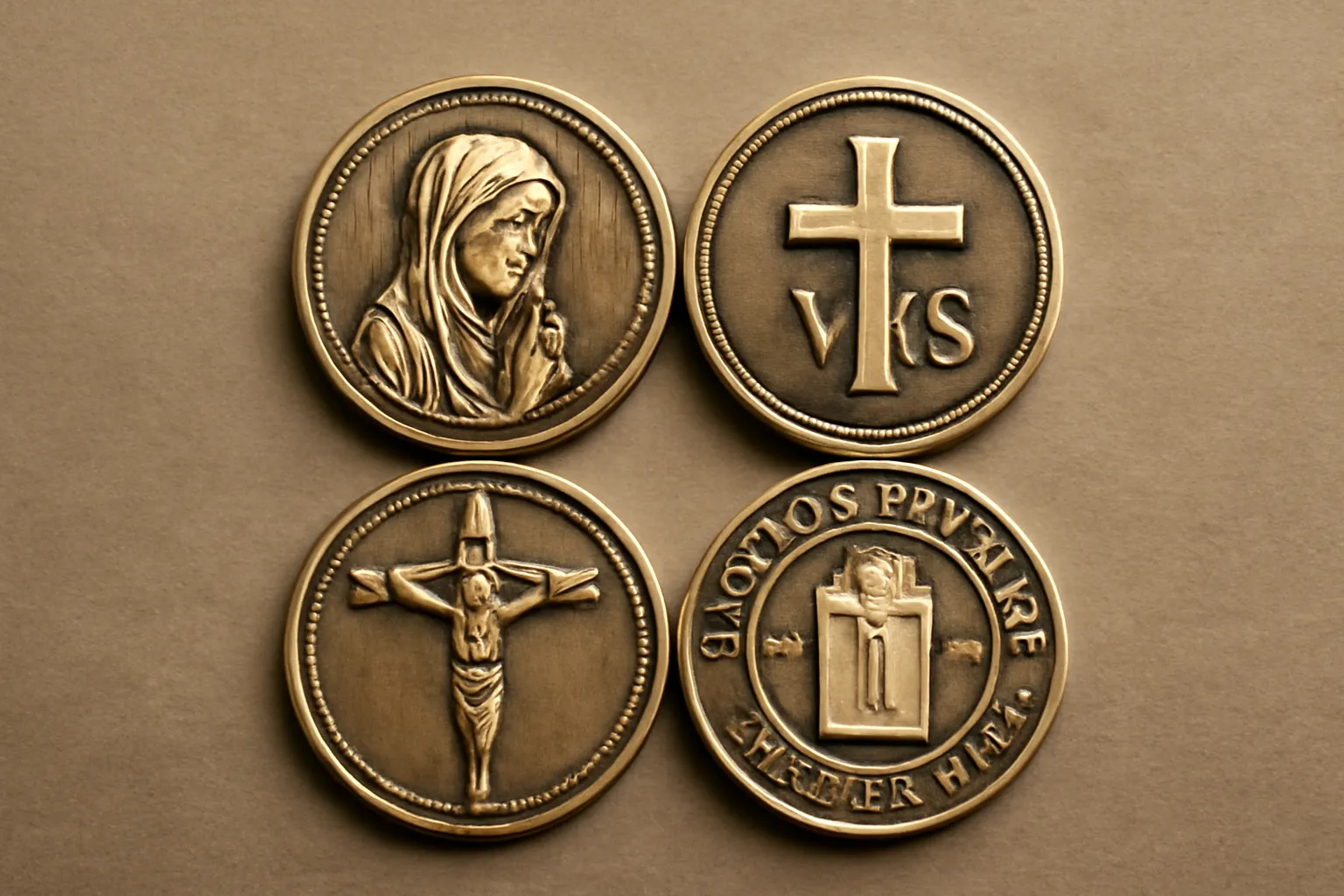
Catholic challenge coins are compact, durable tokens that blend secular commemorative practices with sacred intention. While the broader world of challenge coins includes military, civic, and corporate groups, the Catholic variant often emphasizes spiritual symbolism, parish pride, and a sense of belonging within a faith community. This article explores the history, meaning, and collecting tips for Catholic challenge coins, as well as how these small objects have become meaningful keepsakes and teaching tools in churches, schools, and religious orders around the world.
History: From Military Traditions to Sacred Tokens
The modern concept of a challenge coin has roots in the military tradition, where small metal coins bearing unit insignia were used to foster camaraderie and to verify membership or mission completion. In the Catholic sphere, coin-like tokens were repurposed and reinterpreted to serve faith-centered communities. The shift from a strictly secular or military object to a Catholic symbolic token occurred gradually, as parishes, youth organizations, and Catholic fraternal orders saw the coin’s potential to:
recognize service and leadership within parish programs
document milestones such as Confirmation, ordination anniversaries, or retreat completions
foster catechetical identity among students, catechists, and volunteers
evangelization tools—conversations starter, gift from a mentor, or a memento from a pilgrimage
Over the decades, Catholic organizations—ranging from the Knights of Columbus and other fraternal societies to parish-based youth ministry programs—began commissioning coins with religious imagery, saints’ names, and mottos. These pieces were often distributed at ceremonies, tucked into Bibles or prayer books, or presented after service projects. Unlike some other traditions where coins function primarily as proof of membership, Catholic challenge coins frequently carry explicit theological symbolism and devotional images designed to inspire prayer and reflection.
Today, Catholic challenge coins exist in several broad categories, each with its own purpose and audience. Some coins commemorate a specific liturgical season or a special jubilee; others honor parish staff, volunteer groups, Catholic school teachers, or retreat teams. Collectors may find coins tied to particular spiritual themes—for example, mercy, vocation, or Marian devotion—paired with a year or an event date for historical context.
Meaning and Symbolism: What the Coins Convey
At the heart of every Catholic challenge coin is a deliberate message. The imagery and epigraphy (the words inscribed) work together to express a devotional truth, a mission statement, or a shared experience. The symbolism on these coins often draws from Catholic iconography and liturgical life, translating centuries of faith into a compact, tangible form that can be handled, shared, and passed on.
Key areas of meaning include:
Faith and devotion—images of the Eucharist, the Cross, the Sacred Heart, or the Immaculate Conception remind the wearer of core beliefs and devotional priorities.
Saintly patronage—coins may feature a particular saint who inspires a parish, school, or organization, along with a brief motto or prayer.
Holy reconciliation—some designs highlight mercy, confession, and the forgiveness offered in Christ, aligning with the Church’s mercy-centered year or theme months.
Mission and service—coats of arms or heraldic symbols associated with a parish or diocese emphasize the aim of service, evangelization, and charitable works.
Unity and fellowship—the coin can symbolize a shared journey, a retreat group, or a family-like parish community.
Because Catholic coins often blend theology with art, their design language invites contemplation. The priests, lay ministers, and youth ministers who design and distribute these coins choose motifs with care, seeking to foster a tactile reminder of faith that can be carried in a pocket or displayed at home or in the classroom.
Design Elements and Common Motifs
Designs across Catholic challenge coins vary widely, but certain motifs recur because they carry immediate religious recognition and devotional meaning. Here are common design elements and the spiritual associations they carry:
Crosses and cruciform imagery, signifying the central event of the Christian faith.
Host and chalice symbols to emphasize the Eucharist and the mystery of the Real Presence.
Marian symbols such as the Immaculate Heart, the Rosary, or depictions of Our Lady under various titles (e.g., Our Lady of Guadalupe, Our Lady of the Sacred Heart).
Saints—often named or depicted in heraldic form or softly rendered portraits to reflect a patronage or mission.
Dove, flame, and light motifs representing the Holy Spirit and enlightenment in faith formation contexts.
Angels and sacred art motifs that convey guardianship, guidance, and protection.
Scriptural verses—short prayers or biblical lines chosen to fit the coin’s mission or event.
Patronage and diocesan emblems—for example, a coin issued for a diocesan jubilee or a parish centennial may incorporate the diocesan coat of arms.
Color and enamel—some coins use colored enamel to highlight sacred images (e.g., blue for Mary, red for the Holy Spirit or blood of Christ).
When evaluating a Catholic coin, collectors often look for a balanced composition where the symbolism and inscriptions complement the artwork. A well-designed coin communicates its purpose clearly and can serve as a teaching aid or an invitation to prayer long after the event it commemorates.
How Catholic Challenge Coins Are Used in Practice
In Catholic communities, coins serve several practical and spiritual roles. They may be given to mark a significant milestone, to honor service, or as a reminder of a particular virtue or parish initiative. Typical use-cases include:
Milestone recognition—for teachers, catechists, youth leaders, or volunteers who have completed a program, reached a service anniversary, or completed a mission trip.
Event mementos—as keepsakes from retreats, pilgrimages, mission days, or diocesan celebrations.
Ritual and ceremony tokens—presented during special masses, ordinations, first sacraments, or solemn processions.
catechetical tools—used in classrooms or small groups to prompt discussion about faith, virtue, or a Saints’ life example.
Symbols of unity—shared coins can create a sense of belonging among parishioners, students, and volunteers who work toward common goals.
For many Catholics, the act of receiving or exchanging a coin is a meaningful ritual. It can be a moment to reflect on the day’s work, to thank an elder or mentor, or to recommit oneself to a particular mission, such as service to the poor, prayer for vocations, or evangelization efforts.
Materials, Production, and Quality
Catholic challenge coins are typically made from durable metals such as brass, zinc alloy, or pewter, and may be finished with antique patinas or color enamel. The size often ranges from about 1.5 inches to 2 inches in diameter, with a thickness that makes the coin substantive in the hand but not unwieldy. Common finishes include:
Antique brass or bronze, which gives a weathered, venerable look suitable for solemn occasions.
Shiny brass or silver-tone finishes that emphasize brightness for festive events.
Enamel infill to highlight key symbols, with colored sections indicating particular devotions or diocesan colors.
Dual-tone or bi-metal designs to differentiate foreground from background imagery.
Some coins are minted in limited runs for a single event or year, while others become part of ongoing series that chaplains and organizations reuse year after year. The rarity of a coin—whether it was a one-time release, a small run, or a widely circulated issue—greatly influences its appeal to collectors. In Catholic communities, a coin associated with a well-known apostolate, a beloved priest, or a major pilgrimage can have intense local or regional demand even if it is not widely known beyond that circle.
For many people, collecting Catholic challenge coins is as much about faith, history, and community as about the coins themselves. If you are considering starting or expanding a collection, the following guidance can help you build a thoughtful, meaningful, and well-documented set.
Is There a Marketplace? Where to Find Catholic Challenge Coins
Church bazaars, auctions, and diocesan events often feature official coins produced for specific ministries or milestones.
You can find coins through parish fundraising shops, Catholic schools, and retreat centers.
Online marketplaces sometimes list church coins, diocesan sets, and heritage items from religious orders, though you should exercise caution about attribution and provenance.
Collector groups and Catholic fraternal organizations may host exchanges or sales where coins are traded or sold.
Officially issued coins from ongoing programs—such as diocesan anniversaries or national catechetical conferences—are typically documented on organization websites or parish bulletins.
When purchasing, consider asking about authenticity and editions. A coin with a clearly stated year, event, and issuing organization is generally more valuable to collectors than a generic token with unclear origins.
Evaluating Quality: Condition, Mintage, and Craft
Condition—Coins with limited handling and no scratches or patina loss are generally more desirable to collectors. If you are building a display set, invest in a protective case or display board.
Minting quality—look for crisp engravings, clean edges, and consistent enamel color. Poorly struck coins or enamel chips can significantly reduce value and appeal.
Mintage—coins produced in smaller quantities or as part of a special series tend to be more collectible. Always note the edition size if it is stated.
Provenance—coins tied to a well-documented event, pilgrimage, or parish history are often more meaningful and may command higher interest among serious collectors.
Rarity, Sets, and Valuation
Rarity in Catholic challenge coins often hinges on the combination of year, event, and edition. A coin produced for a single parish anniversary may be rare within a local community but common in a nearby diocese; a national conference coin might be widely collected across the country. When building a collection, consider
Constructing thematic sets (e.g., Marian coins, Eucharist-focused coins, or Saint-themed coins).
Tracking year-by-year series to observe how the imagery and symbolism evolved over time.
Balancing monetary value with spiritual value—some coins have modest market prices but significant personal or community meaning.
Pricing can vary widely. Some coins may be inexpensive keepsakes sold for a few dollars, while rare, historically significant tokens may carry higher price tags among regional collectors. Regardless of price, the intrinsic value of these coins often lies in the sense of connection they foster within the faith community.
Preservation and Display
Store coins in soft, padded containers to prevent scratches and tarnish.
Avoid acidic or abrasive cleaners; use a soft, dry cloth to wipe away dust and fingerprints.
For display, consider shadow boxes or dedicated coin cases that allow you to arrange future additions by theme or year.
Keep documentation—photos, event details, and notes about who commissioned the coin or why it was issued—to maintain a robust narrative for future generations.
Proper care helps preserve not only the physical coin but also the memory of the event or person it commemorates. A well-maintained collection becomes a living archive of local faith life and communal memory.
Authentication and Counterfeits
As with any collectible, there is a risk of counterfeit or misattribution. When authenticity matters, consider the following:
Compare with official documentation from the issuing organization or parish bulletin.
Check the coin’s metal composition and weight if you have access to a precise scale and knowledge of the intended manufacturing process.
Ask for photographs of the edge and back inscriptions; some fakes do not reproduce inscriptions or die details accurately.
Seek guidance from established Catholic coin collectors or local parishes who have produced or distributed the coins you’re evaluating.
While counterfeits exist in many collectible contexts, a thoughtful approach—tied to provenance, event history, and design details—will help you avoid most misattributions.
Ethical Considerations and Community Respect
Catholic challenge coins carry spiritual significance for many people. When collecting or exchanging them, consider:
Respect for sacred imagery—treat coins with reverence, especially those featuring the Eucharist, Marian titles, or names of saints.
Consent and ownership—respect parish policies about distributing or removing coins from church property or events.
Honoring donors and organizers—acknowledge the contributions of those who commissioned coins and those who received them.
Transparency—document coin origins and intended use, particularly when sharing online or in catalogs.
Variants and Related Tokens: Broader Semantic Breadth
In addition to traditional Catholic challenge coins, collectors may encounter related tokens and tokens from related Catholic-inspired traditions. Some variations to be aware of include:
Parish tokens—simpler coins issued for parish anniversaries, fundraiser events, or catechetical programs, often with a local emblem or parish name.
School commemoratives—coins minted for Catholic schools during accreditation visits, graduation years, or annual fund drives, frequently featuring school crests or mascots.
Retreat and pilgrimage mementos—tokens given to participants after retreats or pilgrimages, sometimes with a map motif or shrine imagery.
Fraternal organization coins—Catholic fraternal groups may issue coins for leadership milestones, service campaigns, or national meetings, blending secular and sacred symbolism.
Ecclesial event medals—coins or medals created for major liturgical events, such as jubilees, diocesan synods, or consecration ceremonies, which may be issued in limited numbers.
These related tokens share the same spirit of commemoration and faith-sharing, even though their distribution networks and design languages may differ slightly from parish to parish or organization to organization.
Resources for Further Exploration
If you want to deepen your understanding or begin your own Catholic challenge coin collection, you can explore several resources and approaches, including:
Church and diocesan archives to discover coins tied to specific events or anniversaries.
Parish bulletins and newsletters that announce new coin releases or commemorative campaigns.
Local Catholic schools and youth ministries that occasionally publish collectable tokens tied to faith formation programs.
Catholic museum catalogs and religious art shops that may carry representative examples of ecclesial tokens and their typologies.
Online Catholic collect-communities and forums where enthusiasts share images, stories, and authentication tips.
In addition to physical coins, many Catholic communities maintain digital records or photo galleries documenting the design evolution of their tokens, which can be a valuable reference for historians, designers, and collectors alike.
Conclusion: The Spirit of the Coin
Catholic challenge coins are more than metal objects; they are tangible reminders of faith, service, and community. They encapsulate moments of grace—whether a retreat finished, a catechetical milestone reached, or a pilgrimage completed—and offer a way to carry that grace beyond the moment of ceremony. For the collector, they provide a window into the devotional life of a parish or diocese; for the practitioner, they can serve as a daily prompt to pray, act with charity, and witness to the Gospel. When approached with reverence, curiosity, and care, Catholic challenge coins help preserve the memory of faith-filled moments and inspire future generations to live out their beliefs with integrity and generosity.
Whether you are new to this kind of token or you already have a budding collection, remember that the value of Catholic challenge coins often lies not in monetary worth but in the shared stories and spiritual connections they foster. They invite us to pause, reflect, and renew our commitment to the Gospel in everyday life—and to pass that inspiration along to others as a blessing that endures beyond the coin itself.

 Por Laura Jara