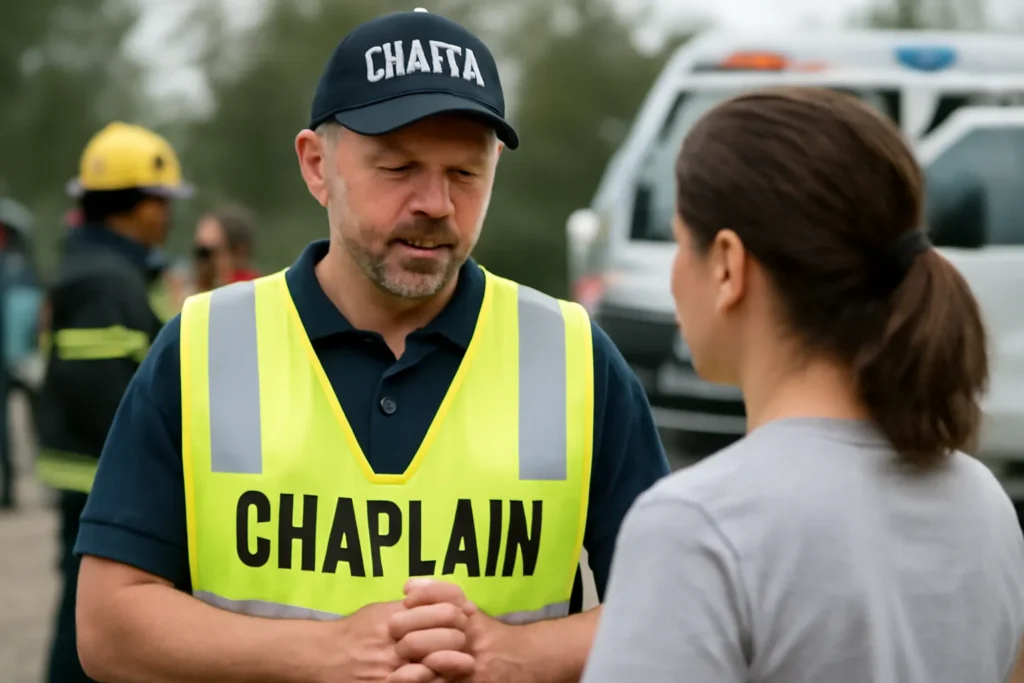
The role of a crisis response chaplain sits at the intersection of spiritual care, emotional support, and practical assistance in the most challenging moments of a disaster. This articulation of crisis response chaplain training expands beyond ceremonial rituals and into structured, evidence-informed methods that help people cope with loss, fear, and upheaval. Effective emergency chaplain education prepares clergy, spiritual leaders, and lay chaplains to work alongside emergency responders, healthcare professionals, social services, and community organizations. The result is not only compassionate presence but also practical, safety-conscious intervention that respects diverse beliefs while upholding professional ethics.
In this article, we explore the core components, best practices, and real-world applications of disaster response chaplain training, using variations of the phrase to reflect the breadth of the field. Readers will gain a detailed map of essential skills, training methodologies, and ongoing development paths that empower chaplains to act with competence, compassion, and cultural humility in crisis environments.
The scope and purpose of crisis response chaplain training
At its heart, crisis response chaplain preparation aims to equip spiritual caregivers with the tools to:
Provide immediate emotional and spiritual support to survivors, families, victims, and responders in the wake of a disaster.
Assess needs and triage spiritual distress in ways that respect individual beliefs and experience.
Coordinate with incident command and other responders to align care with safety, logistics, and public health guidelines.
Balance presence with boundaries to sustain effectiveness without overstepping professional roles.
Respect cultural and religious diversity by integrating appropriate rituals, blessings, or reflective practices when desired by individuals or communities.
Model ethical conduct under pressure, including confidentiality, informed consent, and safeguarding of vulnerable populations.
Promote resilience and post-crisis recovery through ongoing support, debriefing, and referral to longer-term care when needed.
Effective training recognizes that crisis contexts vary widely—from natural disasters to mass casualty incidents, pandemics to large-scale evacuations. The subject matter rotates around both clinical-like listening skills and logistical awareness, resulting in a well-rounded practitioner capable of adapting to evolving scenes while maintaining the integrity of spiritual care.
Successful emergency chaplain education emphasizes a core set of competencies that consistently inform practice across settings. Below are the major domains and the kinds of abilities they encompass.
Active listening and compassionate presence—the capacity to be fully present, read nonverbal cues, and provide a nonjudgmental space for sharing grief and fear.
Spiritual care and ritual flexibility—the ability to offer comfort through prayer, blessing, scripture, or secular mindfulness as requested, while honoring diverse worldviews.
Psychological first aid (PFA) and emotional support—skillful listening, grounding, grounding techniques, and stabilization strategies to reduce acute distress.
Disaster risk awareness and safety consciousness—recognition of hazards, adherence to safety protocols, and the ability to function within incident command systems.
Ethical decision-making and professional boundaries—clear understanding of confidentiality limits, consent, and the line between spiritual care and mental health treatment.
Interagency collaboration and communication—effective liaison with police, fire, EMS, public health, social services, and faith-based partners.
Cultural humility and belief diversity—respect for different faith traditions, agnosticism, atheism, and secular or humanistic outlooks.
Grief, loss, and trauma-informed care—systems for acknowledging multiple types of loss and supporting long-term healing trajectories.
Ethical storytelling and documentation—appropriate, respectful reporting of observations for care planning and coordination while protecting privacy.
Self-awareness and self-regulation—recognition of personal triggers and the use of coping strategies to maintain effectiveness over long shifts or after difficult events.
To cultivate these competencies, trauma-informed chaplaincy training often integrates coursework in psychology, ethics, pastoral care, crisis communication, and emergency management. The result is a holistically prepared professional who can adapt to the realities of crisis response without losing sight of the spiritual and existential questions that arise in disaster contexts.
Delivering care in disaster zones requires a blend of psychological support and spiritual sensibility. The following techniques are commonly emphasized in crisis intervention training for chaplains and similar curricula.
Active listening and presence under pressure
Practice open-ended questions and reflective summaries to validate experiences without forcing interpretations.
Maintain safe physical proximity and a calm, steady presence that translates as reliable ground in chaotic environments.
Use nonverbal techniques—eye contact, nodding, and appropriate silence—to convey empathy without over-dramatizing the situation.
Psychological first aid and stabilization
Provide brief stabilization by normalizing reactions (crying, anger, withdrawal) and offering information about what to expect in the hours and days ahead.
Help survivors regain sense of safety by identifying immediate needs (shelter, food, medical care) and connecting them with relevant services.
Offer stress management techniques such as grounding exercises or paced breathing to reduce acute anxiety.
Spiritual care and inclusive ritual practice
Invite individuals to share meaningful prayers, scriptures, or meditative practices if they wish, while remaining respectful of those who do not desire religious interventions.
Provide ritual flexibility—short blessings, secular rituals, or quiet reflection spaces—as appropriate to diverse beliefs.
Be attentive to spiritual distress as a distinct dimension of post-disaster suffering, recognizing that questions of meaning and purpose often accompany trauma.
Effective crisis response hinges on the ability to work as part of a multidisciplinary team. Disaster spiritual care training places a premium on communication, coordination, and cultural competence to ensure care is both effective and harmonious with larger response efforts.
Interdisciplinary collaboration
Engage with emergency management personnel to align spiritual care with incident objectives, safety protocols, and resource allocation.
Coordinate with social workers, mental health professionals, chaplains from other faiths, and community volunteers to create a continuum of care.
Share situational updates responsibly, respecting confidentiality and the chain of command as established by the incident command system (ICS).
Information management and ethical reporting
Document observations in a concise, non-identifying manner for care planning and after-action review, avoiding speculation or sensational detail.
Ensure that information flow supports the needs of survivors and responders without compromising safety or privacy.
Know when to escalate concerns—such as signs of imminent danger, severe mental health crisis, or serious domestic violence—and follow appropriate protocols.
Cultural competence and sensitivity
Approach each person with curiosity and humility, recognizing the wide spectrum of beliefs, practices, and trauma responses.
Respect dietary restrictions, modesty norms, and sacred spaces while facilitating support in temporary shelters or command posts.
Offer language-accessible support, including interpreter services, to ensure that language barriers do not impede care.
While theory lays the groundwork, practical crisis chaplain training is built on immersive experiences that simulate the pressures of real-world response. The most effective approaches combine scenario-based learning, supervised field experiences, and reflective practice.
Use realistic disaster scenarios that incorporate mass casualty events, shelter operations, and community displacement to test decision-making and communication under stress.
Integrate shifts in incident command structure, changing weather conditions, or evolving risk to mirror the dynamic nature of disasters.
Assess not only the spiritual care provided but also how well the chaplain collaborates with other responders and adheres to safety protocols.
Tabletop exercises and debriefing
Conduct structured discussions that explore roles, responsibilities, and information-sharing during a crisis without the chaos of an active scene.
Lead post-exercise debriefings to identify strengths, gaps, and opportunities for improvement in communication, trauma-informed care, and ethical practice.
Use after-action reviews to translate insights into updated protocols, checklists, and training plans for future drills.
Live drills and field internships
Participate in live drills within shelters, hospitals, or community centers to experience real-world constraints and the rhythms of response work.
Work under the supervision of experienced mentors who can provide feedback on presence, boundary management, and coordination with other agencies.
Engage in reflective practice through journaling, supervision, or peer groups to process emotional impact and sustain long-term resilience.
Employ competency-based assessments that measure communication skills, ethical judgment, cultural responsiveness, and crisis management abilities.
Offer continuing education opportunities, including workshops on trauma-informed care, grief counseling, and spiritual care for diverse populations.
Encourage formal credentials or certificates from recognized faith-based organizations, chaplain associations, or government-aligned training programs when available.
Participants in emergency chaplaincy education pursue a variety of pathways, depending on their background, affiliation, and career goals. Some common trajectories include:
Pastoral education programs that augment crisis intervention training with advanced spiritual care theory and practical ministry skills.
Certification tracks offered by chaplain associations or faith-based disaster response networks that recognize mastery of essential competencies.
Interagency initiatives that provide joint training with local emergency management agencies, hospitals, and social services to foster interoperability.
Continuous professional development through seminars on audience-specific care (children, elders, refugees), trauma recovery, and ethical governance in crisis settings.
Ongoing education is essential because crises continually evolve. The most effective programs emphasize lifelong learning, reflective practice, and regular skills refreshers to keep responders prepared for new types of disasters, changes in population demographics, and advances in mental health support.
Ethics and boundaries stand at the center of crisis spiritual care. Chaplains are trusted to hold sacred space and provide support while avoiding dual relationships, coercive influence, or medical or legal claims that fall outside their scope.
One of the most critical components of chaplain resilience training is learning to manage the emotional toll of crisis work. Without deliberate self-care, even the most skilled professionals can experience burnout or compassion fatigue, reducing effectiveness over time.
Recognize early warning signs such as persistent fatigue, irritability, sleep disturbances, and detachment from work.
Establish routines that support recovery, including regular rest periods, healthy nutrition, physical activity, and time away from duty when possible.
Engage in peer support networks and supervision to process difficult cases and avoid isolation.
Participate in structured after-action debriefings to vent concerns constructively and identify actionable improvements.
Utilize reflective practices such as journaling, small-group conversations, and spiritual reflection to integrate experiences.
Receive and apply feedback from teammates to strengthen future responses and personal growth.
Develop individualized care plans that address sleep hygiene, exercise, social support, and spiritual nourishment.
Incorporate access to mental health professionals, clergy supervisors, and spiritual peers when stress becomes unmanageable.
Maintain a healthy work-life balance that helps sustain long-term commitment to service in high-demand environments.
Real-world applications of crisis chaplain training demonstrate how theory translates into practice. Consider these anonymized, composite scenarios that illustrate essential principles and common pitfalls.
A mass shelter encounter where a chaplain calmly facilitates a grief circle, helps families locate loved ones, and coordinates with social services to ensure basic needs are met. The outcome highlights the importance of interpersonal trust, clear communication, and respectful inclusion of diverse beliefs.
An evacuation center where a rapid shift in incident command requires a chaplain to operate within a changing structure. The chaplain maintains presence, relays critical concerns to responders, and helps survivors cope with uncertainty while respecting safety protocols.
A healthcare setting during a public health crisis where spiritual care intersects with medical care planning. The chaplain offers compassionate listening, supports care teams, and connects patients and families with appropriate resources while honoring patient autonomy.
Each scenario reinforces the value of crisis intervention training and the need for ongoing practice, mentorship, and supervision. Lessons learned often focus on improving interagency collaboration, refining spiritual assessment methods, and developing better tools for tracking spiritual distress without impinging on privacy or dignity.
Practical tools support field work and help ensure consistency across teams and agencies. Below are common types of resources used in disaster response chaplain training and practice.
Spiritual assessment forms that capture preferences, beliefs, rituals, and support needs in a respectful, non-intrusive manner.
Checklists for safety and operations to remind chaplains of essential steps, such as PPE use, buddy systems, and location-specific rules.
Referral directories for mental health services, disaster case management, housing assistance, and community supports.
Resource guides listing places of worship, quiet rooms, and culturally appropriate spaces for prayer or reflection.
Micro-protocols outlining how to respond in different scenarios (shelter, hospital, outdoor event) while maintaining professional boundaries.
Communication templates for notifying families, documenting needs, and coordinating with other responders in a timely manner.
Self-care plans and mindfulness scripts designed for use during long shifts or after particularly difficult calls.
Effective crisis response is not only about what happens in the immediate aftermath but also about how communities prepare for and recover from disasters. Integrating chaplaincy into broader resilience strategies strengthens social fabric and accelerates healing processes.
Strategic partnerships between faith-based groups, secular organizations, and local government foster coordinated responses that respect diverse needs and avoid duplication of services.
Community-based resilience training that includes crisis spirituality components, mental health literacy, and basic disaster response skills for clergy and lay leaders alike.
Public messaging and outreach to communicate available spiritual and emotional support services, reduce stigma around seeking help, and promote collective coping strategies.
Long-term care pathways linking immediate crisis care with ongoing pastoral support, counseling, and community-based recovery programs.
Incorporating these elements requires deliberate planning, policy alignment, and sustained investment in training. When crisis response chaplaincy is embedded in community resilience frameworks, the impact extends beyond the incident, helping individuals and families rebuild lives with a sense of meaning, connection, and hope.
As disasters continue to challenge communities worldwide, the demand for skilled, compassionate, and adaptable crisis chaplains grows. The trajectory of crisis response chaplain training should emphasize:
Continual refinement of trauma-informed care practices that honor autonomy and dignity while offering grounded support.
Enhanced emphasis on interagency collaboration and interoperability to reduce friction during joint operations.
Expanded curricula on cultural humility and diversity sensitivity to serve increasingly pluralistic communities.
Strengthened focus on ethical governance and professional boundaries to maintain trust and safety in high-stress environments.
Accessible, modular training formats—online components, in-person simulations, and community-based practicums—to reach chaplains in various contexts.
Structured pathways for ongoing certification, continuing education, and mentorship that sustain skill growth across a chaplain’s career.
Ultimately, the aim of crisis response chaplain education is to cultivate a cadre of leaders who can offer hope, guide reflection, and facilitate healing when communities are most vulnerable. The combination of spiritual care, psychological support, and practical coordination forms a durable, compassionate response that stands with survivors, responders, and families in the face of profound disruption.
If you are considering training in crisis response chaplaincy, explore programs that emphasize real-world applicability, ethical integrity, and culturally responsive care. Look for curricula that integrate field exercises, supervision, and peer reflection, and seek out communities of practice where you can learn from experienced chaplains who have worked in diverse disaster contexts. By investing in disaster response chaplain training, you contribute to a more resilient, compassionate response system—one that honors the dignity of every person touched by crisis.








Leave a Reply