First responder chaplains serve at the intersection of faith, mental health, and practical crisis response. Their work extends beyond religious rites to include emotional support, ethical guidance, and compassionate presence during some of the most challenging moments in policing, firefighting, and emergency medical services. The role is distinct from that of counselors or social workers, yet it overlaps with elements of trauma-informed care, crisis intervention, and family liaison. A chaplain’s authority rests on trust, confidentiality within legal and organizational bounds, and a commitment to serve all members of the public and the department with impartiality and respect.
In many departments, chaplains function as part of a broader wellness and resilience program, offering services that help responders maintain personal integrity and professional function. They are often on-call, available around the clock, and ready to respond to critical incidents, natural disasters, line-of-duty deaths, and other traumatic events. Their presence can be especially comforting for peers who may feel culturally or physically distant from official resources. Importantly, first responder chaplains acknowledge the diversity of beliefs, values, and backgrounds within the departments and the communities they serve, striving to create inclusive spaces where every person’s dignity is honored.
Key responsibilities in this domain include acting as a moral and ethical sounding board, offering nonjudgmental listening, and guiding individuals toward appropriate resources while honoring personal boundaries and organizational policy. This combination of pastoral presence and practical support helps build trust between responders and leadership, enabling teams to process events, maintain safety, and continue serving the public with steadiness and compassion.
Core Duties in Daily Operations
Pastoral Care and Spiritual Support
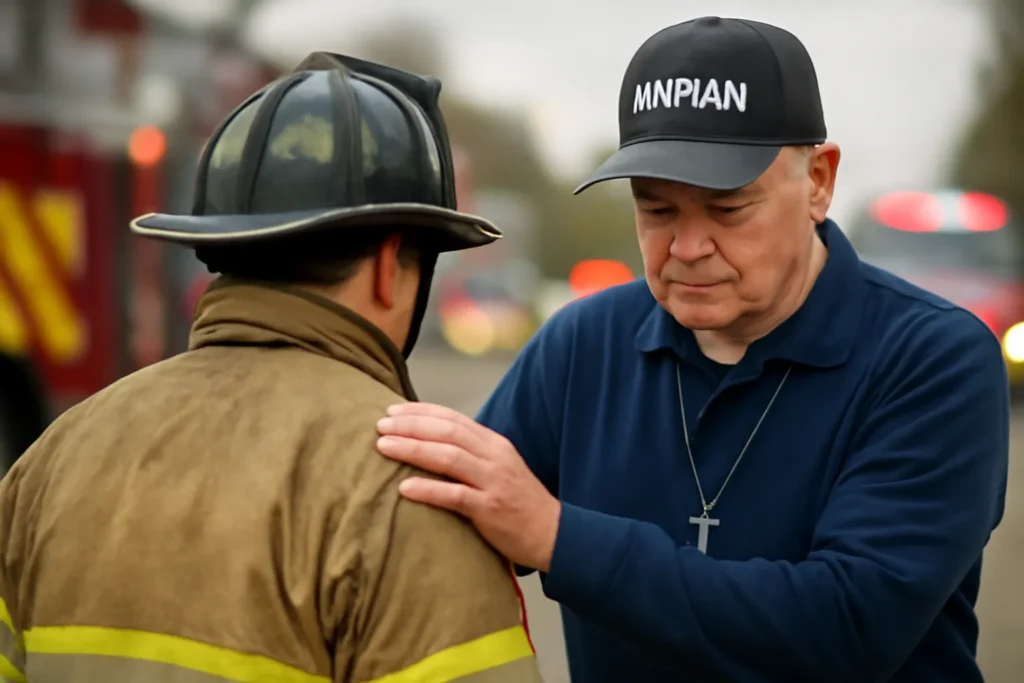
At the heart of a first responder chaplain’s function is pastoral care tailored to the needs of responders and their families. This includes offering comfort after difficult shifts, praying or meditating in a way that respects individual beliefs, and providing spiritual resources when requested. Chaplains may lead or coordinate rituals of remembrance for fallen colleagues, conduct memorial services, or simply sit with a responder who is wrestling with grief, guilt, or moral injury. The aim is not to impose beliefs but to create a trusted space where faith, doubt, doubt, or uncertainty can be explored safely.
Crisis Intervention and Critical Incident Response
During a critical incident, chaplains provide immediate emotional stabilization and practical support for both responders and victims. This includes on-scene presence, psychological first aid, and rapid referrals to community resources. They work alongside incident command to ensure that spiritual care does not interfere with safety protocols, but rather complements them by helping people remain present and focused. In the hours and days following an event, chaplains may assist with debriefing sessions, helping teams normalize their reactions, reduce the risk of long-term trauma, and identify individuals who may need more intensive support.
Grief and Bereavement Support
Line-of-duty deaths and serious injuries create complex grieving processes for coworkers, families, and communities. Chaplains support grief processing through listening, validating emotions, and offering counseling or referrals to specialized services. They may coordinate with peer-support teams to ensure ongoing outreach, provide funeral and memorial planning assistance, and help families navigate practical matters such as benefits and legal processes. Recognizing that grief has many faces, chaplains tailor their approach to cultural norms, personal beliefs, and the unique circumstances of each loss.
Counseling and Referrals
While chaplains are not substitutes for licensed mental health professionals, they provide short-term counseling, psychoeducation, and referral networks that connect individuals to appropriate care. They maintain familiarity with local resources, including community clergy, faith-based organizations, secular counseling centers, and trauma therapy providers. The goal is to support healthy coping strategies, reduce stigma, and empower responders to seek professional help when needed. Confidentiality is a cornerstone of this work, with clear guidelines about what information can be shared and under what circumstances information must be disclosed to protect safety.
Family Liaison and Survivor Support
Responders’ families often bear the emotional weight of a risk-filled profession. Chaplains act as a bridge between the department and families, offering family-centered support, connecting loved ones with resources, and coordinating communications in crisis situations. They help families understand what responders are facing, prepare for possible after-effects, and identify practical supports such as child care or transportation to hospital visits. This work requires sensitive listening, cultural competence, and the ability to navigate complex family dynamics with discretion and care.
Maintaining ethical boundaries is essential for sustaining trust and effectiveness. Chaplains adhere to codes of conduct that safeguard confidentiality while recognizing mandatory reporting requirements and safety issues. They practice boundaries about personal involvement, ensuring they do not become a substitute for medical, legal, or social work services. Clear documentation, informed consent, and ongoing supervision help prevent dual relationships that could compromise care or departmental functioning.
On-Scene Presence and After-Action Support
Scene Presence and Safety Coordination
On-scene chaplaincy requires a careful balance between minimizing interference and maximizing spiritual and emotional support. Chaplains coordinate with incident command and safety officers to identify the most appropriate moments to engage with responders, victims, or families. They respect scene safety, maintain professional appearance, and communicate clearly about their role. The presence of a chaplain can reassure teams, reduce confusion, and enable more effective decision-making by addressing emotional load that could otherwise hamper focus and coherence.
Debriefings and After-Action Reviews
Following a major incident, chaplains participate in or facilitate debriefing sessions that reflect on what happened, how people felt, and what could be improved in the future. They help shape after-action reviews that include mental health considerations, trauma exposure planning, and strategies to strengthen resilience across the organization. Debriefings should be voluntary, culturally sensitive, and trauma-informed, ensuring participants feel safe to share without fear of judgment or retaliation. Chaplains may coordinate with peer-support teams and mental health professionals to ensure continuity of care.
Trauma-Informed Outreach
Trauma-informed care recognizes the pervasive impact of trauma and seeks to avoid re-traumatization. Chaplains employ trauma-informed communication, validating feelings, offering practical coping strategies, and avoiding sensationalization of events. They encourage responders to pace their processing, recognize triggers, and seek professional assistance when symptoms persist beyond the acute phase. By modeling calm, intentional presence, chaplains help foster a culture where seeking help is viewed as a sign of strength rather than weakness.
Training, Skills, and Qualifications
Theological and Ethical Range
Chaplains come from diverse spiritual or secular backgrounds. What unites them is a commitment to universal care, ethical practice, and a willingness to adapt to the needs of a heterogeneous workforce. Formal training often includes pastoral education, clinical ethics, and an understanding of moral injury—the distress that arises when actions or inactions conflict with deeply held moral beliefs. Chaplains cultivate a framework that supports responders’ sense of purpose and integrity, whether they draw on liturgical rituals, silence, or reflective dialogue as a means of processing events.
Cultural Competency and Diversity Awareness
Departments reflect a mosaic of cultures, languages, faith traditions, and secular worldviews. A chaplain’s effectiveness hinges on cultural humility and ongoing learning about different communities. This includes awareness of religious observances, dietary considerations, gender and family structures, and historical contexts that shape how people respond to trauma. Culturally competent chaplains actively seek input from peers and community leaders, ensuring that care is respectful, relevant, and accessible to all affected individuals.
Crisis Intervention Techniques
Core skills include familiarity with psychological first aid (PFA), basic de-escalation, and referral pathways for longer-term care. Chaplains may adopt elements of Critical Incident Stress Management (CISM) or other evidence-informed approaches to support responders’ recovery. They learn to recognize signs of acute stress, burnout, post-traumatic stress, and moral injury, and to respond with appropriate outreach, education, and connections to mental health professionals when needed.
Effective chaplaincy rests on active listening, empathic engagement, and nonverbal attunement. Chaplains practice reflective statements, open-ended questions, and paraphrasing to ensure responders feel heard and understood. They also develop clear, compassionate communication strategies for communicating with families, supervisors, and peers during crises, ensuring that critical information is conveyed accurately and respectfully.
Collaboration with Agencies
Police, Fire, EMS, Hospitals
Chaplains often serve across multiple agencies, creating a consistent thread of support that reinforces whole-community resilience. They coordinate with law enforcement officers, firefighters, emergency medical technicians, and hospital staff to ensure timely access to care, alignment of messaging, and respect for jurisdictional boundaries. Collaboration includes participating in incident briefings, supporting on-scene supervisors, and arranging post-incident debriefings that involve clinical teams, peer-support colleagues, and spiritual care resources.
Judicial and Coroner Roles
In cases involving fatalities or violent crimes, chaplains may work alongside coroners, victim advocates, and legal personnel to provide spiritual and emotional support to families while respecting investigative processes. They help families navigate the legal and logistical aspects of death investigations, coordinate memorial services when appropriate, and serve as a bridge between law, medicine, and community faith traditions. Clear guidelines about confidentiality and information sharing are essential here to protect those who are grieving and to maintain the integrity of investigations.
Community Resources and Chaplaincy Networks
Effective chaplaincy depends on robust networks. Chaplains connect responders and families with local faith communities, secular support groups, mental health professionals, and social services. They participate in regional or national chaplaincy associations that provide training, supervision, and best-practice guidelines. Networking allows departments to offer a broader spectrum of care and to identify resources that respect diverse beliefs and needs while maintaining professional standards.
Self-Care and Boundary Maintenance
Chaplains must model and practice self-care to sustain long-term effectiveness. This includes regular spiritual, emotional, and physical health routines, seeking supervision or counseling when needed, and setting boundaries that protect both the chaplain and those they serve. Practices such as debriefing after demanding shifts, maintaining a support network, and adhering to a personal code of ethics help prevent burnout and compassion fatigue. Organizations should support chaplains with reasonable on-call schedules, access to mental health resources, and opportunities for ongoing training and renewal.
First responder chaplaincy presents a series of ethical and practical challenges. Balancing confidentiality with safety, navigating potential conflicts of interest, and respecting diverse belief systems require ongoing ethical reflection. Chaplains may face pressure to advocate for specific religious beliefs, even when their role is to honor autonomy and provide inclusive care. They must be sensitive to power dynamics within departments—where leaders may depend on them for morale but must avoid overstepping boundaries. Ethical decision-making frameworks, supervision, and institutional policies help address these tensions and ensure care remains patient-centered and ethically sound.
Additionally, chaplains encounter barriers to access—families or responders who are skeptical of faith-based support, language differences, and logistical constraints that limit timely contact. Addressing these barriers requires flexible approaches, multilingual resources, and culturally responsive outreach. Finally, the unpredictability of emergencies means chaplains must cultivate adaptive resilience, staying ready to respond to a wide range of scenarios with humility and perseverance.
The Impact of Chaplaincy on Resilience and Recovery
Research and practice consistently indicate that compassionate spiritual care can enhance resilience, reduce perceived stress, and improve teamwork under pressure. The presence of a trained chaplain can lower barriers to help-seeking, normalize emotional responses to trauma, and strengthen collective efficacy within teams. By providing consistent emotional support, chaplains contribute to healthier coping strategies, better sleep patterns, and more effective peer support networks. They also help shift organizational culture toward one that openly discusses mental health, reduces stigma around seeking help, and prioritizes the wellbeing of both responders and the communities they serve.
In the long term, chaplaincy initiatives can lead to measurable improvements in turnover rates, job satisfaction, and morale. They can assist in designing trauma-informed leadership practices, crisis response plans, and family-centered outreach programs that sustain the department’s capacity to respond to emergencies with competence and compassion. The goal is to cultivate a resilient culture where spiritual care and professional duty reinforce one another, enabling responders to serve with steadiness, empathy, and ethical clarity.
Implementing a Chaplaincy Program in Departments
Program Planning and Governance
Establishing an effective chaplaincy program begins with clear governance, defined scope of practice, and alignment with departmental mission and community needs. Key steps include forming an advisory group that includes representatives from leadership, union or employee associations, chaplain representatives, and community faith-based partners. A written policy should articulate confidentiality standards, on-call procedures, credentialing requirements, and safety protocols. Governance should also specify how chaplains collaborate with mental health professionals, social workers, and victim advocates to ensure seamless care delivery.
Funding and Sustainability
Financial sustainability hinges on diversified funding, including department budgets, grants, and partnerships with local organizations. Some programs leverage volunteer chaplains who undergo formal training and supervision, while others employ paid, full-time chaplains. A robust sustainability plan details compensation structures, continuing education budgets, supervision arrangements, and performance metrics that demonstrate the program’s value to responders and the community at large.
Continuous evaluation helps departments understand the impact of chaplaincy services. Metrics may include measures of staff well-being, incident response times, debriefing participation, and survivor or family satisfaction with support services. Feedback mechanisms—anonymous surveys, focus groups, and after-action reviews—should be used to refine services. Programs can also track referrals to mental health professionals, attendance at resilience training, and reductions in preventable burnout indicators. Data-driven evaluation supports advocacy for continued investment in spiritual care as part of comprehensive responder wellness strategies.
In sum, the duties of a first responder chaplain cover a broad spectrum—from immediate on-scene support and crisis intervention to long-term resilience building and community outreach. The most effective chaplains embody a blend of empathy, discernment, cultural humility, and professional boundaries, delivering care that honors diverse beliefs while reinforcing the department’s commitment to safety, service, and shared humanity. They are not merely custodians of ritual but partners in recovery: listening deeply, guiding wisely, and standing alongside responders, victims, and families as they navigate the most difficult moments life can offer. By integrating spiritual care with evidence-based practice, chaplains help build organizations that are not only capable in emergencies but also compassionate in the aftermath.
For departments considering how to enhance their chaplaincy, the path forward involves intentional planning, ongoing training, and a culture that values holistic wellbeing. The ultimate aim is to equip those who serve with a durable sense of purpose, a robust network of support, and the confidence to respond to crises with courage, clarity, and care. When chaplains are integrated thoughtfully into response teams, they become indispensable allies in preserving human dignity and fostering resilience—both during the heat of a crisis and in the quiet hours that follow.
Note: The scope and phrasing of chaplain duties may vary by jurisdiction, department policies, and the needs of specific communities. The descriptions above reflect common practices across many first-responder settings and can be adapted to local contexts.






Leave a Reply