What chaplains are and where families encounter their support
Chaplains are trained spiritual care providers who offer compassionate listening, ethical guidance, and ritual practices to people facing difficult life moments. Though their formal role often appears in hospitals, military settings, prisons, universities, hospices, and disaster response, the heart of their work is consistently about supporting families as they navigate illness, loss, stress, and major life decisions. Families may encounter chaplains when a loved one is hospitalized, when a service member is deployed or injured, when someone is facing end-of-life choices, or during moments of trauma and transition. Importantly, chaplains work to honor the diverse beliefs that families bring, including different faith traditions, secular worldviews, and spiritual practices. They serve as bridges—between clinical teams and family systems, between individual beliefs and collective needs, and between time-bound crises and long-term resilience.
In recognizing the varied circumstances families face, chaplains adopt a flexible, person-centered approach. They do not replace medical care or social services; rather, they complement them by addressing questions about meaning, values, and hope. This article presents a practical guide to how chaplains support families, with practical steps for families to engage, examples drawn from different settings, and reflections on ethics, culture, and communication. The goal is to illuminate the everyday practices of spiritual care that make a real difference for families during difficult moments.
Who provides chaplaincy care and how it is delivered in different settings
Chaplains come from diverse spiritual and professional backgrounds. They may be affiliated with hospitals, faith communities, secular pastoral care organizations, armed forces, or correctional facilities. Regardless of setting, the core competencies remain consistent: they listen deeply, assess needs, respect autonomy, and coordinate with others to ensure that families feel heard and supported.
In healthcare environments
In hospitals and clinics, chaplains work as members of the patient’s care team. They assess spiritual and emotional needs, facilitate conversations about treatment goals, and offer rituals and prayers that align with the patient’s values. They may also provide support for family members who are coping with suspicion, fear, or anger in the face of medical uncertainty. They understand confidentiality boundaries, recognizing that patients may want to include or limit family involvement in discussions about care. In palliative and hospice settings, chaplains often focus on meaning-centered care, helping families articulate hopes and fears about the future and honoring what matters most to the patient and to those close to them.
In the military and veteran communities
For service members and their families, chaplains offer crisis counseling, transition support, and faith-based or secular rituals that help families adapt to deployments, relocations, injuries, or losses. They frequently act as a liaison between the service member, the family, and the chain of command, ensuring that concerns are heard while maintaining professional boundaries. Military chaplains also provide bereavement resources for survivors and help families navigate hardship with dignity and resilience.
In hospices, end-of-life care, and bereavement support
In end-of-life care, chaplains accompany families through acceptance, planning, and decision-making about goals of care. They help create space for legacy work, memory projects, and rituals that honor the person who is dying. After a death occurs, chaplains often guide families through the immediate grieving period and connect them with ongoing bereavement support, such as groups, counseling referrals, and memoir opportunities. The emphasis is on compassionate presence and helping families find meaning and connection even in sorrow.
In prisons, jails, universities, and community organizations
In correctional facilities and educational settings, chaplains provide spiritual and moral support to incarcerated individuals, their families, and campus communities. They help navigate conflicts, offer crisis intervention, and support families confronting rehabilitation, visitation, and reintegration challenges. In community contexts, chaplains may work with faith groups and secular organizations to address social determinants of health, housing stability, and family resilience, reinforcing the idea that spiritual care encompasses practical, everyday needs as well as sacred rituals.
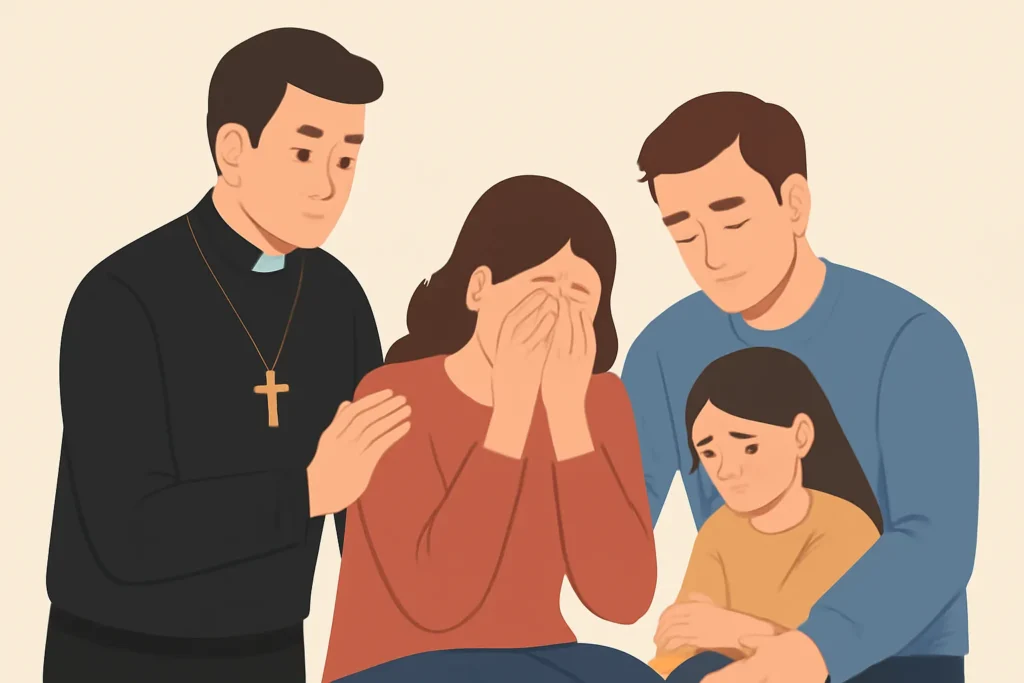
The most fundamental support is being there—showing up with patience, warmth, and nonjudgmental listening. Families often carry a mix of fear, hope, guilt, and love. Chaplains validate these feelings and offer a safe space where family members can express what they’re experiencing without fear of stigma. This presence is not about fixing problems but about standing with families as they face uncertainty.
Facilitating meaningful conversations
Communication within families about illness, prognosis, and care preferences can be challenging. Chaplains help facilitate conversations that are patient- and family-centered, encouraging clarity while honoring different voices within the family. They may use reflective listening, open-ended questions, and structured family meetings to ensure that everyone’s concerns are heard and that decisions align with the patient’s values.
Rituals, prayer, and sacraments
Rituals can provide structure and solace during times of stress. Chaplains may offer prayers, blessings, sacraments, or other ceremonial practices that fit the family’s beliefs. They can also help families create personal rites—for example, lighting a candle, sharing a memory, or recording a message for a loved one. Rituals can bring communities together, reaffirm connections, and help transition through stages of illness or loss.
Decision support and ethical guidance
When families face difficult choices, chaplains offer ethical reflection and non-coercive guidance. They help families weigh options in light of values such as autonomy, beneficence, and quality of life. While chaplains do not make medical decisions, they can help illuminate what matters most to the patient and family, supporting the decision-making process with sensitivity and respect.
Support for children and adolescents
Children and teens experience illness and crisis differently from adults. Chaplains tailor conversations and activities to be age-appropriate, helping younger family members understand what is happening, express their fears, and maintain a sense of safety and belonging. They may provide family-centered activities, storytelling, or age-appropriate resources that address the emotional needs of children without overwhelming them.
Grief, loss, and bereavement
Grief is a process, not a moment. Chaplains assist families through anticipatory grief, the experience of loss, and the aftereffects of bereavement. They offer grief education, coping strategies, and ongoing support or referrals to counseling, support groups, and community resources. They acknowledge that grief is personal and cultural, and they honor diverse mourning practices.
Cultural humility and inclusivity
Respect for diverse beliefs is central to chaplaincy. Chaplains engage in cultural humility—seeking to understand rather than assume, validating different religious identities, and accommodating practices that may differ from the dominant culture. They strive to collaborate with families in ways that protect dignity and agency, recognizing that spiritual care can be expressed in many forms beyond traditional rituals.
Care coordination and navigation
Families often juggle multiple professionals, services, and systems. Chaplains serve as care coordinators who help connect family needs to appropriate resources, including social workers, palliative care teams, chaplaincy supervisors, ethnic or faith communities, and community organizations. They can help families understand care plans, insurance resources, and practical arrangements, reducing fragmentation and confusion.
Practical steps families can take to engage chaplains
Identify the right entry point
Start by asking the primary care team or the hospital’s chaplaincy department how to access spiritual care. In many settings, referrals can be made by nurses, physicians, social workers, or directly by family members. If you are unsure where to start, inquire about an on-call chaplain or the office that coordinates spiritual care services.
Before meeting a chaplain, it can help to reflect on questions such as, What matters most to you right now? Do you want prayers, a blessing, or simply someone who will listen? Consider who should be present in the conversation, whether translation services are needed, and what language would make the discussion most meaningful. Bringing a short list of concerns or goals can make the initial visit efficient and focused.
Clarify boundaries, confidentiality, and consent
Chaplains uphold confidentiality, but they also operate within the constraints of safety and the care setting. It’s important to understand privacy limits and to discuss whether information can be shared with other members of the care team or family members. Be explicit about consent and about who can participate in conversations, especially when the patient is a minor or lacks decision-making capacity.
Ask for goals and a plan
A chaplain can help craft a plan that includes short- and long-term spiritual and emotional goals. This plan might involve a series of visits, a ritual, or referrals to community resources. Ask for a clear outline of what will happen next and whether follow-up visits can be scheduled to monitor progress and adjust as needed.
Prepare questions for different needs
To maximize the usefulness of chaplain visits, consider questions such as:
What kinds of rituals or practices would be most meaningful for our family?
How can we involve children in a healthy, developmentally appropriate way?
What resources are available for grief counseling or support groups?
How can we communicate with the medical team about values and preferences?
Are there cultural or spiritual resources we haven’t considered?
Engage in ongoing collaboration
Chaplaincy work is most effective when it is collaborative. Families should feel encouraged to check in after sessions, share feedback, and request adjustments to the care plan. If needed, families can request a meeting with the chaplain to include other family members, caregivers, or faith leaders who can contribute to the healing and decision-making process.
Case illustrations: how chaplains adapt to family needs
Scenario: a parent facing a complex medical decision
A family confronts a choice about continued aggressive treatment for a loved one. A chaplain spends time listening to each family member’s hopes and fears, helps translate medical information into values-based language, and arranges a family conference with the care team. The chaplain may also arrange a small ritual or moment of reflection to acknowledge hope while honoring realism. Over time, the family feels equipped to make a decision that aligns with the patient’s preferences and the family’s values.
Scenario: a child coping with a parent’s illness
A young person experiences anxiety and sadness as a parent battles a serious illness. The chaplain creates a child-friendly space for questions, offers age-appropriate explanations, and invites participation in a family-centered memory project. They may coordinate with child life specialists and social workers to ensure the child’s emotional needs are addressed without overwhelming them with adult concerns.
Scenario: bereavement after a sudden loss
Following a rapid death, a family feels stunned and scattered. The chaplain provides immediate listening, honors the family’s ritual preferences, and connects them with grief counselors and support groups. By offering a structured pathway through immediate shock and long-term mourning, the chaplain helps the family begin to rebuild a sense of continuity and connection.
Ethics, diversity, and boundaries in family-centered chaplaincy
Respect for autonomy and consent
Families retain agency in decisions about spiritual care. Chaplains honor consent, avoid coercion, and respect individual beliefs. They help families balance collective needs with the patient’s wishes, ensuring that care remains patient-directed whenever possible.
While confidentiality is fundamental, there are exceptions when safety concerns arise. Chaplains explain these limits upfront and document consent appropriately. They also help families understand how information may be shared with the care team to promote coordinated and humane care.
Inclusion of diverse beliefs and practices
Families may come from many faith traditions or hold secular worldviews. Chaplains practice cultural humility, asking respectful questions to learn about beliefs and practices that matter to the family. They may adapt rituals, incorporate symbolic acts, or collaborate with religious leaders or community resources to honor the family's values.
Boundaries for helping professionals and boundaries with families
Chaplains maintain professional boundaries to ensure trustworthy relationships. They avoid assuming roles that belong to medical staff or social workers, and they emphasize that spiritual care is one part of a broader network of support.
Tools, tips, and resources for families
Open communication: Build a habit of honest, respectful dialogue with the care team and with each other.
Question prompts: Use prepared questions to guide discussions about prognosis, goals of care, and the kind of support that is most meaningful.
Ritual and memory resources: Consider candles, journals, memory boxes, written letters, or music that reflect the patient’s values and preferences.
Child-friendly supports: Age-appropriate explanations, activities, and family discussions can help children process changes in a way that honors their development.
Bereavement pathways: Seek referrals to support groups, individual counselors, or community resources that align with family preferences and culture.
Practical steps you can take today include identifying the chaplaincy contact in your setting, preparing a short list of questions, and ensuring that the right family members participate in the conversation. If you are unsure about what is possible, ask the care team to help you understand how spiritual care could fit into your plan.
Checklists you can adapt
Initial contact checklist: names, relationship to patient, preferred language, consent for involving others, current concerns.
Visit planning checklist: goals for the visit, any requests for rituals, people to involve, and time expectations.
Post-visit follow-up checklist: summary of decisions, next steps, resources, and scheduled follow-up.
How chaplains support families beyond the crisis moment
The value of chaplaincy often extends beyond the immediate crisis. Families may benefit from ongoing spiritual and emotional support during recovery, during caregiving transitions, and as they adjust to new normalities after a major illness or loss. Chaplains can remain accessible for check-ins, seasonal or anniversary reverberations of grief, and encouragement as families reestablish routines or reorganize caregiving roles. This enduring presence helps families feel anchored, even as circumstances evolve.
In many communities, chaplains collaborate with secular counselors, social workers, and faith leaders to offer a comprehensive network of care. They may coordinate with peer support groups, hospice bereavement programs, and youth activities that foster resilience. The outcome is a holistic approach to healing that honors spiritual, emotional, and practical dimensions of family life.
Practical, compassionate care from chaplains recognizes that families are not a single unit but a dynamic system shaped by individual beliefs, cultural backgrounds, and shared memories. By valuing each voice, creating spaces for honest conversation, and offering flexible rituals and practical support, chaplains help families move through crisis with dignity and hope. If you or someone you love is facing a difficult moment, reaching out to a chaplain can be a meaningful step toward aligning care with the values that matter most to you and your family.








Leave a Reply