Grief Counseling and Faith: Spiritual Support for Healing After Loss
Grief is a deeply human experience, and many people find that faith or spiritual beliefs offer a scaffold for meaning, hope, and resilience when loss arrives. When grief counseling and faith-based carework together, individuals can access a broader spectrum of resources—emotional understanding, existential framing, community support, and practical coping tools. This article surveys how professional grief counseling and diverse spiritual orientations can intersect in ways that honor personal beliefs while providing evidence-based care for healing after death, illness, or other significant losses.
What grief counseling is, and how faith can influence it
Grief counseling refers to therapeutic work aimed at helping people navigate the emotional, cognitive, physical, and relational consequences of losing someone or something meaningful. It may be offered by mental health professionals such as psychologists, social workers, licensed counselors, or pastoral counselors who incorporate grief theory with practical strategies. When faith enters the equation, care may incorporate prayer, sacred texts, ritual, or spiritual direction alongside traditional therapeutic techniques. The goal is not to replace faith but to align grief support with a person’s beliefs so that healing is coherent with what they already hold sacred.
Different terms describe similar support processes in different contexts, including bereavement counseling, loss counseling, mourning support, and pastoral care. While some clients prefer a strictly secular approach, others seek religious counseling or spiritual care that acknowledges God, transcendence, or karmic frameworks. Regardless of label, best practice emphasizes empathy, nonjudgmental listening, and the elicitation of a person’s own values and meaning.
Core principles that guide grief therapy with faith in mind
Several guiding principles help integrate grief processing with spiritual life in a respectful and effective way:
Person-centered care: The client determines the pace, focus, and boundaries of the therapeutic process, including how faith is incorporated.
Respect for belief systems: Counselors acknowledge a client’s religious or spiritual framework without attempting to indoctrinate or invalidate it.
Meaning-making: Therapy supports the survivor in reconstructing a sense of purpose after loss, often using faith-informed lenses such as hope, justice, or divine presence.
Cultural and theological sensitivity: Providers strive to understand how tradition, community norms, and sacred texts shape grief expressions.
Evidence-informed approaches: Techniques from cognitive-behavioral therapy, narrative therapy, and mindfulness are adapted to honor spiritual beliefs.
Communication between care teams: If a client engages both a mental health professional and a faith leader, coordinated communication can reduce conflicts and enhance consistency in care.
Faith-based practices that can support grief processing
Across traditions, several practices are commonly used to comfort the bereaved, promote solace, and foster resilience. When these practices are offered with sensitivity to individual preference, they can complement psychological strategies rather than compete with them.
Prayer and contemplation
For many, prayer provides tonic meaning, a way to articulate sorrow, seek guidance, and experience a sense of companionship with the divine. Structured prayer or contemplative practice can be integrated with therapy sessions or used independently to reduce rumination and anxiety while deepening trust in the healing process.
Sacred texts and wisdom literature
Reading sacred passages, parables, or poetry relevant to loss can offer a framework for understanding suffering, comfort in community, and reminders of endurance. Counselors may invite clients to reflect on passages that resonate with their personal experience, while ensuring that interpretations remain owned by the person rather than imposed by the clinician.
Rituals and remembrance
Rituals—such as lighting a candle, visiting a grave, sharing stories at anniversaries, or creating a personal memorial—can externalize grief and provide symbolic meaning. Rituals are not universal cures, but they can create a safe space for expression, connection, and gratitude even amid pain.
Pastoral and spiritual direction
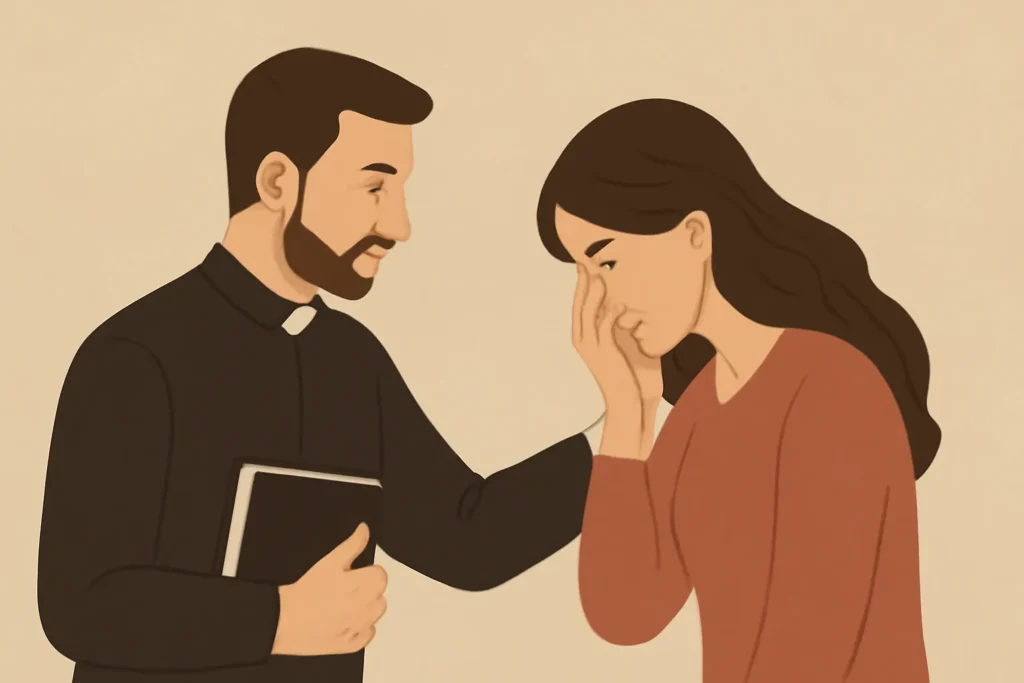
Pastoral counselors or spiritual directors offer guidance anchored in faith traditions and accountability within a faith community. They can help people articulate what they believe God or the sacred is doing through loss, while collaborating with mental health professionals to address emotional distress.
Community support and faith networks
Conversations with faith community members, support groups, and compassionate care from clergy can provide practical help, companionship, and a sense of belonging. Spiritual communities can be a resource for ongoing support after the formal therapy period ends.
Choosing between faith-informed and secular grief counseling
People often weigh whether to pursue faith-informed grief counseling or a secular approach. The best choice depends on personal beliefs, comfort level, and the specific losses involved. Some clients prefer an integrated model in which a licensed therapist collaborates with a faith leader or follows a program that explicitly honors religious perspectives. Others seek purely secular modalities to ensure neutrality or to address non-religious aspects of meaning-making.
Key questions to ask when selecting support:
Does the counselor have experience working with clients who share my faith or spiritual background?
How will faith be incorporated into therapy: optional, or a central component?
Are there potential conflicts between therapeutic approaches and my beliefs, and how would they be handled?
Is the therapist trained in grief-specific modalities (e.g., meaning reconstruction, narrative therapy) as well as general psychotherapy?
Is there flexibility to adjust the pace and emphasis as my beliefs evolve through the grieving process?
It can be helpful to arrange an initial consultation focused on alignment and boundaries. You might say, “I’d like to explore how my faith will be part of the process, and I want to know how you integrate spiritual concerns with evidence-based grief work.” A good fit respects both your emotional needs and your spiritual framework.
What to expect in a typical grief counseling session with faith in mind
A session that honors faith traditions often includes a blend of conversation, reflection, and practical exercises. While each clinician has a unique approach, common elements may include:
Exploration of beliefs: A safe space to articulate questions about meaning, justice, the afterlife, or divine presence.
Emotion labeling and processing: Identifying and expressing sadness, anger, guilt, or fear within a spiritual frame.
Meaning-making exercises: Guided exercises designed to help the client reframes the loss in a way that aligns with their faith and life story.
Ritual planning: Coordinating or adapting rituals that honor the deceased and support ongoing healing.
Stress reduction strategies: Mindfulness, breathing techniques, and coping skills that can be practiced in a faith context (e.g., prayerful breath, centering prayers).
Family and community considerations: Addressing relational dynamics affected by loss, including intergenerational or interfaith differences.
Therapeutic progress can be gradual. Some clients experience faster relief, while others need months to work through difficult memories, unresolved conflicts, or spiritual questions. The pace should feel tolerable and meaningful to you, with ongoing measurement of goals, progress, and adjustments when needed.
Rituals, symbols, and remembrances across traditions
Rituals and symbolic acts can provide continuity, a sense of control, and a place to honor what was lost. They can be simple or elaborate, personal or communal, depending on tradition and preference. Important considerations include:
Personalization: Rituals that reflect the deceased’s life and the survivor’s beliefs tend to be more meaningful than generic rites.
Inclusivity: Some survivors observe rituals within their own tradition, while others incorporate elements from multiple traditions or create new rituals that fit their evolving faith.
Accessibility: Practical aspects like time, location, and cost influence what rituals are feasible.
Timing: Anniversary dates, birthdays, and holidays often serve as focal points for remembrance and reflection.
Examples include creating a memory box with mementos, planting a tree in memory, offering a prayer service on the anniversary of a death, or compiling a legacy project such as letters to the deceased. When therapists or clergy collaborate, they can help design rituals that honor both the psychological process of grief and the spiritual journey of healing.
The role of faith communities in healing after loss
Faith communities frequently serve as extended families of support, offering practical help and a sense of belonging. They can:
Provide consistent companionship through phone calls, meals, or visitation programs, which can stabilize someone who feels overwhelmed by grief.
Offer collective worship experiences and faith-specific rites that reaffirm hope and the possibility of life after loss.
Connect individuals with grief groups or bereavement ministries that meet regularly to share stories and strategies for coping.
Facilitate interfaith or intercultural dialogue when families hold diverse beliefs, promoting mutual respect and understanding.
However, faith communities can also present challenges if life events reveal doctrinal disagreements, rigid expectations about emotional expression, or differences over medical and ethical decisions. In such cases, it is important to seek caregivers who can navigate these tensions with tact and empathy, and to set boundaries when necessary to protect emotional safety.
Grief care must honor the vast spectrum of beliefs, including those who identify as secular, agnostic, or spiritual but not religious. Inclusive practice acknowledges that:
Meaning tends to be a universal concern in grief, whether framed by faith or philosophical reflection.
Some clients experience spiritual distress—a sense of abandonment by the sacred, doubt about divine benevolence, or crises of faith that require careful attention.
All clients deserve a space where they can ask hard questions without fear of judgment or coercion.
Therapists and clergy who collaborate respectfully can help bridge gaps, ensuring that those who identify as non-religious or interfaith can still access compassionate, structured support that honors their worldview.
Addressing difficult questions: suffering, death, and the nature of God or the transcendent
One of the most challenging aspects of grief, especially for people of faith, is reconciling suffering with their theological or spiritual beliefs. A thoughtful approach includes:
Open dialogue: Encourage honest expressions of anger, confusion, or fear about the divine or cosmic order.
Faith-informed reframing: Explore how beliefs about compassion, judgment, or afterlife might inform healing rather than deepen guilt.
Dyadic exploration: For couples or families with different beliefs, facilitated conversations can help find common ground or respectful accommodations.
Boundary setting: Clarify what is and isn’t appropriate to discuss within different settings (therapy rooms, congregational spaces, or family gatherings).
By acknowledging the reality of pain while maintaining space for spiritual questions, counselors and faith leaders can guide clients toward a more integrated sense of self and a hopeful, if nuanced, view of the future.
Practical guidance for selecting care that respects faith and belief
Choosing the right kind of support is a personal decision shaped by faith, culture, and the specifics of the loss. Here are practical steps:
Clarify expectations: Before beginning, discuss how faith will be integrated into the plan and what boundaries exist around religious practices in sessions.
Check credentials: Verify that the provider is licensed, has experience with grief, and demonstrates cultural humility and respect for diverse beliefs.
Ask about integration: Inquire how therapeutic models (CBT, ACT, narrative therapy, etc.) will be used in a way that aligns with faith commitments.
Assess fit: A good match often includes warmth, listening, and a shared understanding of what healing looks like for you—spiritually as well as emotionally.
Look for collaborative options: If you want faith leaders involved, ask about team-based care where therapist and spiritual mentor coordinate while preserving confidentiality.
Remember that there is no one-size-fits-all answer to how faith and therapy should interact. Your path may be deeply liturgical, quietly personal, or entirely secular—what matters is that you feel supported, respected, and safe.
Guidance for families, couples, and bereaved children or teens
Grief affects people across generations, and faith may shape how children and adolescents experience loss. Family dynamics, religious education, and community expectations can either facilitate healing or generate additional stress. Consider these approaches:
Age-appropriate conversations: Use language and concepts suitable to developmental level, while still honoring beliefs and questions about death.
Family rituals: Create inclusive rituals that enable all members to participate in remembrance and healing.
Role modeling: Adults can demonstrate healthy grieving behavior, including expressing emotion, seeking help, and maintaining spiritual practices.
Professional support: Engage a grief counselor who has experience with families and who can tailor interventions for children and teens within a spiritual context.
In families where beliefs diverge, it can be helpful to establish shared rituals that respect each member’s stance. This might involve secular elements (like memory jars or storytelling circles) combined with select symbolic acts from each tradition, if acceptable to everyone involved.
Common questions and myths about grief, counseling, and faith
Misunderstandings about grief care and spiritual healing can deter people from seeking support. Here are clarifications about some frequently asked questions:
“Will therapy force my faith to change?” No. A respectful therapist honors current beliefs and provides space to explore questions without pressuring a particular outcome.
“Can faith therapies replace professional mental health treatment?” For some, faith-based care is primary; for others, it’s complementary. If symptoms of depression, anxiety, or complicated grief persist, seeking a licensed clinician is advisable.
“Is it okay to grieve differently than others in my faith community?” Yes. Grieving styles vary; communities benefit from accepting diverse expressions of sorrow and healing paths.
“What if my beliefs change after loss?” It is common for faith perspectives to evolve after a loss. A flexible, nonjudgmental support relationship can accompany that evolution.
Ethical considerations: boundaries, consent, and safety
Ethical care is essential when blending grief therapy with faith-based guidance. Key considerations include maintaining confidentiality, obtaining informed consent for any faith-related interventions, and ensuring safety for individuals who may experience spiritual distress, doubt, or crisis. If a client presents with self-harm risk or harm to others, crisis protocols override all otherwise agreed-upon boundaries, and appropriate emergency steps are taken.
Loss can trigger intense distress, but most people gradually adapt with support. Seek help promptly if you notice:
Persistent despair that lasts weeks or months and interferes with daily life.
Inability to perform basic self-care or maintain responsibilities.
Recurrent thoughts of death or self-harm, or any intent to harm others.
Severe sleep disturbances, appetite changes, or physical symptoms not explained by medical issues.
Guilt or anger about faith concepts that becomes consuming, unmanageable, or isolates you from community support.
If any of these signs are present, consider contacting a mental health professional, a trusted clergy member, or a crisis line to access immediate assistance.
Integrating learning from grief counseling with ongoing faith practice
Healing after loss is often a layered process. Some survivors incorporate their therapeutic gains into ongoing spiritual practice, and vice versa. Practical ways to maintain integration include:
Regular reflective journaling that weaves together emotions, memories, and spiritual insights.
Continued participation in faith practices that feel restorative, such as worship, meditation, or study, adapted to one’s healing pace.
Meaningful service or solidarity activities that honor the deceased while connecting with others who have experienced similar losses.
Periodic check-ins with both a clinician and a faith mentor to adjust goals and address new questions as life evolves.
Over time, many people discover that grief counseling helps them understand and regulate their pain, while faith provides frameworks for hope, accountability, and connection to something greater than themselves. The synergy can lead to a durable peaceful resilience that honors the person who died and supports the living in practical, daily ways.
Practical resources for readers seeking grief support tied to faith
The following resources may be helpful for readers exploring grief counseling with spiritual support:
Local licensed therapists who specialize in grief and offer faith-inclusive approaches.
Pastoral care teams at local houses of worship, temples, mosques, gurdwaras, churches, or meditation centers.
Bereavement support groups hosted by faith communities or secular organizations—often a mixture of in-person and online options.
Educational literature about meaning-focused grief therapy, meaning reconstruction, and spiritual coping strategies.
When exploring resources, prioritize safety, sensitivity to your beliefs, and a practical plan for ongoing support. It may be useful to create a short list of questions to bring to a first meeting, such as: “How do you approach grief that involves faith questions or spiritual distress?” or “What would a collaborative plan with a faith leader look like for me?”
A closing note on care that honors both science and spirit
Grief is not a problem to be solved in a single session, and healing after loss is not a linear journey. It is a process of living with تغییر—change—while keeping hold of what gives life meaning. For many people, that meaning includes a sense of the sacred, a belief in care for one another, and a community that holds them in their sorrow. By blending evidence-based grief counseling with spiritual care, people can access a comprehensive support system that acknowledges pain, validates questions, and nurtures hope. The outcome can be not only relief from suffering but also a more expansive, integrated sense of self that remains attentive to love, memory, and purpose.
Grief counseling and faith work best when they meet the person where they are—politely, honestly, and with a willingness to walk alongside them as they navigate loss, doubt, and healing. The goal is not to erase grief but to transform it into a channel for connection—with the memory of the one who is gone, with a community, and with the inner resources that faith or philosophy can provide.










Leave a Reply