The Bible is the Christian church’s primary written witness to God’s work through creation, Israel, Jesus Christ, and the early church.
Christians read the Bible for worship, teaching, prayer, moral guidance, and spiritual formation. It is not used only as a collection of inspirational sayings. Churches read it publicly, preach from it, study it in community, and use its story to understand who God is and how Christians are called to live.
The Bible also has a central place in Christian beliefs about Jesus. The Old Testament provides the story, promises, poetry, wisdom, and prophetic hope that form the background of Jesus’ life and ministry. The New Testament presents the four Gospels, the growth of the early church, letters to Christian communities, and the book of Revelation.
Core idea: Christians do not treat the Bible as a collection of unrelated passages. They read its individual books within the larger story of God, creation, humanity, redemption, and the church.
Christian churches regard the Bible as authoritative because it bears witness to God’s relationship with humanity and, above all, to Jesus Christ. The exact way that authority is described differs among denominations, but Scripture remains central across historic Christian traditions.
During worship, a congregation may hear readings from several parts of the Bible. A service could include a psalm, a passage from the Old Testament, a reading from one of Paul’s letters, and a Gospel reading. The sermon or homily usually explains how the selected passage speaks to Christian faith and daily life.
The Bible also shapes the church’s language. Christian terms such as covenant, grace, sin, salvation, resurrection, discipleship, and kingdom of God come from the biblical story. Hymns, prayers, creeds, sermons, and Christian artwork often assume that listeners know at least some of these themes.
At important moments in church life, biblical passages are used to mark significant commitments. Baptisms, weddings, funerals, ordinations, confirmations, and communion services commonly include Scripture readings. These readings connect personal experiences with the wider faith and history of the Christian community.
What books are included in the Christian Bible
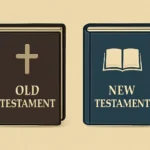
The Christian Bible has two major sections: the Old Testament and the New Testament. The Old Testament is also called the Hebrew Bible by Jewish communities, although Christian arrangements and interpretations can differ from Jewish ones. The New Testament focuses on Jesus and the church that formed around his life, death, and resurrection.
Most Protestant Bibles contain 66 books: 39 in the Old Testament and 27 in the New Testament. Catholic Bibles include additional Old Testament books, often called the Deuterocanonical books. Eastern Orthodox Bibles may include a somewhat different collection, depending on the church tradition.
These differences do not mean that Christian denominations have entirely different Bibles. They share the 27 books of the New Testament and most of the Old Testament. Their differences mainly concern which ancient Jewish writings are included and how those writings are grouped.
The Bible contains several kinds of literature, and recognizing them helps you read responsibly:
Historical narrative: stories about creation, Israel, Jesus, and the early church.
Law and instruction: commands and covenant teachings, especially in the first five books.
Poetry and wisdom: songs, prayers, proverbs, reflections, and honest questions about suffering.
Prophetic writing: messages confronting injustice, calling people back to faithfulness, and expressing hope.
Gospels: four accounts of Jesus’ ministry, teaching, death, and resurrection.
Letters: guidance written to particular churches and Christian leaders.
Apocalyptic writing: symbolic visions concerning judgment, perseverance, and God’s final renewal.
A poem should not be read exactly like a legal instruction, and a symbolic vision should not automatically be treated like a newspaper report. Genre affects meaning. Good Bible reading begins by asking what kind of writing you are encountering.
How the Old Testament and New Testament fit together
The Old Testament tells the story of God’s dealings with the people of Israel and presents themes that continue throughout the Bible. These include creation, human rebellion, covenant, worship, justice, mercy, exile, return, and hope for restoration.
The books of the Old Testament are not arranged in exactly the same way in every Christian Bible. In general, they include the Pentateuch, historical books, wisdom literature, and prophetic books. Together, they provide the cultural, theological, and historical setting for the New Testament.
The New Testament begins with the four Gospels: Matthew, Mark, Luke, and John. They are not four chapters of one book but four distinct accounts that present Jesus from different perspectives. Each emphasizes particular features of his identity, teaching, ministry, death, and resurrection.
Acts continues the story after Jesus’ resurrection by describing the spread of the Christian message and the formation of Christian communities. The letters address questions about faith, worship, conflict, ethics, leadership, suffering, and hope. Revelation uses vivid symbolic language to encourage believers to remain faithful while looking toward God’s ultimate victory.
Christians often read the New Testament in light of the Old Testament. For example, the Gospel accounts use images of shepherds, Passover, the temple, kingship, sacrifice, and a new covenant. Understanding those earlier themes can make the New Testament’s claims about Jesus clearer.
How Christian denominations approach biblical authority
All major Christian traditions give the Bible a significant role, but they do not describe its authority in identical ways. The differences often concern the relationship between Scripture, church tradition, teaching authority, and personal interpretation.
Many Protestant churches emphasize Scripture as the highest written authority for Christian belief and practice. This does not mean every Protestant church interprets the Bible in the same way. Protestant denominations differ over baptism, communion, church government, spiritual gifts, salvation, and many other subjects.
The Roman Catholic Church reads Scripture together with sacred tradition and the teaching office of the church. Catholic interpretation places strong emphasis on the Bible as part of the church’s worship and inherited faith, rather than treating individual interpretation as completely separate from the Christian community.
Eastern Orthodox churches also read the Bible within the life of the church and its ancient worshiping tradition. The Bible is closely connected with liturgy, the writings of early Christian teachers, the church councils, and the spiritual practices of the Orthodox community.
These approaches share a conviction that the Bible should be read carefully and faithfully. They also show why a passage may be interpreted differently by sincere Christians who belong to different traditions.
How the Bible is used during Christian worship
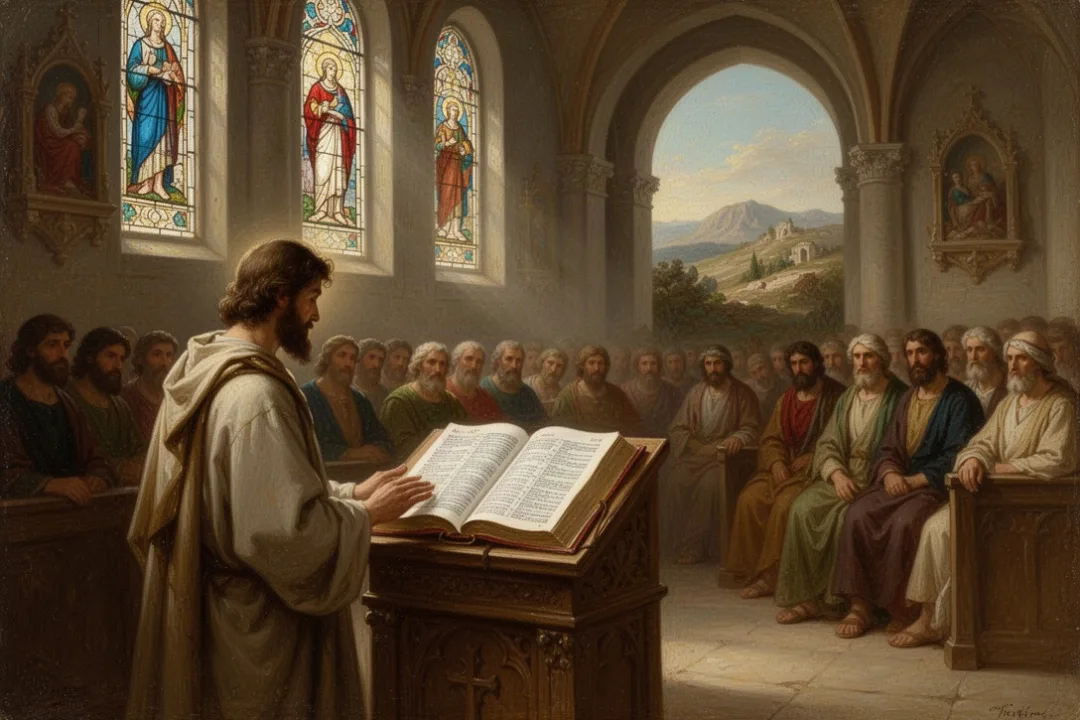
Public Scripture reading is one of the clearest ways a church recognizes the Bible’s importance. The congregation listens together rather than treating the Bible only as private reading material. In many churches, the readings follow a planned schedule so that worshipers encounter a broad range of biblical books over time.
Preaching or teaching usually connects a passage with the life of the congregation. A responsible sermon should explain what the text meant in its original setting before applying its message to present circumstances. Application may address personal character, family life, public responsibility, suffering, forgiveness, justice, or hope.
Churches also use the Bible in prayers and songs. A prayer may echo the language of the Psalms, confess themes found in the Gospels, or ask for wisdom using ideas from the letters. Christian songs often paraphrase biblical passages rather than quoting them directly.
Communion, baptism, and other ordinances or sacraments are interpreted through biblical accounts and instructions. A church may read about Jesus’ Last Supper, his command to make disciples, or the early believers’ shared life as it explains these practices to the congregation.
“Your word is a lamp to my feet and a light to my path” is the central image of Psalm 119:105: Scripture is portrayed as guidance for faithful living, not as a shortcut around thought or discernment.
How to choose a Bible for church and personal reading
The best Bible for you is one you can understand accurately and read consistently. No single English translation is ideal for every purpose. Some aim to preserve the structure and wording of the original languages closely, while others prioritize natural contemporary English.
When choosing a Bible, consider these practical questions:
What tradition do you attend? Your church may regularly use a particular translation or include books that are not found in every Protestant edition.
Can you understand the language? A respected translation is not useful if its vocabulary or sentence structure prevents comprehension.
Will you read aloud? A Bible used in worship should sound clear and natural to listeners.
Do you need study notes? Notes can explain history, geography, difficult terms, and major interpretations, but they represent the editor’s perspective.
What format will you use? A print Bible may help you focus, while an audio or digital Bible can make regular listening more practical.
Are you comparing translations? Reading two or three reliable translations can reveal shades of meaning and clarify difficult sentences.
Common English translations include the New Revised Standard Version, English Standard Version, New International Version, Christian Standard Bible, New American Bible, New American Standard Bible, King James Version, and New King James Version. Their wording, reading level, notes, and denominational use vary, so compare sample passages before purchasing.
Practical tip: Ask your pastor, priest, or church study leader which translation is used in worship. Using the same edition as your congregation can make public reading, group discussion, and memorization easier.
How to read the Bible without taking passages out of context
A single verse can sound as though it makes a clear claim while meaning something different within its chapter or book. Before applying a passage to your own situation, read the surrounding paragraphs and ask who is speaking, who is listening, and what problem the writer is addressing.
Consider the historical setting. A letter written to a first-century church may address local disputes that are not immediately visible to modern readers. A prophetic passage may speak to a specific political or religious crisis. Knowing the setting does not make the passage irrelevant; it helps you identify what kind of relevance it has.
Pay attention to the speaker and the literary form. The Bible records the words of many people, including people who are confused, fearful, or acting wrongly. A statement made by one of Job’s friends, for example, should not automatically be treated as a universal truth simply because it appears in the Bible.
Read difficult passages alongside clearer passages on related themes. Christians often compare accounts in the Gospels, examine repeated ideas across several letters, and consider how a command relates to the overall biblical emphasis on love of God and neighbor.
Interpretation also benefits from humility. A reader may have a strong personal reaction to a passage and still misunderstand it. Listening to thoughtful teachers, consulting a study Bible, and discussing the text with a mature Christian community can reveal assumptions you did not realize you had.
Practical Bible-reading tips and common mistakes
Regular Bible reading does not require rushing through large portions or feeling guilty when your routine changes. A manageable plan that leaves room for reflection is usually more helpful than an ambitious schedule abandoned after a few days.
Start with a clear book. The Gospel of Mark, the Gospel of John, Philippians, James, or selected Psalms can provide an accessible beginning.
Read a complete section. Follow the paragraph or episode instead of stopping at an arbitrary verse number.
Identify the main point. Ask what the writer wants the original audience to understand, believe, or do.
Notice repeated words and contrasts. Repetition, cause and effect, commands, promises, and changes in setting often reveal the structure.
Write down honest questions. Questions about history, language, and theology are part of careful study, not signs of failure.
Use a reliable guide. A study Bible, church class, Bible dictionary, or trusted commentary can supply background information.
Respond in prayer and practice. Consider how the passage shapes worship, character, relationships, or service.
Several habits commonly lead readers astray:
Using a verse as a slogan: A short quotation may lose its meaning when separated from its paragraph.
Assuming every command applies in exactly the same form: Biblical instructions belong to different covenants, communities, and historical settings.
Ignoring genre: Poetry, parable, narrative, law, and apocalyptic vision communicate in different ways.
Reading only favorite passages: Familiar verses can encourage you, but less familiar books may correct incomplete assumptions.
Forcing a political opinion onto every text: The Bible speaks to public life, but not every passage directly answers a modern political question.
Treating study tools as neutral: Notes and commentaries are helpful, yet their authors make interpretive choices that should be evaluated.
How children, teenagers, and adults can study Scripture
Children often benefit from a Bible that uses clear language, explains unfamiliar customs, and includes age-appropriate illustrations. Adults should help children distinguish between the Bible’s actual text and simplified retellings. A children’s Bible can introduce the story, but it does not replace reading the biblical books themselves as children mature.
Teenagers may want space to ask difficult questions about suffering, science, sexuality, justice, doubt, and differences among churches. A helpful church environment does not shame honest questions. It teaches students how to examine a passage, understand its setting, and recognize the difference between a biblical claim and a particular teacher’s opinion.
Adults can study individually or in groups. Group study works best when participants read the assigned passage beforehand, listen carefully to one another, and distinguish what the text says from what they wish it said. A leader should keep the conversation connected to the passage rather than allowing one personal story to dominate the meeting.
People with disabilities may benefit from large-print editions, audio recordings, screen readers, accessible digital formats, or sign-language resources. An accessible Bible is not a lesser form of engagement. It allows more members of the church to participate fully in worship and study.
How the Bible shapes Christian beliefs and behavior
Christian teaching about God, Jesus, salvation, the church, prayer, ethics, and the future is rooted in biblical texts. Churches do not merely ask whether a passage contains a rule. They also ask what the passage reveals about God’s character and what kind of community Christians are meant to become.
The Bible repeatedly connects worship with conduct. The prophets criticize religious practices that coexist with oppression, dishonesty, and neglect of the vulnerable. Jesus likewise links love for God with love for other people. The letters urge Christian communities to show patience, generosity, truthfulness, sexual integrity, hospitality, and care for those in need.
That does not mean the Bible offers a simple, isolated answer to every modern question. Christians must apply ancient texts through careful interpretation, prayer, moral reasoning, and attention to the wisdom of the wider church. The goal is not to collect proof texts but to develop faithfulness shaped by the whole biblical witness.
Scripture also gives language for experiences that are difficult to express. The Psalms include praise, grief, anger, confession, fear, and trust. Job wrestles with undeserved suffering. The Gospels show followers of Jesus misunderstanding, failing, and receiving restoration. These passages allow Christians to bring real emotions before God rather than pretending that faith removes every struggle.
What a church should look for in responsible Bible teaching
A healthy Christian church treats the Bible with seriousness without using it to control people through fear or confusion. Teaching should explain the passage, acknowledge uncertainty where interpretations differ, and avoid presenting a leader’s personal preferences as unquestionable divine commands.
Responsible teachers pay attention to the whole Bible and do not build an entire doctrine on one obscure or disputed verse. They explain the difference between central Christian convictions and issues on which faithful denominations disagree. They also welcome careful questions and correct mistakes when better evidence comes to light.
Watch for teaching that:
promises guaranteed wealth, health, or success to everyone who has enough faith;
uses isolated verses to justify abuse, discrimination, or unquestioned loyalty to a leader;
claims that only one leader or group is allowed to interpret Scripture;
discourages members from reading the Bible for themselves;
ignores the Bible’s repeated concern for honesty, mercy, justice, and protection of vulnerable people.
The Bible is meant to form a worshiping community, not merely to win arguments. A church’s treatment of Scripture should be visible in its teaching, its relationships, its use of authority, and its care for people beyond the congregation.
Where the Bible belongs in a Christian’s daily life
For many Christians, Bible reading becomes part of a daily rhythm that may include prayer, silence, journaling, or family discussion. Others listen to Scripture while commuting, read a short passage before bed, or follow a church reading plan. The method can vary, but regular attention helps the biblical story become familiar enough to shape decisions and reactions.
Memorizing a short passage can help you recall Christian wisdom during stress or temptation. Reflection is equally important. Ask what the passage shows about God, what it reveals about human behavior, what hope it offers, and how it calls you to treat other people.
The Bible should not be used as a replacement for professional medical, legal, or mental-health care. Christians may seek biblical wisdom while also receiving appropriate help from qualified professionals. Faithful reading includes honesty about the limits of a passage and respect for forms of knowledge that address different questions.
When Christians read the Bible in worship, study, prayer, and service, it becomes more than a book kept on a shelf. It becomes a shared source of language and direction through which the church remembers its identity, examines its behavior, and keeps returning to the story of Jesus.
Frequently asked questions
Do all Christian churches use the same Bible?
No. Christian churches share the New Testament and most Old Testament books, but the number and arrangement of Old Testament books differ among Protestant, Catholic, and Orthodox traditions. Churches may also prefer different English translations. If you are attending a particular congregation, ask which edition is used in worship and whether it follows a specific lectionary or reading schedule.
Which Bible translation is easiest for a new Christian to understand?
Choose a reliable translation written in English you can follow comfortably. The New International Version, Christian Standard Bible, New Living Translation, and Common English Bible are often considered accessible, while other translations may emphasize a more formal style. Reading a sample chapter and listening to it aloud can help you decide better than comparing labels alone.
Should I read the Bible from Genesis to Revelation?
You can, but it may not be the easiest starting plan. Some readers begin with one Gospel to learn about Jesus, then read Acts or a shorter New Testament letter. Others use a guided plan that alternates Old and New Testament books. Whichever route you choose, read complete sections and keep track of each book’s setting and purpose.
Can Christians disagree about what the Bible means?
Yes. Christians have long disagreed about interpretation, including baptism, church leadership, communion, spiritual gifts, and the relationship between faith and works. Disagreement does not make study pointless, but it calls for humility and careful reasoning. Compare interpretations, examine the passage in context, and distinguish central beliefs from questions on which churches have historically differed.





Leave a Reply