Jews Return to Israel: History, Reasons, and Current Migration Trends
Jews Return to Israel: History, Reasons, and Current Migration Trends
The idea of the Jewish people returning to the land of Israel has moved through centuries of history, philosophy, and policy. From ancient bonds described in sacred texts to modern policies that enable mass migration, the movement often framed as the “return” uses many names and faces: aliyah, Jewish migration, repatriation, and the ongoing project of Jewish nationhood in the State of Israel. This article surveys the arc of that journey, detailing the historical background, the central motivations driving individual and collective moves, and the current migration trends shaping where Jews choose to live today. It is a synthesis of historical memory, religious and cultural symbolism, and socio-economic realities that together illuminate why many Jews seek to live in Israel and how those migrations have changed the Jewish world and Israeli society alike.
Long before modern politics framed a nation-state, Jewish ties to the land now known as Israel were expressed in religious, cultural, and historical memory. The biblical narratives, the ruins of temples, and the ongoing religious and agricultural cycles in historic Judea created a sense that the land held a unique role in Jewish identity. Even after the destruction of the Second Temple and the dispersal of communities across the Mediterranean and Eurasia, the idea of returning to Zion remained a central strand in Jewish prayer, liturgy, and tradition. When Jews prayed facing Jerusalem, when liturgical phrases spoke of rebuilding the Temple, or when poets imagined a homeland beyond exile, they carried the language of return across generations.
These ancient roots did not always translate into sustained settlement in the land, but they established a perpetual symbol of homeland and flourishing agricultural life, a moral and spiritual north star. The concept grew more concrete during periods of relative autonomy in various diasporic communities and, later, during increasingly organized efforts among Jewish communities in Europe and the Middle East to reestablish Jewish presence in the historic land. The arc from biblical memory to modern political movement—though marked by cycles of hope and setback—set the stage for a modern return that would be driven as much by a national project as by personal and communal aspiration.
Historical memory and territorial longing coexisted with the practical realities of travel, settlement, and state-building. The interplay of spiritual expectation with secular, political, and economic incentives would shape the pathways toward a more organized form of return in the late 19th and early 20th centuries. At the same time, the concept of a Jewish homeland began to attract supporters across continents, and the idea that Jews could exercise political self-determination in their ancient homeland gained increasing credibility within international circles.
The modern Zionist movement and the birth of the State
The modern phase of “return” begins with Zionism, a political and cultural movement that emerged in the late 19th century as a response to rising antisemitism, nationalism, and a growing belief among Jews that self-determination would best be achieved in a Jewish state. The Zionist project reframed the longing for return as a national project with tangible political goals: to establish a Jewish homeland in Palestine and to bring Jews from the diaspora back to their historic land. The movement attracted a spectrum of adherents—from religious activists who saw the return as a fulfillment of biblical prophecy to secular nationalists who viewed it as a pragmatic solution to persecution and statelessness.
The bureaucratic and diplomatic efforts that followed culminated in landmark moments. The Balfour Declaration of 1917, in which the British government stated support for a “national home for the Jewish people” in Palestine, provided a crucial international endorsement. The subsequent British Mandate period set the administrative framework for immigration, land settlement, and political development that would lead to the establishment of a modern state. Jewish leaders organized agricultural settlement, urban development, and educational institutions, creating a social and economic infrastructure that could absorb newcomers and enable long-term growth.
Israel proclaimed its independence in 1948, following a war with its neighbors and amid a complex regional environment. The founding era was not only a political achievement; it was a moment that allowed the reorganization of Jewish life in a territorial home. The Law of Return, enacted soon after independence, codified a policy that would enable Jews from around the world to immigrate to the new state. The law stated that Jews anywhere in the world and possessing a Jewish mother or convert to Judaism were eligible to make aliyah and become citizens. This policy would become the backbone of later migration waves and would redefine what it meant to be a Jew in the diaspora and in Israel alike.
As a nation-building exercise, the early decades were intense and complicated. New immigrants arrived in a landscape of scarcity and challenge, with institutions that needed to be built almost from scratch: housing sectors, schools, health systems, and a burgeoning economy. Yet the promise of a safe haven and a sovereign homeland gave many Jews the courage to leave former homes and establish a future in this newly independent territorial state. The story of aliyah during this period is inseparable from the political and security realities of the young state and from the enduring appeal of a Jewish homeland for people around the world.
Reasons behind the Jewish return to Israel
What motivates individuals and families to pursue immigration to Israel or to participate in a broader pattern of Jewish repatriation? The motivations are diverse and interwoven, reflecting religious, cultural, historical, economic, and security considerations. Several dominant themes often appear in discussions of why Jews choose this path:
National self-determination: For many, living in the State of Israel embodies Jewish sovereignty and self-governance after centuries of statelessness in various diasporas.
Religious and spiritual significance: The land is imbued with sacred meaning for Jewish law, liturgy, and identity; returning is sometimes framed as fulfilling religious aspirations and communal responsibilities.
Historical justice and repair: The continuity of Jewish life in the historic homeland is often seen as addressing historical wrongs and ensuring a future for Jewish communities.
Security and refuge: Israel is perceived by many Jews as a unique safe haven in a world with persistent antisemitism and geopolitical uncertainty.
Family reunification and community: The sense of belonging to a cohesive Jewish society, where family networks and communal institutions can thrive, can be a strong pull to relocate.
Economic opportunity and development: The Israeli economy, particularly its high-tech sector, offers opportunities for skilled professionals and new entrepreneurs seeking a vibrant market and global connections.
Education and cultural life: Israel’s universities, research institutes, and rich cultural scene attract students, researchers, and artists who view the country as a hub of innovation and learning.
Different waves of migration emphasize different mixes of these factors. In some periods, security and safety shaped decisions; in others, family ties or the lure of educational and professional advancement carried decisive weight. The various reasons are not mutually exclusive but often reinforce one another, creating a compelling, multi-layered picture of why the Jewish return to Israel persists in modern times.
In contemporary discourse, the Law of Return remains a central policy instrument, but it interacts with evolving immigration programs, government incentives for housing and integration, and nonprofit initiatives that facilitate language acquisition, employment, and social integration. Together, laws, programs, and community networks create a practical pathway from diaspora to the Jewish homeland while also sustaining a long historical conversation about what it means to be a Jew living in Israel today.
Migration waves and patterns: The chronology of aliyah
The history of Jews moving to Israel is often mapped as a series of waves, or aliyot, each shaped by specific historical circumstances, geopolitical shifts, and mobilization efforts. While the timing and scale vary, these waves together constitute a continuous process of return that has continually redefined the demographics and culture of Israel. Below are major currents that have characterized this ongoing immigration story:
Early waves and foundational settlement (late 19th to early 20th century)
The earliest organized Pogrom-to-Settlement cycle occurred during the First Aliyah (1882–1903) and the Second Aliyah (1904–1914). In these years, thousands of Jews, many motivated by ideological convictions about Jewish agricultural revival and national revival, settled in rural settlements and towns. Among the most influential outcomes were the establishment of pioneering agricultural colonies, the revival of Hebrew as a spoken language, and the creation of institutions that would become central to the Israeli economy and culture.
Birth of national institutions and the mandate era
The period of the British Mandate (1920–1948) saw rising immigration in response to pogroms in Eastern Europe, rising antisemitism, and the refugee crisis following World War I. Waves of aliyah during these decades contributed to the growth of urban centers, the expansion of the port of Haifa, the strengthening of political organizations, and the establishment of infrastructure that would sustain the state that would soon emerge.
Post-independence consolidation and mass migration
After 1948, independence in Israel coincided with ongoing waves of immigration, as Jews left hostile environments, fled persecution, and sought a homeland. The early decades were characterized by the absorption of refugees from Europe and the Middle East, as well as economic challenges linked to the demands of state-building in a new political context. Immigration policy, housing programs, and education systems became central tools for integrating new arrivals into a cohesive national framework.
Late 20th century: Soviet aliyah and the demographic transformation
The collapse of the Soviet Union and the upheavals of the late 1980s and early 1990s triggered a dramatic wave of immigration from the former Soviet Union to Israel. This period, often described as the Soviet aliyah, brought hundreds of thousands of Jews and Jewish descendants to the state, many of whom were educated professionals, artists, and entrepreneurs. The cultural and linguistic diversity that these immigrants introduced reshaped Israeli society, economy, and politics, intensifying debates about immigration policy, integration, and social welfare.
Ethnic and regional streams: Ethiopian Jews and the broader Mizrahi influx
Additionally, the late 20th century saw significant movements of Ethiopian Jews, who arrived through dramatic rescue operations such as Operation Moses and Operation Solomon. The integration of Beta Israel communities introduced a complex set of challenges and opportunities for Israeli society, including debates about education, cultural preservation, and social equity. Alongside this, Jews from North Africa and the Middle East—often categorized as Mizrahi or Sephardic communities—also contributed to the rich tapestry of Israeli life and altered the cultural landscape in cities and rural communities alike.
Contemporary patterns: Global dispersion and new destinations
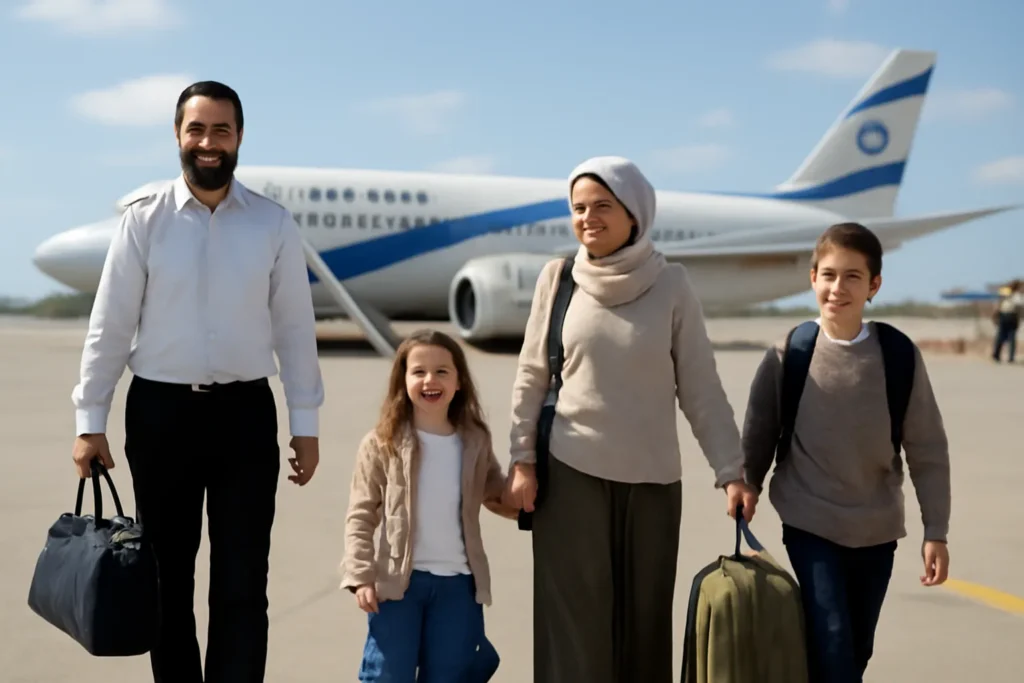
In recent decades, new patterns have emerged. While France and the United States continued to send sizable numbers of new immigrants, Israel has also welcomed arrivals from other European countries, Africa, and parts of Latin America. The ongoing conflicts and social changes in the Middle East have shaped decisions for some to seek the relative security and opportunity of an Israeli home. Programs designed to streamline and fund immigration, such as Nefesh B'Nefesh (a collaboration among government offices, airlines, and Jewish organizations), have facilitated organized moves and support for newcomers as they adjust to life in Israel.
Another important trend is the demographic contribution of younger Jews studying or working abroad who decide to make aliyah as part of long-term life plans. This has helped sustain Israel’s growth, diversify its talent pool, and strengthen its cultural life. As a result, contemporary migration trends are characterized by a combination of family reunification, professional opportunities, religious and cultural motivations, and a sustained commitment to building a shared Jewish future in the land of Israel.
Policies, organizations, and practical aspects of immigration
Five decades after the founding of the state, the institutional framework surrounding Jews’ return to Israel evolved into a structured system. The Law of Return provides eligibility criteria and citizenship rights for Jews and those with Jewish ancestry, creating a political path for migration. Various organizations and government programs coordinate the practical side of immigration, including language instruction, housing, job placement, and social integration. The following components are central to the process:
Legal framework: The Law of Return defines eligibility and outlines the pathway to citizenship for eligible individuals arriving in Israel. It remains a cornerstone of national policy and a focal point in international discussions about Jewish immigration and diaspora relations.
Absorption and integration: Government ministries and nonprofit groups run programs to help new arrivals learn Hebrew (Ulpan classes), secure housing, obtain professional licenses, and integrate into schooling and civic life.
Nonprofit and community support: Organizations such as Nefesh B'Nefesh work with the Jewish Agency for Israel and other partners to coordinate flights, pre-arrival preparation, and post-arrival services. These networks reduce the friction of relocation and help immigrants chart a path to stability.
Economic and employment considerations: Access to markets, entrepreneurship incentives, and the opportunity to contribute to Israel’s growing high-tech and innovation sectors attract skilled workers from around the world.
Cultural and religious life: The absorption process often includes access to synagogues, study houses, religious institutions, and cultural centers that help newcomers maintain continuity with their heritage while adapting to a new social context.
While the Law of Return provides a legal route, the reality of immigration also depends on housing availability, language acquisition, and the ability to navigate a different social and economic environment. The integration journey is not merely a border issue but a lifelong process of building a home, community, and career in a foreign land while preserving a sense of continuity with Jewish history and memory.
Current migration trends and global dynamics
In the early 21st century, Jews continue to migrate to Israel for a mix of reasons, and the pattern of immigration has shifted with global events, economic conditions, and evolving anti-Semitism. Some of the most notable contemporary trends include:
Continued pull from North America: The United States and Canada remain sources of significant aliyah, with many professionals and young families seeking to combine security and opportunity with living in a Jewish-majority society and a country that supports civil liberties.
Increased arrivals from Europe: France, the United Kingdom, and other European countries have seen upward migration in response to anti-Semitism, security concerns, and the desire to live in Israel’s social and economic environment.
Ethiopian and other long-standing communities: The Ethiopian Jewish population has continued to contribute to Israeli society, with ongoing efforts to address integration and equity, while other longstanding communities from Middle Eastern and North African backgrounds maintain cultural links and family connections across borders.
Regional upheavals and refugee currents: Conflicts and political changes in nearby regions can influence migration decisions, with Israel often seen as a place of stability and continuity for Jewish communities facing danger or disruption elsewhere.
Global mobility and diasporic networks: The rise of diaspora networks, online communications, and international partnerships has made the process of relocation smoother and more predictable, enabling families to plan migrations around jobs, schools, and housing.
Politically, the government’s settlement policies, budget allocations for housing and education, and international diplomacy shape the pace and direction of these flows. The presence of robust absorption programs and a strong civic infrastructure helps ensure that new arrivals can integrate without losing their identity nor their connection to a broader Jewish community worldwide. The result is a dynamic that continually redefines what it means for Jews to live in Israel, in ways that reflect both continuity and change across generations.
Impact on Israeli society and the Jewish world
The steady stream of newcomers from around the world has carved a distinctive character for Israel’s society, economy, and culture. Immigrants bring languages, foods, music, and traditions that enrich daily life while presenting challenges of integration, education, and equity. The blending of diverse Jewish traditions—from Ashkenazi and Sephardi to Mizrahi and Ethiopian—has created a rich, multi-vocal public square, which in turn shapes politics, media, and religious life.
Economically, immigration has contributed to labor force growth, innovation, and entrepreneurial activity, particularly in the technology sector, medicine, and academia. The influx of highly educated professionals has helped fuel Israel’s reputation as a global technology hub, while also stressing urban housing markets and urban infrastructure in cities with high absorption rates.
Culturally, the presence of diverse Jewish communities has widened the scope of religious practice, education, and cultural production. Schools, universities, community centers, and cultural institutions reflect the complexity of Israel’s population and help preserve the voices of new arrivals while connecting them to the broader Israeli public. This dynamic is visible in music, language use (modern Hebrew as a unifying medium), and in public debates about national identity and the meaning of belonging in a modern Jewish state.
From a global Jewish perspective, the annual cycles of migration reinforce the idea that Israel is not only a homeland in a political sense but also a focal point of Jewish history, memory, and destiny. The ongoing conversation about what it means to be part of a Jewish people that lives in a sovereign land continues to energize Jewish communities around the world, fostering philanthropy, advocacy, and cultural exchange that connect diaspora communities with Israeli society.
It is also essential to acknowledge that migration experiences are not uniform. Some newcomers encounter difficulties in finding housing, securing employment, and achieving social integration. Others adapt quickly, leveraging networks, language learning, and educational opportunities to establish thriving lives. Public policy and civil society organizations play a critical role in balancing the needs of new immigrants with the larger social agenda of an inclusive, resilient society.
Future prospects and ongoing debates
What lies ahead for Jews returning to Israel? The future of this ongoing movement will depend on a combination of demographic realities, geopolitical developments, and the ability of Israeli society to adapt to a rapidly changing world. Some potential trajectories and debates include:
Demographic balance: Israel’s population growth and the pace of new immigration will influence social policy, housing, and education, as well as the political landscape, including debates about state resources and inclusion.
Integration policies: The effectiveness of absorption programs, language education, and professional credential recognition will shape how smoothly newcomers can participate in the economy and civil life.
Security and international relations: Regional tensions, security concerns, and international diplomacy will influence Jewish migration decisions, as well as perceptions of Israel as a safe home for Jews worldwide.
Cultural synthesis: The continued merging of diverse Jewish cultures—Ashkenazi, Sephardi, Mizrahi, Ethiopian, and others—will keep enriching Israeli culture, while also prompting discussions about equality, representation, and social justice.
Religious pluralism and community life: Debates about religious pluralism, the place of different Jewish denominations, and access to holy sites will continue to shape the social fabric and political discourse in Israel.
Global diaspora relations: As Jews in the diaspora observe ongoing shifts in migration patterns, Israel’s relationship with world Jewry, Jewish agencies, and partner organizations will evolve, influencing fundraising, advocacy, and international cooperation.
In the broader sense, the story of the Jewish return to Israel remains a powerful narrative about memory, belonging, and resilience. The movement’s future will likely involve a combination of steady, long-term immigration, periodic surges in response to world events, and ongoing efforts to ensure that new generations can claim a robust, inclusive, and sustainable home in the land that has shaped Jewish history for millennia.
In sum, the journey of the Jewish people back to their historic homeland encompasses a deep historical arc, a set of compelling modern motivations, and a series of waves that have reshaped Israeli society and the global Jewish community. From ancient ties to the present-day and future prospects, the story of the Jews’ return to Israel—through aliyah and beyond—offers a rich field for study, reflection, and civic engagement. By understanding the history, recognizing the reasons for migration, and analyzing current trends, readers can better grasp how a diaspora population built a nation and continues to sustain a dynamic, multivalent Jewish life in Israel today.
Jewish return to Israel is not a single event but a continuing process that blends memory with modernity, faith with citizenship, and regional realities with transnational networks. The movement’s history invites ongoing discussion about identity, belonging, and the responsibilities of a nation-state to both its native citizens and the global Jewish community. As new generations rise and the world around them changes, the question of where Jews choose to live and how they shape that homeland will remain a central thread in the story of Israel and the Jewish world.








Leave a Reply