Defining Zionism: What the Term Means and How It Has Been Used
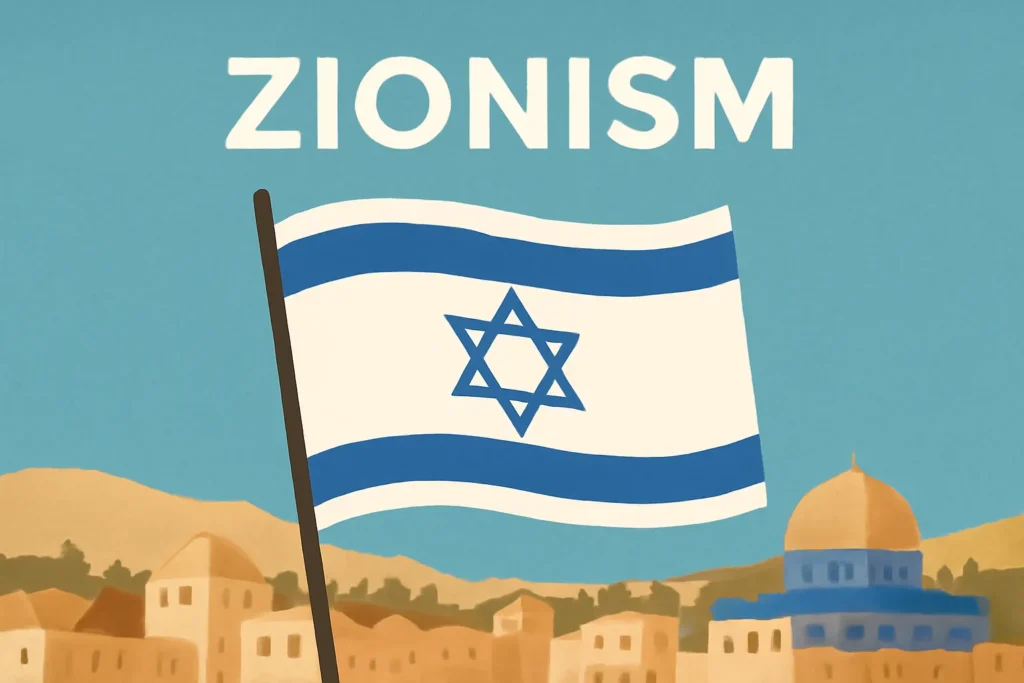
The term Zionism describes a political, cultural, and nationalist project aimed at securing the Jewish right to self-determination in the historic homeland of the Jewish people. While the precise meaning has varied over time and among communities, at its core Zionism asserts that Jews form a distinct national group deserving political sovereignty or meaningful national life in a national homeland. For some, it signals a concrete political program—creating a Jewish state—while for others it emphasizes cultural revival, religious connection to the land, or the protection of Jewish communities worldwide. In broad terms, Zionism concerns the relationship between the Jewish people, the land of Israel, and political or moral commitments to national belonging. Throughout this article, we will use Zionism as an umbrella term that encompasses historical movements, diverse ideologies, and contemporary debates.
Origins and Early Precedents
The seeds of Zionism lie in a long arc of Jewish history, spelling out two intertwined impulses: longing for a homeland and concerns about safety in diasporic life. For many centuries, Jewish communities maintained a spiritual and cultural connection to the land of Israel, even when political sovereignty was absent. In later centuries, moments of political awakening and national self-consciousness in Europe and the Middle East intersected with this deep-rooted sense of belonging.
Religious and Cultural Antecedents
Some streams of Jewish thought stressed a religious reclamation of the land and the restoration of Jewish life in Jerusalem and other ancient centers. This line of thinking often framed the land as a sacred inheritance rather than a purely secular political project. At the same time, other strands highlighted linguistic revival, education, and cultural renewal as essential to preserving Jewish identity in the modern world. In this sense, cultural Zionism placed emphasis on language (notably Hebrew as a modern, living tongue), education, and a revived Jewish culture as prerequisites for a viable future in Eretz Yisrael (the Land of Israel).
Political and National Awakening in the 19th Century
The actual emergence of Zionism as a modern political movement took shape in the late 1800s, when nationalism as a political force gained momentum across Europe and beyond. Jewish intellectuals and activists began to articulate a plan for a Jewish national home, especially in response to rising antisemitism, persecution, and the precarious status of Jews in many societies. This era gave rise to a set of organized efforts and a new vocabulary for the Jewish public: organizational Zionist structures, congresses, and publications dedicated to the question of a homeland. The explicit shifting from mere yearning to a concrete political program marks a turning point in the history of the idea we now call Zionism.
Core Concepts and Varieties of Zionism
The term Zionism encompasses a spectrum of ideas about how Jews should relate to a homeland and what form that homeland should take. Distinctions among different streams help explain why there is not a single, monolithic Zionist doctrine. The main branches include political Zionism, cultural Zionism, religious Zionism, practical Zionism, and socialist Zionism (also called labor Zionism). Each strand emphasizes different means—political advocacy, cultural revival, religious legitimacy, practical settlement, or socialist economic organization—yet all articulate some version of Jewish self-determination in a national context.
Political Zionism centers on gaining international recognition and political legitimacy for a Jewish state as a response to existential threats and discrimination. The most influential figure associated with this strand is Theodor Herzl, whose writings and activism argued that a formal, recognized sovereign entity was the practical solution to anti-Jewish persecution in Europe. The First Zionist Congress, convened in 1897 in Basel, Switzerland, crystallized a political program aimed at establishing a Jewish homeland and creating institutional structures to advance that goal.
Cultural Zionism
Cultural Zionism emphasizes creating a national culture that expresses Jewish identity in the modern era. Proponents argued that a revived Hebrew language, literature, arts, and education would catalyze a sense of peoplehood even before a sovereign state took shape. A leading voice in this stream was Ahad Ha'am, who urged a revival that would form the moral and cultural core of a future state. For cultural Zionists, sovereignty was important, but flourishing Jewish culture and spiritual renewal were just as essential for the survival and dignity of Jewish life.
Religious Zionism
Religious Zionism binds the nation-building project to religious faith and messianic expectation. Some religious Zionists view the return to the land as a divine command or a fulfillment of biblical prophecies, while others stress the ethical and practical responsibilities that come with sovereignty. This stream often supports settlement activity and the integration of religious life with political reality, arguing that a Jewish state in the land of Israel is compatible with, or even required by, religious obligation.
Practical Zionism and Settlement
Practical Zionism focuses on actions that enable Jewish settlement and development in the land, regardless of immediate political sovereignty. This agenda included building institutions, establishing farms and towns, and fostering immigration and absorption. The practical approach paved the way for later political decisions and created a groundwork of infrastructure, settlement networks, and social institutions that would be critical to the later state-building process.
Socialist Zionism (Labor Zionism)
Socialist Zionism connected national revival with socialist ideals—labor unions, collective farms, and cooperative communities. Advocates believed that building a new Jewish society required economic and social reforms that could model a just and productive state. This strand played a major role in the founding years of the State of Israel, shaping political parties, labor institutions, and social policy.
Milestones in Zionist History
The Zionist movement is marked by a series of pivotal events that transformed a set of ideas into real-world institutions, political agreements, and ultimately a modern state. Understanding these milestones helps illuminate how Zionism evolved from a transnational movement into a sovereign political reality.
1897 The Basel Congress establishes the World Zionist Organization, signaling a unified organizational effort and a formal agenda for a Jewish homeland.
1917 The Balfour Declaration expresses British support for a "national home for the Jewish people" in Palestine, a diplomatic milestone that affected subsequent policy and debate.
1922 The League of Nations grants a mandate for Palestine, setting the legal framework for British administration and Jewish immigration and settlement.
1947 The United Nations proposes partition, recommending separate Jewish and Arab states, which becomes a focal point in the debate over sovereignty and borders.
1948 The State of Israel is proclaimed, fulfilling a political and national aspiration and triggering regional conflict and subsequent wars that shaped the Middle East landscape for decades.
1967 The Six-Day War expands Israeli-controlled territory and fosters new issues around sovereignty, settlements, and the future of negotiations with neighboring states and Palestinians.
1978 The Camp David Accords, while primarily between Israel and Egypt, illustrate how Zionist aims intersect with regional diplomacy and peace processes.
1990s–present Various peace processes, security concerns, and debates over settlement policy continue to influence Zionist thought and policy, revealing a tension between national security, international legitimacy, and human rights considerations.
Zionism and the State of Israel
The establishment of the State of Israel in 1948 represents a historic culmination for many strands of Zionism, yet it also raises enduring questions about borders, identity, and rights. Different perspectives exist on how the Zionist project should be interpreted in relation to Palestinian rights, refugee status, and the nature of a Jewish and democratic state. The state-building era involved intensive immigration, nation-building institutions, and a complex constitutional framework that sought to balance democracy, Jewish national character, and minority protections. In practice, debates over socioeconomic policy, security commitments, and settlement activity have been central to Zionist policy across decades.
The diaspora—the broad, global community of Jews outside of Israel—has played a critical role in shaping Zionism as a transnational movement. Many Jews outside the land of Israel supported the idea of a Jewish homeland for safety, cultural revival, and political vitality. Others questioned or critiqued particular policies or approaches, contributing to an ongoing, plural conversation about what Zionism means in different national and cultural contexts. Diaspora communities often maintain strong ties to Israel through philanthropy, culture, and political advocacy, while also sustaining diversity of opinion about the best means to achieve Jewish self-determination and security.
Contemporary Debates and Critiques
As a living political idea, Zionism exists within a wide spectrum of opinions. Contemporary discussions frequently address the balance between national self-determination and the rights of Palestinians in territories under dispute. Critics argue about the implications of settlement policy, the treatment of Palestinians, and the conditions necessary for lasting peace. Supporters emphasize the necessity of a safe homeland for Jews who face antisemitism and displacement and highlight Israel's democratic institutions, technological innovation, and social resilience as part of the Zionist project. The debates are nuanced and often reflect broader questions about human rights, regional security, and international law.
Misconceptions, Clarifications, and Common Questions
Given its complex history, Zionism has been misunderstood in various ways. Some common misperceptions include treating Zionism as a monolith or equating all Jewish people with a single political stance. In reality, the Zionist movement comprises a range of ideologies and viewpoints, including those who prioritize security, democracy, religious significance, cultural revival, and social justice. It is also important to distinguish between Zionism as a nationalist project and anti-Zionism as a political position that opposes the idea of a Jewish state while not necessarily denying Jewish historical connections to the region. Clear-eyed discussion recognizes that these terms describe distinct political and ethical commitments.
Questions that often arise include:
What is the relationship between Zionism and Judaism as a religion or culture?
How do different Zionist strands interpret the concept of a “Jewish homeland”?
What are the implications of Zionist ideas for Palestinian rights and for regional peace?
How has international law, diplomacy, and United Nations resolutions shaped the Zionist project?
Contemporary Zionism: Diversity of Thought and Practice
In the present era, Zionism continues to evolve through dialogue among diverse communities and political actors. There are those who advocate for a strong security state and robust national infrastructure; others who push for a two-state framework with a Palestinian partner for peace; and still others who emphasize social justice, civil rights within Israel, or a bi-national or multi-identity approach. This plurality is reflected in political parties, civil society groups, and cultural initiatives that map different paths toward national renewal and cultural flourishing.
The ongoing conversations about settlement policy, human rights, and economic development illustrate that Zionism is not a fixed doctrine but a living conversation. Understanding this fluidity is essential for anyone seeking to comprehend how Zionism interacts with global politics, Jewish life, and regional realities.
Glossary of Core Terms and Concepts
The following terms are frequently encountered in discussions about Zionism and related topics. They help clarify the language used in historical texts, policy debates, and contemporary journalism.
Aliyah: the immigration of Jews to the Land of Israel, central to Zionist strategy and national development.
Land of Israel: the historical and religious term for the geographic area central to Jewish identity and Zionist aspirations.
Self-determination: the right of a people to determine their political status and pursue cultural and national development.
Hebrew revival: the modernization and popularization of Hebrew as a national language, a cultural pillar of Zionist effort.
Two-state solution: a proposed framework for peace that envisions Israel and a Palestinian state coexisting with defined borders.
Conclusion: The Continuing Relevance of Zionism
While the state of Israel stands as a defining achievement for many who identify with Zionism, the movement's meaning continues to be debated and reinterpreted. The enduring questions—how to balance national security with human rights, how to ensure democratic legitimacy for a diverse society, and how to secure a peaceful future for both Israelis and Palestinians—remain central to contemporary discourse. Understanding the history, the various strands, and the global context of Zionism helps illuminate not only political developments but also the cultural and moral dimensions of a movement that has shaped, and continues to shape, Jewish life and regional politics in profound ways.
Further Readings and Contextual Notes
For readers who wish to deepen their understanding, exploring primary sources, historical accounts, and scholarly analyses can offer a more nuanced picture. Classic works on the subject discuss the roots of Zionism, the biographies of key figures, and the evolution of Zionist thought through different historical eras. Contemporary scholarship often emphasizes the intersections between national identity, state-building, and international diplomacy, highlighting how historical memory and practical politics interact in the ongoing story of Zionism.
Additional Perspectives and Reflexive Dialogues
It is important to recognize that Zionism is not simply a historical curiosity; it is a living framework that continues to influence policymakers, scholars, artists, and ordinary citizens. Dialogues across communities—Jewish, Palestinian, regional, and international—contribute to a broader understanding of how national aspirations can be harmonized with universal human rights, how diverse identities can share space in a single political project, and how a sense of belonging can coexist with a commitment to justice and peace.
Key Takeaways: What Makes Zionism Distinct
- Zionism is a multi-faceted movement rooted in Jewish history, aimed at enabling Jewish self-determination and cultural revival in the land of Israel. It includes a spectrum of ideologies—from strong political sovereignty to cultural and religious revival.
- Its historical development spans precursors in religious and cultural longing, through modern political organization in Basel, to eventual statehood in 1948 and ongoing debates about borders, identity, and rights.
- The movement has had a profound impact on international politics, regional diplomacy, and the daily lives of Jews worldwide, while also shaping Palestinian national consciousness and regional conflicts that persist into the present.








Leave a Reply