What Is Aliyah? Definition, History, and How It Works
What Is Aliyah? Definition, History, and How It Works
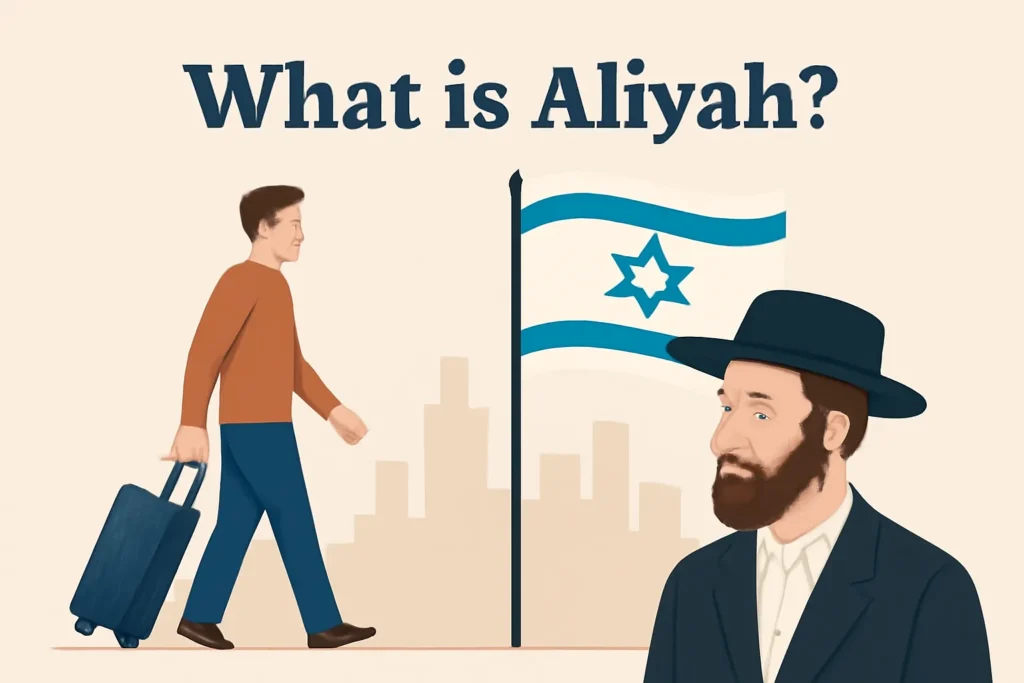
Aliyah is a central and enduring concept in Jewish history and Israeli society. Derived from a Hebrew verb meaning "to go up," the term encapsulates more than a simple act of relocation. It carries a national, religious, and cultural dimension: it refers to Jewish immigration to the land of Israel, with the expectation of building and sustaining a Jewish homeland. In modern discourse, you will also hear phrases like making aliyah, aliyah to Israel, and oleh or oleh hadash, all of which highlight different nuances of the same overarching process. This article explains what aliyah means, traces its history, and describes how it works in the contemporary state of Israel.
At its most fundamental level, aliyah is the act of Jews relocating to Israel with the intention of residing there permanently. The word itself evokes a sense of ascent—toward a homeland with deep historical and spiritual resonance. In legal terms and in daily life, however, aliyah also involves practical steps, rights, and services that help newcomers settle. The modern practice sits at the intersection of religion, nationality, migration policy, and social integration.
Aliyah is not only about physical movement; it also entails belonging to a national project and participating in Israeli society as a citizen or resident.
People who move as part of this process are often called olim (singular oleh, plural olim), meaning those who ascend or go up to Israel.
In everyday conversation, you may encounter oleh hadash (a “new immigrant”) to distinguish first-time arrivals from longer-term residents who have already established themselves.
There are variations in how aliyah unfolds, depending on personal background, family status, and the country of origin, but the central aim remains the same: to build a life in Israel within a framework of rights, responsibilities, and community networks.
Etymology and Semantics
The term aliyah comes from the Hebrew root עלה (alah), meaning “to go up.” In biblical and post-biblical language, it conveys both elevation and return—a conceptual return to the ancestral homeland. In modern usage, this etymology underscores the dual sense of returning to a land and committing to participate in its civil and cultural life. Some discussions emphasize people’s ascent in terms of national belonging, while others stress the legal status that enables Jewish citizens and certain relatives to obtain Israeli citizenship under specific laws and policies.
Historical Waves of Aliyah
The history of aliyah is written in waves—distinct periods when large groups of Jews moved to what would become the State of Israel. Each wave reflected a mix of push factors (persecution, economic hardship, persecution in home countries) and pull factors (political changes, Zionist organizing, opportunities in agricultural and urban settlement). Below is a concise overview of the major epochs often talked about by historians and scholars.
The First Aliyah (c. 1882–1903): Material and spiritual inspiration from Jewish national revival in the wake of pogroms in Eastern Europe and the rise of modern Zionist thought, with settlements founded in rural areas and cities alike.
The Second Aliyah (c. 1904–1914): A period of pioneering social experiments, farmers (“kupot”) and workers, and the groundwork for communal models like the kibbutz.
The Third and Fourth Aliyah (c. 1919–1928): Continued immigration linked to the aftermath of World War I, the Balfour Declaration, and the early British Mandate; urban and agricultural development continued to shape the Yishuv.
The Fifth Aliyah (c. 1929–1939): A significant influx of Jews from Europe fleeing rising antisemitism and the onset of World War II, reinforcing the population base and institutional infrastructure of the Yishuv.
Postwar and mid-20th-century aliyah (late 1940s–1950s): The founding of the State of Israel in 1948 sparked massive arrivals, including Holocaust survivors and new immigrants from war-torn regions, often facilitated by the nascent state and international Jewish organizations.
Ethiopian and other mid-to-late 20th-century movements (1980s–1990s): Major operations and ongoing streams brought large numbers of Jews from Ethiopia, North Africa, and later the Former Soviet Union, each integrating into Israeli society in complex ways.
Soviet and post-Soviet aliyah (1990s–2000s): A transformative period driven by the collapse of the Soviet Union; hundreds of thousands of Jews and persons with Jewish roots relocated to Israel, reshaping diaspora connections and domestic demographics.
Recent waves and ongoing arrivals from France, the Americas, and other regions continue to diversify Israeli society while reinforcing the country’s role as a center for Jewish life worldwide.
Across these eras, aliyah has been more than a migration pattern; it has been a driving force behind Israel’s demographic growth, defense, economy, and culture. Each wave brought new languages, customs, and professional skills, which in turn influenced policy, education, and urban planning. The core idea—of Jews returning to their historic homeland—has remained constant, even as the practical arrangements and social realities have evolved.
What these waves tell us about resilience and adaptation
The long arc of aliyah reveals how communities adapt to new environments, learn new languages, and negotiate identity in a country that itself defines its political and cultural geography in terms of a Jewish and democratic state. It also shows how international Jewish communities have engaged with Israel—through aliyah organizations, charitable networks, and political advocacy—creating a transnational system of support that spans continents.
In contemporary practice, aliyah is facilitated by a combination of Israeli government agencies, non-profit organizations, and international Jewish communities. The essential idea is to enable eligible individuals and families to immigrate, obtain citizenship when applicable, and access services that help them integrate into Israeli life. A central component is the formal Law of Return, which provides a legal pathway to citizenship for Jews and for certain relatives. Yet the actual experience of aliyah involves practical steps, support networks, and a period of absorption or “oleh” life in the country.
The Law of Return and eligibility
The Law of Return, enacted in 1950 and amended since, grants the right of aliya and Israeli citizenship to Jews, as well as to children and grandchildren of Jews, and to spouses of Jews and their descendants in many cases. In practice, this means that eligible individuals can begin a formal immigration process with the aim of acquiring citizenship. Non-Jewish family members may be eligible for other immigration pathways, and Israel recognizes various categories of Jewishness and Jewish identity for purposes of aliyah.
Organizations and authorities involved
Several institutions play a key role in modern aliyah:
The Jewish Agency for Israel, historically central to Zionist settlement and today a major partner in guiding new immigrants.
Nefesh B'Nefesh, a leading NGO that coordinates flights, pre-arrival counseling, and logistical support for donors and new olim from North America, the UK, and Francophone countries.
Population and Immigration Authority (under the Israeli Ministry of Interior), which handles paperwork, visas, and residency status once aliyah is underway.
Ulpanic and absorption services (including government and municipal programs) that provide language instruction, job placement, housing assistance, and social integration support.
The steps people typically follow
Decision and preparation: Decide to move, assess personal and family considerations, and gather relevant documents.
Arrangements with a coordinating body: Contact a recognized organization (such as Nefesh B'Nefesh or the Jewish Agency) to receive guidance and to prepare for the arrival.
Submitting the application: Complete the aliyah process with the relevant authorities, including proving Jewish status or eligibility under the Law of Return.
Flight and transition: Plan travel to Israel, often with organized flights and pre-arrival checks; upon arrival, participate in absorption programs.
Absorption and integration: Engage in Hebrew-language classes (ulpan), housing arrangements, school enrollment for children, and workforce integration.
The overall process emphasizes language acquisition, education, and housing support, all of which are essential to successful integration. The government and partner organizations work to minimize bureaucratic hurdles and maximize access to social services, health care, and employment opportunities during the initial post-arrival period.
Eligibility, Documentation, and the Application Process
A critical area for anyone considering aliyah is understanding eligibility and the required documentation. While the Law of Return provides the legal basis for citizenship, actual immigration involves a set of steps and proofs that must be prepared in advance. Below is a practical guide to the main elements of eligibility and the typical documents requested.
Who qualifies for aliyah?
Broadly speaking, the people who commonly qualify include:
Jews by halachic or recognized civil definitions, depending on the country of origin and the verifying authorities.
Children and grandchildren of Jews, as defined by relevant laws and interpretations, along with their spouses in many cases.
Individuals with Jewish spouses or close family ties under the framework of the Law of Return, subject to verification.
In some circumstances, individuals who have faced persecution or clear discrimination due to Jewish status may be considered eligible under special provisions.
Common documents and verifications
Typical documentation includes, but is not limited to:
Passport or other government-issued identification.
Birth certificates for all members of the family involved in the move.
Marriage certificates if applying as a family unit or spousal eligibility.
Proof of Jewish status (e.g., letters from a recognized rabbi or community authority, documentation of a Jewish upbringing, or other acceptable evidence depending on the country and program).
Documents related to education, profession, and language proficiency if relevant to the absorption process.
Any court-ordered or government-required documents for family status changes, name changes, or custody arrangements when applicable.
Steps in the application process
Consultation with an eligible organization to understand documentation and timelines.
Submission of initial materials to the coordinating body, often including proof of Jewish status and identity documents.
Review and interview stages to assess eligibility and readiness for absorption.
Approval in principle and guidance on travel logistics, flights, and pre-arrival arrangements.
Arrival and enrollment in absorption programs, language classes, and educational or work placement planning.
It is important to note that procedures can differ somewhat based on country of origin and policy changes. Prospective Olim are encouraged to consult official sources and recognized organizations for the most current requirements. The overall path emphasizes clarity, support, and readiness, ensuring that newcomers can begin their new lives with practical assistance and social networks in place.
Absorption and Community Life: After Arrival
A central feature of aliyah in modern Israel is the absorption phase—often called the oleh absorption period. The aim is to smooth the transition from planning to daily life, with language learning, housing, employment, education, health care, and community building as focal areas.
Language and education
Hebrew language acquisition is typically supported through official ulpan programs that are designed to fit various levels of prior fluency. For families with children, schools and after-school programs are tailored to new immigrants, helping children adapt to the Israeli education system while preserving cultural backgrounds.
Housing, health, and social services
New Olim often receive help securing initial housing and navigating health services. Health coverage generally begins upon arrival or shortly thereafter, with ongoing access to the national health system. In parallel, the absorption process helps immigrants connect with social services, municipal programs, and career guidance to facilitate entry into the labor market.
Employment and economic life
Building a sustainable economic life is a core objective of aliyah. Job placement assistance, vocational training, and recognition of professional credentials are common elements of the absorption framework. The landscape of opportunities varies widely by region, city, and sector, but the emphasis remains on enabling Olim to contribute to Israeli society.
Community and belonging
Many olim find value in participating in immigrant and local communities, synagogues, and cultural centers. These networks provide social support, language practice, and a sense of belonging as new residents navigate the complexities of everyday life in a new country.
Benefits, Support, and Public Policy
Beyond citizenship, aliyah is accompanied by a range of benefits designed to encourage immigration and integration. These supports include financial grants, housing stipends, tax incentives, and targeted welfare programs, all coordinated through a mix of government agencies and non-profit organizations.
Financial assistance for initial housing, schooling, and essential needs, often provided through public programs and partner organizations.
Tax incentives and exemptions for new residents during the early years of settlement.
Health and education access as standard parts of the absorption package, with expedited enrollment for primary schooling and health care enrollment.
Community networks that help Olim connect with experienced immigrants who can share practical advice and support.
It is important to recognize that the specific benefits can vary over time. Prospective olim should consult up-to-date resources from the Population and Immigration Authority, the Jewish Agency, and partner organizations to understand eligibility and current programs.
Common Questions, Myths, and Clarifications
In public discourse, several questions and misconceptions commonly arise regarding aliyah. Clarifying these points can help individuals make informed decisions and set realistic expectations about the process and life in Israel.
Aliyah guarantees citizenship in all cases? The Law of Return provides a framework for citizenship, but the practical immigration process includes verification and may involve conditions. It does not automatically guarantee every outcome in every circumstance.
You must be Jewish by birth to immigrate? Not necessarily. The Law of Return covers Jews, children and grandchildren of Jews, and spouses in many cases; conversion status and other identity factors may also be considered within the framework of eligibility.
You need to speak Hebrew already to make aliyah? Not at all. Ulpan and language support are integral parts of absorption, designed to bring newcomers up to speed as they settle.
Aliyah is a one-time event? In practice, aliyah is a process that includes pre-arrival planning, travel, and a lengthy absorption period during which newcomers build a life and integrate into society.
All Olim live in Jerusalem or Tel Aviv? No. Olim settle nationwide, including in development towns, peripheral communities, and municipal centers across Israel. Each community offers distinct opportunities and challenges.
Understanding these nuances helps dispel myths and fosters a more accurate picture of aliyah as a dynamic, multi-phase journey rather than a single act.
Variations in Terminology and Related Concepts
The language surrounding aliyah reflects historical, religious, and cultural dimensions. Knowing the terminology can improve clarity when exploring resources, speaking with authorities, or planning a move.
Oleh and Oleh Hadash
A person who makes aliyah is called an oleh (plural: olim). The term oleh hadash is specifically used to emphasize a new immigrant who has just arrived and is beginning the absorption process.
Aliyah L’Regel and other historical expressions
In some historical narratives, you will encounter terms describing specific episodes or waves, but in contemporary use, the practical distinctions tend to revolve around status (new immigrant vs. established resident), country of origin, and the stage of integration.







Leave a Reply