Matthew 18:20 teaches that Jesus is present with believers who gather in his name. The verse is a promise about Christ’s spiritual presence, not a rule that a prayer meeting must have exactly two or three people.
Matthew 18:20 appears in a section where Jesus teaches his disciples how to respond when a believer sins against another believer. The surrounding instructions move from private conversation, to involving one or two others, and then to the wider church when necessary. The subject is therefore not only private devotion; it is also reconciliation, accountability, and the health of the Christian community.
Just before this verse, Jesus speaks about believers agreeing in prayer and about the Father responding to their request. He then explains that he is present when two or three gather in his name. These statements belong together. The gathering is marked by dependence on God, sincere agreement, and a desire to act according to Jesus’ teaching.
The phrase “in my name” means more than saying Jesus’ name aloud at the beginning or end of a prayer. To gather in his name is to gather under his authority, with trust in him and a willingness to follow his character. A meeting can use Christian language and still miss the meaning of the verse if it is driven by pride, revenge, manipulation, or personal ambition.
Central idea: Matthew 18:20 gives comfort to small gatherings, but its deeper emphasis is that Jesus remains present and active when his people seek him faithfully together.
Why the surrounding verses matter
Reading Matthew 18:20 by itself can make it sound like a general statement about any small group of Christians. That application is not wrong, but the surrounding passage gives it greater depth. Jesus is addressing the difficult work of handling sin while protecting both truth and the person who has done wrong.
Matthew 18:15 begins with a private conversation between the offended person and the one who caused the harm. If the person will not listen, one or two others are brought into the matter. If the issue remains unresolved, the church becomes involved. This process seeks restoration before public judgment, while also recognizing that serious wrongdoing cannot simply be ignored.
In that setting, the promise of Jesus’ presence encourages believers to make hard decisions with humility. They are not left to rely only on personal feelings, group pressure, or social status. When they seek reconciliation and practice discipline according to Jesus’ instruction, Christ is present in the work of the community.
The verses that follow strengthen this connection. Peter asks how often he should forgive a fellow believer, and Jesus responds by calling his followers to generous, repeated forgiveness. The larger unit therefore holds several ideas together: honest correction, communal responsibility, prayer, forgiveness, and the presence of Christ.
What “two or three” does and does not mean
The number two or three should not be treated as a mystical minimum for Christian prayer. Jesus is not saying that a prayer offered alone is unheard, or that a large congregation has a greater spiritual value than a small one. Other passages in the New Testament affirm personal prayer and the Father’s awareness of private devotion.
Instead, the wording highlights the value of believers gathered together, even when the group is small or overlooked. In the ancient setting, two or three witnesses could establish a matter under the principle found in Deuteronomy 19:15. Matthew 18 may echo that legal background because the surrounding discussion involves testimony, correction, and communal judgment.
That possible connection does not mean every Christian meeting is a courtroom. It does show why Jesus may mention a small number of people. He is assuring his disciples that a faithful gathering does not become insignificant simply because it lacks crowds, public visibility, or institutional influence.
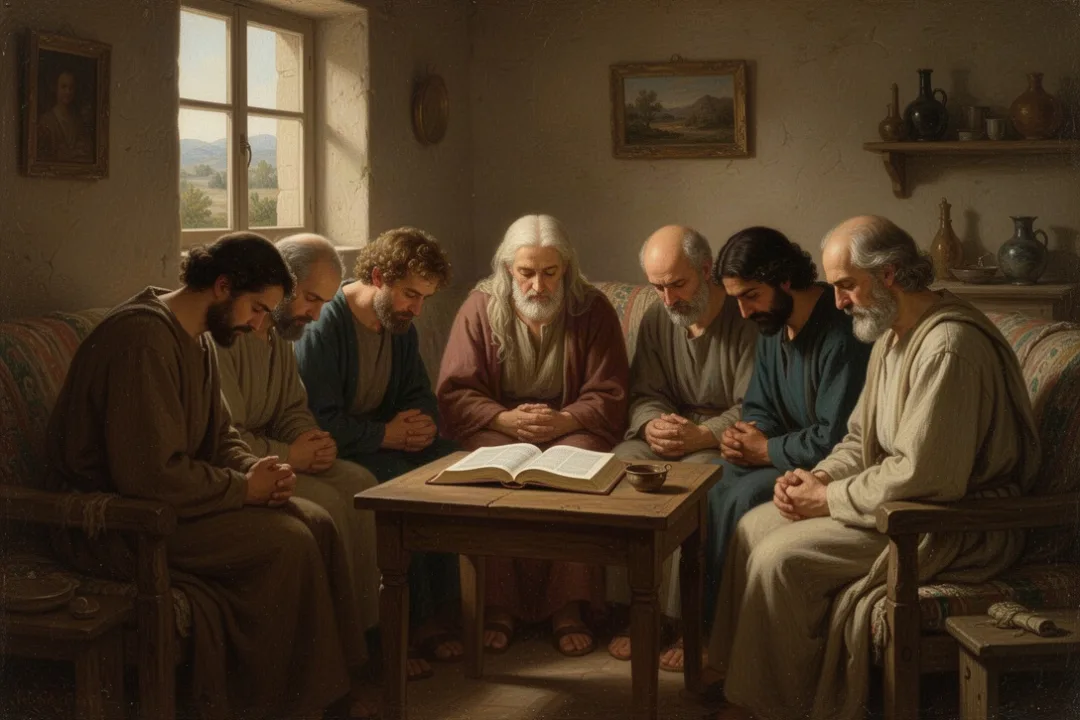
Two or three can describe a small prayer group, a pastoral conversation, or a few believers seeking wisdom together.
It does not establish a required attendance number for God to hear prayer.
It does not imply that individual prayer is less valid than group prayer.
It does not promise that every shared request will receive the exact outcome people want.
It does affirm that Christ is present with faithful believers, including those meeting in quiet or difficult circumstances.
What it means to gather in Jesus’ name
Gathering in Jesus’ name includes more than meeting in a church building or placing a Christian label on an event. The phrase points to purpose, allegiance, and conduct. Those who gather in his name are seeking to honor him, hear his teaching, and allow his priorities to shape the way they pray and treat one another.
A group may meet in a sanctuary, a home, a hospital room, a college dorm, or a prison cell. The physical setting does not determine whether the meeting reflects Matthew 18:20. What matters is whether the people are turning toward Jesus rather than using religion to promote themselves or control others.
Gathering in his name also involves a relationship among the people present. The context assumes that believers will address conflict honestly, listen to one another, and pursue forgiveness. Unity is not mere agreement; it is a shared submission to Christ that can include truthful disagreement, patient discernment, and a willingness to change.
That distinction helps prevent two opposite errors. One error reduces the verse to a slogan for any gathering, regardless of its purpose. The other makes the promise so narrow that believers overlook Christ’s real encouragement to small groups. The best reading recognizes both the specific context of church relationships and the broader comfort of Christ’s presence among his people.
How Matthew 18:20 relates to prayer
Many Christians know this verse because it is often used at the beginning of a prayer meeting. That use reflects the passage’s emphasis on shared prayer, but the verse should not be treated as a guarantee that agreement will force a particular answer from God. Biblical prayer is not a technique for controlling divine action.
The preceding verse speaks of believers agreeing about a request made to the Father. This agreement is best understood as shared discernment before God, not simply saying the same words or creating emotional intensity. People can agree sincerely and still need to submit their request to God’s wisdom, timing, and purposes.
Jesus’ promise of presence gives prayer its deepest confidence. The group does not pray into an empty room, and its effectiveness does not depend on the charisma of a leader. The people present can pray with honesty about fear, uncertainty, sickness, conflict, need, and hope because Christ is with them.
Shared prayer also changes the way individuals carry burdens. A person who cannot find words may receive support from others. Someone who is tempted to respond impulsively may benefit from the patience of a mature believer. A group can remember God’s faithfulness, ask for wisdom, and continue praying when an answer is delayed.
At the same time, private prayer remains essential. Jesus teaches personal prayer in Matthew 6:5-13, where he warns against performing religious devotion for public approval and presents a pattern of trust, forgiveness, dependence, and obedience. Matthew 18:20 should therefore complement private prayer, not replace it.
How the verse encourages small Christian gatherings
Matthew 18:20 has particular significance for believers who cannot gather in large numbers. Christians may meet in homes because of distance, illness, persecution, family responsibilities, or a lack of access to a formal congregation. Others may gather in a small Bible study, a hospital room, a military setting, or a workplace before the day begins.
The verse tells such believers that their gathering is not spiritually second-rate. Smallness does not mean absence. A few people who pray, listen to Scripture, confess wrongdoing, encourage one another, and seek to obey Jesus can participate in genuine Christian fellowship.
This encouragement should not be turned into a criticism of larger churches. The New Testament also describes believers meeting as a broader body, sharing gifts, caring for the vulnerable, teaching, worshiping, and practicing the Lord’s Supper. Matthew 18:20 protects the dignity of small gatherings; it does not declare that large congregations are unnecessary.
The verse can also strengthen Christians who feel forgotten. A group of two or three may have no stage, public recognition, or impressive resources. Yet faithfulness is measured by obedience to Christ, not by size or visibility. His presence gives dignity to ordinary acts of prayer, care, correction, and service.
How Christ’s presence differs from physical visibility
Jesus spoke Matthew 18:20 before his crucifixion and resurrection, when his disciples experienced his physical presence in a direct way. After his resurrection and ascension, the promise points to a continuing presence that is real even though believers do not see Jesus bodily among them.
This does not mean that Jesus is present only as a feeling. Some gatherings are emotionally powerful; others feel quiet, awkward, or dry. The promise rests on Christ’s faithfulness, not on the group’s emotional experience. Believers can trust that he is present even when the meeting seems ordinary.
His presence also does not mean every decision made by a group is automatically correct. Christians can misunderstand Scripture, misread circumstances, or let strong personalities dominate. The promise calls the group to test its actions by Jesus’ teaching, wise counsel, prayer, and the wider witness of Scripture.
Matthew 18:20 points believers away from spiritual performance and toward faithful fellowship under the authority of Christ.
That perspective offers both comfort and caution. Comfort comes from knowing that Jesus does not abandon a small or struggling community. Caution comes from remembering that invoking his name does not give a group permission to act carelessly or claim divine approval for personal preferences.
Common mistakes when applying Matthew 18:20
Because the verse is short and memorable, it is easy to apply it in ways that lose its meaning. These common mistakes can be avoided by reading the verse with its surrounding passage and by asking what kind of gathering Jesus is describing.
Treating two or three as a magic number: The verse does not say that God listens only when at least two people pray. Solo prayer is also part of Christian discipleship.
Using the verse to guarantee a desired result: Agreement in prayer is not a contract requiring God to grant a specific request. Christian prayer includes trust and submission.
Ignoring the context of conflict: Matthew 18:20 follows teaching about confronting sin, involving witnesses, and restoring relationships. It is not detached from those responsibilities.
Confusing unity with silence: A group is not faithful merely because no one challenges a harmful idea. Honest conversation can serve genuine unity.
Claiming that every group decision has divine authority: A gathering must continue testing its beliefs and actions against Jesus’ teaching.
Using the verse to dismiss the wider church: Small meetings matter, but Christian community also includes mutual service, teaching, pastoral care, and shared worship.
Measuring Christ’s presence by emotion: A quiet meeting may still be spiritually meaningful, while an intense meeting may still require careful discernment.
Practical ways to apply Matthew 18:20 today
The verse becomes most useful when it shapes the way believers gather, not merely the words they place on a meeting announcement. Its application begins with a clear purpose: to seek Jesus together rather than to use a group for influence, entertainment, or conflict avoidance.
Start with a Christ-centered purpose. Before meeting, identify whether the group is gathering to pray, study Scripture, reconcile, make a decision, encourage someone, or serve a practical need. A clear purpose helps keep the group under Jesus’ authority.
Make room for honest prayer. Let people bring real concerns rather than offering only polished religious language. Include gratitude, confession, requests for wisdom, and care for people who are suffering.
Listen before deciding. If the gathering concerns a conflict or important decision, allow each person to speak without interruption. Agreement that comes from pressure is weaker than agreement shaped by truth and patience.
Use Scripture responsibly. Read the relevant biblical teaching in context and distinguish what the text says from personal impressions. Avoid using isolated verses to force an outcome.
Practice forgiveness without denying harm. Matthew 18 joins correction with mercy. Forgiveness does not require pretending that wrongdoing was harmless or removing appropriate boundaries.
Review the group’s motives. Ask whether the gathering is seeking Christ’s honor or simply defending a preferred person, tradition, or result. Motives often affect the quality of communal discernment.
Follow prayer with faithful action. If the group prays for reconciliation, it should take reasonable steps toward a respectful conversation. If it prays for someone in need, it should consider practical care.
Practical test: Before claiming Matthew 18:20, ask whether the gathering reflects Jesus’ character through humility, truthfulness, forgiveness, and concern for others.
How churches can use the verse responsibly
Church leaders can use Matthew 18:20 to encourage participation from people who feel their contribution is too small to matter. A prayer meeting of three people deserves pastoral care just as a crowded worship service does. Leaders can also remind congregations that the power of a gathering does not rest primarily on production quality, attendance, or public attention.
The verse can guide leadership meetings, care teams, small groups, and reconciliation efforts. It encourages participants to pray before discussing difficult matters and to remember that the people in the room are not opponents to defeat. They are neighbors who need truth, patience, and grace.
Responsible use also requires safeguards. A leader should not quote the verse to silence questions, pressure people into agreement, or claim that disagreement means someone is resisting Jesus. Christian unity cannot be manufactured by spiritual intimidation. Healthy unity welcomes truth, protects vulnerable people, and remains accountable to Scripture and the wider church.
When a dispute involves abuse, threats, exploitation, or criminal conduct, Matthew 18 should never be used to demand a private meeting that could place someone at risk. Seeking safety, professional help, pastoral support, or legal assistance may be necessary. Reconciliation is a Christian value, but it does not cancel wise boundaries or the need to protect people from further harm.
What Matthew 18:20 reveals about Christian community
The verse presents Christian faith as relational. Believers do not follow Jesus only through isolated beliefs or private experiences. They learn to forgive, listen, correct, encourage, and serve within a community where other people’s needs and perspectives matter.
It also reveals that Jesus identifies closely with the life of his people. When believers gather under his authority, their meeting is not spiritually empty or disconnected from him. Christ’s presence creates responsibility: those who invoke his name should treat one another in ways that reflect his mercy, holiness, and truth.
Matthew 18:20 further challenges the assumption that visible success proves spiritual importance. A hidden gathering can be deeply faithful. Two people praying for wisdom, three believers working through a painful conflict, or a small group caring for a neighbor may be doing work that receives little public attention but matters greatly before God.
The promise therefore supports both courage and humility. It gives courage to believers who gather in weakness, and it gives humility to groups that gather with confidence. No meeting is made important by its own status; its significance comes from seeking Jesus faithfully and allowing his teaching to shape the community.
Questions to ask when reading Matthew 18:20
A careful reading can begin with a few practical questions. These questions help move the verse from a familiar slogan to a guide for Christian life.
What is the purpose of the gathering?
Are the participants seeking Jesus’ will or merely confirming their own?
Does the group’s behavior reflect the reconciliation and forgiveness taught in Matthew 18?
Are people free to speak honestly and safely?
Does the group distinguish biblical teaching from personal preference?
What faithful action should follow the prayer or discussion?
These questions do not reduce the verse to a checklist. They help believers notice whether their gathering reflects the promise it is claiming. Matthew 18:20 calls Christians to trust that Jesus is present while also taking seriously what it means to gather under his name.
Why Matthew 18:20 still matters for ordinary believers
Many Christians encounter this verse during seasons when community feels fragile. A church may be divided, a family may be praying through illness, or a small group may wonder whether its efforts make any difference. Jesus’ words offer reassurance without promising an easy meeting or an immediate answer.
The promise is not that every gathering will feel powerful, every disagreement will disappear, or every request will be granted in the expected way. The promise is that Jesus is not absent when his people gather faithfully. He is present as they seek wisdom, confront wrong, extend forgiveness, and care for one another.
That makes Matthew 18:20 both a comfort and a calling. It comforts the small gathering by affirming its value, and it calls every gathering to reflect the character of the One whose name it bears. When believers pray, listen, reconcile, and act with humility, they give visible shape to the reality that Christ is among them.
Frequently asked questions
Does Matthew 18:20 mean God will not hear me if I pray alone?
No. Matthew 18:20 highlights Christ’s presence with believers gathered together, but it does not reject private prayer. Jesus teaches personal prayer elsewhere, including Matthew 6:5-13. The “two or three” wording reassures small communities that their shared prayer matters. It should not be turned into a minimum attendance requirement or used to suggest that solitary prayer is spiritually inferior.
What does it mean to gather in Jesus’ name?
Gathering in Jesus’ name means meeting under his authority and seeking purposes consistent with his teaching. It includes prayer, humility, truthfulness, forgiveness, and concern for others. Simply mentioning Jesus or meeting in a religious building does not guarantee that a gathering reflects the verse. The group’s motives and conduct matter as much as its stated purpose.
Does Matthew 18:20 guarantee that group prayer will be answered?
The verse does not promise that believers will receive every requested outcome. Shared prayer should involve agreement, trust, and submission to God’s wisdom rather than an attempt to control him. A group may pray sincerely and still experience a different answer, a delay, or a need for further discernment. Christ’s presence is the central promise, not a guaranteed result.
Is Matthew 18:20 mainly about church discipline?
Its immediate context includes correcting sin, involving witnesses, making communal decisions, and pursuing restoration. That context should not be ignored. The verse also gives broader encouragement to Christians who gather for prayer, worship, study, or mutual care. Its application is wider than discipline, but its meaning is enriched by the surrounding call to truth, reconciliation, and forgiveness.







Leave a Reply