Meshullemeth: A Woman of Significance in the Old Testament
Meshullemeth: A Woman of Significance in the Old Testament
Old Testament Women | Women of Faith | Biblical Characters
Meshullemeth: A Woman of Significance in the Old Testament
📅 9th century BCE, during the reign of King Ahab and King Jehu in Israel · 📜 The Hebrew name Meshullemeth means 'female recipient' or 'woman who receives,' possibly indicating a role of blessing or fulfillment of divine promise.
MeshullemethOld TestamentWomen in the Bible
For thus says the Lord God of Israel to the jar of flour and the jug of oil which are at your disposal—they shall not be exhausted, until the day that the Lord sends rain upon the earth.— 1 Kings 17:14
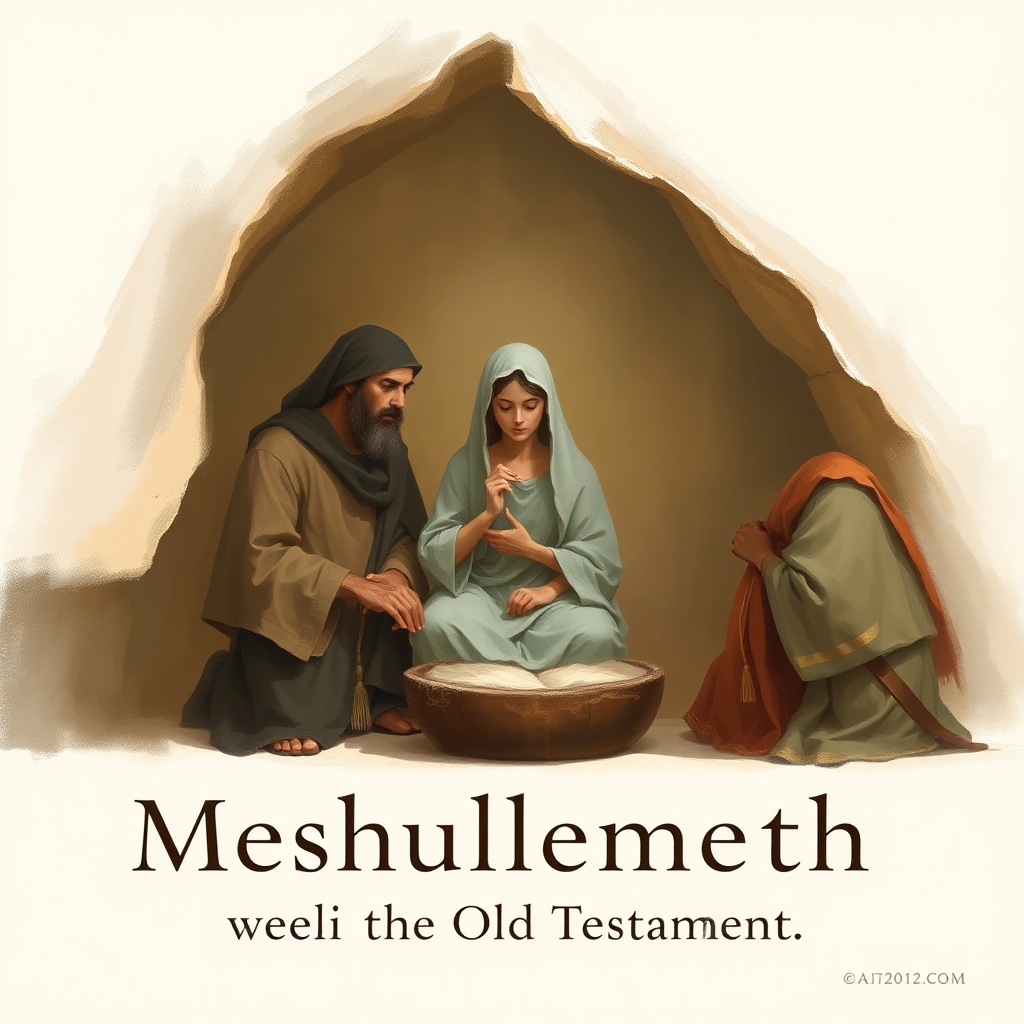
Meshullemeth appears in the biblical narrative in 1 Kings 17, where her story intersects with the prophet Elijah’s ministry. She was a woman of faith and resourcefulness, living in Zarephath during a time of severe drought and famine. When Elijah arrived at her home, she was gathering sticks, likely preparing to die with her son due to starvation. Elijah's request for food and her subsequent faith led to a miraculous provision—her supply of flour and oil did not run out during the famine. The pivotal moment came when her son fell ill and died, causing her grief and desperation. Elijah prayed to God, and her son was resurrected. Meshullemeth’s story highlights her trust in God's prophet and her perseverance amid hardship. Her faith and resilience serve as a testament to divine providence and the importance of trusting God's promises even in dire circumstances.
🏛️ Cultural & Historical Context
Living in ancient Israel during the 9th century BCE, Meshullemeth’s era was marked by social and religious upheaval. Women often held limited roles, primarily managing households, but biblical figures like her exemplify faith-driven influence. Her story reflects the critical role of women in sustaining faith communities and families despite societal constraints. Her willingness to serve and trust in God's prophets demonstrates the cultural value placed on faith and divine reliance. Despite her societal position, her faith elevates her status, illustrating the biblical ideal of trust in God's sovereignty amidst hardship. Her story also highlights the significance of communal trust and divine intervention during times of crisis, shaping the biblical view of divine providence and maternal devotion.
👨👩👧 Family Connections
Meshullemeth was the wife of the prophet and wealthy man in the town of Zarephath; her story is connected to the prophet Elijah, but her specific family details are not detailed in scripture.
Meshullemeth embodies unwavering faith and divine trust, illustrating God's care for those who rely on His promises. Her story emphasizes that divine power sustains believers during trials, foreshadowing salvation history’s themes of resurrection and divine restoration. Her resilience in the face of death and famine showcases faith in God's miraculous work and His sovereignty over life and death. As a woman of faith, she exemplifies the maternal care and faithfulness that God desires of His followers. Her story highlights how divine intervention can restore hope in hopeless situations, foreshadowing God's ultimate plan of salvation through Christ, where death and despair are overcome by divine power and love.
📖 Lessons for Today
📖 Lesson 1
Trust in God's provision even when circumstances seem dire, as divine miracles can occur when faith is genuine.
Meshullemeth’s unwavering faith and trust in God's prophet connect her with other biblical women like Hannah and the widow of Zarephath. Unlike Sarah or Ruth, who are known for their roles in divine promises or lineage, Meshullemeth's story highlights maternal resilience and reliance on divine provision amidst crisis. Her faith contrasts with women who doubted God's plans, emphasizing perseverance. Her story complements other women of faith who trusted God's promises, illustrating different ways women demonstrated faith and devotion in biblical history.
📜 Scripture References
Reference
1 Kings 17:8-24
❓ Frequently Asked Questions
Who was Meshullemeth in the Bible?
Meshullemeth was a woman mentioned in 1 Kings 17, known for her faithfulness and hospitality toward the prophet Elijah during a famine in Zarephath.
What was the significance of her story?
Her story demonstrates unwavering faith in God's provision, showcasing divine blessing during difficult times, especially through the miracle of her son's resurrection.
Is Meshullemeth mentioned elsewhere in the Bible?
No, Meshullemeth's story is only recorded in 1 Kings 17, but her example continues to inspire faith and resilience among believers.
✨ Did You Know?
The name Meshullemeth, meaning 'female recipient,' is unique in biblical texts and may reflect a symbolic role of women as receivers of divine blessing or promises. Additionally, her story emphasizes the importance of hospitality and trust in prophetic ministry, which was culturally highly valued in ancient Israel.









Leave a Reply