Orthodox Prayer Beads: History, Meaning, and a Practical Guide to Using Them
Orthodox Prayer Beads: History, Meaning, and a Practical Guide to Using Them
Orthodox prayer beads have served as a concrete, tactile aid to contemplative prayer for centuries. While different Christian traditions use beads in varying ways, the Orthodox practice is distinctive in its emphasis on the Jesus Prayer, its regional names like komboskini or chotki, and its nuanced approach to counting, rhythm, and stillness. This article explores the history and meaning behind these sacred strands and offers a practical guide to using them in daily devotion, quiet retreats, or liturgical settings.
The use of counting devices to assist prayer is ancient and widespread. In the Orthodox world, the practice most closely associated with the beads is the repetition of the Jesus Prayer, a short, formulaic invocation that has been cherished by monks and laypeople alike. The roots of this tradition lie in the broader Christian pursuit of hesychasm—a method of contemplative prayer that seeks inner stillness and a direct awareness of God. Beads provide a tangible rhythm that helps the mind settle and the heart focus on God.
Two major terms you will encounter are komboskini and chotki. Both refer to prayer ropes used for counting invocations, but they arise from different linguistic and cultural contexts:
Komboskini (Greek origin) typically denotes a lightweight cord or rope with evenly spaced knots. It is especially common in Greek Orthodox practice and among monks and nuns who emphasize the repetitive recitation of the Jesus Prayer.
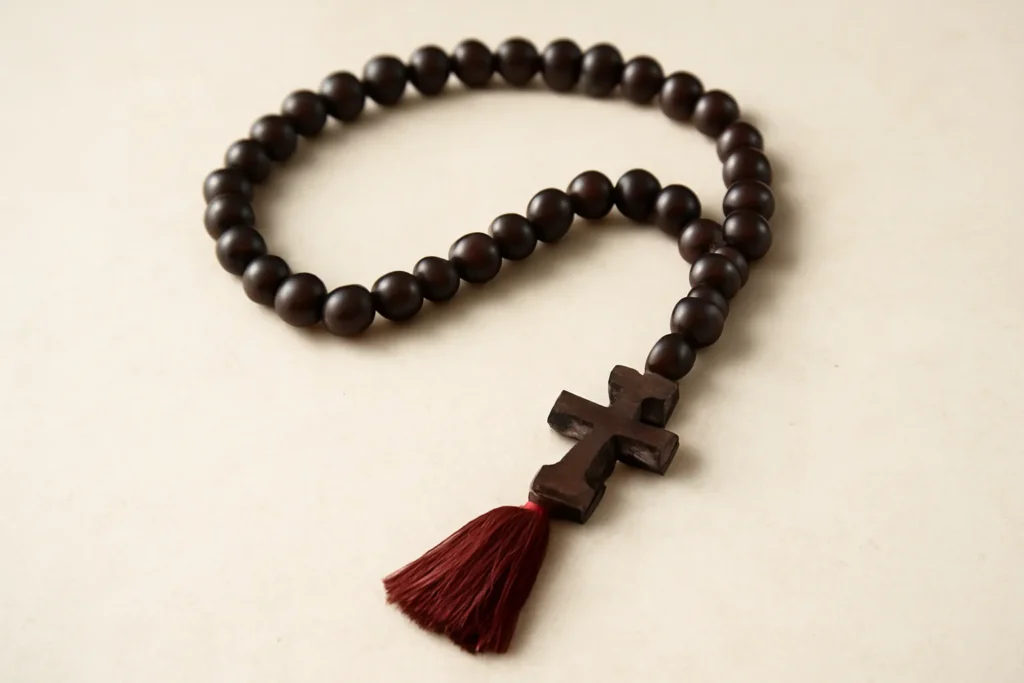
Chotki (Russian and other Slavic traditions) usually takes the form of a knotted rope with a cross or a small cross pendant. Some chotki are knotted to form fixed counts, while others are more flexible, depending on local custom.
In both forms, the beads or knots serve to:
mark the progress of a prayer sequence,
provide a physical anchor for concentration,
offer a meditative rhythm that can calm the breath and heart rate,
and symbolize a spiritual journey—from distraction to attentiveness, from loneliness to communion with God.
Historically, the use of a counting rope or beads appears in various Christian communities, but the Orthodox revival of the Jesus Prayer with a dedicated knot or bead structure has a distinct lineage in monastic monasteries of the Byzantine and Slavic worlds. Over time, regional crafts, materials, and devotional customs created a rich tapestry of forms—yet all retain the core function: to aid persistent, humble prayer and breathing with intention before God.
Meaning and symbolism of Orthodox prayer beads
Although the practical purpose of both komboskini and chotki is to count repetitions of a sacred prayer, the symbolism is deeper and multifaceted. The beads or knots are not mere tokens; they invite a contemplative posture and are often considered to be a physical reminder of the heavenly chorus surrounding the believer. Several layers of meaning can be highlighted:
Humility and dependence: each bead invites the practitioner to lay down distractions and rely on God’s mercy. The rhythm encourages a posture of patience and surrender.
Continuity and eternity: the uninterrupted loop of a rope or a string of beads mirrors the belief in God’s eternal nature and the unceasing prayer of the faithful.
Community and tradition: although one uses beads alone, the practice connects the believer with a long lineage of Christians who have prayed with the same words and the same tools across generations and cultures.
Theology of the prayer: the Jesus Prayer itself—“Lord Jesus Christ, Son of God, have mercy on me, a sinner”—is a concise confession, a plea for mercy, and a personal dialogue with the divine. The beads serve as the cadence for this intimate encounter.
Some practitioners emphasize a theology of discernment and inner transformation. As you use the beads, you may notice a shift from external actions (counting) to interior attention (presence of God). In this sense, the prayer rope is less about the beads themselves and more about what they do to the heart and mind: guideposts on the road toward lasting prayer.
Understanding the vocabulary helps when you encounter different communities. Here are some key terms and variations you might encounter, along with notes on how they can be used in practice:
Komboskini (Greek): often a simple rope with evenly spaced knots; used to count the Jesus Prayer. It can be worn, carried, or held during prayer and may sometimes include a small tassel or cross as a concluding symbol.
Chotki (Russian and Slavic): frequently a knotted rope with a cross, sometimes divided into sections (for example, 4–5 sections) to aid pacing. Some chotki are designed with a few larger beads or a cross at the end to mark the finish of a cycle.
Prayer rope (generic, English-speaking contexts): a broader category that can describe both komboskini and chotki, or other culturally similar strands used for counting prayers or recitations.
Sticharia in some Orthodox contexts may refer to a larger prayer rope used in monastic life, though the terminology varies by region and local tradition.
Regional aesthetics also differ. Greek komboskini might emphasize light, simple cords with modest beads, while Russian chotki may feature more pronounced knots, a cross pendant, and more decorative ends. Regardless of appearance, the core intent remains the same: to aid steady, heartfelt prayer.
A practical guide to using Orthodox prayer beads
Whether you are a beginner or revisiting a long-standing practice, here is a structured, practical guide to using orthodox prayer beads in a meaningful way. The guidance below applies to both komboskini and chotki, with notes on distinguishing features where relevant.
Choosing the right bead string for you
First, select a form that speaks to your devotional needs. Consider:
Material: wood (warmth and simplicity), bone or horn (traditional), seeds (earthy), glass or stone (cool and durable), or shell (softly luminous). Each material has a tactile resonance that can influence your breathing, pace, and focus.
Length: a compact cord for pocket carrying or a longer loop that you can rest across the hand or wrist. A shorter length may be convenient for travel; a longer one offers a fuller rhythm for longer sessions.
Knots vs. beads: some combinations use discrete beads; others use knots spaced along a cord. If you prefer counting, beads give a clear tactile cue; if you value a continuous line, a knot-based design may feel more fluid.
Cross and iconography: many practice with a small cross at the end, which can be meaningful for marking the end of a prayer cycle or a moment of contemplation.
Preparing to pray
Before you begin, find a quiet place and consider a few simple steps to prepare:
Adopt a comfortable posture that allows for steady breathing. This could be seated with feet uncrossed, or standing with hands relaxed.
Take a few slow breaths to settle the body and quiet the mind.
Make the sign of the cross if it is part of your practice, or simply offer a moment of gratitude for God’s presence.
Address the beads as a companion in prayer, not as a magical talisman. The beads are a tool for attention, not a source of power in themselves.
Reciting the Jesus Prayer with the beads
The core practice involves repeating the Jesus Prayer while moving along the beads or knots. A typical routine might look like this:
Begin with the breath—inhalation and exhalation settle into the rhythm of the prayer.
On each knot or bead, whisper or silently pronounce the Jesus Prayer: “Lord Jesus Christ, Son of God, have mercy on me, a sinner.”
Maintain a gentle pace that allows for reflection rather than mechanical repetition. If your mind wanders, gently return to the next bead or knot without judgment.
When you reach the end of the strand (whether the last bead or a finishing cross), pause briefly in stillness, offer thanks, and optionally repeat the cycle.
Guidance for pace and repetition varies by tradition. Some prefer shorter cycles (e.g., three to five iterations) during daily routines, while others undertake longer periods (twenty, thirty, or more cycles) during extended contemplative time. The key is consistency over intensity and a focus on the presence of God rather than on achieving a specific number of recitations.
Rules of thumb for grip, posture, and mindfulness
Grip: hold the cord comfortably in the fingers near the cross or the end of the rope. Avoid gripping too tightly, which can hinder natural breathing and presence.
Posture: a relaxed spine, gently bowed head, and softened shoulders help reduce physical tension and support longer, more attentive prayer.
Breath: synchronize the rhythm of the breath with the recitation. A calm inhale and a measured exhale can deepen inner stillness.
Consistency: practice at roughly the same time each day when possible, gradually extending the duration as your capacity grows.
Integrating beads into daily life
Beads can accompany you during various daily activities, not only in formal hours of prayer. Consider:
Carrying a small komboskini or chotki in a pocket or bag for moments of pause during the day.
Using the beads as you read scripture or reflect on a particular theme (mercy, humility, or patience).
Sharing a simple bead practice with a friend or family member to encourage mutual support in spiritual growth.
In all cases, remember that the beads are a tool for attention to God, not a performance metric or a trophy of piety. The spiritual fruit of the practice is measured in growing quietness before God, increased compassion toward others, and a consistent habit of turning toward prayer in daily life.
Materials, care, and maintenance
Beads and cords require gentle care to preserve their beauty and function. Here are practical tips to keep your prayer rope in good condition while preserving its symbolic and devotional value:
Cleaning: wipe wooden or stone beads with a soft, dry cloth. For fabric or cord, a light, dry brushing can remove dust. Avoid soaking the rope in water, especially if it is wood or seed-based, as moisture can cause warping or weakening of the fibers.
Conditioning: some wooden beads may benefit from a very light application of natural oil (e.g., olive oil, or a beeswax-based conditioner) applied sparingly and wiped off. Do not over-oil, and ensure the surface remains dry.
Storage: store in a clean, dry place away from direct sunlight to prevent fading or cracking. A soft pouch or wrapped cloth helps protect the beads from dust and accidental pulls.
Handling: treat the prayer rope with reverence. Avoid yanking or pulling during prayer; let the beads glide gently over the fingers, honoring the sacred act you are performing.
Remember that blessing and consecration by a priest or deacon can sanctify a prayer rope. If you acquire a bead string in a religious setting, you may wish to ask for blessing or guidance on its use in your specific tradition. A blessed bead set often carries a meaningful sense of belonging to a community of faith and a sense of continuity with a larger tradition of prayer.
Common questions about Orthodox prayer beads
As with many devotional practices, beginners often have questions. Here are some frequently asked questions with concise answers to help you approach the practice with confidence:
Are beads required to pray the Jesus Prayer? Not strictly. The practice originates with repetitive prayer, and while beads help count and pace the recitation, you can pray the Jesus Prayer without any beads. Beads simply offer a tactile aid and a structured rhythm.
Is there a “correct” number of knots or beads? There is no single universal standard. Some traditions use a fixed number of knots or beads as a guide, while others prefer a continuous strand without a strict count. The emphasis is on steady prayer and inner focus rather than a mandated count.
Can laypeople use komboskini or chotki? Yes. While these tools originated in monastic settings, they are widely used by laypersons as a personal aid to prayer, contemplation, and spiritual discipline.
What if I forget the Jesus Prayer? If you forget a line or lose focus, simply return to the next bead or knot and begin again. The practice is about returning to God with humility, not about perfect repetition.
Variations in practice and regional adaptations
Across the Orthodox world, you may encounter variations tailored to local culture and spiritual leadership. Some examples include:
Monastic communities may have stricter cycles, longer sessions, or more formalized sequences of prayers in addition to the Jesus Prayer.
In parish life, laypeople might use beads during personal devotions, while others reserve them for early morning prayers, evening vigils, or times of illness and need.
Some traditions use beads in conjunction with brief meditations on a specific Scripture passage or a saint’s troparion, blending the beads with short prayers or hymns.
Regardless of the variation, the underlying aim remains consistent: to cultivate attention toward God through a rhythm that quiets distraction and fosters reverent presence. The beads are a bridge between the speaker and the sacred, a tool for turning inward toward a more intimate relationship with the divine.
Ethical and spiritual considerations
As you engage with orthodox prayer beads, a few ethical and spiritual guidelines can help preserve the integrity of the practice:
Respect for the sacred tradition: approach the beads with reverence, recognizing they are more than objects; they are aids to encounter with God.
Humility in use: avoid turning beads into a measurement of virtue or a display of piety. The value lies in a softened heart and attentive prayer, not in the number of recitations.
Shared practice with sensitivity: if you learn or borrow beads from another person or community, honor their customs and seek the context in which the beads are used.
Spiritual discernment: if using beads becomes a source of anxiety or compulsion, consider speaking with a spiritual guide or priest to ensure the practice remains healthy and nourishing.
Beads have the potential to become a beautiful symbol of ongoing conversion—a reminder that prayer is not a one-time act but a daily invitation to reorient the heart toward God. In that sense, the combination of matter (the beads) with intention (the prayer) becomes a potent conduit for grace in the Orthodox Christian life.
Conclusion: embracing the practice with care and devotion
Orthodox prayer beads, whether they are called komboskini, chotki, or simply a prayer rope, offer a timeless way to anchor the mind in the presence of God. They are not magical artifacts; they are tools that invite steadiness, humility, and reverent attention. By weaving rhythm, texture, and sacred words into daily life, believers can cultivate a spiritual rhythm that endures beyond the moment of prayer and into the broader texture of daily living.
Whether you are drawn to the Greek komboskini or the Slavic-inspired chotki, or you simply wish to explore a form of prayer beads that resonates with your heart, approach this practice with openness: let the beads guide your breath, let the words shape your attention, and let God’s mercy become the center of your everyday life. In doing so, you participate in a living tradition that has sustained countless people in their pursuit of union with the Divine.





Leave a Reply