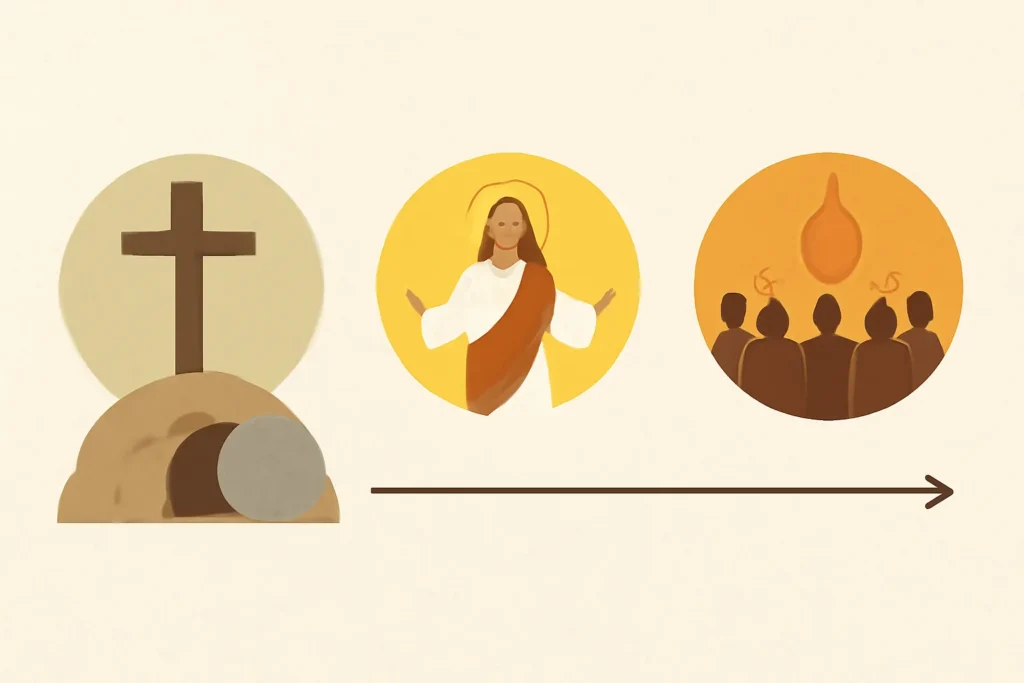
In Christian tradition, the period that stretches from the Resurrection of Jesus to Pentecost marks a pivotal transition: from the risen Christ among his followers to the Spirit-filled mission that launches the church. This article traces the pentecost after resurrection timeline, outlining the major events, key players, and enduring implications. We will use a few variations of the phrase to highlight how this sequence is understood across biblical books, liturgical calendars, and devotional reflections. The goal is to present a clear, comprehensive map of what scholars, theologians, and believers describe as the birth of the church and the empowerment of witnesses for mission.
From Resurrection to Ascension: Stage One in the Timeline of Pentecost after Resurrection
The earliest days after the empty tomb unfold according to gospel narratives that emphasize appearances, teachings, and a commissioning that reframes the disciples’ mission. This stage—often called the arc from Resurrection to Ascension—lays the groundwork for what comes next: the waiting for the Spirit in Jerusalem and the eventual outpouring on Pentecost.
Resurrection morning. The tomb is found empty, and the initial witness accounts emphasize astonishment, fear, and awe. The surprise of the resurrection becomes the anchor for all subsequent events, signaling that Jesus has conquered death and is alive in a new, transformed form.
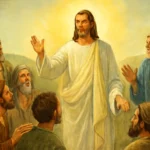
First appearances. In several post-resurrection encounters, Jesus reveals his risen presence to different groups: to Mary Magdalene and other women at the tomb, to two travelers on the road to Emmaus, and later to the gathered disciples in Jerusalem. These appearances confirm the reality of the resurrection and begin to reframe the disciples’ understanding of Jesus’ mission and identity.
The Great Commission, in context. Across the gospel accounts that narrate the post-resurrection period, Jesus entrusts his followers with a universal mission. He commissions them to proclaim repentance and forgiveness, to baptize, and to teach all nations. This mission is not a plan merely for a local band of followers; it is an invitation to witness to the world, empowered by the Spirit that would come later. The Commission functions as a bridge between the risen Christ and the Spirit-filled church that follows.
The Ascension. On the fortieth day after the Resurrection, Jesus is taken up in heaven in the presence of his disciples. The Ascension marks the end of Jesus’ earthly appearances and the transition to an age in which his followers must live by faith, guided and empowered by the Holy Spirit rather than by his bodily presence. The event also establishes Jesus as Lord over all, reigning at the right hand of God while the Spirit prepares the church for its mission.
The connection to the Jewish calendar. The timeline is often framed in terms of a fifty-day sequence that culminates in Pentecost—also known as the Feast of Weeks in the Jewish calendar. While Christian interpretation centers the Spirit’s descent, the traditional counting situates Pentecost as the culmination of a longer festival period that begins at Passover. This linkage helps explain the multilingual and multinational dimensions that characterize the Pentecost event.
Pentecost Preparation: The Waiting Period in Jerusalem
After the Ascension, the early followers return to Jerusalem with anticipation and prayer. The period between Ascension and Pentecost is not a void but a "preparation phase" in which the community awaits the Spirit’s coming. This segment is essential for understanding how the church moves from witness to outpouring.
Return to the Upper Room. A core group of about 120 believers gather in Jerusalem, praying, worshiping, and seeking guidance for the next phase of mission. Their unity and devotion become a crucial backdrop to the Spirit’s descent.
The place of prayer and teaching. The early followers devote themselves to prayer, the apostles’ teaching, fellowship, and shared meals. This pattern—often summarized as teaching, fellowship, breaking bread, and prayers—becomes a hallmark of the early Christian community and a model for church life thereafter.
Participation of women and men. The timeline underscores that women and men alike share in the expectation of God’s action. While the most famous accounts highlight the male apostles, the wider circle of followers (including women) participate in the community that is being prepared for something transformative.
The Choosing of Matthias: A Bridge to the Apostolic Twelve (Acts 1:15-26)
Within the waiting period, the community faces a practical question: who will replace Judas Iscariot, the one who betrayed and then died? The book of Acts records the selection of Matthias to join the Apostolic ranks, ensuring that the number of apostles remains twelve. This choice reinforces the continuity of the apostolic foundation of the church and signals a readiness to represent the full witness to Israel and the nations. The process includes prayer, casting lots, and a shared sense of divine guidance. While the method of selecting Matthias has sparked discussion among scholars and believers, the broader point remains clear: the Spirit will empower a reconstituted leadership to steward the community in anticipation of Pentecost.
Pentecost Day: The Outpouring of the Holy Spirit
The central event of the timeline after the Resurrection is the dramatic descent of the Holy Spirit on the Day of Pentecost. This moment represents a radical shift from a Jesus-centered presence to a Spirit-centered mission, enabling ordinary followers to speak boldly and minister with power for the gospel’s expansion.
The sound like a rushing wind. A mighty, audible manifestation announces the Spirit’s arrival, drawing a crowd from various regions to witness what is happening in Jerusalem.
Tongues as of fire. The Spirit rests on each participant as “tongues of fire,” symbolizing divine presence, purification, and empowerment. The imagery emphasizes purification, purification, and the ability to carry the message outward with clarity and courage.
Speaking in other languages. In a striking sign of universal accessibility, those gathered hear the believers speaking in their own native languages. This multilingual proclamation becomes a pattern for the church’s mission to reach diverse peoples with the gospel.
Filled with the Spirit. The believers’ empowerment is not a private experience; it catalyzes public proclamation, bold witness, and a new sense of unity and purpose among the followers who had previously scattered or struggled with fear.
The Peter Sermon: The Call to Repentance and Faith
With the Spirit’s empowering presence, the Apostle Peter rises to interpret the events for the crowd. In a bold and compelling sermon, he quotes Scripture, asserts the fulfillment of prophecy, and calls for repentance. The response is swift and transformative: many are moved to believe, confess faith, and seek baptism. The sermon serves as a theological hinge, connecting the prophetic expectation of Israel with the inauguration of a new era under the Messiah who now conquers death through the Spirit.
The Birth of the Church: After Pentecost and the First Converts
Pentecost marks more than a spectacular event; it births a living community equipped to carry forward Jesus’ mission. The early chapters of Acts describe a dynamic shift from scattered disciples to a cohesive, Spirit-led church that grows in both numbers and spiritual depth.
Three thousand added to the church on the day of Pentecost. The immediate expansion signals that the gospel’s reach is global in scope, not limited to a single locale or social group.
Affirmation of the apostolic teaching. The new believers embrace the apostles’ teaching, which anchors their faith, doctrine, and practice. This commitment ensures a shared understanding of who Jesus is, what he accomplished, and how to live in light of the resurrection and the Spirit’s power.
Common life and devotion. The early church practices communal life: they devote themselves to fellowship, to the breaking of bread, and to prayer. The description in Acts highlights a countercultural community where needs are shared and generosity flows freely.
Signs and wonders. The Spirit’s activity is evident in the community’s life and mission—healings, miracles, and bold proclamation reinforce the credibility of the gospel and confirm the authenticity of the Spirit’s presence among the believers.
Global mission launched. The Pentecost moment catalyzes a movement designed to transcend regional boundaries. The followers begin to interpret their mission as witness to all nations, languages, and cultures—a theme that will unfold throughout Acts and the rest of the New Testament.
Timeline Variants: How Different Traditions Frame the Pentecost After Resurrection
Across biblical scholarship, liturgical calendars, and devotional traditions, several variations of this timeline are observed. These differences don’t contradict the core sequence; rather, they reflect different perspectives on how best to understand, teach, and apply the narrative of Resurrection, Ascension, and Pentecost.
Canonical sequence vs. liturgical counting. Some readers emphasize the canonical sequence in Acts and Luke, where Pentecost arrives on the fiftieth day after Passover. Others align the event with the Jewish Feast of Weeks, highlighting the continuity between the Jewish calendar and early Christian proclamation.
Countdown: how many days?. The traditional count is fifty days from Passover to Pentecost, with Resurrection often placed on day zero. In some readings, the focus is on the forty days between Resurrection and Ascension, followed by ten days of waiting before Pentecost. Both readings aim to honor the biblical motifs of expectation, prayer, and readiness for God’s action.
The scope of witnesses. Some traditions stress the 120 in the upper room as the core community preparing for mission, while others highlight the role of the apostles more prominently. Both perspectives affirm that a faithful community, empowered by prayer, becomes a vessel for the Spirit’s work.
Role of women and marginalized voices. While the later narrative emphasizes the disciples, some traditions point to the broader circle—women and men—whose faithfulness and hospitality contribute to the church’s early vitality. This emphasis invites readers to recognize diverse witnesses as part of the Pentecost story.
Relationship to the Feast of Weeks. In Jewish-Christian discourse, Pentecost is understood both as the Christian feast celebrating the Spirit’s descent and as the fulfillment of the Jewish harvest festival. The dual framing helps explain the multiethnic, multilingual dynamics of Acts 2 and the Spirit’s broadened reach beyond Israel.
Beyond the historical chronology, the Pentecost after Resurrection narrative carries enduring theological lessons that shape Christian faith and practice. The following themes are often highlighted by scholars, pastors, and lay readers alike:
Empowerment for witness. Pentecost demonstrates that the Spirit equips ordinary people to speak boldly about Jesus, even in unfamiliar circumstances. This empowerment is not for private piety alone but for public proclamation and courageous mission.
Unity in a multilingual church. The ability to speak in diverse languages on Pentecost becomes a powerful sign of the gospel’s reach across cultural and linguistic barriers. It invites the church to cultivate inclusive, cross-cultural mission.
Participation of the whole community. The Spirit’s outpouring descends on a community of believers who are gathered in prayer. This underscores the importance of shared expectancy, mutual support, and collective discernment in discerning God’s will.
Continuity and renewal. The timeline represents continuity with Jesus’ ministry and proclamation while inaugurating a new era in which the Spirit continues Jesus’ work through the church. It is a deliberate both/and: continuity with the risen Christ and renewal through the Spirit’s power.
Life in the Spirit as daily practice. The post-Pentecost church forms a pattern of worship, teaching, prayer, fellowship, and radical generosity. The Spirit’s presence is not a one-time event but a sustaining reality that shapes daily life.
For ministers, theologians, and educators, the Pentecost history offers practical guidance. It helps in planning sermons, Bible studies, and outreach strategies that aim to cultivate a Spirit-led community. Some practical applications commonly drawn from the timeline include:
Expectant prayer. A posture of waiting on God and seeking his presence is foundational. Churches often incorporate seasons of prayer aligned with the Pentecost theme to cultivate spiritual hunger and openness to the Spirit’s leading.
Clear proclamation. Just as Peter’s sermon interpreted the event for his audience, Christian communities are encouraged to articulate a coherent, biblically grounded witness to Christ that resonates with contemporary life.
Formation of a resilient community. The early believers’ commitment to teaching, prayer, fellowship, and generous living provides a model for how churches can grow in unity and mission while meeting the needs of their members and neighbors.
Mission-minded spirituality. Pentecost reorients believers toward outward mission—proclaiming the gospel to all nations, languages, and cultures—while remaining rooted in prayer and communal life.
The following compact outline offers a concise reference to the primary beat points in the Pentecost after Resurrection timeline. It can be used for study guides, teaching outlines, or personal devotion to understand the sequence and its significance.
Resurrection Sunday: tomb found empty; appearances begin; witness becomes confidence.
Post-resurrection appearances: to women, to the disciples, to Thomas, to the group on the road to Emmaus; confirmation of Jesus’ risen life.
Great Commission and mission clarity: Jesus sends the disciples with a universal mission and divine authority.
Fortieth day after Resurrection: Ascension of Jesus; Jesus is exalted to the Father; his earthly presence ends, his heavenly reign begins.
Ten days of waiting: the believers gather in Jerusalem, in the upper room, praying and discerning God’s timing for the Spirit’s coming.
Selection of Matthias: replacement chosen to restore the number of apostles; leadership restored for the new era.
Pentecost day: descent of the Holy Spirit on the believers; tongues of fire; speaking in various languages; bold proclamation.
Sacred response: Peter’s sermon leads to repentance, baptism, and entry into the community.
Birth of the church: community life characterized by shared resources, devotion to teaching, and awe at God’s works; growth and new believers daily.
While the core sequence is stable in the biblical accounts, readers are invited to reflect on how the Pentecost timeline informs contemporary faith. Consider these guiding thoughts:
How is the Spirit’s power evident in today’s church? Reflect on opportunities for bold proclamation, healing, and reconciliation in your community and beyond.
Do we cultivate a posture of waiting and prayer? Just as the disciples waited in Jerusalem, modern believers can cultivate spaces of prayer, listening for God’s guidance in decision-making and mission planning.
Is our church a place of learning and generosity? The Acts pattern invites ongoing formation in teaching, fellowship, and sharing resources so that the body can serve others effectively.
Who are the “minority voices” that should be included in our mission? Pentecost’s universal reach invites a broader, more inclusive vision that reflects the multiethnic and multilingual horizon of the Spirit’s work.
In sum, the Pentecost after Resurrection timeline is not merely a historical sequence; it is a living template for how God empowers a community to witness, care for one another, and extend mercy and truth to the world. Whether you study it as a biblical drama, a liturgical season, or a theological foundation for mission, the arc from the Resurrection through Pentecost remains a powerful reminder: the risen Christ continues his mission through the Spirit, and the church is called to participate in that mission with courage, humility, and joy.





Leave a Reply