Resurrection Appearances of Jesus: A Biblical Overview
Resurrection Appearances of Jesus: A Biblical Overview
Across the New Testament, the story of Jesus does not end at the tomb. Instead, a sequence of dramatic encounters with the risen Christ unfolds in diverse settings, voices, and theological emphases. These appearances, often described as the resurrection appearances of Jesus, serve to confirm Jesus’ identity, inaugurate a fresh understanding of life after death, and launch the early community into mission. This article surveys the major episodes, the theological aims behind them, and the way scholars and believers read these post-resurrection encounters as a coherent witness to faith, hope, and transformation.
The biblical record presents a cluster of encounters that occur in Jerusalem, on the road to Emmaus, by the Sea of Galilee, and in various gathered assemblies of the disciples. While the specifics of each appearance differ from one gospel to another, several common features emerge. First, the risen Jesus is recognized in increasingly varied ways. Sometimes he is recognized immediately, at other times only after a revelation or an invitation—“touch my hands and feet,” or “look at my hands” in one account, or simply a breaking of bread that opens eyes in another. Second, the appearances typically involve a commissioning: a call to testify, preach repentance, and participate in a mission that extends beyond the immediate circle of the disciples. Third, the resurrected body appears both tangible and transfigured, able to eat, still bearing marks, and capable of appearing and disappearing in ways that surprise the observers. These features together convey a message that the resurrection is not a mere resuscitation, but the inauguration of a transformed pattern of life rooted in the divine presence.
In theological terms, the post-resurrection encounters model a shift from expectation of a political deliverer to participation in a cosmic salvation. The events also lay the groundwork for the church’s worship and its proclamation of good news—the gospel that Jesus has conquered death and now governs history as the risen Lord. For students of both faith and history, these appearances are central to understanding how early Christians framed Jesus’ identity, his ongoing presence, and their own calling as witnesses to the resurrection.
Matthew’s account: the risen Jesus on the mountain and among the women
At the tomb, Mary Magdalene and the other Mary encounter an angel who announces that Jesus has risen, and they are told to go tell the disciples. This moment establishes the first public witness that the tomb is empty and that the sequence of appearances has begun.
On the road, the women meet the risen Christ who sends them with a message of peace and assignment. They are charged to share the news with the disciples, a scene that emphasizes faith and proclamation as inseparable companions of resurrection.
The final decisive episode in Matthew occurs later in Galilee, where the eleven disciples meet the risen Jesus on a mountain. He commissions them with the Great Commission—“go and make disciples of all nations”—and promises his ongoing presence until the end of the age.
Matthew’s portrayal foregrounds an authoritative, global mission and a visible manifestation of Jesus in a single, defining encounter on a mountain. The trajectory—from women at the tomb to a formal commissioning of the whole church—highlights both witness and vocation as core outcomes of the resurrection.
Mark’s compact and contested ending: appearances to Mary and the disciples
In the shorter, more commonly cited ending of Mark, the first witnesses are Mary Magdalene and a few others who report the resurrection appearances, followed by appearances among the eleven as they gather in fear and joy.
In later manuscripts, a longer ending adds appearances to two disciples on the road and to the broader group, underscoring a pattern of revelation through fearful doubt transformed into witness. This variation invites readers to appreciate how early communities wrestled with how best to narrate the risen Jesus’s presence.
Mark emphasizes a dynamic, public proclamation in the wake of the resurrection, even as some textual traditions raise questions about the completeness of its original ending. The core idea remains: the risen Jesus calls his followers to declare the good news and to accompany that proclamation with the power of miracles and instruction.
Luke’s narrative: the Emmaus journey and the gathered disciples in Jerusalem
The road to Emmaus features Cleopas (and an unnamed companion) who are joined by the risen Jesus in a moment of confusion. Their eyes are opened in the breaking of bread, and they realize who they have encountered only afterward, when they return to Jerusalem to testify to the others.
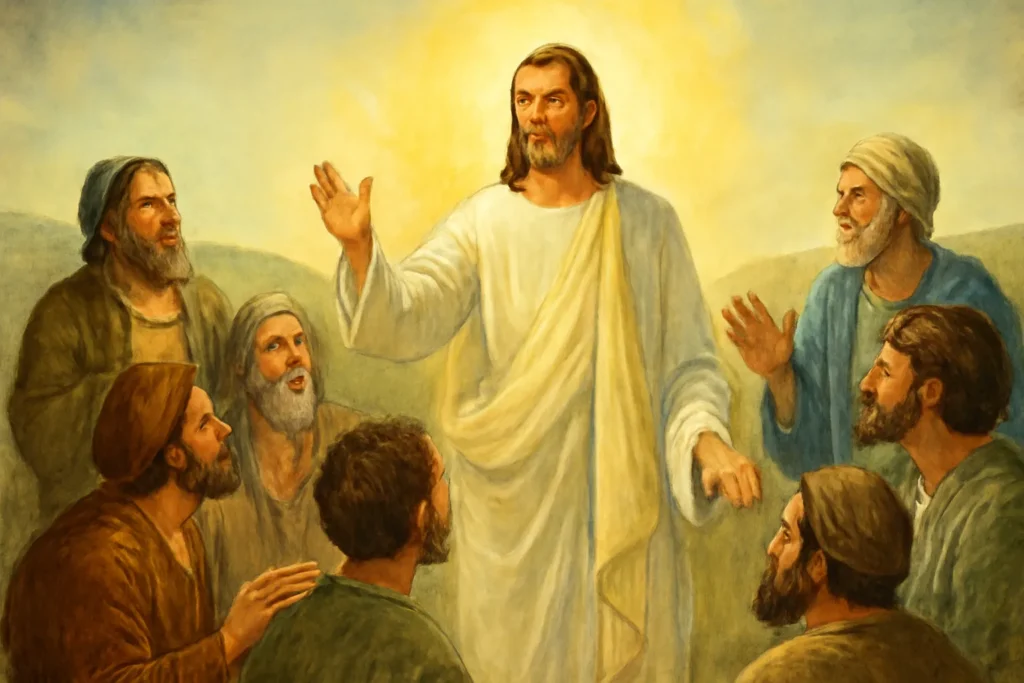
In the following appearance, the disciples are gathered, and Jesus appears among them, offering a blessing of peace and showing his wounds. He explains the fulfillment of Scripture concerning the Messiah and opens their minds to understand the scriptures.
Luke’s account continues with additional appearances, including invitations to touch his wounds and the command to proclaim repentance and forgiveness to all nations, beginning at Jerusalem. The story culminates with Jesus’ ascension, which signals the transition from visible presence to a continued, spiritual presence through the Spirit.
Luke’s emphasis on the journey motif—recognition that comes in the breaking of bread, and the disciples’ increased comprehension of divine plan—frames the resurrection as a transformative interpretive event. It reshapes how the early community reads Jesus’ life, death, and ongoing mission.
John’s testimony: intimate encounters and Thomas’s confession
In John, the first explicit appearance is to Mary Magdalene, who brings the news to the disciples and whom Jesus later meets in the garden. Her encounter functions as a personal witness that leads others to belief.
The risen Christ appears to the gathered disciples in an upper room, where doubt and fear are replaced by recognition and trust. He offers peace, breathes the Spirit, and commissions them to continue the work of forgiveness and mission.
Thomas—often remembered as “Doubting Thomas”—is granted a personal invitation to touch Jesus’ wounds. His profession, “My Lord and my God,” becomes a climactic confession of faith and a model for later readers of the gospel.
In John 21, a final series of appearances occurs by the Sea of Galilee where Jesus commissions Peter and the disciples for a ministry of feeding and shepherding, foreshadowing the church’s pastoral care and leadership.
John’s accounts emphasize both intimate recognition and communal mission, highlighting personal encounter (with Mary, with Thomas) alongside a broader invitation to leadership and service in the church. The motifs of peace, forgiveness, and love recur across John’s post-resurrection appearances.
Paul’s perspective: the creedal summary in 1 Corinthians 15
Beyond the gospel narratives, the apostle Paul offers a powerful and highly influential account of the risen Christ’s appearances in his first letter to the Corinthians. Paul anchors Christian faith in a sequence of appearances that function as a devotional and apologetic resource for the church. In what is often treated as a compact creed, Paul writes that Jesus appeared to Cephas (Peter), then to the twelve, then to “more than five hundred brothers and sisters” at one time, most of whom were still alive at the time of Paul’s writing, then to James, then to all the apostles, and finally to Paul himself as an extraordinary mystery of grace. This summary emphasizes public, verifiable testimony and underlines the conviction that the risen Jesus remains dynamically present to the community through the Spirit and through witnesses.
The Pauline record broadens the scope of the appearances beyond the inner circle of Jesus’ original followers and positions the resurrection as the foundation of church life. It also provides a framework for understanding why New Testament writers treat the resurrection not merely as a historical event but as a living reality that continually shapes preaching, doctrine, and ethics.
A chronological sketch of the post-resurrection timeline
Empty tomb verified by women—first recognizable sign that something dramatic has happened, followed by a series of appearances that move from fear to faith.
First appearance to a key witness—Mary Magdalene or other women—who becomes the herald of Jesus’ victory over death.
Encounter on the road to Emmaus—two believers experience a transformative revelation as Jesus explains the scriptures and reveals himself in the breaking of bread.
Gathered disciples in Jerusalem—Jesus appears among them, grants peace, and opens the understanding to the scriptures, sending them to proclaim repentance and forgiveness.
Individual appearances to key figures—Thomas, Peter, and others—each encounter shaping personal faith and communal trust.
Miraculous signs and a sequence of communal gatherings—eating together, blessing, and commissioning, underscoring the continuity of Jesus’ presence in the community.
Sea of Galilee appearances—Jesus meets the disciples in a familiar setting, extends a pastoral call, and uses a fishing imagery to speak of shepherding and leadership.
Ascension as a transition—Jesus is received up into heaven, signaling a shift from visible presence to ongoing spiritual presence through the Spirit and mission.
The nature of the risen body: continuity and transformation
One of the central questions about the resurrection appearances concerns the nature of the risen body. The gospel accounts present a figure who is recognizably Jesus but who also bears a set of transformed traits. In some episodes, the risen Jesus is touched and eats with the disciples, suggesting tangible continuity with the earthly Jesus. In other passages, he appears in a manner that transcends ordinary physical limitations, emerging within locked rooms or appearing on a mountaintop. This blend of continuity and transformation signals a post-resurrection life that is real and embodied, yet not confined by the same rules that governed ordinary life before death. The distinct expressions in each gospel account invite readers to explore how early Christians envisioned life after death and the integrity of the physical world within God’s redemptive plan.
Theological significance and pastoral implications
The resurrection appearances of Jesus carry several key theological implications. First, they validate Jesus’ identity as the Messiah and Son of God by demonstrating victory over death and proving the continuity of his earthly ministry in a renewed form. Second, they provide the church with a powerful model of witness: faith that begins with encounter and leads to proclamation. Third, they anchor the gospel’s message in concrete events that the earliest communities could know as real and trustworthy, which helps to counter doubts and skeptical arguments. Fourth, they compel a reorientation of life: the risen Jesus calls his followers to a mission that reaches beyond their own borders, accompanied by a pledge of divine presence and empowerment through the Spirit. The post-resurrection appearances thus become the hinge upon which Christian worship, ethics, and missionary imagination turn.
Scholars approach the resurrection appearances with a range of historical and literary tools. Some emphasize minimalism, suggesting the core testimony centers on a few decisive appearances that formed the creed-like statements of the early church. Others highlight the variety of sources and the diverse theological aims of the evangelists, recognizing how each gospel artist crafted a narrative that would reinforce faith in diverse communities facing different challenges. In either case, the creedal material in 1 Corinthians 15, the Luke–Acts trajectory, and the Johnian memorials function together as a robust early witness to the risen Jesus. The differences among the gospel portrayals do not erase common ground: an insistence that Jesus lives, appears to his followers, and commissions them to continue his work in the world.
Common features and thematic motifs across the appearances
Recognition and revelation: some accounts present instant recognition, others require signs, breath, or shared meals for the revelation to occur.
Peace and forgiveness: Jesus consistently offers peace and forgiveness, making reconciliation a central feature of the encounters.
Commissioning: a recurring pattern is the sending forth of the disciples to public witness, mission, and pastoral care.
Empowerment by the Spirit: in several episodes, Jesus imparts or promises the Spirit to equip the community for ministry.
Transcendent presence: the risen Jesus demonstrates a presence that is at once intimate and transformative, guiding the community beyond Jerusalem to the ends of the earth.
Appearances in Paul’s letters: framing belief for a broader audience
In 1 Corinthians 15, Paul composes a compact but potent statement about the resurrection appearances of Jesus that transcends individual gospel accounts. He presents a sequence of appearances as best as can be corroborated among early witnesses: to Peter, to the Twelve, to more than five hundred witnesses, to James, to all the apostles, and finally to Paul himself. This structured list serves multiple aims: it anchors belief in communal memory, it legitimates the claim of the risen Christ in a diverse Christian milieu, and it provides a model for apologetics and pastoral care. For Paul, the resurrection is not a private miracle but a public, historical reality that forms the basis for preaching, hope in the face of death, and ethical transformation in communities across the ancient world.
The recurring pattern of resurrection appearances has shaped Christian practice in significant ways. Worship today often reflects a sense of ongoing presence with Christ, a memory of the empty tomb, and a hope that life is not bounded by mortality. The eventual commissioning motifs that appear in the gospel accounts underwrite missionary activity, pastoral leadership, and service to neighbors. The emphasis on forgiveness, reconciliation, and peace that sneaks into these narratives informs preaching, catechesis, and liturgy. For congregations, these appearances translate into creeds, hymns, prayer practices, and scriptural study that keep the focus on the risen Christ who continues to guide the church through the Spirit and through the testimony of faithful witnesses across generations.
Glossary of key terms
Risen Jesus or Risen Christ: Jesus after his death, who is alive and present in the world in a transformed form.
Post-resurrection encounters: moments when Jesus appears to individuals or groups after his resurrection.
Appearances: events where Jesus is seen, speaks, or interacts with his followers following the resurrection.
Great Commission: the command to go and make disciples of all nations, baptizing and teaching in Jesus’ authority.
Creed-like material: concise, formulaic summaries of faith, often used to articulate core beliefs about Jesus’ death and resurrection.
Frequently asked questions about the resurrection appearances
Do all four gospels describe the same post-resurrection events? Not exactly. Each gospel emphasizes different appearances and settings, but all converge on the core claim that Jesus rose from the dead and was made known to his followers in recognizable ways.
Are the appearances described as physical or spiritual? The accounts present a range of expressions. Jesus speaks, eats, and is touched in some narratives, suggesting physical continuity, while other passages emphasize a transcendent, transformative presence beyond ordinary physical constraints.
Why are there differences among accounts? The evangelists wrote for different communities with particular concerns. Their differences highlight diverse theological aims rather than contradictions, inviting readers to hear the broader witness of the risen Jesus across contexts.
What is the purpose of including Paul’s list of appearances? Paul uses the list to anchor Christian faith in a shared memory that could be affirmed by many witnesses and to strengthen the case for the resurrection as a historical and transformative event for the church.
How do resurrection appearances affect Christian ethics? By stressing reconciliation, forgiveness, peace, and mission, the appearances invite believers to embody these values in daily life, worship, and service.
In sum, the resurrection appearances of Jesus constitute a foundational set of biblical events. They function as a multi-voiced testimony to a single reality: that Jesus has been raised, that he continues to be present with his people, and that his resurrection inaugurates a new era for humanity. By surveying the gospel accounts, Paul’s letters, and the broader theological reflections of the early church, we gain a clearer sense of how early Christians understood death, life, and vocation in light of the risen Christ. This biblical overview highlights not only what happened at the tomb but how the risen Jesus reoriented belief, worship, and mission—an enduring legacy that continues to shape Christian faith today.










Leave a Reply