A baptism testimony is more than a recounting of events. It is a personal declaration of faith that communicates how you have encountered
grace, repentance, and transformation through your relationship with God. In preparing for baptism testimony, you are not merely memorizing words; you are articulating a lived
experience of faith, hope, and commitment. This section helps you grasp the why behind your words, the audience you will speak to, and the
spiritual significance of sharing your journey publicly.
The intention of a baptism is usually twofold: publicly identify with Christ and encourage others by sharing how the gospel has changed your life. When you write and
deliver your testimony, you are inviting listening hearts to consider their own paths, while inviting God to work in the present moment. A clear, authentic testimony builds
trust, invites questions, and honors the sacred ceremony itself. In a step-by-step guide, we approach this task with reverence, preparation, and practical tools.
In this guide, you will find actionable steps that help you craft a testifying narrative that is personal yet accessible, structured yet flexible, and rooted in biblical truth.
You will learn how to balance storytelling with doctrinal clarity, how to speak with sincerity rather than performance, and how to navigate potential nerves without sacrificing vitality.
Step 1: Reflect on Your Faith Journey
The first part of any effective baptism testimony is sober self-examination. Take time to reflect on where you began, what prompted your turning toward Christ, and how
your life has changed since that moment. This reflection forms the raw material you will later shape into a coherent narrative.
Begin by considering these guiding questions:
What events or people helped you seek God or return to faith?
What did you understand about salvation before and after your decision?
What does it mean to you now to be forgiven and made new?
How have you experienced grace in daily life, not just in big moments?
When you type or write, avoid rushing. Give your memory room to breathe: describe settings, emotions, questions you wrestled with, and the people who supported you.
The aim is authentic clarity, not perfect prose. Your authentic voice, shaped by years of walking with God, becomes your most compelling asset.
Step 2: Gather Biblical and Doctrinal Grounding
A testimony that is anchored in biblical truth communicates not only your experience but also the gospel’s enduring promises. Include references to the core
elements of faith that anchor your story in Scripture. This ensures your words align with the church’s teaching and helps listeners see the theological context of your journey.
Consider including succinct reminders of these foundational themes:
Repentance and turning away from what separates us from God
Faith in Jesus Christ as Lord and Savior
Grace as the unearned gift that reconciles us to God
Transformation by the Holy Spirit that leads to a changed life
Public identification with Christ through baptism as a step of obedience
You may want to reference key verses that resonate with your journey, such as Romans 3:23–24, Ephesians 2:8–9, or Romans 6:4. If you quote Scripture, keep it concise and
directly connected to your experience. A few well-chosen phrases can be more impactful than long quotations.
Step 3: Identify Core Elements of Your Testimony
A strong baptism testimony typically includes several essential elements. Mapping these elements before you write helps you stay focused and avoids wandering off topic.
Before: A short picture of life apart from Christ or without a sustaining faith.
Turning Point: The moment when God began to draw you, or when you consciously chose to trust Jesus.
Response: How you responded in faith—prayer, surrender, baptism, or a church community’s invitation.
Changed Life: Concrete ways your life has been changed—things you do differently or new joy you experience.
Call to Action: A brief invitation for others to consider their own journeys or to seek God’s guidance.
These elements are not rigid rules; they are a flexible framework. Some testimonies lean more on narrative storytelling, while others emphasize doctrinal clarity. The
key is to be honest about where you were, how you met Christ, and what’s different now.
In writing the core outline, you can highlight moments of mercy, obstacles overcome, and the people who supported you. You may also reflect on
how baptism itself marks a new chapter in your faith journey.
Step 4: Write a Draft with a Clear Structure
A well-constructed draft helps you deliver your baptism testimony with confidence. In a step-by-step guide, the writing stage is where narrative craft meets spiritual
honesty. Start with a simple structure and then refine for depth and conciseness.
A practical framework you can follow:
Open with the setting—where you were and what your life looked like then.
Introduce the turning point—when you decided to trust Christ.
Describe the impact—what changed inside you and how your daily life reflected that change.
Close with baptism as an outward sign of an inward decision, and offer a short invitation or blessing.
When crafting phrases, aim for clarity and concreteness. Rather than saying, “I felt different,” describe a tangible shift: a stubborn fear replaced by
hope, or a new pattern of prayer that has carried you through difficult moments. Use sensory details where appropriate—what you saw, heard, or felt in that season—without becoming
melodramatic.
Sample language you can adapt:
“Before I believed in Jesus, I lived with a sense of emptiness that I could not name.”
“When I prayed, I sensed a quiet presence guiding me toward forgiveness.”
“Today, I choose to follow Christ, and I will display that faith through baptism as a sign to others.”
It is perfectly acceptable to have a few draft versions. Some people benefit from writing in their own voice first and then adjusting for audience and setting. If you find your
words feel stiff, try telling your story aloud to a trusted friend and recording it, then transcribing a more natural version.
Ethical note: Be honest about struggles, but avoid using the testimony as a platform to criticize people or to vent old grievances. The focus should be the work
of Christ in your life, not to highlight conflict for its own sake.
Components of a strong narrative
A robust baptism testimony blends narrative and testimony through these elements:
Story arc with a beginning, middle, and end.
Specific moments that reveal turning points, not vague abstractions.
Vocabulary that resonates with listeners unfamiliar with church jargon.
Grace-centered language that emphasizes God’s work over human achievement.
Step 5: Seek Feedback from Mentors and Believers
A fresh set of eyes can help you refine your baptism testimony. Seek feedback from pastors, mentors, family members, or fellow believers who know your journey and can
offer both spiritual and practical guidance.
When you request feedback, ask for specific input, such as:
Does the testimony communicate a clear turning point?
Are biblical references used accurately and appropriately?
Is the language accessible to a diverse audience?
Does the delivery feel authentic and not performative?
Be open to constructive criticism, and view revision as a normal part of the process. Even seasoned speakers revise multiple times before presenting publicly. After receiving feedback,
revise your draft to address gaps, clarify confusing sections, and ensure a consistent tone throughout.
Step 6: Practice Delivery and Presence
The content of your baptism testimony matters, but how you deliver it matters just as much. Practice helps you manage nerves, maintain eye contact, and speak with confidence.
Practice aloud in a quiet space, gradually increasing the audience size, starting with one trusted friend or mentor.
Record yourself and listen for pacing, volume, and emphasis. Adjust as needed.
Develop a natural pace with intentional pauses to let moments sink in.
Focus on breathing and posture to convey calm and sincerity.
During practice, emphasize genuine emotion without letting emotion overwhelm the message. A sincere, controlled delivery helps listeners connect with your story and with the
spiritual truths you share.
On the day of sharing your testimony, dress in a respectful manner, arrive early, and engage with the audience before and after the moment. A few warm interactions can ease
tension and remind you that you are speaking to real people who may be hearing these words for the first time.
Step 7: Address Potential Questions and Concerns
Some listeners may have questions about baptism, salvation, or church practice. Preparing responses in advance helps you remain confident and patient, even if questions arise
during or after your testimony.
Think about frequently asked questions you might encounter, such as:
What qualifies someone for baptism?
Is baptism necessary for salvation, or is it a symbol?
What role does personal faith play in baptism?
How should we understand infant baptism if applicable to your tradition?
Craft brief, respectful answers that reflect your own beliefs and the church’s teaching. If you don’t know an answer, it is perfectly appropriate to say you will seek guidance from a leader or
Scripture, and to offer to follow up after the service.
Step 8: Prepare for the Moment of Baptism
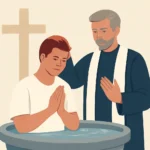
The baptism itself is a sovereign moment in which your profession of faith is publicly witnessed. Preparing for this moment includes practical steps and a spiritual posture.
Arrive early to acclimate to the environment and to meet those who will support you.
Ask someone you trust to stand nearby or to offer a short prayer before you speak if appropriate.
Prepare your mind to respond to the immediate impact of baptism—praise, gratitude, and humility.
Remember the core message you want to convey—your relationship with Christ and your commitment to follow Him.
During the service, maintain a posture of reverence and gratitude. Your demeanor can communicate the gravity of the moment just as your words do. If you feel overwhelmed, take a slow
breath, acknowledge God’s presence, and press on with the testimony you prepared.
Step 9: Post-Baptism Reflection and Sharing
After the baptism, you may have opportunities to share your story with others in the church or with friends and family. A short, grace-filled reflection can help others see
how baptism fits into a lifelong walk with Christ.
Consider these post-baptism practices:
Write a brief note of thanks to mentors, leaders, and sponsors who supported you.
Share highlights of what the day meant to you in a few sentences on social media or church communications, if appropriate.
Pray for continued growth and opportunities to encourage others who are exploring faith.
Your baptism testimony remains a living document of your faith. As you grow, you may revisit your story to reflect deeper understanding, new experiences, and fresh ways to share
Christ’s work in your life.
Additional Tips for Integrating Your Testimony in Church Life
Beyond the moment of baptism, your personal narrative can become a resource for others. A well-told testimony can be a bridge to evangelism, a tool for counseling, and a source of
encouragement for new believers. Here are practical ideas to weave your testimony into broader church life.
Small group sharing: Offer to share your story in a group setting to help others articulate their own faith journeys.
Children and youth ministries: Adapt your testimony for younger audiences to illustrate concepts like grace and obedience in developmentally appropriate terms.
Mentorship: Use your journey to relate to those who are seeking, struggling, or considering baptism themselves.
Testing and seasonal moments: Revisit your testimony when preparing for new ministry milestones or during Easter and Christmas seasons.
When you share your testimony in different contexts, adjust the language to match the audience while preserving the core truth: faith in Christ, repentance, and a life oriented toward God’s
redeeming work. In every setting, aim for humility, clarity, and Christ-centeredness.
Common Pitfalls and How to Avoid Them
Even with careful preparation, some testimonies miss their mark. Being aware of common missteps helps you craft a more effective and gracious witness.
Overpersonalization at the expense of truth: Personal stories are powerful, but truth grounded in Scripture keeps the witness healthy.
Vague or vague theology: Avoid abstracts; connect statements to concrete biblical principles.
Performance anxiety: The goal is sincerity, not showmanship.
Dominance by emotion without clarity: Let emotion arise naturally, but follow with clear explanation.
Length and pacing: A concise testimony is often more impactful; aim for 3–5 minutes, adjusting for your context.
When you anticipate potential pitfalls, you can rehearse lines that keep you centered on the gospel. If nerves spike, remember that you are bearing testimony to what God has already
accomplished in your life—not performing a flawless speech.
Resources and Examples for Inspiration
Many people find it helpful to study published testimonials, sermon excerpts, or personal stories from fellow believers. Use resources as models, not as scripts to imitate verbatim.
Consider these types of resources as you grow in your ability to share:
Pastoral guidance from your church leaders
Recorded testimonies from fellow believers in your network
Biblical commentaries that illuminate the themes of grace, faith, and baptism
Workbooks or writing prompts specifically designed for testimony development
When you engage with examples, look for patterns you can adapt to your own voice. Note how other speakers balance narrative details with doctrinal clarity, and how they invite
listeners to respond to God’s work. Remember that your own life holds a unique testimony that no one else can share in exactly the same way.
The Structure of a Personal Testimony: Quick Reference
If you want a quick checklist to guide your preparation, use this concise reference. It helps ensure you cover essential elements while keeping your message accessible.
Context — set the scene where your faith journey begins.
Turning point — describe when you decided to trust Christ or recommit your life.
Response — explain how you responded (belief, prayer, baptism).
Impact — share concrete changes in life and mindset.
Hope — close with the ongoing journey of faith and an invitation to consider Christ.
This framework can be adapted for different audiences and formats. Whether your audience is a full church congregation, a youth group, or a small Bible study, anchoring your story in
the core elements above keeps your message coherent and impactful.
Language and Tone: Tips for Accessibility and Respect
The way you say something matters as much as what you say. Your language should reflect humility, empathy, and a sincere desire to connect with listeners who may be encountering
faith for the first time. Here are some guidelines for achieving a relatable tone.
Use everyday language rather than church jargon. If you use a term, briefly explain it.
Balance emotion and clarity so listeners feel your heart without losing the thread of the message.
Avoid inflammatory statements or divisions; focus on the unity of faith in Christ.
Be mindful of cultural sensitivity and adapt personal anecdotes to be inclusive and respectful.
Your tone should invite curiosity and reflection rather than defensiveness. A well-worded testimony invites people to ask questions, seek God, and consider their own journey toward
faith.
Examples of Variations in Baptism Testimony Styles
People prepare for baptism testimony in different ways, and there is beauty in these variations. Here are a few common styles you might encounter or wish to emulate in your own
preparation:
Story-driven testimonies emphasize narrative flow, vivid scenes, and personal drama that lead to faith.
Theological testimonies foreground doctrinal milestones, such as justification by faith and sanctification by the Spirit.
Testimony by virtue of change emphasizes transformation in behavior, relationships, and daily habits as evidence of faith.
Liturgical or hymn-informed testimonies weave scriptural readings or familiar worship phrases into the telling.
Regardless of style, the most enduring testimonies center on Christ’s work and the decision to follow Him publicly. You can blend elements from different styles to match your
personality and the occasion, but keep the focus on the gospel and your personal response to it.
Final Thoughts: Embracing Your Role as a Testifier
Preparing for baptism testimony is an invitation to step into a role that combines personal witness with spiritual formation. By investing time in reflection, doctrinal grounding, and
practical writing, you position yourself to share a story that encourages faith, celebrates transformation, and honors God. Your words have the potential to bless someone who is searching
for light in a season of doubt or hardship.
Remember that your testimony is not just about what happened in the past; it is an ongoing declaration of who you are becoming in Christ. As you grow, your understanding of grace, mercy,
and obedience will continue to deepen, and your baptism testimony can be revised to reflect the ongoing, unfolding work of God in your life.











Leave a Reply