What the term baptism means in the Church of Christ
In many Christian contexts, baptism is viewed as a symbolic rite or a public declaration of faith. In the tradition often identified as the baptism church of christ, this sacrament takes on a distinctive emphasis: it is understood as an act of obedience to Jesus’ commands, performed by immersion and linked to the believer’s forgiveness and entry into the body of Christ. The phrase baptism in the Church of Christ is not merely a label for a ceremony; it is a living expression of a particular theological framework within the Restoration Movement. This article surveys the beliefs, the customary practices, and the practical steps involved in baptism according to this tradition, while noting common variations among churches that identify with the Church of Christ umbrella.
Core beliefs about baptism in the Church of Christ tradition
The Church of Christ, often described as part of the Restoration Movement, teaches that baptism is more than a symbol: it is a divinely mandated step that responds to the gospel and initiates a person into Christ and his church. Crucially, baptism is understood as an act of faith that expresses repentance, confession, and trust in Jesus as Lord. In this sense, salvation in the Church of Christ framework is tied to responsive obedience to the gospel and to the act of baptism itself.
Several foundational beliefs about baptism are commonly taught in the Church of Christ:
Scriptural basis: Proponents point to passages such as Mark 16:16, Acts 2:38, Romans 6:3-4, and Colossians 2:12 to ground the practice in the biblical record.
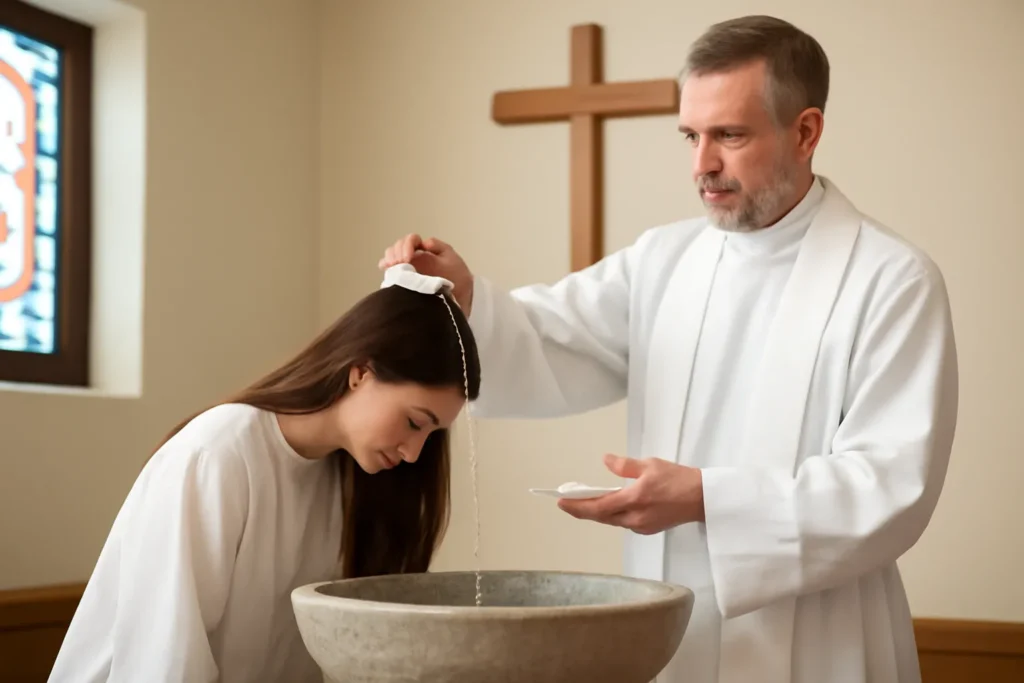
Mode: The prevailing practice is immersion in water, rather than sprinkling or pouring. Immersion is seen as picturing the believer’s death to sin and resurrection with Christ.
Condition: The person being baptized is typically a confessing believer who has heard the gospel, repented, and publicly professed faith in Jesus Christ.
Function: Baptism functions as a corporate initiation into the local congregation and as a real, transformative moment in the believer’s spiritual journey.
Authority: Baptism is conducted under the authority of the local church and in accordance with its elders or gospel preachers, respecting the congregational structure typical in many Church of Christ communities.
The practice of baptism: immersion, belief, and public confession
The Church of Christ emphasizes believers’ baptism by immersion as the standard mode. This practice is deeply linked to the theological conviction that baptism is an outward response to inward faith. For many in the Church of Christ, infant baptism is not the norm; baptism is reserved for those who can publicly express faith in Christ, repent of sin, and confess Jesus as Lord.
In the Church of Christ, baptism is not a mere symbol of having joined a church; it is an act that aligns the believer with the death, burial, and resurrection of Christ. The public dimension is important because baptism publicly identifies the believer with Christ before the community and with the church universal.
Important distinctions to understand about the practice include:
Eligibility: Typically, an individual who understands the gospel and can articulate faith in Christ.
Public confession: The baptism rite often includes a verbal confession of Jesus as Lord and Savior.
Communal context: Baptism occurs within a worship service or a designated baptismal ceremony in the local church, often followed by a welcome into the congregation.
Scriptural foundations and theological rationale
Advocates of the Church of Christ approach baptism as a divinely instituted ordinance that accompanies faith and repentance. They frequently highlight the sequence found in the book of Acts and the teaching of Jesus in the Gospels to explain why baptism is essential.
Key scriptural anchors include:
Acts 2:38: The apostle Peter calls for repentance and baptism for the forgiveness of sins, and to receive the gift of the Holy Spirit.
Mark 16:16: The necessity of believing and being baptized for salvation, according to some translations and interpretations.
Romans 6:3-4 and Colossians 2:12: Illustrations of baptism as participation in the death and resurrection of Christ, symbolizing new life.
Galatians 3:27: The idea of putting on Christ through baptism, equating baptism with entering into a new identity in Jesus.
The cumulative reading of these texts leads to a common conviction in the Church of Christ that baptism is not merely a symbol but a meaningful entrance into the benefits of Christ’s saving work, experienced within the community of faith.
Steps to baptism in the Church of Christ: a practical guide
For someone considering baptism in the Church of Christ, the path typically unfolds through a series of deliberate steps. While local practices may differ slightly from one congregation to another, the following sequence captures the common pattern:
Hearing the gospel: The process usually begins with hearing the message about Jesus, his life, death, and resurrection, and understanding why baptism is significant.
Repentance and faith: Individuals are invited to repent from sin and place their faith in Jesus as Lord and Savior.
Confession of faith: The person publicly confesses belief in Jesus Christ as the Son of God and the Savior of the world.
Prayer and pastoral guidance: A pastor, elder, or designated church leader prays with the candidate and provides spiritual guidance for the baptismal decision.
Preparation time: Some congregations require or encourage a brief period of catechesis or personal reflection, especially for new believers.
Immersion baptism: The candidate is immersed in water in the presence of the gathered church community. This immersion represents a symbolic burial with Christ and a rising to new life in him.
Post-baptism affirmation: After baptism, the congregation often welcomes the newly baptized member with a public affirmation of faith and inclusion in the body of Christ.
Discipleship steps: The baptized person is encouraged to engage with a local congregation through regular worship, Bible study, prayer, and service.
The sequence above reflects a pattern aimed at aligning the believer’s inner faith with an outward, public declaration within the community of faith.
What happens during baptism: symbolism, grace, and transformation
In the Church of Christ, baptism is commonly described with a blend of symbolism and grace. Participants are often taught that the immersion illustrates several theological realities:
Death to sin and burial with Christ: the believer dies to sin and is buried during the immersion.
Resurrection to new life: emerging from the water represents the believer’s new life in Christ.
Identification with the church: baptism publicly identifies the believer with the body of Christ, the church, and its mission in the world.
Remission of sins: many teachings connect baptism with the forgiveness of sins as part of God’s saving work through Jesus.
Because of its connection to forgiveness and salvation in this tradition, baptism is often described as a step that occurs after genuine faith in the gospel rather than a mere symbol or a human work. This is not to imply that the Church of Christ teaches that baptism earns salvation by merit; rather, it is seen as the obedient response through which God communicates grace to the believer.
Mode, timing, and the role of the local church
The practice of the Church of Christ is characterized by a few consistent features regarding how baptism is performed and by whom:
Mode: immersion in water is the standard and preferred method, often performed in a baptismal pool or a natural body of water.
Timing: baptism is typically offered to those who have expressed faith, though some congregations provide baptismal instruction or counseling before proceeding.
Authority: the ceremony is carried out under the auspices of the local church, commonly by an elder, gospel preacher, or another qualified leader who has the pastoral authority to perform the rite.
The emphasis on local church authority reflects a broader ecclesiology in which the church is a community of believers gathered around the gospel. Baptism is thus not a purely personal rite but a communal event that affirms participation in the life of a concrete local body.
Infant baptism, age of accountability, and related questions
One of the frequent questions about baptism in the Church of Christ concerns whether infants should be baptized. The tradition generally upholds believers’ baptism by immersion, which means that infant baptism is not practiced as a matter of standard teaching. The prevailing position is that individuals should be old enough to understand the gospel, believe in Jesus, repent, and publicly confess faith before being baptized.
In this framework, many communities refer to an age of accountability or a threshold at which a person can knowingly respond to the gospel. The exact age is not universally fixed across all congregations; rather, it is determined by local leadership in consultation with families and the maturing child. Parents often plan for child catechesis, Bible teaching, and opportunities for the child to express faith before baptism happens.
Practical considerations also arise around how to approach baptism for those who have previously undergone some form of baptism in another tradition. Members and leaders usually consider the doctrinal understanding of baptism and the state of the candidate’s faith. In many cases, if the prior baptism is not by immersion or not understood in continuity with the Church of Christ’s beliefs, a participant may be instructed to be rebaptized by immersion in the local congregation, following an explicit profession of faith.
Who administers baptism and what this reveals about church life
In the Church of Christ, baptism is typically administered by:
Elders or gospel preachers who minister to the congregation; and
Other trusted believers who have been granted authority to perform baptisms within the local church context.
The emphasis on local leadership underscores a practical ecclesiology: the community gathers, the gospel is proclaimed, a confession is made, and a baptism is performed in a way that reflects the unity and discipline of the local church. Some congregations arrange baptism in a special service, while others include it within ordinary worship. The common thread is that the act of baptism is integrated into the life of the church, not treated as a private rite separated from the community.
Baptism, salvation, and the believer’s ongoing journey
A central theme in baptism church of christ discussions is the relationship between the act of baptism and the believer’s salvation. While different congregations may articulate nuances, the core idea remains that baptism is a meaningful, biblically grounded response to the gospel that participates in Christ’s saving work. It is not seen as the only thing that saves a person, but as a crucial, obedience-based step that accompanies faith. The post-baptism life, therefore, is expected to reflect a turning toward Christ and a commitment to live under the authority of the gospel within the community of faith.
In practical terms, new believers’ lives are shaped by:
Regular worship with the local body of believers, including singing, prayer, and preaching from the Bible.
Bible study and catechesis to deepen understanding of Christian doctrine and daily living.
Fellowship and service: participation in acts of mercy, evangelism, and support for fellow members.
How baptism in the Church of Christ relates to worship and church life
Baptism is not a stand-alone event; it sits within the broader life of the church. Following baptism, new members often receive instruction about how to participate in the Lord’s Supper, Bible study, and mission outreach. The weekly rhythm of worship, the regular observance of the Lord’s Supper, and the congregational life of the Church of Christ all contribute to a holistic spiritual formation. While the practice of the Lord’s Supper is widely observed in many Churches of Christ, baptism remains a distinct ordinance tied to the individual’s faith response and entry into the church.
Common questions about baptism in the Church of Christ
Below are answers to several frequently asked questions often encountered by those exploring the baptismal practice among the Churches of Christ:
Is infant baptism practiced in the Church of Christ? Most Churches of Christ emphasize believer’s baptism by immersion and do not practice infant baptism as part of the standard doctrinal pattern.
Can someone baptize themselves? In ordinary practice, baptism is conducted by a church leader or an ordained evangelist; self-baptism is generally not the norm within these communities.
What if someone was baptized in another tradition? The answer varies by congregation. Some churches retain the sense that baptism is valid if it was by immersion and performed with faith; others require re-baptism to align with local beliefs and the Church of Christ understanding of baptismal initiation.
What is the role of faith and repentance? Faith and repentance are prerequisites to baptism; baptism is not the first act of grace itself but the outward step of faith that accompanies it.
Historical context and variation within the restoration movement
The Church of Christ is part of a broader historical movement known as the Restoration Movement, which sought unity among Christians by restoring what adherents perceive as the pattern of the early church. Within this broader family, there is variation in practice and emphasis. Some groups within the Restoration Movement allow a broader interpretation of baptism or have different expectations about church governance, but the emphasis on baptism by immersion, believer's baptism, and baptism as a step of obedience remains a core hallmark for many Churches of Christ.
Relative to similar traditions, the Church of Christ differs in practice from other fellowships within the Restoration family, such as the Disciples of Christ, which historically has been more willing to use instrumental music in worship and to embrace a broader ecumenical approach. Regardless of these differences, discussions about baptism in the Church of Christ consistently highlight the central place of the gospel, the believer’s response to it, and the importance of baptism as a public declaration within the local church.
Finding a congregation and preparing for baptism
If you are considering baptism within the Church of Christ, you may want to take the following practical steps:
Learn about the local church: Visit a nearby Church of Christ congregation to observe its worship, teaching, and practice around baptism.
Engage with a minister or elder: Speak with a gospel preacher or elder about your faith journey and questions regarding baptism.
Study key scriptures: Read and discuss the passages cited in this article to understand the biblical basis for baptism in the Church of Christ.
Attend baptismal preparation: If the church offers a class or counseling, participate to ensure you understand the meaning and commitments involved.
Public confession and faith: Prepare to share a personal testimony of faith in Jesus, including what he means to you and how you’ve experienced his grace.
Get immersed: When you and the church agree you are ready, undergo baptism by immersion in a suitable setting with witnesses and church leadership present.
The process emphasizes a patient, biblically grounded journey rather than a rushed ceremony. The goal is a faithful response to the gospel, followed by sustained discipleship within a church community.
For those who want to explore more about baptism in the Church of Christ and related movements, consider examining:
Scriptural commentaries on Acts 2:38 and Romans 6.
Historical summaries of the Restoration Movement and its stance on baptism.
Church doctrinal statements or catechisms from local Church of Christ congregations.
Works that compare baptism practices across the Churches of Christ and related groups, including discussions of infant baptism and modes of baptism.
While the exact wording and emphasis may vary from church to church, the core idea remains stable: baptism is a meaningful, biblically grounded response to the gospel, performed by immersion, and conducted within the local church as an entry into the life of Christ and his people.
Summary: baptism in the Church of Christ as a pathway into the life of faith
Throughout the Church of Christ tradition, baptism is understood as a deliberate, faith-filled response to the gospel that invites a person into the community of believers. The distinctive features—believers’ baptism by immersion, public confession of faith, and a baptism administered by a local church leadership—reflect a theology that ties salvation to the obedient response to Jesus’ command and the faith he requires of his followers. This practice is not a mere ceremony; it is a formative moment that signals the beginning of a life of discipleship, worship, and service within the body of Christ.
Whether you are exploring the baptism church of christ for the first time or seeking to understand a specific congregation's teaching, the key is to engage with the gospel clearly: to hear, to believe, to repent, to confess, and to be baptized as an act of faithful obedience to Christ. In doing so, individuals participate in the ongoing story of God’s people and join a community that seeks to live out the gospel in everyday life.






Leave a Reply