Second Temple: History, Significance, and Archaeological Insights
Second Temple: History, Significance, and Archaeological Insights
The Second Temple, often called the Second Temple period or the Temple in Jerusalem, spans roughly five centuries of Jewish history from the return of exiles under Cyrus the Great to the Roman destruction in 70 CE. This era begins with the rebuilding of the sanctuary under Zerubbabel and Joshua, continues through the Hellenistic and Roman periods, and ends with a cataclysmic rupturing event that shaped Jewish life and identity for generations. The intermediate years saw a remarkable blend of religious renewal, political struggle, and evolving architectural grandeur. The later phase, commonly known as Herodian renovation, transformed a relatively modest sanctuary into a monumental complex that could accommodate large crowds during pilgrimages and festivals. In many discussions, scholars and readers refer to this as the Temple complex of the Second Temple era, acknowledging both its spiritual significance and its changing political fortunes.
The story of the Second Temple era begins after the Babylonian exile, when Persian rulers allowed a return to Zion. The biblical books and later historical summaries present Cyrus the Great’s decree as a turning point that enabled a community to reconstitute a religious center. The early phase saw leaders such as Zerubbabel and Yehoshua (Joshua) overseeing the laying of the foundation and the restoration of cultic practices in a rebuilt sanctuary. This initial reconstruction is sometimes called the Temple rebuilt under Zerubbabel, distinguishing it from the earlier, Solomon’s First Temple. The renewed sanctuary served a community eager to reestablish sacrifice, ritual calendar observance, and the central role of the priesthood after decades of disruption.
Over the next centuries, the descendants of the returning exiles navigated a shifting political landscape. They lived under imperial authority—first Persian, then Hellenistic after Alexander the Great’s conquests, and later under Roman dominion. Each era left its imprint on the temple precincts, liturgical practices, and the legal framework surrounding ritual purity, sacrifice, and festival pilgrimage. The Temple in Jerusalem thus existed not merely as a building, but as a living institution embedded in the rhythms of daily life, seasonal feasts, and the succession of generations of priests, scribes, and lay devotees.
Backdrop of religious and political change
As the Second Temple period unfolded, communities within Judea and the broader diaspora faced pressures from foreign rulers and internal factions. The Maccabean revolt and the later Hasmonean dynasty are often treated as moments when the temple and political power intersected in new ways. Even before the monumental Herodian expansion, the sanctuary served as a focal point for Judean identity, with serious debates about leadership, authority, and the scope of ritual duties. The temple’s role was not only sacramental; it also stood at the center of questions about legitimacy, purity laws, and inclusion of diverse groups within the broader worshiping community. The arc of this history shows a continuity of worship and a continuing evolution of architectural and ritual forms that reflected changing times.
Construction, renovation, and architectural features
From Zerubbabel’s Temple to the Herodian expansion
The initial rebuilding, often labeled the postexilic temple, reestablished the sanctuary and its immediate precincts. It provided a necessary home for sacrificial rites and for the reintroduction of the calendar’s major festivals—
Pesach (Passover)
Shavuot (Weeks)
Sukkot (Tabernacles)
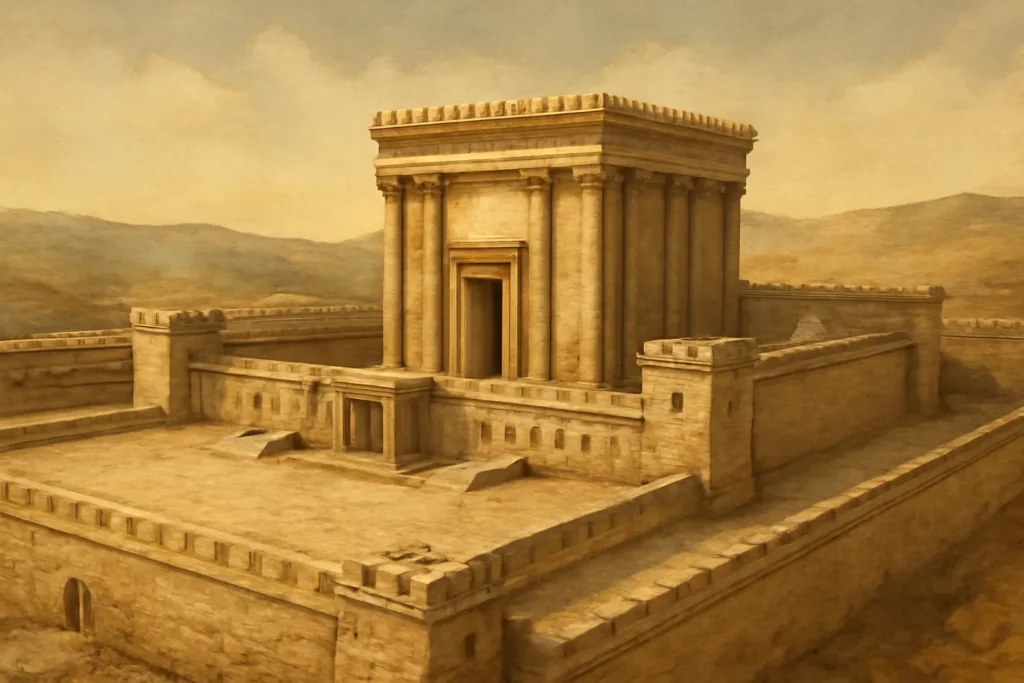
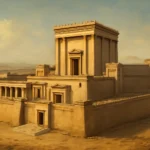
Centuries later, under Herod the Great, the temple complex underwent a dramatic renovation that transformed it into an architectural marvel. Although the sanctuary remained, the surrounding courtyards, porches, and retaining walls were expanded and reinforced to create a space capable of accommodating tens of thousands of pilgrims. The Herodian renovation began in earnest in the late first century BCE and continued for decades, reshaping the outer appearance and expanding the sacred precincts while preserving the core liturgical functions inside the sanctuary. This period produced what many scholars describe as one of the most ambitious architectural programs in the ancient world—a grand project that sought to reflect the glory and sovereignty of the people who worshiped there, even as political tensions intensified across the region.
Architectural layout and key components
The Temple complex during the latter era featured a layered arrangement of courts and sacred spaces that spectators and worshipers traversed in a particular sequence. The main components typically highlighted in scholarly descriptions include:
The Temple Mount precinct, a hilltop platform that supported the inner sanctum and the surrounding structures.
The First Enclosure and Second Enclosures, where priests and Levites performed ritual duties and where certain classes of worshipers were permitted during festival times.
The Court of the Gentiles, the outermost open space where non-Jewish visitors could gather and observe other parts of the precincts.
The Women’s Court (Ezrat Nashim) and the Israelite Court (Ezrat Yisrael), which separated different groups of worshipers and priests.
The Holy Place (Hekal) inside the sanctuary, housing sacred furnishings such as the menorah, the table of showbread, and the altar of incense.
The Holy of Holies (Kodesh Hakodashim), the most sacred inner chamber where the Ark of the Covenant had stood in ancient times and where the divine presence was traditionally believed to rest on the Day of Atonement.
Although the exact arrangement and appearance of every feature are debated, the broad pattern—with a progression from public to most sacred spaces—remains a common thread in descriptions of the Second Temple’s architecture. The Western Wall, a surviving portion of Herodian retaining walls, stands today as a tangible reminder of that era’s stone-cut precision, monumental scale, and the reverence attached to the temple precincts. The surviving stones—massive and meticulously fitted—speak to the ambitions of the Herodian modernization project and to the enduring human effort to memorialize religious devotion in stone.
Materials, technology, and labor
Architectural mastery in the Temple complex was achieved through a combination of imported and locally sourced materials, sophisticated quarrying, and skilled labor. The Herodian builders drew upon a long tradition of monumental construction in the eastern Mediterranean, employing massive limestone blocks, precise ashlar masonry, and standardized decorative elements. The project also demonstrates how a religious community could mobilize resources and labor for a purpose that was both spiritual and civic—a public expression of identity reaffirmed in stone and space. The end result was a sanctuary and courtyard system that could accommodate large crowds during pilgrim seasons, reflecting the temple’s role as a pilgrimage site central to Jewish religious life during the Second Temple era.
Religious life, rituals, and leadership
Priesthood, the Sanhedrin, and daily practice
The religious life of the latter temple era revolved around the priestly order and a complex set of ritual tasks performed by the Levites and Aaronic priesthood. Sacrifices were central to the worship life, and the sanctuary was the locus for offerings during major feasts and on ordinary days when the temple functioned as a center of worship. The leadership also involved a legal and judicial body known as the Sanhedrin in some periods, a council that carried certain religious and civil authorities in matters of interpretation of the law and sacrificial rules. The hierarchy included high priests, chief priests, and subordinate priests who took turns fulfilling duties, especially during festival seasons when the crowds swelled and ceremonial procedures grew more complex.
Liturgy, feast days, and calendar observance
Liturgical life around the temple was tied to the Jewish calendar and the agricultural year. Pilgrims would journey from towns and diaspora communities to participate in high holy days and offerings. The calendar emphasized a rhythm of sacrifice, purification rites, and ritual purity, framed by careful observance of the laws associated with the sanctuary. The ritual calendar helped inscribe a shared memory into the body and experience of the worshiping community, binding generations through common observances. The experience of the temple’s prayers, processions, and sacrifices served as a powerful symbol of covenantal fidelity, even as debates about ritual purity and inclusion persisted within different factions of Judaism during the period.
Significance in Jewish history and its broader impact
Centrality for Jewish identity
During the Second Temple era, the sanctuary was not simply a building but a living symbol of covenantal relationship between the people and their deity. The temple’s sanctity and its role as the primary site of sacrificial life helped shape a sense of continuity with ancestral traditions while also stabilizing a community through periods of upheaval. In Jewish thought and memory, the sanctuary stood for a spiritual ideal: a place of divine presence, a locus of communal prayer, and a concrete sign of national sovereignty—even when political power wavered or was fragmented by foreign rule.
Influence on later religious traditions
Beyond its own time, the Second Temple period left an enduring imprint on later religious traditions, including Rabbinic Judaism, early Christian communities, and modern interpretations of sacred space in Jerusalem. The destruction of the temple in 70 CE did not erase its significance; instead, it transformed how religious life organized itself. Rabbinic authorities reoriented practice around rabbinic centers and synagogues, while still venerating the temple’s memory and anticipating its restoration in eschatological hope. The broader narrative of the temple’s rise and fall has become a central thread in theological reflections about divine providence, covenant, and city-formation in the Jewish and Christian worlds.
As communities dispersed from Jerusalem, the memory of the sanctuary continued to shape religious imagination. Writings from the period and later traditions discuss purity laws, sacrificial practices, and the moral responsibilities of a people who had once worshiped at the most sacred site. In the diaspora, the temple’s memory reinforced a sense of ethical responsibility and collective memory, guiding how Jews thought about sacred space, national identity, and the ethical obligations of leadership and community life. The enduring symbol of the Temple precincts—even in exile—helped sustain a shared narrative across centuries and continents.
Archaeological insights into the Second Temple and its surroundings
What the excavations reveal about daily life and worship
Archaeology around the City of David, on and around the Temple Mount, and in the Jewish Quarter of Jerusalem has yielded a wealth of material that illuminate the Second Temple period in new ways. Among the most important findings are:
Remnants of monumental stonework and orthogonal street plans associated with the Herodian renovation.
Preserved architectural fragments, including columns, paving stones, and capital details that illustrate advanced masonry and urban design.
Artifacts from religious practice, such as ritual objects and inscriptions that illuminate priestly duties and the logistics of sacrificial life.
Urban infrastructure elements, including water systems and drainage that supported a large population during pilgrimage seasons.
Scholars often relate these discoveries to the broader architectural program of the temple complex, helping to confirm the general layout of courts and sacred spaces described in historical sources. The archaeological record thus complements textual narratives, offering tangible connections to the daily routines of priests, merchants, pilgrims, and residents who lived in and around the sanctuary during the Second Temple era.
Key archaeological sites and remains
Several sites provide particularly important windows into the era:
The Western Wall precinct, which survives as a fragment of the ancient retaining wall surrounding the temple platform and remains a focus for ongoing ritual and study.
Remains of the Temple Mount platform itself, whose stones and construction techniques reveal scaling and alignment strategies used to support the monumental project.
Industrial and domestic layers in nearby neighborhoods, indicating how people lived, traded, and supported temple life through crafts, markets, and daily work.
Architectural traces in adjacent quarters that illustrate the social and economic ecosystems that accompanied the religious center.
Limitations and interpretive challenges
Archaeology of the Second Temple is complex and sometimes contested, in part because the relevant layers lie beneath modern urban strata, political sensitivities around the Temple Mount, and the fragmentary nature of surviving materials. Yet, by combining stratigraphic data, architectural analysis, and comparative studies from other ancient sites, researchers have been able to construct a coherent image of the complex sanctuary, its expansion, and the way urban life intertwined with sacred duties. The result is a nuanced picture of a durable institution that adapted to changing political realities while preserving core religious commitments.
Historical trajectories: continuity and transformation
Persian roots, Hellenistic influence, and Roman rule
The Second Temple period did not unfold in a vacuum. Its early development emerged under Persian oversight, followed by the Hellenistic era after Alexander’s conquests, and ultimately under Roman sovereignty. Each era left its imprint on the sanctuary’s governance, architectural program, and ritual life. Persian imperial policy generally favored local autonomy under a framework of tribute, which allowed for religious continuity. The Hellenistic period introduced new cultural currents, artistic styles, and debates about identity and assimilation within a broader Mediterranean world. Roman rule, with its distinctive political structures and military presence, brought new tensions and opportunities for the temple’s leadership and the city’s residents. In every phase, the sanctuary remained a focal point for worship, communal action, and political symbolism.
Internal debates and factions
Within Judean society, a spectrum of religious and political perspectives shaped how the temple functioned. Some groups emphasized strict adherence to purity laws and priestly prerogatives, while others sought broader inclusion of various groups within the worshiping community or advocated reform in liturgical practices. These internal debates influenced the way the temple was read as a symbol of covenantal fidelity, as well as how it related to the authority structures of the time. The complex interplay of authority, ritual law, and social expectation helped explain both the temple’s resilience during peaceful periods and the vulnerability it faced during times of revolt and external pressure.
The destruction of the Second Temple by Roman forces in 70 CE stands as one of the defining moments of ancient Jewish history. The loss was not simply the loss of a building; it signified a profound disruption of sacrificial life and the center of public worship. In the immediate aftermath, thousands of residents were displaced, and the city experienced upheaval and reconfiguration. Yet the memory of the holy sanctuary persisted in religious writings, traditions, and later rabbinic thought. The temple’s destruction became a touchstone for discussions of exile, redemption, and the longing for restoration that continued to shape Jewish life for centuries.
Diaspora memory and legal imagination
Even as Jews dispersed across the Mediterranean and beyond, the idea of the sanctuary remained a powerful symbol of national memory and religious ideal. In many later texts, the temple is invoked as a standard of purity, a model of priestly order, and a symbol of divine favor or judgment. The enduring memory of the temple complex also informed debates about sacred space, urban planning, and the political status of Jerusalem in later centuries. This memory would eventually intersect with modern debates about access to and stewardship of sacred sites on the same hilltop where the ancient sanctuary once stood.
Legacy for today: sacred space, archaeology, and public memory
Contemporary significance of the temple precincts
Today, the Temple Mount and the surrounding sacred precincts continue to be a focal point of religious devotion, scholarly inquiry, and political dialogue. The physical remnants, especially the Western Wall and adjacent archaeological layers, provide a tangible link to a distant era and a concrete context for understanding ancient worship, city-building, and the daily lives of those who lived in a city framed by a monumental temple complex. Scholars and visitors alike approach the site with a sense of historical depth, recognizing the complex interplay of faith, memory, and politics that has shaped this landscape for millennia.
Archaeological findings from the Second Temple era function as a bridge across generations—connecting ancient practices with modern religious life, and linking textual traditions with material culture. The careful study of architecture, artifacts, and urban layout helps to illuminate how ancient communities organized themselves around sacred times and spaces. In doing so, archaeology enriches our understanding of how faith traditions adapt to changing circumstances while preserving core beliefs and practices over long stretches of time.
The following terms frequently appear in discussions of the second-temple sanctuary and its era. Some readers will encounter them in ancient sources and in modern scholarship; here they are clarified for quick reference:
Temple Mount: The elevated platform on which the main temple complex stood, including the inner sanctuaries and surrounding courtyards.
Holy of Holies: The innermost chamber within the sanctuary, regarded as the most sacred space and traditionally associated with the divine presence.
Sanhedrin: The supreme religious legal body that exercised authority in matters of ritual interpretation and civil governance at various times.
Herodian expansion: The large-scale renovation and extension of the temple complex undertaken by King Herod the Great, beginning in the late 1st century BCE.
Second Temple period: The theological, political, and cultural era from approximately 516 BCE to 70 CE, centered on the Jerusalem sanctuary.
Pilgrimage site: A place of annual or seasonal religious travel for worshipers who journeyed to the temple to participate in festival rites.
Priesthood: The hereditary group of priests who performed liturgical duties within the sanctuary and its courts.
Temple complex: The whole assembly of sacred structures and spaces associated with the sanctuary and its surrounding courtyards.
In sum, the Second Temple era represents a remarkable chapter in antiquity when faith, law, architecture, and civic life coalesced around a central sacred space in Jerusalem. From the initial rebuild under Zerubbabel to the dramatic Herodian renovation, the temple complex stood as a symbol of covenant, continuity, and divine presence for a people navigating the pressures of empire, diaspora, and historical change. For students of history, archaeology, and religious studies, this period offers a rich tapestry of sources—texts and stones alike—that illuminate how a society imagined itself, organized its public life, and preserved its sacred memory through centuries of transformation.




Leave a Reply