Rechabites in the Bible: Their history and meaning
Rechabites in the Bible: Their history and meaning
The Rechabites were a family group praised by God for faithfully keeping their ancestor’s commands.
Their story appears mainly in Jeremiah 35, where the prophet uses their obedience to expose Judah’s refusal to listen to God. The Rechabites had avoided wine, permanent houses, farming, and vineyards because of instructions associated with Jonadab son of Rechab. Their way of life was distinctive, but Jeremiah’s message was not simply about abstaining from wine or living as nomads.
The central issue was faithful obedience. The Rechabites listened to a human ancestor for generations, while the people of Judah repeatedly ignored the words of the Lord delivered through the prophets. Their example shows how conduct, family memory, and religious faithfulness can come together in a biblical narrative.
The name Rechabites comes from Rechab, the father of Jonadab, also called Jehonadab in some passages. The group seems to have been a distinct family or clan within the broader population of ancient Israel. Scripture does not provide a full history of their origin, so some details about their ancestry remain uncertain.
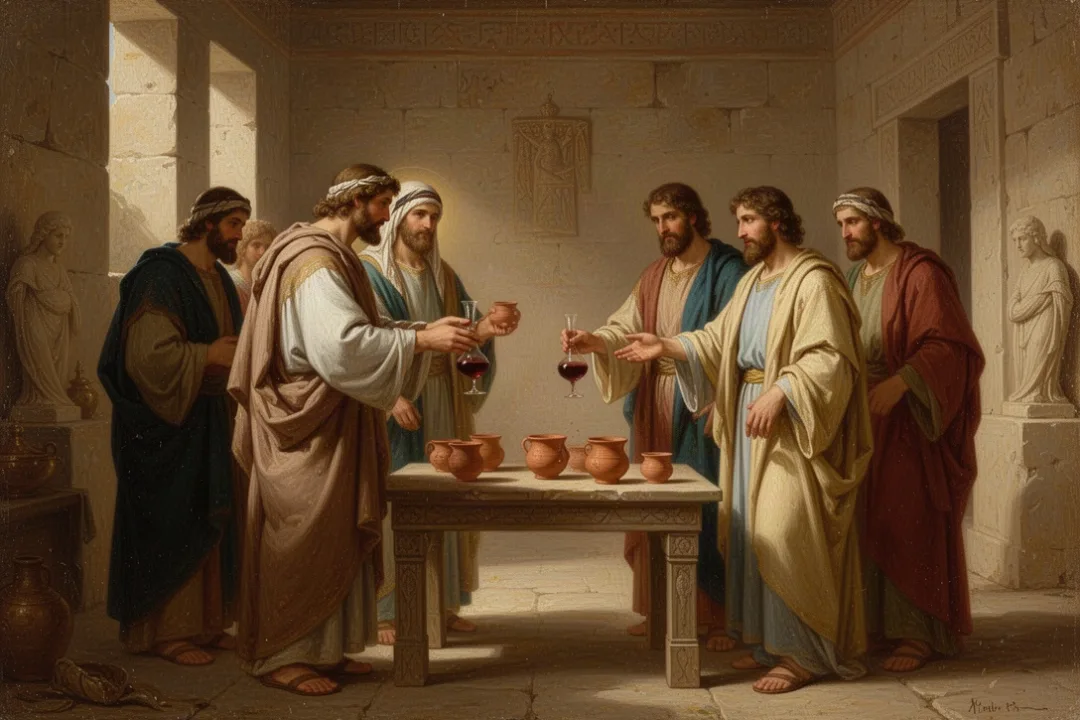
The clearest account is found in Jeremiah 35. During the reign of King Jehoiakim of Judah, Jeremiah received instructions from God to bring the Rechabites into one of the temple chambers. He set wine before them and told them to drink it. They refused, explaining that Jonadab had commanded their family never to drink wine.
They also said that Jonadab had ordered them not to build houses, plant seed, establish vineyards, or own vineyards. Instead, they were to live in tents. Their reason was practical as well as traditional: this lifestyle would allow them to remain separate and preserve the command handed down through their family.
The Rechabites’ response is especially striking because they did not make an exception when circumstances changed. They explained that they had obeyed Jonadab for many generations. They had entered Jerusalem because military pressure from the Babylonian armies and other regional forces had made the countryside unsafe, but they had not abandoned their ancestral rule.
The main contrast: The Rechabites obeyed a human family command over many generations, while Judah would not obey God’s repeated warnings through the prophets.
The account does not present the Rechabites as a separate religion. They appear within the world of Israel and Judah, and Jeremiah uses their behavior as an illustration for the people of God. Their value in the story comes from their steadfastness and attentiveness, not from a claim that every Israelite should copy their exact lifestyle.
What Jonadab commanded the Rechabites to do
Jonadab’s commands shaped the family’s identity. According to Jeremiah 35, the Rechabites were instructed to follow several connected practices:
They were not to drink wine.
They were not to build permanent houses.
They were not to plant seed or maintain vineyards.
They were not to own vineyards.
They were to live in tents.
They were to remain mobile rather than settle permanently in the land.
These rules created a deliberately simple and mobile way of life. The commands concerned more than alcohol. They restricted the family’s participation in settled agriculture and urban life, keeping them dependent on movement, livestock, and temporary dwellings rather than land ownership and permanent settlement.
The Bible does not explicitly explain every reason for Jonadab’s commands. They may have protected the family from the temptations associated with settled wealth, political entanglement, and agricultural prosperity. They may also have preserved a pastoral or semi-nomadic identity. Any explanation beyond the stated commands should be treated as a reasonable possibility rather than a certain fact.
The prohibition against wine is sometimes misunderstood. Jeremiah 35 does not teach that all people in every situation must avoid wine. The passage describes a particular family vow or rule and focuses on the Rechabites’ obedience to it. Other biblical passages discuss wine in different contexts, sometimes warning against drunkenness and sometimes mentioning wine as part of ordinary life.
The Rechabites’ rejection of wine also demonstrates that the test in Jeremiah was not difficult because they lacked clarity. They knew precisely what Jonadab had commanded. When Jeremiah offered wine, they did not debate whether the command still applied or whether a prophetic setting created an exception. Their inherited rule gave them a clear answer.
Why tents and mobility mattered
Living in tents distinguished the Rechabites from settled communities. A permanent house could represent security, property, family continuity in one location, and participation in the agricultural economy. The Rechabite pattern rejected those advantages in favor of mobility and separation.
Their way of life may remind readers of Israel’s earlier wilderness experience, but Jeremiah does not directly say that the Rechabites were trying to recreate the exodus. The biblical text gives their immediate reason: they were following Jonadab’s command. Connections to older Israelite traditions can be considered, but they should not replace what the passage actually states.
When the Babylonian threat forced the Rechabites into Jerusalem, they faced an unusual test. They were inside a major city and near the temple, yet they still maintained their distinctive customs. Their faithfulness did not depend on ideal circumstances. They kept the rule while displaced from their normal environment.
How Jeremiah 35 uses the Rechabites as an example
Jeremiah 35 is not mainly a story about an unusual clan. It is a prophetic sign action. God tells Jeremiah to create a situation in which the Rechabites’ obedience can be seen publicly. Their refusal becomes a living contrast with Judah’s persistent disobedience.
Jeremiah then presents God’s complaint against Judah. The Lord had repeatedly sent prophets to warn the people to turn from evil, change their behavior, and follow his commands. Yet Judah had not listened. The people had more authority, more revelation, and a greater obligation than the Rechabites, but they had responded with resistance.
The contrast is carefully constructed:
The Rechabites obeyed the words of Jonadab, a human ancestor.
Jonadab’s instruction was given once and preserved through generations.
God had spoken to Judah repeatedly through prophets.
Judah had received covenant teaching but refused to respond faithfully.
The Rechabites protected a family tradition, while Judah violated its relationship with God.
The point is not that Jonadab’s authority was equal to God’s. It is the opposite. If the Rechabites showed serious respect for a human command, Judah should have shown far greater respect for the commands of the Lord. Their example exposes the weakness of Judah’s excuse.
Jeremiah’s message also shows that obedience is visible in choices. The Rechabites did not merely claim to honor Jonadab. Their refusal of wine and commitment to tents demonstrated that honor. Likewise, Judah’s behavior demonstrated its disregard for God despite its religious language and national identity.
The passage therefore challenges a common assumption: hearing a command is not the same as responding to it. The Rechabites heard, remembered, and practiced. Judah heard, but repeatedly failed to act. In Jeremiah’s preaching, obedience reveals what people truly regard as authoritative.
Reading the lesson carefully: Jeremiah does not praise the Rechabites because nomadic life is automatically holier than settled life. He praises their dependable obedience and uses it to confront Judah’s refusal to obey God.
Jonadab, Jehonadab, and the Rechabite connection
Jonadab is introduced in Jeremiah as the son of Rechab. A related figure named Jehonadab son of Rechab appears in 2 Kings 10. Jehonadab joins King Jehu during Jehu’s campaign against the worship of Baal in the northern kingdom of Israel. Jehu recognizes him as an ally in carrying out the purge of Baal worship.
Most readers understand Jonadab and Jehonadab to refer to the same individual, with the names representing forms of the same Hebrew name. The spelling differs between English translations and contexts, but the connection is widely accepted. In 2 Kings, Jehonadab is associated with opposition to Baal worship; in Jeremiah, Jonadab is remembered as the ancestor who gave the Rechabites their defining commands.
The account in 2 Kings does not describe all of Jonadab’s rules. It shows him alongside Jehu and identifies him as an important figure who supported Jehu’s actions against Baal worship. Jeremiah supplies the information about the family’s lifestyle, including their abstinence from wine and refusal to settle permanently.
The two passages together present Jonadab as a person remembered for strong religious and communal commitments. Still, the Bible does not tell us exactly when he gave the commands or how the Rechabite way of life developed. It is safer to say that the family preserved a rule associated with him than to construct a detailed biography that Scripture does not provide.
Were the Rechabites Kenites?
Some biblical references have led interpreters to connect the Rechabites with the Kenites. Judges 1:16 mentions descendants of the Kenite, Moses’ father-in-law, living among the people of Judah. Judges 4:11 also refers to a Kenite named Heber. These passages show that Kenite groups lived in or near the land of Israel and maintained relationships with Israelites.
First Chronicles 2:55 mentions families connected with scribes who came from Jabez, including the Tirathites, Shimeathites, and Sucathites, and then refers to the Kenites who came from Hammath, the father of the house of Rechab. This wording is one reason many interpreters associate the Rechabites with the Kenites.
However, the precise relationship remains uncertain. The biblical texts do not provide a complete genealogy proving every step between the Kenites, Rechab, and the Rechabites of Jeremiah. Some readers understand the Rechabites as a Kenite clan; others are more cautious and speak of a possible connection.
The Kenite question matters for historical background, but it does not change the central message of Jeremiah 35. Whether the Rechabites were Kenites by ancestry or a related group, Jeremiah presents them as a family known for keeping Jonadab’s commands.
What happened to the Rechabites after Jeremiah 35
At the end of Jeremiah 35, God promises that the descendants of Jonadab son of Rechab will always have someone standing before him. The statement comes after the Rechabites have demonstrated their faithfulness, and it contrasts with the judgment announced against Judah.
The promise is often interpreted as assurance that the Rechabite family will continue to exist and retain a recognized place before God. The wording does not provide a detailed prediction about their later history, nor does it identify a particular political office or priestly role. It should not be turned into a claim the text does not make.
The Old Testament does not offer a continuous record of the Rechabites after the Babylonian period. Later Jewish and Christian writings contain traditions about groups identified with the Rechabites, but those traditions vary and are not equivalent to direct biblical evidence. Their later history is therefore best described with caution.
The promise does show that God notices the faithfulness of a group that might otherwise seem socially marginal. The Rechabites were not kings, priests, or major political leaders in the narrative. Yet their actions became significant enough to serve as a permanent prophetic example.
They also demonstrate that a family’s identity can preserve a witness through difficult historical changes. War, displacement, and life in Jerusalem did not erase their commitment. Their identity was carried not by buildings or land but by remembered instruction and practiced loyalty.
What Christians and other readers can learn from the Rechabites
The Rechabites offer several lessons, but these should be drawn from Jeremiah’s emphasis rather than from assumptions about their lifestyle. The passage does not require every reader to live in tents or reject every form of wine. It directs attention to the qualities their conduct displayed.
Faithfulness includes consistency. The Rechabites followed their rule across generations. Their commitment was not limited to a single dramatic moment. They maintained the same practice in ordinary life, during displacement, and when a prophet placed wine in front of them.
Good intentions need visible action. The family could have claimed to honor Jonadab while quietly ignoring his instructions. Instead, their behavior made their loyalty clear. Biblical obedience is not merely agreement with a principle; it becomes concrete in decisions and habits.
Tradition can preserve responsibility. Jonadab’s commands gave the family a shared identity and a standard by which they could measure their conduct. Tradition is not automatically good, but a tradition that directs people toward discipline and faithfulness can help shape a community.
Human examples can expose spiritual failure. Jeremiah’s comparison is deliberately uncomfortable. Judah had the words of God, the covenant, and repeated prophetic warnings. The Rechabites had a family command, yet they were more consistent in keeping it. Their example reveals that having greater spiritual knowledge does not guarantee greater obedience.
Faithfulness may require limits. The Rechabites accepted restrictions that separated them from common patterns of settled life. Their limits were not presented as a universal law, but they illustrate how deliberate boundaries can protect a community’s commitments.
Displacement does not have to erase identity. The Rechabites entered Jerusalem because of danger, but they did not allow a changed location to redefine their commitments. Their experience speaks to anyone who has had to preserve important convictions in unfamiliar surroundings.
At the same time, the Rechabites should not be idealized in ways the passage does not support. Scripture does not say that they were sinless, that every rule they followed was commanded by God, or that their customs were a model for all societies. Jeremiah uses their specific obedience for a specific prophetic purpose.
The most direct application is therefore straightforward: listen carefully to God’s instruction and let your response become visible in your life. The Rechabites are remembered because their conduct made their stated loyalty credible. Their story asks readers to consider whether their own habits support or contradict what they claim to believe.
Where to read about the Rechabites in Scripture
Several passages provide the biblical background for the Rechabites and their ancestor:
2 Kings 10:15–23: Jehonadab son of Rechab appears with Jehu during the campaign against Baal worship.
Jeremiah 35: Jeremiah tests the Rechabites with wine, records their ancestral commands, and presents their obedience as a lesson for Judah.
Judges 1:16: A group associated with the Kenite is described as living among the people of Judah.
Judges 4:11: Heber the Kenite is mentioned in the account of Deborah and Barak.
1 Chronicles 2:55: The passage refers to the Kenites and the house of Rechab in a genealogical and family context.
Jeremiah 35 remains the essential passage because it explains both the Rechabites’ practices and the reason God highlights them. Reading it alongside 2 Kings 10 helps connect Jonadab with Jehonadab, while the passages in Judges and 1 Chronicles provide background for possible Kenite associations.
The Rechabites stand out in Scripture not because the Bible gives them a long history, but because a brief account captures a lasting moral contrast. They remembered a command, honored it under pressure, and demonstrated that obedience can be preserved even when circumstances change.
Frequently asked questions
Did the Rechabites worship God?
The Bible places them within the story of Israel and uses their conduct as a positive example before God. Jeremiah does not give a complete account of their theology or worship practices, so it is best not to claim more than the text says. Their obedience to Jonadab is clearly commended as a contrast to Judah’s refusal to obey the Lord.
Were the Rechabites required to avoid wine forever?
The command applied to the Rechabite family and was preserved across generations. Jeremiah 35 presents it as their inherited rule, not as a universal prohibition imposed on every Israelite or every later reader. The passage’s main concern is their faithfulness to the command, not the establishment of a general rule about drinking wine.
Are modern groups descended from the biblical Rechabites?
Some later traditions and communities have claimed connection with the Rechabites, but the Bible does not provide a continuous genealogy from Jeremiah’s time to the present. Historical claims should therefore be treated cautiously. The strongest evidence concerns the Rechabites described in the Old Testament, not an independently verified modern lineage.
What does “standing before me” mean in God’s promise to the Rechabites?
In Jeremiah 35, the phrase indicates continuing presence and acceptance before God. It is commonly understood as a promise that Jonadab’s family would continue to have a place in God’s sight. The wording does not clearly identify a specific office, priestly status, or detailed prediction about the family’s later history.











Leave a Reply