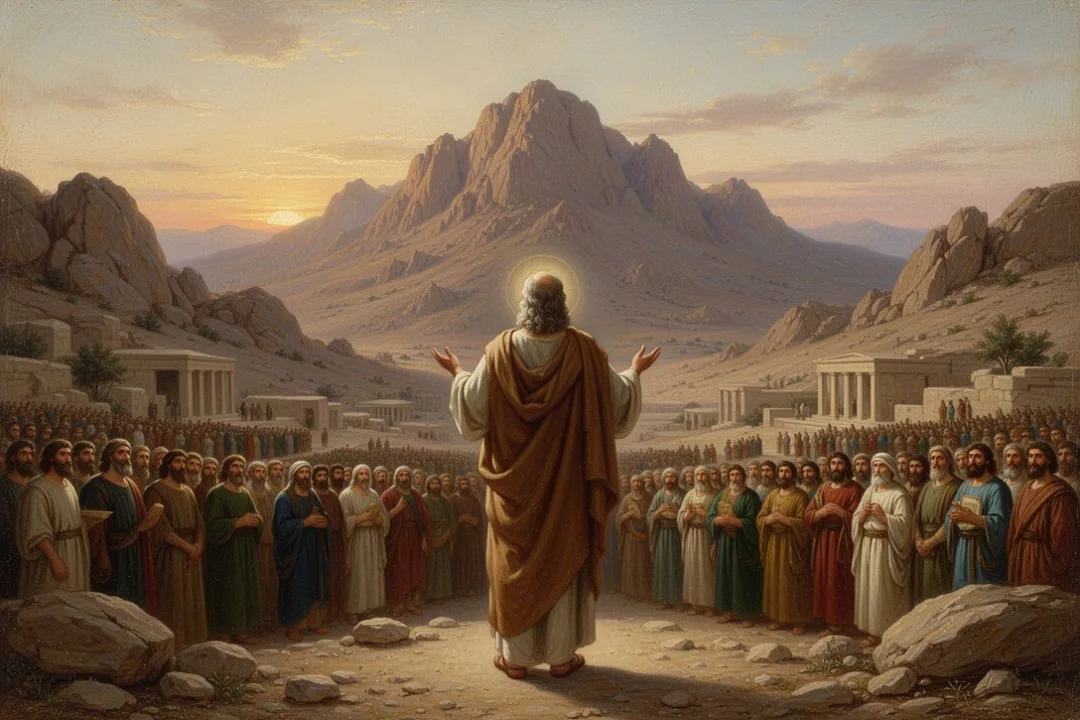
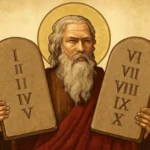
The first and best-known listing is in Exodus 20:1–17. In this passage, the Israelites have left Egypt and arrived at Mount Sinai, where God gives Moses laws for the covenant community. The commandments begin with exclusive worship of God and continue with instructions about worship, family, life, marriage, property, truth, and desire.
The commandments appear again in Deuteronomy 5:4–21. Deuteronomy presents Moses speaking to a new generation of Israelites before they enter the Promised Land. The wording and surrounding explanation differ in some details from Exodus 20, but the central commandments are the same.
Short answer: If someone asks which book contains the Ten Commandments, answer Exodus, especially Exodus 20. For the second biblical presentation, also turn to Deuteronomy 5.
The Bible does not usually label these commands with the English phrase “the Ten Commandments” inside the list itself. That familiar expression comes from the biblical description of them as ten words or sayings. The commands are also known by the Hebrew term aseret ha-dibrot, often translated as “the Ten Words.”
Other passages refer back to the laws given at Sinai, but they do not provide another complete version of the list. For example, Exodus 34 describes a renewed covenant after Israel’s sin with the golden calf, but its surrounding laws are not simply a third copy of the familiar Ten Commandments.
What happens in Exodus before the commandments are given
Exodus 20 follows a major turning point in the story of Israel. According to the biblical account, God has brought the Israelites out of slavery in Egypt and led them toward Mount Sinai. The commandments therefore appear after an act of deliverance, not as a set of rules offered without context.
Before giving the commands, God identifies himself as the one who brought Israel out of Egypt. That opening establishes the relationship behind the law: God has rescued the people, and they are being taught how to live as a covenant community. The commandments describe faithful living within that relationship.
Exodus 19 sets the scene at Mount Sinai. The people prepare themselves, and the mountain is associated with thunder, lightning, cloud, fire, smoke, and a powerful divine presence. Moses acts as the mediator between God and the people, who are not presented as casually approaching the mountain.
In Exodus 20, the commandments are introduced as God’s own words. The passage then moves from duties toward God to duties toward other people. This arrangement connects worship and ethics: devotion to God cannot be separated from the way people treat family members, neighbors, workers, and the vulnerable.
The chapter does not end immediately after the tenth commandment. It continues with instructions about worship and the construction of an altar. Those additional laws belong to the larger body of covenant teaching surrounding the Ten Commandments, but they should not be confused with the ten central sayings themselves.
How Exodus 20 presents the Ten Commandments
Different Christian traditions divide and number the commandments somewhat differently, even though they use the same biblical text. The basic content is readily recognizable, but the numbering can vary because the opening statements and the commands about worship and coveting are organized in different ways.
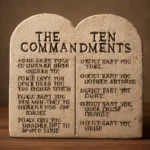
In Exodus 20, the commandments address these broad subjects:
Exclusive loyalty to God: Israel is not to place other gods before the Lord.
Rejecting idols: The people are forbidden to make or worship images as gods.
Respect for God’s name: God’s name must not be used falsely or abusively.
Sabbath observance: The seventh day is set apart as a day of rest.
Honor within the family: Children are told to honor their father and mother.
Protection of human life: Murder is prohibited.
Faithfulness in marriage: Adultery is prohibited.
Respect for property: Stealing is prohibited.
Truthful testimony: False witness against another person is prohibited.
Freedom from coveting: People are not to desire another person’s household, spouse, servants, animals, or possessions in a wrongful way.
These summaries communicate the meaning without reproducing a particular Bible translation word for word. The exact phrasing may differ between translations, but the subjects remain consistent. The commands move from a person’s relationship with God to relationships with other people and finally to the inner desires that can lead to outward wrongdoing.
The command about the Sabbath receives more explanation in Exodus than several of the shorter commands. Exodus connects Sabbath rest with God’s work of creation, presenting the seventh day as a pattern of rest. The command applies not only to the head of a household but also to children, servants, livestock, and resident foreigners, showing that rest has a communal dimension.
The command to honor parents is the first one connected with a stated benefit. Exodus associates honoring parents with a long life in the land God is giving Israel. This is not merely a private family suggestion; it reflects the importance of stable relationships and respect for authority within the covenant community.
The later commands are brief, but their brevity does not make them narrow. Prohibitions against murder, adultery, theft, and false testimony protect life, marriage, property, and justice. The command against coveting goes beneath visible behavior by addressing the desires that can produce betrayal, theft, resentment, or violence.
Why Deuteronomy 5 repeats the commandments
Deuteronomy means something like “second law” in common English explanation, although the book is more accurately understood as Moses’ covenant teaching and renewal for Israel. The people standing at the edge of the Promised Land include a new generation, so Moses restates the central covenant obligations.
Deuteronomy 5 begins by recalling the covenant made at Horeb, another name used for Mount Sinai in the Bible. Moses emphasizes that the covenant is relevant to the people now hearing him, not merely to their parents or ancestors. The repetition makes the commandments part of the community’s present responsibility.
The list in Deuteronomy 5 closely follows Exodus 20, but several details differ. The most noticeable difference concerns the reason given for keeping the Sabbath. Exodus connects the Sabbath with God’s pattern of creation, while Deuteronomy connects it with Israel’s memory of slavery in Egypt and God’s liberation.
The command about coveting is also arranged with a different order for the neighbor’s wife and household. These variations do not create two unrelated sets of commandments. They show how the same covenant instruction is presented in two different settings: the original revelation at Sinai and its later restatement before entry into the land.
Deuteronomy frequently urges the people to remember, hear, obey, and teach. Its presentation of the commandments is therefore more than repetition for reference. It places the law within a speech about loyalty, memory, love for God, and the consequences of choosing faithfulness or rebellion.
The two passages are useful to read together. Exodus gives the commandments within the dramatic Sinai event, while Deuteronomy gives them within Moses’ final teaching to Israel. Comparing them helps you see both the continuity of the commands and the different emphasis each book brings to the covenant.
How Jewish and Christian traditions number the commandments
Readers sometimes find different numbering in a church, synagogue, study Bible, or children’s resource. This does not necessarily mean that one source has added or removed a commandment. The difference usually comes from how the opening statements and the prohibitions concerning idols and coveting are grouped.
In many Jewish traditions, the opening declaration that God brought Israel out of Egypt is treated as the first of the ten sayings. The prohibition against having other gods and the prohibition against making images are then numbered separately. The final prohibition against coveting is generally treated as one command covering a range of wrongful desires.
Many Roman Catholic and Lutheran traditions combine the commands about other gods and idols in one command concerning false worship. They then divide the final material about coveting into two commands, commonly distinguishing coveting a neighbor’s spouse from coveting a neighbor’s possessions.
Many Reformed, Eastern Orthodox, and other Protestant traditions use another arrangement. They often count the prohibition against other gods as the first command, the prohibition against idols as the second, and the commands about coveting as one final command.
These numbering systems are different ways of organizing the same text. If you compare a list from two traditions, focus first on the biblical wording and subject matter rather than assuming that a different number means a different law.
Jewish numbering: The opening declaration may be counted as the first saying, with the commands about other gods and images treated separately.
Roman Catholic and Lutheran numbering: The commands about false gods and images are commonly combined, while coveting is divided.
Many Reformed and other Protestant numbering systems: The commands about other gods and images are commonly separated, while coveting is treated as one final command.
The wording of the commandments also reflects the ancient setting of Israel. References to servants, livestock, a neighbor’s household, and resident foreigners belong to the social world addressed by Exodus and Deuteronomy. The underlying concerns—worship, rest, family respect, life, faithfulness, honesty, property, and desire—are why the commandments continue to receive attention in Jewish and Christian teaching.
How the Ten Commandments fit into the rest of the Bible
The Ten Commandments are central, but they are not the whole of biblical law. The books of Exodus, Leviticus, Numbers, and Deuteronomy contain many other instructions about sacrifice, purity, festivals, courts, agriculture, debt, worship, leadership, and care for vulnerable people.
Exodus 20 should therefore be read as the beginning of a larger covenant section rather than as an isolated legal document. The commandments give broad foundational obligations, while the laws that follow apply those obligations to specific situations in Israelite life.
The Old Testament repeatedly recalls these commands and links them with Israel’s loyalty to God. Later biblical writers also condemn idolatry, murder, adultery, theft, dishonesty, and exploitation. Their messages show that the commandments are not merely a historical list; they function as a standard against which the community’s behavior is evaluated.
Jesus refers to several commandments in the Gospels when responding to questions about eternal life and faithful living. He also teaches that love for God and love for one’s neighbor summarize the direction of God’s commands. That teaching does not erase the Ten Commandments; it highlights the relational purpose behind them.
In the Sermon on the Mount, recorded in Matthew 5–7, Jesus addresses subjects related to murder, adultery, oaths, retaliation, and love of enemies. He moves attention beyond external compliance to anger, lust, honesty, mercy, and the condition of the heart.
Several New Testament letters also refer to commandments from the list. Romans 13 connects commands concerning adultery, murder, theft, false witness, and coveting with love of neighbor. Ephesians 6 refers to honoring parents, and James 2 mentions prohibitions against adultery and murder while discussing impartial treatment of others.
These references should be handled carefully because Christian traditions differ over how Old Testament covenant laws apply under the new covenant. Christians generally agree that the commandments reveal God’s concern for faithful worship and moral life, while they may differ in how they distinguish enduring moral principles from laws specific to Israel’s worship and national life.
Reading tip: Start with Exodus 20, then read Deuteronomy 5. Compare the repeated commandments with the surrounding chapters to see how worship, community life, justice, and remembrance shape their meaning.
How to find and study the passage yourself
If you want to read the Ten Commandments in context, begin with the chapters around the list rather than opening only to the numbered verses. Read Exodus 19–24 to follow the Sinai setting, and read Deuteronomy 4–6 to understand Moses’ appeal to the next generation.
A simple study process can help you compare the two passages without getting lost in differences between translations:
Read Exodus 20:1–17 and identify each command’s main subject.
Read Deuteronomy 5:4–21 and mark wording that is the same or different.
Notice the reasons given for the Sabbath and the community’s obligation to remember its deliverance.
Check the surrounding chapters to see how the broad commands connect with detailed laws.
Compare the numbering system used by your Bible, church, synagogue, or study resource.
Read later references carefully, especially passages where biblical writers apply the commandments to worship, justice, and love.
Pay attention to who is speaking, who is hearing, and where the people are in the biblical story. Exodus presents the covenant at Sinai after deliverance from Egypt. Deuteronomy presents Moses recalling that covenant before Israel enters the land. Those settings explain why the passages emphasize both obedience and remembrance.
You can also group the commandments by the kind of life they protect. The first commands concern worship and God’s name; the Sabbath concerns time and rest; the family command concerns generational relationships; and the final commands protect life, marriage, property, truth, and the heart’s desires.
The clearest direct answer remains simple: the Ten Commandments are in Exodus 20. If you want the second full biblical presentation, read Deuteronomy 5. Together, these passages provide the primary places to study the Ten Commandments and their role in the covenant between God and Israel.
Frequently asked questions
Are the Ten Commandments in Exodus or Deuteronomy?
They are in both books. Exodus 20 records the commandments at Mount Sinai, while Deuteronomy 5 repeats them as Moses addresses Israel before entering the Promised Land. Exodus is usually the first reference given because it presents the original Sinai setting.
Are the Ten Commandments the same as the law of Moses?
The Ten Commandments are part of the law given through Moses, but they are not the entire law. The Pentateuch contains many additional instructions about worship, sacrifices, festivals, courts, community responsibilities, and daily life.
Why do different churches number the commandments differently?
The biblical text does not number each command in a universally standardized way. Jewish, Roman Catholic, Lutheran, Reformed, Orthodox, and other traditions group the opening statements, idol prohibitions, and coveting commands differently while referring to the same passages.
Where should I read about the Ten Commandments first?
Begin with Exodus 19–20 for the Sinai context and the primary listing. Then read Deuteronomy 5, which restates the commandments for a later generation. Reading both passages shows their shared content and their different explanations of the covenant.




Leave a Reply