Overview: The Ten Commandments in the King James Version
The Ten Commandments, known in scholarly circles as the Decalogue, stand at a central crossroads of biblical ethics, religious identity, and social order. In the King James Version (KJV), these commands are presented with the language and cadence that have influenced generations of English-speaking readers and religious communities. This article surveys the Ten Commandments in the KJV, explains their structure, and offers context for how they have been interpreted, memorized, and applied across history. While the wording is steeped in early modern English typography and syntax, the moral and spiritual import remains accessible to readers today. The focus here is not only to reproduce the verses but also to illuminate their meaning, significance, and practical implications for individuals and communities alike.
The Decalogue in the KJV: Structure, Purpose, and Theological Grounding
The term Decalogue derives from the Greek for "ten words," signaling a compact code that expresses fundamental expectations for the worship of God and the conduct of daily life. In the King James Bible, the commandments appear in a pattern that couples matters of divine worship with concerns about human relationships and social justice. This structure reflects a deliberate arrangement: first, the primacy of God; then, ethical obligations toward others; finally, aspirations for personal and communal harmony. Readers often notice three broad clusters within the Decalogue in the KJV:
First table (Exodus 20:3-11): duties toward God, including devotion, reverence, and worship practices.
Second table (Exodus 20:12-17): duties toward fellow human beings, such as family honor, life, integrity, and property.
Interconnected themes that link monotheism, proper name usage, and the Sabbath tradition with daily living.
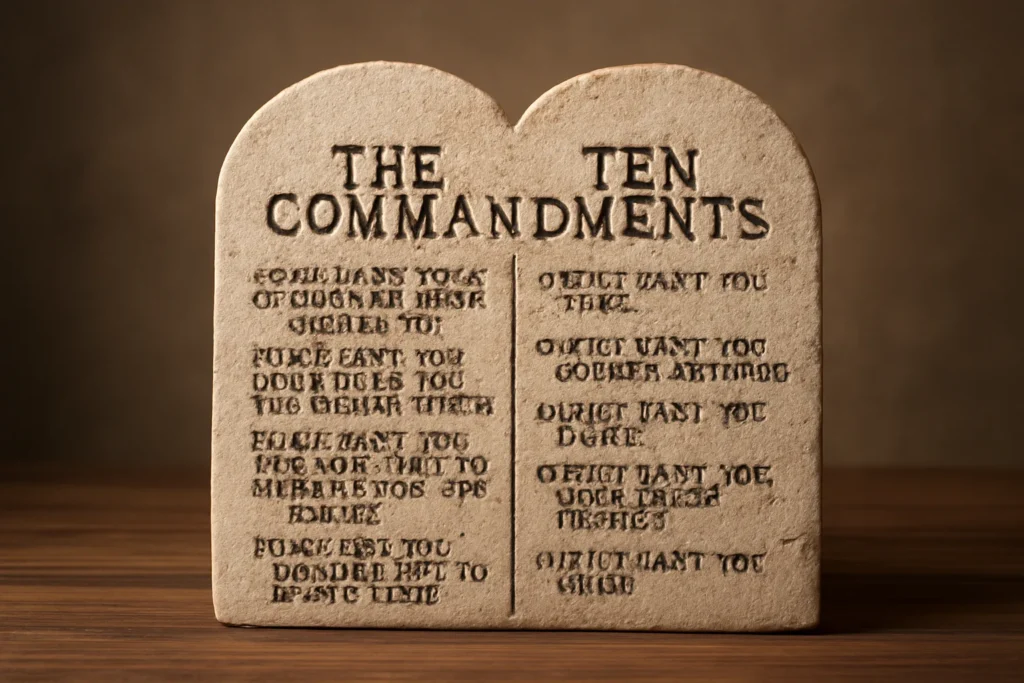
The Ten Commandments in the King James Version (Exodus 20:3-17)
Thou shalt have no other gods before me.
Thou shalt not make unto thee any graven image, or any likeness of any thing that is in heaven above, or that is in the earth beneath, or that is in the water under the earth: thou shalt not bow down thyself to them, nor serve them: for I the LORD thy God am a jealous God, visiting the iniquity of the fathers upon the children unto the third and fourth generation of them that hate me;
Thou shalt not take the name of the LORD thy God in vain; for the LORD will not hold him guiltless that taketh his name in vain.
Remember the sabbath day, to keep it holy.
Six days shalt thou labour, and do all thy work: but the seventh day is the sabbath day unto the LORD thy God: in it thou shalt not do any work, thou, nor thy son, nor thy daughter, nor thy manservant, nor thy maidservant, nor thy cattle, nor thy stranger that is within thy gates:
For in six days the LORD made heaven and earth, the sea, and all that in them is, and rested the seventh day: wherefore the LORD blessed the sabbath day, and hallowed it.
Honour thy father and thy mother: that thy days may be long upon the land which the LORD thy God giveth thee.
Thou shalt not kill.
Thou shalt not commit adultery.
Thou shalt not steal.
Thou shalt not bear false witness against thy neighbour.
Thou shalt not covet thy neighbour's house, thou shalt not covet thy neighbour's wife, nor his manservant, nor his maidservant, nor his ox, nor his ass, nor any thing that is thy neighbour's.
These lines, drawn from Exodus 20, form a compact moral and religious covenant that has shaped Judeo-Christian ethics for millennia. In the King James Version, the cadence—“Thou shalt” and “the LORD”—renders a sense of solemn duty and intimate address that readers have found compelling across generations. The wording also highlights critical themes such as monotheism, reverence for the sacred name, the sanctity of the Sabbath, and the prohibition of idolatry. In studying the KJV, readers often note the explicit social dimensions of the commandments, including family respect, protection of life, fidelity in marriage, honesty in speech, and respect for property and neighbors.
Translation notes: How the King James Bible renders the Decalogue
The King James Version preserves a rhetoric that blends ceremonial instruction with moral exhortation. Some phrases—such as “Thou shalt have no other gods before me” and “Remember the sabbath day, to keep it holy”—have become idioms in English religious life. The KJV’s use of the second person singular (thou, thy) contributes to a tone that is both intimate and authoritative. For modern readers, the archaic pronouns can be challenging, yet they also emphasize a direct relationship with God as described in the sacred text. The phrasing also reflects broader biblical themes in the ancient Near East while maintaining a distinctive theological integrity of the Judeo-Christian tradition.
The Ten Commandments in Deuteronomy (KJV): A Restatement and Expansion
In Deuteronomy, Moses repeats the Decalogue with careful emphasis on covenant fidelity and historical memory. The KJV rendering here preserves similar language but introduces slightly expanded phrasing in places. This restatement underscores two important ideas: the continuity of ethical obligation across generations and the ethical weight of remembering the Lord’s acts in history. The Deuteronomic version is often read as a reaffirmation that life in the promised land should be ordered by a righteous, God-centered ethic, not merely a ritual checklist. Below is a concise rendering in the style of the KJV, preserving the essential orders while highlighting the similarities and the few stylistic differences from Exodus.
Thou shalt have none other gods before me.
Thou shalt not make unto thee any graven image, or any likeness of any thing that is in heaven above, or that is in the earth beneath, or that is in the water under the earth: thou shalt not bow down thyself to them, nor serve them: for I the LORD thy God am a jealous God, visiting the iniquity of the fathers upon the children unto the third and fourth generation of them that hate me;
Thou shalt not take the name of the LORD thy God in vain; for the LORD will not hold him guiltless that taketh his name in vain.
Keep the sabbath day to sanctify it, as the LORD thy God commanded thee.
Six days thou shalt labour, and do all thy work: but the seventh day is the sabbath day unto the LORD thy God: in it thou shalt not do any work, thou, nor thy son, nor thy daughter, nor thy manservant, nor thy maidservant, nor thy cattle, nor thy stranger that is within thy gates:
And remember that thou wast a servant in the land of Egypt, and the LORD thy God brought thee out thence through a mighty hand, and by a stretched out arm: therefore the LORD thy God commanded thee to keep the sabbath day.
Honour thy father and thy mother, that thy days may be long upon the land which the LORD thy God giveth thee.
Thou shalt not kill.
Neither shalt thou commit adultery.
Neither shalt thou steal.
Neither shalt thou bear false witness against thy neighbour, neither shalt thou desire thy neighbour's house, neither shalt thou desire thy neighbour's wife, nor his servant, nor his maid, nor his ox, nor his ass, nor anything that is thy neighbour's.
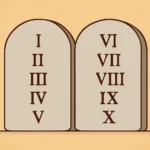
These words the LORD spake unto all your assembly in the mount out of the fire, and the cloud, and the thick darkness, with a great voice: and he added no more. And he wrote them upon two tables of stone, and delivered them unto thee.
The T en Commandments in the KJV are often interpreted as a compact framework for moral life that transcends cultural context. They have informed debates about religious liberty, social justice, and ethical behavior in many Christian traditions. Here are some key themes to reflect on as you study the text:
Monotheism and worship: The emphasis on exclusive loyalty to the one God shapes how believers understand identity and purpose. The prohibition of graven images and the call to worship in spirit and truth invite readers to consider how they express faith in daily life.
Name and reverence: The command not to take the Lord's name in vain invites a broader reflection on speech, integrity, and the weight of language in sacred and secular settings.
Time and rest: The Sabbath command forms a theologically significant rhythm—work, worship, and rest together—shaping patterns of labor, family life, and communal worship across generations.
Family and social order: Honouring parents and respecting life, property, and reputation are framed as foundational for a stable, just society.
Truth-telling and integrity: The prohibition against bearing false witness anchors the social trust necessary for honest communities and fair justice systems.
Desire and contentment: The final commands against coveting invite ongoing inner formation—the cultivation of restraint, gratitude, and humility in a world of abundance and competition.
For readers today, the Ten Commandments offer a blueprint for personal conduct, family relationships, civic life, and religious practice. Some practical considerations include:
Worship and devotion: Prioritizing God in daily routines, personal disciplines, and communal worship; avoiding distractions that would usurp spiritual allegiance.
Ethics in speech: Using language responsibly, avoiding manipulation, deception, and blasphemy; recognizing the power of words to build or wound.
Work, rest, and holiness of time: Establishing rhythms that honor the divine pattern of creation and provide space for rest, family time, and worship.
Family life: Honoring parents and caring for the vulnerable; fostering environments where elders are valued and children are protected and taught.
Integrity in society: Honesty in business, justice in law, and respect for others’ property and reputation; resisting schemes that would harm neighbors.
Inner life and desire: Cultivating contentment and integrity in a world of desire and comparison; guarding the heart against covetousness that fragments community trust.
Scholars often compare the Decalogue to other ancient Near Eastern legal and ethical codes. In the KJV tradition, the Ten Commandments are not merely rules but expressions of a living relationship between God and a people. This covenantal frame distinguishes them from purely civil codes by tying social ethics to spiritual devotion and communal identity. For readers, this means recognizing that ethical behavior and religious devotion are interwoven, each informing the other in day-to-day decisions, family life, and public witness.
Decalogue: The traditional name for the Ten Commandments, derived from the Greek for “ten words.”
Second table: The portion of the commandments that concerns human relationships, typically including commands 6 through 10.
Sabbath (Sabbath day): The day of rest and worship, observed in the Jewish and Christian traditions with roots in the creation narrative.
Idolatry: The worship or veneration of images or created things in place of the one God.
Coveting: A desire for what belongs to another, which in the Decalogue is addressed as a matter of inner danger that can lead to outward sin.
Beyond Exodus and Deuteronomy, the Decalogue appears in various other scriptural contexts and is cited throughout the Hebrew Bible and the New Testament. While the wording and emphasis differ across books and translations, the essential moral priorities—worship of the one God, respect for life and family, truthfulness, and contentment—remain central. In the King James Version, these words have become part of the cultural and theological lexicon, shaping sermons, catechisms, art, and liturgy for many Christian communities—and even influencing secular debates about ethics and civil life.
Understanding the historical setting helps readers appreciate why the KJV renders the Decalogue with particular cadence and emphasis. The 17th-century English translation project sought to produce a Bible that was both majestic in style and faithful to the traditional meanings of the Hebrew text. The King James translators faced the challenge of rendering a polyglot text into a form that could be read aloud in churches and studied in homes across a diverse empire. The result is a text that has resonated for centuries, shaping not only religious belief but also language and culture in the English-speaking world. The Ten Commandments in the KJV thus serve as a bridge between ancient covenantal language and modern moral reflection.
To read the Ten Commandments in the King James Version is to encounter a compact code that invites ongoing interpretation and application. The commandments do not merely regulate individual behavior; they also invite communities to reflect on their shared commitments to the divine, one another, and the common good. Readers are invited to consider: How does a commitment to exclusive worship shape daily choices? In what ways does a vow to honor family and neighbor influence political life, economic justice, and civil discourse? How can a modern faith community teach and embody the principles of truthfulness, mercy, and gratitude in a world of rapid change?
In a world with shifting values and evolving social norms, the Ten Commandments in the KJV continue to offer a durable framework for reflection and action. They remind readers that moral living is grounded in a relationship with God and expressed in concrete, everyday acts—rest, speech, family life, work, and neighborly care. For students, clergy, families, and individuals exploring the scriptures, the KJV rendering of the Decalogue remains a foundational text for understanding duties to God, duties to others, and the aspiration toward a life of integrity, justice, and peace.






Leave a Reply