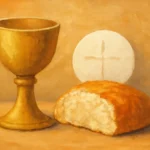
Quick Answer: The Bible teaches that communion is a commanded act of remembrance. In “what does the bible say about taking communion,” we learn that believers partake of bread and the cup in thanksgiving, showing the Lord’s death until He returns. Scripture also teaches communion as fellowship in Christ’s body and blood, calling us to come believing and living in Him.
If you’ve ever wondered what does the bible say about taking communion, you’re not alone. Christians come to the Lord’s Table with questions about purpose, participation, and what the elements mean. Scripture doesn’t treat communion as a ritual without spiritual weight. Instead, the Bible presents it as remembrance of Jesus’ death, as communion (fellowship) in Christ, and as a meaningful participation in the life He gives.
In 1 Corinthians, believers are reminded that the Lord Jesus instituted communion and said to do it in remembrance of Him. In 1 Corinthians 10, communion is described as fellowship—“communion of the blood of Christ” and “communion of the body of Christ.” And in John 6, Jesus teaches that receiving Him spiritually gives life. Together, these passages help us approach communion with faith, reverence, and hope.
At a Glance — Verses in This Article
1 Corinthians 11:23-26
1 Corinthians 10:16-17
John 6:53-58
Bible Verses
1 Corinthians 11:23-26 (King James Version)
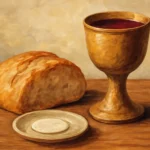
“For I have received of the Lord that which also I delivered unto you, That the Lord Jesus the same night in which he was betrayed took bread: And when he had given thanks, he brake it, and said, Take, eat: this is my body, which is broken for you: this do in remembrance of me. After the same manner also he took the cup, when he had supped, saying, This cup is the new testament in my blood: this do ye, as oft as ye drink it, in remembrance of me. For as often as ye eat this bread, and drink this cup, ye do shew the Lord’s death till he come.”
This passage records Jesus’ instruction to take the bread and cup in remembrance, and it explains communion as proclaiming the Lord’s death until He comes.
1 Corinthians 10:16-17 (King James Version)
“The cup of blessing which we bless, is it not the communion of the blood of Christ? The bread which we break, is it not the communion of the body of Christ? For we being many are one bread, and one body: for we are all partakers of that one bread.”
Paul connects communion to fellowship in Christ, showing that believers who share the bread and cup truly participate in His body and blood.
John 6:53-58 (King James Version)
“Then Jesus said unto them, Verily, verily, I say unto you, Except ye eat the flesh of the Son of man, and drink his blood, ye have no life in you. Whoso eateth my flesh, and drinketh my blood, hath eternal life; and I will raise him up at the last day. For my flesh is meat indeed, and my blood is drink indeed. He that eateth my flesh, and drinketh my blood, dwelleth in me, and I in him. As the living Father hath sent me, and I live by the Father: so he that eateth me, even he shall live by me. This is that bread which came down from heaven: not as your fathers did eat manna, and are dead: he that eateth of this bread shall live for ever.”
Jesus teaches that receiving Him brings spiritual life, helping believers understand communion as pointing to union with Christ.
1) Communion is a God-given act of remembrance
When people ask meaning of communion in the Bible, the most direct answer begins with how Jesus Himself instructed it. In 1 Corinthians 11:23-26, Paul explains that he “received of the Lord” and then delivered the Lord’s instruction: the Lord Jesus took bread, gave thanks, broke it, and said, “Take, eat: this is my body… this do in remembrance of me.” Then He took the cup and said, “This cup is the new testament in my blood: this do ye, as oft as ye drink it, in remembrance of me.”
So communion is not meant to be empty symbolism or a family tradition carried on out of habit. It is obedience—something believers are to do because the Lord commanded it. The purpose is also clear: remembrance of Jesus. Remembrance does not only mean “thinking back”; it means bringing the saving work of Christ before the heart with gratitude and faith.
Paul adds an important time-and-hope element: “For as often as ye eat this bread, and drink this cup, ye do shew the Lord’s death till he come.” That phrase gives communion its forward-looking character. Every faithful participation proclaims Christ’s death and anticipates His return. In other words, communion is both backward-looking (Jesus’ sacrifice) and forward-looking (His coming).
That’s why taking communion can strengthen a believer’s worship even when life feels uncertain. You are not merely reviewing doctrine; you are responding to Christ. Communion becomes a spiritual moment of alignment—your heart remembering the Savior and your hope waiting for Him.
2) Communion is fellowship with Christ and unity among believers
A second major theme in Bible teaching on communion is fellowship—sharing in what Christ has done and who He is. 1 Corinthians 10:16-17 describes communion in language that connects believers to Christ Himself: “The cup of blessing which we bless, is it not the communion of the blood of Christ? The bread which we break, is it not the communion of the body of Christ? For we being many are one bread, and one body: for we are all partakers of that one bread.”
This means communion is not only a private experience. It is also a family reality: many believers become “one body.” Communion therefore calls Christians to humility and unity, not isolation. When you partake with others, you’re sharing a testimony that Jesus has brought you into fellowship with Him and into fellowship with His people.
Also, note the wording: Paul doesn’t treat the cup and bread as mere memorial objects; he uses the term communion to describe the spiritual reality tied to these elements. As the church participates, Christ’s people are reminded that they belong to Him.
This fellowship theme can shape how you prepare. Ask yourself: Am I coming in faith, recognizing Christ’s blood and body? Am I coming in a spirit of unity, willing to reconcile where needed? Communion becomes a doorway to spiritual alignment—toward Christ first, and then toward one another.
So when someone wonders what communion represents biblically, the answer includes this: it is fellowship in Christ that produces visible unity within the church.
3) Communion points to life in Christ
In John 6:53-58, Jesus speaks directly about spiritual life connected to receiving Him. He says, “Except ye eat the flesh of the Son of man, and drinketh his blood, ye have no life in you.” He continues with strong assurance: “Whoso eateth my flesh, and drinketh my blood, hath eternal life; and I will raise him up at the last day.” Jesus also says, “He that eateth my flesh, and drinketh my blood, dwelleth in me, and I in him.”
Taken together, these teachings help us understand communion as more than remembrance and more than fellowship in a general sense. Communion points believers to union with Christ—dwelling in Him and having life because of Him.
Jesus describes this life as present (“dwelleth in me, and I in him”) and future (“I will raise him up at the last day”). Communion, then, is not only a looking back to the cross; it is a renewing of trust that Christ gives life to those who receive Him.
John also emphasizes that Jesus is the bread from heaven: “This is that bread which came down from heaven… he that eateth of this bread shall live for ever.” That statement strengthens the heart of the believer: communion is a spiritual reminder that Jesus is not a temporary helper—He is the living Bread.
Therefore, as you participate in communion, you can come with expectancy. The Lord’s Table is meant to awaken faith that Christ has life for you, that He remains in you, and that He will bring you to resurrection hope.
Preparing your heart before communion
Because communion is commanded, meaningful, and life-giving, preparation matters. Begin by remembering what Christ said to do. In 1 Corinthians 11:23-26, Jesus tells believers to partake “in remembrance of me.” So before you receive, spend a few minutes with honest gratitude—rehearse in your heart what His broken body and shed blood mean for you.
Second, come in fellowship and unity. 1 Corinthians 10:16-17 ties communion to the “communion of the blood of Christ” and the “communion of the body of Christ,” reminding the church that believers are “one bread” and “one body.” If there’s ongoing conflict with a brother or sister, communion becomes a gentle but serious prompt: seek reconciliation as you’re able, and approach the table with a peaceable spirit.
Third, approach communion with living faith in Christ. Jesus’ words in John 6:53-58 remind us that He gives life and that those who “eat” and “drink” dwell in Him. So do not treat communion as a detached ceremony. Ask the Lord to deepen your trust so that you receive His life and remain in Him.
Finally, let your participation shape your week. Since you “shew the Lord’s death till he come,” carry that hope into your daily choices: forgive, worship, and endure with confidence because Christ’s death is not past—it’s active in the believer’s life.
In short, communion should move you toward remembrance, toward unity, and toward dwelling in Christ.
Frequently Asked Questions
What does the bible say about taking communion for believers today?
The Bible teaches that communion is something believers do in obedience and remembrance of the Lord Jesus. Paul records Christ’s instruction to take the bread and cup “in remembrance of me,” and explains that doing so proclaims the Lord’s death until He comes.
What the Bible says about communion meaning—does it only remind us, or does it do more?
Communion includes remembrance, but Scripture also presents communion as fellowship in Christ. Paul says the cup is the “communion of the blood of Christ” and the bread is the “communion of the body of Christ,” linking participation to spiritual relationship with Jesus and unity with His people.
What communion represents biblically in terms of spiritual life?
Jesus teaches that receiving Him gives life. In John 6:53-58, He says that those who eat His flesh and drink His blood have eternal life and dwell in Him. Communion points believers to this reality of union with Christ.
How should a Christian prepare their heart when approaching the Lord’s Table?
Prepare by remembering Christ’s sacrifice, coming in faith and gratitude, and approaching with unity. Since communion is fellowship in Christ’s body and blood, seek peace where you can. Then receive with confidence that Christ gives life and remains in His people.
A Short Prayer
Lord Jesus, thank You for commanding communion and for teaching us to remember You. As we take the bread and the cup, let our hearts be awakened to Your broken body and Your shed blood. Make us faithful in remembrance, united as one body, and alive in You. Help us dwell in You and trust Your life-giving power. Until You come, keep our hope strong and our worship sincere. Amen.
Key Takeaway: The Bible presents communion as a commanded act of remembrance that brings believers into fellowship with Christ, strengthening unity and hope in His life-giving presence.