The end of the Sabbath is a moment that many traditions mark with ceremony, poetry, and a careful set of practical rules. While the phrase often refers to the Jewish observance surrounding Shabbat, the idea of a deliberate transition from sacred time to ordinary time appears in various faiths with distinctive practices. This article explains the meaning, the precise timing, and the traditions that accompany the end of the Sabbath, using a broad lens to cover different communities and interpretations. It also highlights common terms such as motzei Shabbat, Havdalah, and tzait hakochavim, and shows how people navigate the moment of transition in daily life.
To understand why the end of the Sabbath matters, it helps to consider what Shabbat represents and how the transition back to the ordinary workweek is experienced. The end of the Sabbath signals more than a clock time; it is a deliberate movement from a day of rest, sanctity, and communal focus to the practical rhythms of weekday life. Several dimensions contribute to its meaning:
Holiness and separation: Shabbat is treated as a distinct, consecrated period. Marking its end reinforces the boundary between holy time and ordinary time.
Memory and sweetness: The rituals associated with the end—especially Havdalah with its spices and candle—invite people to carry the Sabbath’s sweetness into the coming week, even as they resume daily activities.
Spiritual recalibration: After a day of rest and spiritual focus, the end of Shabbat helps people transition to their responsibilities, family duties, study, and work with a renewed sense of purpose.
Communal rhythm: For many families, the moment of end-of-Sabbath observance becomes a weekly cultural rhythm—a shared practice that anchors the community in time.
Key terms and variations around the end of the Sabbath
Motzei Shabbat and Havdalah
The term motzei Shabbat literally means “the exit of Shabbat” and is commonly used to denote the moment when Shabbat has ended. The central ritual connected to this moment is Havdalah, a short ceremony that marks the distinction between the holy day and the ordinary days that follow. Havdalah is a structured moment in which several sensory elements—wine, spices, and the candle—are engaged to symbolize this boundary.
Shabbat’s end vs. nightfall
In Jewish law, there are a few related, but distinct, notions about the precise end of Shabbat. The most widely used markers are tzait hakochavim (appearance of three stars in the sky) or tzais (nightfall). Some communities and authorities allow a slightly broader time window, while others adhere strictly to the star-based criterion. This interplay between sunset, twilight, and star appearance shapes when Havdalah can be recited and when Shabbat is considered finished.
Different paths within Judaism
Ashkenazi and Sephardi communities share Havdalah but may differ in textual wording, order, and customs surrounding the ceremonial materials.
Chabad-Lubavitch and other Hasidic groups often emphasize the mystical dimension of the end of Shabbat, with particular uses of candlelight and song.
Women’s and men’s roles in Havdalah can vary by community, with some traditions inviting participation across the household or by specific family roles.
Times and calculations: when does the Sabbath end?
Timings for the end of the Sabbath are not uniform. They depend on geography, season, and the particular halachic (Jewish legal) framework a community follows. Here is a practical overview of how the timing is approached in common practice:
Shabbat begins on Friday at sunset in most communities, with many people lighting candles before sunset to mark the onset of the sacred period for the household.
Shabbat ends on Saturday at nightfall, but the exact moment is determined by the local definition of when the stars appear, i.e., tzait hakochavim, or by the more formal three-star criterion in some traditions.
Three stars vs. nightfall
The criteria for the end of Shabbat can be described as follows:
In many communities, the end is marked when the three stars appear, signaling the onset of the ordinary week after the Sabbath’s sanctity. This is often described as tzait hakochavim in Hebrew sources.
Some authorities use miluy ha-nochalim or other twilight-based calculations, particularly in places with extended twilight or very northern/southern latitudes where star appearances can be ambiguous.
In practice, many families perform Havdalah around the time of nightfall, even if some stars have not yet appeared, trusting local guidance or community custom.
Seasonal and geographic variation
Season, latitude, and longitude all influence how soon after sunset the Sabbath ends. In high-latitude locations during certain seasons, twilight can last for hours, which can shift the practical end time. Conversely, near the equator, the transition may be quicker. Because Jewish law emphasizes local sunset and local nightfall, families use local calendars, weather conditions, and rabbinic guidance to determine the appropriate moment to recite Havdalah and to conclude Shabbat.
Traditions and rituals that mark the end
To mark the moment of transition, many households and congregations observe a short ritual known as Havdalah. The ritual blends tactile, olfactory, and visual elements to create a memorable boundary between Shabbat and the week ahead and to infuse the upcoming days with intention. Here are the core components and their symbolic meanings:
The elements of Havdalah
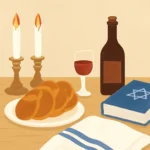
Wine or grape juice: Used for blessing and as a memorable taste of the Sabbath’s sweetness that should accompany the week.
Spices (besamim): The aromatic spices are smelled to invoke the pleasant fragrances of Shabbat and to awaken the senses for weekday life.
Candle: A braided or multiple-wick candle is lit to symbolize the distinction between light and darkness, sacred and secular.
The liturgy and its texture
Havdalah is typically a short service consisting of blessings and a concluding statement that separates between holy and ordinary. The exact wording and order of blessings can vary by tradition, but the core idea remains consistent: a formal recognition that Shabbat has ended and the ordinary week has begun. Some communities also incorporate songs or additional readings, reinforcing themes of gratitude, renewal, and hope for the days ahead.
Order and etiquette variations
In many households, the wine blessing is recited first, followed by prayers over the spices and then the candle blessing. In others, the candle is lit first, with the other blessings following.
Some families perform Havdalah by a single person or by a group, depending on the size of the gathering and the local custom.
The gesture of touching fingers to the candle and watching the reflection is a common practice to «take in» the light as a physical reminder of the boundary between sacred and ordinary.
Beyond Havdalah: additional customs tied to the end of Shabbat
Some communities recite a short Kaddish or other liturgical elements during or after Havdalah, especially in family settings or synagogue programming that extends the Sabbath’s close.
Families may greet one another with “Shabbat Shalom” or a similar blessing on Sunday evening as a gentle re-entry into the workweek.
The moment is sometimes a cue for practical transitions—turning off Shabbat-specific lighting, returning to weekday routines, or starting a common meal that continues into Sunday evening.
For many people, the end of the Sabbath is not merely a clock-based event; it is a comprehensive shift in routine, ambience, and intention. Here are some practical aspects of living in the wake of Shabbat’s conclusion:
Preparing for Havdalah often begins before the sun has fully set, ensuring that all candle materials, wine, and spices are ready and that the home remains welcoming and calm for the moment of transition.
Food and meals: A Friday night or Saturday afternoon meal may be followed by an easy, simple Sunday schedule. Some families schedule a special Monday or Tuesday meal to carry the Sabbath’s spirit into the week.
Reflection and intention: The end of Shabbat can be a moment for informal reflection or a family blessing for a good week, sometimes including a short reading or a personal intention for the days ahead.
End of Sabbath across traditions: a comparative view
Judaism: the central rite and its nuances
In Jewish practice, the end of Shabbat is a regular, weekly event that reinforces time-bound rituals and the sanctity of community life. The Havdalah ceremony, with its distinct sensory components, offers a tangible boundary. The exact timing depends on location and season, but the moral and spiritual aim remains consistent: to honor the day’s rest and to transition into the ordinary week with intention and gratitude.
Christian perspectives on the close of the Sunday sabbath
In many Christian traditions, Sunday is considered a weekly day of rest and worship, though the specifics of “the end of the Sabbath” differ from Jewish practice. Some congregations mark the close of Sunday with a service, fellowship time, or personal reflections as the week resumes. The concept of rest and spiritual renewal frequently emphasizes the idea of paschal rest or the ongoing significance of the Resurrection, depending on denomination. In some communities, the end of “the Lord’s Day” is approached with practical steps for the week ahead, rather than a formal ritual similar to Havdalah.
Other religious and cultural contexts
In addition to Judaism and Christianity, various traditions observe a weekly or seasonal boundary between sacred and ordinary time. Some cultures incorporate motifs of light and scent to signal transition, while others emphasize community meals, storytelling, or quiet contemplation. Regardless of the exact ritual language, the underlying aim is the same: to honor a period of rest and to carry its spirit forward into daily life.
Practical guidance for newcomers and families
For those who are new to observing the end of the Sabbath, a few practical steps can help cultivate a meaningful transition that respects tradition and fits modern life:
Know your local times: Use a reliable local calendar or timetable to determine when nightfall or the appearance of stars typically occurs in your location and season.
Prepare the ritual materials: Have wine or grape juice, a candle with a safe holder, and besamim (spices) readily available before Shabbat ends so you can perform Havdalah without rush.
Learn the core blessings: Familiarize yourself with the basic phrases involved in Havdalah, including the blessing over the wine and the blessing over the candle. Texts can vary by tradition; your rabbi or community liturgy can provide the exact wording you should use.
Adapt to family rhythm: If you have small children, consider a shorter or child-friendly Havdalah, perhaps focusing on the candle and a simple blessing, then gradually add the spice and wine elements as everyone becomes more comfortable with the ritual.
Reflect and share: Use the end-of-Sabbath moment as an opportunity to share gratitude for the past day and a hopeful intention for the week ahead.
Common questions about the end of Sabbath
What marks the exact end of Shabbat?
The appearance of three stars in the sky (tzait hakochavim) is a common marker, along with the concept of nightfall. Some communities adhere to one standard or another depending on local custom and rabbinic guidance.
Can Havdalah be performed if I am traveling or away from home?
Yes. Havdalah can be performed in any suitable setting, as long as the essential elements (wine, spices, and a lit candle) are available. In travel situations, people often improvise with portable candles and small spice containers.
Is Havdalah mandatory every week?
In the traditional sense, Havdalah is the ritual that marks the end of Shabbat. While there may be extenuating circumstances (illness, safety concerns), the practice is highly encouraged as a regular weekly custom to maintain the boundary between the holy and the ordinary.
What happens if I miss Havdalah on a busy night?
In many communities, individuals observe Havdalah the next day, or perform a minimalist form of the ceremony. If needed, consult a rabbinic authority for guidance specific to your tradition and circumstances.
Are there differences between Ashkenazi and Sephardi Havdalah?
Yes. While the core components are shared (wine, spices, candle), there can be variations in the order, the exact blessing texts, and the customary songs or melodies.
Throughout this article, you’ll encounter several phrases that refer to the same general idea with different shades of meaning. The end of Sabbath can also be described as the end of Shabbat, the moment of motzei Shabbat, or the closing of the Sabbath to indicate how time shifts from a holy day to a regular weekday. You may also hear phrases like Havdalah ceremony or separating between holy and secular, which captures the essence of the ritual’s purpose. Across traditions, the core notion is consistent: a ceremonial boundary that honors sacred time while preparing one’s heart and routine for the days ahead.
Putting it all together: a sample observance plan
For a family aiming to observe the end of the Sabbath with a simple, meaningful routine, here is a practical outline that can be adapted to different traditions:
Prepare in advance: Place the wine, spice container, and candle within easy reach before dusk. If you light candles for Shabbat, ensure they are already lit; otherwise, have a small candle ready for Havdalah.
Time the transition: Check local times for nightfall or the appearance of stars. Plan to begin Havdalah at or after that moment, depending on your community’s customs.
Perform the Havdalah in order:
Light the candle (or have a neighbor’s candle as a witness to the moment of transition).
Recite the blessings over wine and then over spices.
Conclude with the blessing that distinguishes between the holy and the ordinary.
Reflect and respond: Share a brief moment of gratitude for Shabbat and a hopeful intention for the week ahead. If appropriate, offer a small toast to family and friends.
A concluding reflection: why the end matters in a modern world
In today’s fast-paced context, the end of the Sabbath serves as a deliberate pause that invites mindfulness. The ritual helps communities and families reclaim a sense of rhythm, horizon, and intention—boundaries that can be easy to blur in a busy life. By marking the boundary between sacred time and ordinary time, people can carry the Sabbath’s lessons into their weekdays: patience, gratitude, rest, and shared responsibility. The end of the Sabbath, then, is not merely a clock time but a discipline of presence—a weekly reminder to balance life’s demands with time for reflection, family, and communal memory.
Whether you interpret the moment through the lens of traditional Jewish law, adopt a broader interfaith perspective, or blend personal custom with a recognized liturgy, the end of the Sabbath remains a meaningful practice. It is a moment to honor what has been and to prepare what will be, as a community and as individuals.

 Por Laura Jara