Seventh-day Adventists and the Sabbath: What to know
Seventh-day Adventists and the Sabbath: What to know
If you work a Saturday shift, attend a Saturday event, or have a Seventh-day Adventist friend, you may wonder why the day matters so much. Seventh-day Adventists observe the Sabbath from Friday sunset to Saturday sunset, rather than treating Sunday as the weekly day of worship. They understand the Sabbath as a biblical day of rest, worship, service, and time with God and other people.
The practice is more than attending church on Saturday morning. Adventists generally try to set aside ordinary employment, shopping, entertainment, and other routine business during the Sabbath hours. At the same time, they do not view the day as a burden or as a way to earn God’s favor. They see it as a gift for spiritual renewal and a weekly reminder that life does not depend entirely on human work.
Why Seventh-day Adventists observe Saturday as the Sabbath
The name Seventh-day Adventist reflects two central convictions: the expectation of Christ’s second coming and the observance of the seventh-day Sabbath. Adventists believe the seventh day described in the Bible is Saturday, the day traditionally reckoned from Friday evening to Saturday evening.
Their understanding begins with the creation account in Genesis 1–2. In that account, God rests, blesses, and sets apart the seventh day after the work of creation. Adventists read this as a pattern established before the existence of ancient Israel, so they regard the Sabbath as a gift intended for humanity broadly, not only as a national custom for Jews.
They also point to the fourth commandment in Exodus 20:8–11, which calls people to remember the Sabbath and keep it holy. The commandment connects the day with God’s creation of the heavens and earth. Deuteronomy 5:12–15 connects Sabbath rest with freedom from slavery, giving the day another meaning: people and even servants, animals, and resident foreigners were not to be driven endlessly by labor.
Jesus regularly attended synagogue on the Sabbath, as described in Luke 4:16, and the Gospels record several Sabbath healings and discussions. Adventists understand these accounts as showing that the Sabbath is compatible with compassion, healing, and practical help. They do not believe Jesus abolished the Sabbath; they believe he corrected narrow or burdensome interpretations of it.
The basic answer: Seventh-day Adventists keep the Sabbath because they believe the seventh day remains biblically set apart for worship and rest, beginning at sunset on Friday and ending at sunset on Saturday.
How the Seventh-day Adventist Sabbath works from week to week
The Sabbath is observed according to sunset rather than midnight. Since sunset changes throughout the year, the exact beginning and ending time varies by location and season. A family may begin welcoming the Sabbath on Friday evening and close it with prayer after sunset on Saturday.
Many Adventists prepare before sunset so that the Sabbath does not begin with unfinished errands or unnecessary household work. Preparation may include cooking meals, cleaning the home, filling the car with fuel, completing schoolwork, and planning transportation. The purpose is not to create a perfect ritual but to make room for a calmer and more intentional day.
A typical Sabbath can include several forms of worship and fellowship:
Friday evening worship: Families or congregations may sing, pray, read Scripture, and reflect on the week as the Sabbath begins.
Sabbath School: Many churches hold a Bible study period on Saturday morning, often organized by age group.
Congregational worship: The main service commonly includes singing, prayer, a sermon, and sometimes a children’s message.
Shared meals: Members may eat with family, friends, or other church members after the service.
Outdoor time: Walking, nature study, quiet recreation, and time in creation are common Sabbath activities.
Service and care: Visiting someone who is ill, helping a neighbor, or supporting a community ministry can fit the day’s purpose.
Saturday evening worship: Some households pray or sing together when the sun has set and the Sabbath is ending.
Practices differ among families, cultures, and congregations. Some people spend much of the day at church and with other members, while others worship in a small group or at home. The common thread is the deliberate setting apart of Friday sunset through Saturday sunset.
What Seventh-day Adventists usually avoid during Sabbath hours
Adventist churches encourage members to avoid ordinary work and commercial activity during the Sabbath. This usually means not working a regular job, running a business, shopping for nonessential items, or treating the day as a normal opportunity for personal profit. Many also avoid secular entertainment that they feel distracts from worship, reflection, relationships, or service.
The boundaries are not always identical for every person. A hospital employee, emergency worker, caregiver, parent, or person facing an unexpected situation may need to perform necessary duties. Adventists commonly distinguish between routine work that can be planned around the Sabbath and acts of mercy or necessity that protect health and meet genuine human needs.
Jesus’ Sabbath controversies are central to this distinction. In Mark 2:23–28, he teaches that the Sabbath was made for people rather than people being made merely to serve a rule. In Matthew 12:1–14, he responds to criticism by emphasizing mercy and by healing on the Sabbath. Adventists therefore tend to ask whether an activity honors the day’s purpose rather than applying a rigid list to every circumstance.
Common questions include whether someone may drive, cook, use a phone, play sports, study, or eat at a restaurant. The answer can depend on the purpose and context. Driving to worship or to help someone is generally viewed differently from spending the day on routine commercial errands. Reading, music, technology, and recreation are often evaluated by whether they support rest, worship, wholesome relationships, and a clear mind.
How to prepare for the Sabbath without making it stressful
Preparation helps the Sabbath feel like a welcome interruption to the workweek instead of a collection of restrictions. It can be especially useful for families with children, people who work irregular hours, and anyone who is new to the practice.
Plan necessary work early. Finish predictable job duties, school assignments, shopping, laundry, and household cleaning before Friday evening when possible.
Prepare simple meals. Cook ahead or choose foods that need little preparation so the day is not dominated by kitchen tasks.
Arrange transportation. Confirm church plans, fuel the car, and coordinate rides before sunset if you will be traveling.
Set aside work communications. Turn off routine notifications and explain your availability to coworkers, clients, or friends.
Choose meaningful activities. Plan worship, a walk, a visit, Bible reading, music, or a service project rather than leaving the entire day unstructured.
Include everyone in the household. Children and guests should experience the Sabbath as peaceful and engaging, not as a day filled with unexplained prohibitions.
Review what worked. Afterward, consider which preparations made the day restful and which rules created unnecessary pressure.
Preparation is meant to support the Sabbath, not become another source of anxiety. An unfinished task, a sick child, or an unexpected need does not turn the day into a failure. Many Adventists would say that the point is to receive the Sabbath as a gracious rhythm and to keep returning to its purpose.
What happens at a Seventh-day Adventist church on Saturday
A Saturday service often begins with Sabbath School, a structured period of Bible study and discussion. Lessons may be organized for children, teenagers, young adults, and different adult groups. Depending on the congregation, members may discuss a published lesson guide, study a biblical theme, pray together, or share mission updates.
The main worship service typically follows. It may include congregational singing, Scripture readings, prayer, offerings, announcements, and a sermon. The sermon can address biblical teaching, Christian discipleship, family life, health, service, or the hope of Christ’s return. Local congregations vary in music, style, length, and formality.
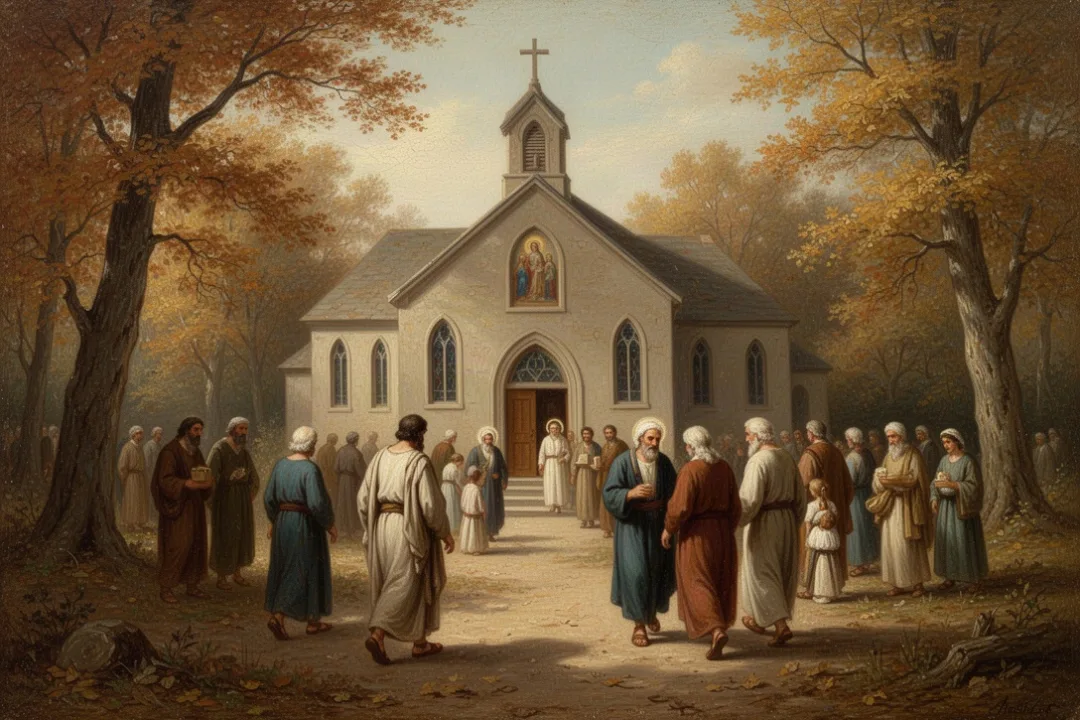
After worship, members often share a meal or spend time together. A congregation may organize a potluck, a fellowship meal, a Bible discussion, a hike, a visit to a nursing home, or a youth activity. The afternoon does not have to be spent inside the church building. Nature, friendship, learning, and service are all common ways to continue the day.
Visitors generally do not need to know special rules before attending. Modest, comfortable clothing and a respectful attitude are appropriate. A visitor may participate in singing, remain quiet during prayer, or simply observe. If you are unsure about meal arrangements, children’s programs, or service times, contacting the local congregation beforehand can make the visit easier.
How the Sabbath relates to salvation and Christian identity
Seventh-day Adventists officially teach that people are saved by God’s grace through faith in Jesus Christ, not by keeping the Sabbath or any other practice as a way to purchase salvation. Sabbath observance is understood as a response to God’s relationship with humanity. It expresses trust, loyalty, gratitude, and a willingness to accept God’s rhythm of work and rest.
For many Adventists, the Sabbath also points to creation and redemption. Creation presents God as the maker of the world, while the gospel presents God as the one who restores people through Christ. Resting from ordinary work can symbolize the belief that a person’s deepest worth does not come from productivity, income, or achievement.
Adventists also associate the Sabbath with freedom. A weekly pause limits the power of employers, markets, deadlines, and personal ambition to control every hour. The commandment includes other people and animals in the benefit of rest, so the practice has a social dimension. It asks those with authority not to demand constant labor from people who depend on them.
This does not mean all Adventists practice the Sabbath in exactly the same way or that every member feels equally confident about every activity. Some emphasize quiet worship, others emphasize family and nature, and others focus strongly on community service. Their shared conviction is that the Sabbath is holy time, not simply a preferred appointment for a weekly church service.
How Seventh-day Adventists understand Sunday worship
Seventh-day Adventists recognize that many Christians worship on Sunday and do not generally regard every Sunday worshiper as insincere or disobedient. Their disagreement concerns the biblical identity of the weekly Sabbath and the authority for changing its observance. They believe the seventh day is the day specified in Scripture and that the New Testament does not command Christians to transfer the Sabbath to Sunday.
Sunday has significance for many Christians because of its association with Jesus’ resurrection and longstanding church practice. Adventists honor the resurrection but distinguish that celebration from the question of which day the Bible calls the Sabbath. They may attend a Sunday event when necessary, work with people who worship Sunday, or participate in interfaith settings without treating Sunday as their Sabbath.
Adventist teaching also includes an end-time interpretation of worship and religious liberty. Revelation 13–14 is read as describing a future conflict involving worship, allegiance, coercion, and the authority of God. Adventists connect the Sabbath with this larger theme, but they emphasize that religious conviction should not be imposed through force. Freedom of conscience is a significant part of their public and theological identity.
How Sabbath observance affects work, school, and family life
Because the Sabbath begins on Friday evening, it can affect employment schedules, school activities, examinations, sports, travel, and social events. Adventists may request accommodations that allow them to leave before sunset Friday or avoid required activities from Friday sunset through Saturday sunset. The details depend on the employer, school, local policy, and the person’s circumstances.
Many Adventists communicate early and respectfully rather than waiting for a conflict. They may explain that Sabbath observance is a religious commitment, offer alternative work times, trade shifts, or complete assignments before the Sabbath begins. Some careers are easier to arrange than others, and not everyone has the same freedom to refuse a shift.
Families often build weekly traditions around the day. Friday evening may include a special meal, candles or music, Bible reading, and prayer. Saturday may include church, a picnic, a visit to relatives, or an outdoor activity. These traditions help children understand the Sabbath as positive shared time, rather than merely a list of things they cannot do.
Parents also have to make practical judgments. Feeding a baby, caring for a disabled family member, responding to illness, and handling an emergency are not treated as ordinary commercial labor. The principle of mercy is applied to real life, where people’s needs cannot always be scheduled neatly around sunset.
Why the Sabbath remains meaningful to many Adventists
For many members, the Sabbath offers relief from a culture that measures people by output. It creates a weekly period when paid work, school competition, shopping, and routine demands are intentionally reduced. This can provide room for prayer, unhurried conversation, worship, and attention to the natural world.
The day also strengthens community. Congregations eat together, visit people who are isolated, support children and young adults, and organize practical service. A Sabbath shaped by mercy can move beyond private relaxation toward care for neighbors and people who are vulnerable.
Its meaning is also theological. The Sabbath reminds Adventists that God is creator, liberator, and redeemer. The day looks backward to creation, speaks to present dependence on God, and points forward to the promised restoration described in the Bible. These themes explain why observance is treated as a central part of Adventist discipleship rather than a minor denominational preference.
For respectful conversations: Ask how a person observes the Sabbath rather than assuming every Adventist follows identical boundaries. Local culture, occupation, family responsibilities, and personal conviction can shape the details while the Friday-sunset-to-Saturday-sunset framework remains central.
Questions to ask when you need to accommodate a Sabbath observer
If a coworker, student, tenant, customer, or friend observes the Sabbath, a few practical steps can prevent avoidable conflict. Treat the request as a matter of religious practice, and discuss solutions before the schedule becomes urgent.
Ask which hours the person observes and whether the times change with sunset.
Discuss alternative shifts, deadlines, appointments, or meeting times as early as possible.
Do not assume that every activity is prohibited; ask what creates a conflict in that specific setting.
Keep emergency and safety needs separate from ordinary scheduling preferences.
Respect privacy if the person does not want to explain personal religious details.
Apply workplace or school policies consistently while considering reasonable religious accommodations where available.
Respect does not require agreement about theology. A clear conversation can recognize the person’s commitment while allowing everyone to plan responsibly. For an Adventist, having the Sabbath acknowledged can make the difference between practicing a central belief and facing a recurring conflict every week.
Frequently asked questions
Do Seventh-day Adventists worship on Saturday or Sunday?
Seventh-day Adventists worship on Saturday, which they identify as the Bible’s seventh-day Sabbath. Their observance begins at Friday sunset and ends at Saturday sunset. They may attend or support events on Sunday, but they do not regard Sunday as the weekly Sabbath. Their practice is based on the creation account, the fourth commandment, and Jesus’ Sabbath ministry.
Can Seventh-day Adventists work on the Sabbath?
They generally avoid regular employment and routine business from Friday sunset to Saturday sunset. Exceptions may involve emergencies, caregiving, health services, public safety, or other necessary acts of mercy. Individual circumstances vary, and members may seek schedule changes or accommodations. The guiding question is usually whether the activity is ordinary work that could be planned around the Sabbath or a genuine need that cannot reasonably wait.
Can Seventh-day Adventists use technology on the Sabbath?
There is no single rule that treats every device in exactly the same way. Many Adventists limit work emails, social media, shopping, gaming, and entertainment that distract from the day’s purpose. They may use phones for navigation, communication, worship resources, emergencies, or contacting family. Personal choices differ, but the intended focus is worship, rest, relationships, nature, and service rather than ordinary digital routines.
What should I expect if I visit a Seventh-day Adventist church?
You can generally expect Bible study, congregational worship, prayer, music, and a sermon on Saturday morning. Some churches offer children’s programs and a shared meal afterward. Services differ in style and length, so checking the local congregation’s schedule is helpful. Visitors are welcome to observe without knowing the customs in advance, and ordinary respectful clothing is appropriate.











Leave a Reply