Advent: The Christ Candle - History, Meaning, and How to Light It
Advent: The Christ Candle - History, Meaning, and How to Light It
Advent: The Christ Candle - History, Meaning, and How to Light It
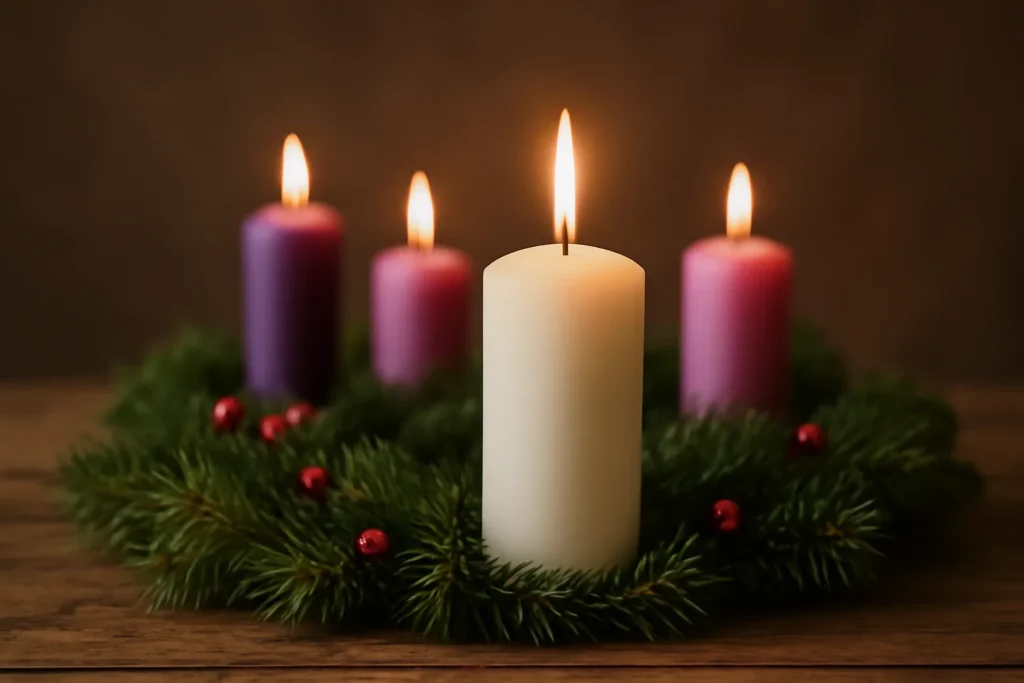
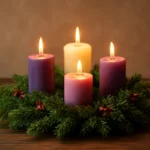
In many Christian homes and churches, theAdventseason is marked by a wreath bearing four candles and, at its center, a single Christ Candle. This white central light is more than a decorative element; it embodies the heart of the season—the arrival of Jesus Christ and the illumination that his coming brings to a world of longing and darkness. The practice blends ritual, symbolism, and daily or weekly devotion, inviting families and faith communities to slow down, reflect, and prepare to celebrate Christmas.
Throughout this article we will explore Advent the Christ Candle in several dimensions: its history, its meaning, and practical guidance on how to light this central candle. We will also look at variations in different Christian traditions, safety considerations, and ideas for making the lighting ritual a meaningful part of home life or church worship. Whether you encounter the Advent candle as the Christ Candle in a parish wreath or as a family-centered devotional centerpiece, its glow can become a tangible reminder of the God who draws near in the season of waiting.
What is the Christ Candle?
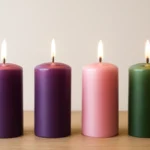
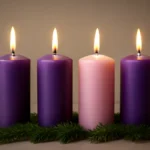
The Christ Candle is the central white candle placed in the middle of the Advent wreath or on a dedicated table or stand. It is distinct from the four outer candles, which are typically purple (and sometimes blue for Louisiana/Western rites) and, on the third Sunday of Advent, a pink or rose candle may be added to signify Gaudete Sunday—a day of rejoicing in anticipation of the coming Messiah.
The Christ Candle represents the person and work of Jesus Christ—the Incarnation in time and space. It symbolizes the light that Christ brings into a world darkened by sin and sorrow, and it bears witness to the ongoing presence of God with his people. In many traditions, the liturgy of Advent culminates not just in Advent’s four weeks of waiting, but in the Christmas celebration when the Christ Candle is lit and the season’s themes converge in the fullness of Christmas joy.
In everyday practice, you may hear the Christ Candle described in several related ways. Some people call it the central Advent candle, others refer to it as the Nativity Candle, and many simply say the white candle in the Advent wreath or the Christ light. Regardless of the label, the symbolism remains consistent: the coming of Jesus is the turning point that brings light into human history.
History of Advent and the Christ Candle
Origins of the Advent wreath
The broader tradition of the Advent wreath arose in 18th- and 19th-century Europe, with roots most often traced to Protestant communities in Germany. A widely cited origin attributes the practice to Johann Hinrich Wichern, founder of the Rundgang (a home for deprived children) in Hamburg in 1839. He created a large wooden ring with many small candles to teach poor children about the length of Advent—24 candles in total, one for each day of December leading up to Christmas, which gradually grew lighter as Christmas approached.
The original practice evolved over time: the ring or wreath gradually settled into the more compact form commonly used today in many churches and households. The four outer candles came to symbolize the four Sundays of Advent, often colored purple or blue, with a pink or rose candle added on the third Sunday in some traditions to mark Gaudete Sunday, a word that means “rejoice.”
From Wichern to wider practice
As the Advent wreath spread beyond Germany, different denominations adapted the pattern to fit their liturgical calendars and theological emphases. In many Western churches—especially Catholic, Lutheran, and Anglican communities—the tradition of lighting the four outer candles on successive Sundays became a regular feature of Advent worship. The central Christ Candle was integrated in various ways: some traditions place it in the center from the outset and light it on Christmas Eve or Christmas Day; others wait to light the Christ Candle only when Christmas is celebrated, marking the culmination of Advent’s waiting.
Across cultures, the Christ Candle has sometimes been understood as a symbol of the true Light now revealed in the birth of Christ. In some regions, Advent parishes combined the wreath with a visible reminder of the Nativity; in others, households used the central candle as a focal point for daily prayer or family devotions during the final week of Advent.
Meaning and Symbolism
The lamplight of the Christ Candle is more than decorative illumination. It embodies the theological and spiritual centers of Advent: anticipation, revelation, and the ultimate manifestation of God’s love in Jesus. The symbolism has several layers:
Hope—The first candle lit on the wreath stands for expectation and longing for the Messiah, a hope that grows brighter as each week passes.
Preparation—The second candle deepens the sense of readiness, as the people of God prepare themselves for the one who comes to be with us.
Joy—The pink or rose candle on Gaudete Sunday expresses a growing joy in the approaching fulfillment of God’s promises, a joy that is distinct from hope and peace.
Peace—The fourth purple candle embodies the peace that Christ’s coming brings to a world divided by conflict and fear.
Christ light—The Christ Candle itself represents Jesus as the light of the world, the source of truth and life who enters history as a daystar in the darkness.
The progression from expectation to fulfillment mirrors the biblical trajectory of the season. In the liturgical sense, Advent is not merely about waiting; it is about preparing to recognize and welcome the one who is already coming and who continues to come into our lives today. The central candle thus serves as a tangible focal point for worship, prayer, and reflection.
Four weeks of waiting, four themes, one light
Week 1—Hope and anticipation, blind corners of history begin to brighten as the promise draws nearer.
Week 2—Preparation and turning toward God’s plan for salvation.
Week 3—Joy and gladness as the time of waiting carries its own promise.
Week 4—Peace, the realization that God’s presence is with us, culminating in the Nativity celebration.
How to Light the Christ Candle: A Step-by-Step Guide
The ritual of lighting the Christ Candle is a practical and devotional act that families and congregations can perform together. The exact form can vary by tradition, but the core idea remains the same: let the light of Christ illuminate the season as you reflect on the texts, prayers, and themes of Advent.
Step-by-step ritual for the Advent wreath or Christ-centered table
Prepare the space—Ensure your Advent wreath or centerpiece is placed on a stable surface away from drafts, wind, or heat sources. If using a real fire, place the candles in a safe holder and have a fire extinguisher or water nearby.
Arrange the candles—In a typical arrangement, there are four outer candles (purple or blue) and one central white candle. If your tradition uses a pink candle for Gaudete Sunday, position it accordingly on week three.
Lighting order—On the first Sunday of Advent, light the first outer candle and, if you begin with a symbol of Advent, prepare to light the Christ Candle as the culmination of the service or family time. On subsequent Sundays, light an additional outer candle; on Christmas Eve or Christmas Day, light the Christ Candle in addition to all four outer candles.
Read a short passage—Choose a Scripture reading that suits the Advent moment, such as Isaiah 9:2-7, Matthew 4:16, or John 8:12, all of which echo the theme of light entering darkness.
Offer prayers or reflections—Invite participants to share brief prayers of gratitude, hope, repentance, or longing for peace. The Christ Candle often serves as a focal point for these prayers.
Close the time—Conclude with a benediction or blessing, and extinguish nothing yet unless your custom calls for it. When you extinguish after the final prayer, do so with reverence or leave the candles to burn safely until you finish your devotion.
Safety and practical tips
Never leave lit candles unattended. If you must leave the room, extinguish the flames or place them out of reach of children and pets.
Trim wicks to about 1/4 inch before lighting to prevent excessive smoke and flare-ups.
Use a sturdy candle holder that collects wax and reduces the risk of tipping.
Consider LED alternatives—If fire safety is a concern, battery-operated candles provide the same visual symbolism without the risks.
Ventilation—Ensure the room is well-ventilated, especially if you light multiple candles during longer devotion times.
Variations Across Traditions
The Christ Candle inside Advent wreaths is widely used, but the exact practice can vary by tradition, geography, and culture. Here are some common variations:
Catholic and Protestant co-use—Both Catholic and Protestant communities frequently use the Advent wreath and Christ Candle, though the precise arrangement or liturgical emphasis can differ. The Christ Candle is often lit in conjunction with the Christmas Vigil or Christmas Day liturgy in Catholic parishes.
Anglican and Lutheran practices—In many Anglican and Lutheran churches, the central white candle marks the turning point from Advent to Christmas and is lit with a spoken blessing or prayer during Christmas Eve services or on Christmas Day.
Orthodox contexts—In the Eastern Orthodox tradition, the season before Christmas is typically observed as the Nativity Fast rather than an Advent wreath with a Christ Candle. Some parishes adopt a Western-style Advent wreath as a devotional aid for families in mixed-density congregations or during ecumenical services.
Domestic and ecumenical variations—In homes and ecumenical groups, the outer candles may be blue or purple, and the central candle remains white to symbolize Christ’s purity and light. Some households omit the pink candle altogether, while others use it only on Gaudete Sunday to denote joyful anticipation.
Regardless of the exact coloring or timetable, the essential meaning of the Christ Candle—Christ’s coming, light, and presence in the world—remains at the center of Advent the Christ Candle practices. The variations offer creative ways to express the same theological truth: God has drawn near in Jesus, bringing hope into a world longing for peace.
Liturgical Readings and Devotional Practices
The Christ Candle invites readers and worshipers to connect heart and mind through Scripture and prayer. Here are some ideas to deepen the experience:
Weekly Bible passages—Use readings that emphasize light, salvation, and the advent of the Messiah. Examples include Isaiah 11:1-10, Isaiah 60:1-3, Luke 1:78-79, and John 1:4-9.
Grace-filled reflections—Pause to reflect on how Jesus’ arrival affects your daily life: relationships, work, neighborhood, and personal growth.
Music and hymns—Incorporate carols or hymns about light and hope, such as “O Come, O Come, Emmanuel,” “Joy to the World,” and “Silent Night.”
Family prayers—Encourage family members to offer short prayers about what Advent means for them, what they long for in the coming year, or how they can be a light to others.
Practical Ideas for Home Observance
Making the Christ Candle a regular part of home life can be both meaningful and accessible. Here are practical ideas to integrate the central candle into family rituals:
Weekly devotion kit—Create a small kit that includes a devotional, a Scripture card, a candle snuffer, and a short prayer. Light the Christ Candle while you read and pray.
Interactive readings—Invite children and guests to read aloud a verse or short meditation before lighting the candles. This builds communal participation and learning.
Service and generosity—On the Sundays of Advent, pair the lighting with a family service project or a plan to give to those in need, linking light and generosity.
Reflection prompts—Leave a small card under the wreath with prompts such as “What hope is growing in you this week?” or “How can we be light for someone who is hurting?”
Christmas Eve vigil—Conclude Advent with a brief Christmas Eve vigil, where the Christ Candle is lit to symbolize the arrival of the Light into the world.
Choosing colors and design for your Advent arrangement
The colors and style of your Advent wreath or Christ-centered table can reflect the tradition you follow or the home’s personality. While purple or blue outer candles are common in many churches, you can adapt to blue for a cooler, contemplative tone, or keep the traditional purple outer candles with a rose-pink candle for Gaudete Sunday. The central Christ Candle is almost always white, symbolizing purity, holiness, and the presence of Christ.
Frequently Asked Questions
When is the Christ Candle lit?—In most Western liturgical calendars, the Christ Candle is lit on Christmas Eve or Christmas Day, marking the transition from Advent’s waiting to the celebration of Christ’s birth. Some families also light it during the final Advent service or at a Christmas Eve family gathering.
Why is the central candle white?—White has long been associated with purity, holiness, and victory in Christian symbolism, and it visually distinguishes the Christ Candle from the outer candles that indicate Advent’s four weeks of waiting.
May the Christ Candle be lit earlier?—Some households and churches choose to light the Christ Candle earlier as a sign of Christ’s immediacy and continual presence. The important thing is to remain faithful to your tradition and to use the lighting as a meaningful moment of reflection.
What passage should we read with the Christ Candle?—A traditional choice is John 8:12, where Jesus declares, “I am the light of the world.” Other fitting passages include Isaiah 9:2-7 and Luke 2:9-14, which celebrate the coming of the Messiah and the shepherds’ response to the divine revelation.
Can we use LED candles?—Yes. LED or flameless candles are a practical alternative that preserves the symbolism of light while reducing fire risk, especially in homes with children and pets.
Connecting the Christ Candle to the Larger Story
The Christ Candle is not isolated from the broader Christmas story; rather, it is an invitation to connect Advent longing with Christmas celebration. The central question it invites is this: What does it mean that God has drawn near in Jesus, and how does that light transform our lives in tangible ways? In this sense, Advent the Christ Candle becomes a bridge between ancient prophecy and present-day practice—between anticipation and joy, between quiet prayer and generous action.
In a broader, ecumenical sense, families and congregations might reflect on how this light can be a source of hope in their communities. Lighting the Christ Candle can become a shared act that signals hospitality, outreach, and peace. When you invite others to partake in the lighting ritual—neighbors, friends, or guests—you extend the message of Advent from private devotion to public witness.
Closing Reflections on Advent and the Christ Candle
The practice of honoring Advent the Christ Candle—whether in a church sanctuary or a family living room—invites us to slow, listen, and prepare. It is a reminder that the world longs for light, and that the coming of Christ brings enduring illumination. The ritual of lighting the central candle offers a simple, tangible way to mark the weeks of waiting, to tell the story of Christmas, and to allow that story to shape how we live in the days ahead.
If you are beginning this practice for the first time, start with one wreath, one central white candle, and a small, intentional plan for your first Advent. There is no single “right way” to celebrate; what matters is the sense of attentive anticipation and the invitation Christ extends to you and your household: that you would know him more deeply as the Light who saves, sustains, and renews.





Leave a Reply