What is the Advent wreath, and why does it matter? An introductory overview
The Advent wreath is a circular evergreen garland that carries rich symbolism and a practical rhythm for the weeks leading up to Christmas. It serves as a tangible reminder of anticipation, hope, and spiritual preparation during the season of Advent. In many homes and churches around the world, families and congregations gather to light candles, read scriptures, and reflect on the themes that unfold week by week. This article offers a comprehensive Advent wreath explanation: its meaning, the symbols it contains, and a practical guide to how to light it in a way that is meaningful, inclusive, and safe. Whether you are new to the tradition or seeking to deepen your understanding, you will find details about the origins, variations across traditions, and ideas for devotion and celebration.
The Advent wreath explained: origin, purpose, and its place in worship and home life
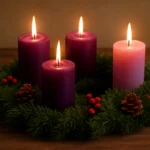
The concept of an Advent wreath is rooted in Christian liturgical practice, but it has evolved into a symbol with broad cultural resonance. The circular shape signifies eternity and the unbroken faith across generations. The evergreen branches express resilience and life that remains green even in winter, a metaphor for the enduring promise of God. The practice of lighting candles each week creates a rhythm that helps believers slow down, reflect, and anticipate the coming of Christ.
In many settings, the phrase Advent wreath explanation is used interchangeably with terms like Advent candle wreath or Advent circle. While there is variation in how the wreath is arranged and colored in different traditions, the core ideas are consistent: a seasonal sequence that invites prayer, gratitude, and hopeful expectation. This is a meaning-centered explanation of the Advent wreath, designed to illuminate how symbolism and ritual work together to deepen spiritual life during December.
Meaning and symbolism: what the wreath represents in Advent devotion
The circle: eternal life, continuity, and God’s promises
The circular form of the wreath is not accidental. A circle has no beginning and no end, which makes it a powerful emblem of the eternal love and faithfulness of God. In an Advent wreath explanation, the circle stands for the unbroken relationship between God and humanity, a promise that endures through every season and every year. For families and churches, the circle invites participants to reflect on the continuity of faith—how God remained present across generations and how the church continues the story today.
Evergreen branches: enduring life and hope
The evergreen foliage (fir, pine, spruce, or other hardy greens) is a central symbol in Advent wreath symbolism. It signals that life continues beneath the winter surface and that hope remains even in times of waiting. In Advent wreath explanation discussions, the greenery is often described as a sign of resilience—God’s life-giving presence that persists, even when the world feels cold or uncertain.
Candles: light in the darkness, weeks of waiting, and the growing anticipation
The most recognizable element of the Advent wreath is its candles. Over the four weeks of Advent, a candle is lit on each Sunday, creating a growing circle of light. The symbolism of the candles is multifaceted:
Hope: The first candle is frequently associated with hope—the expectation that God’s promises will be fulfilled.
Peace: The second candle often reminds worshippers of peace, the peace that comes with God’s reconciliation and the promise of a restored relationship with creation.
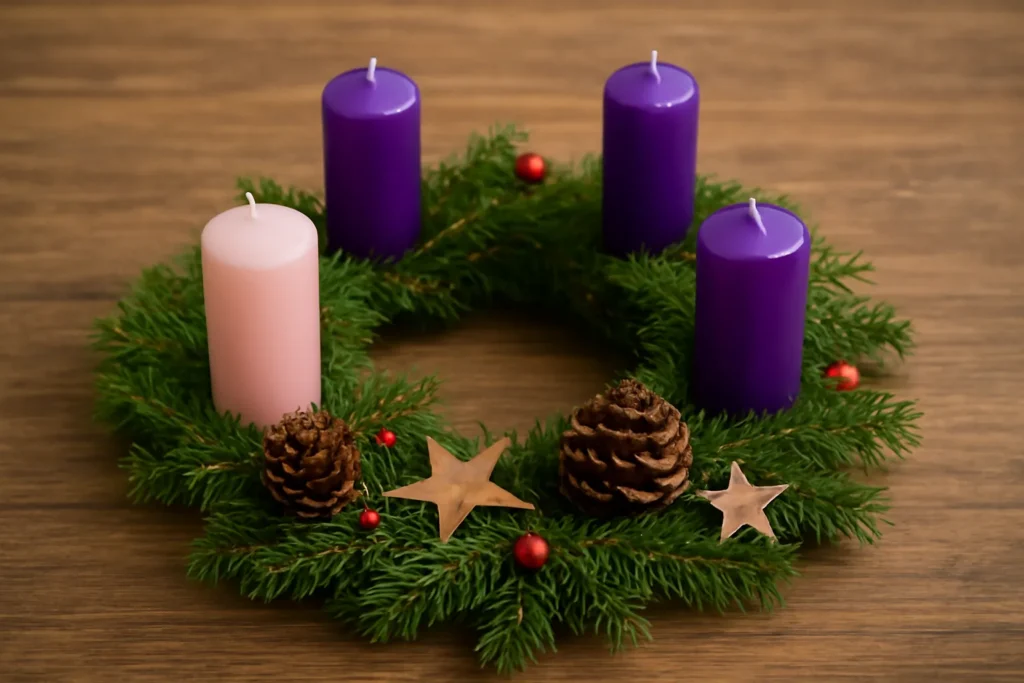
Joy: The third candle, typically pink or rose-colored in many traditions, signals a joyful anticipation as Christmas nears. Some explanations call this candle the “Gaudete” candle, from the Latin word for joy.
Love: The fourth candle embodies love and the dawning of fulfillment as the birth of Christ approaches.
In addition to these four candles, many wreaths include a central or separate fifth candle, often called the Christ candle. This candle is lit on Christmas Eve or Christmas Day to symbolize the arrival of Christ, the light of the world entering the world in human form.
Colors and their meanings: purple, pink, blue, and beyond
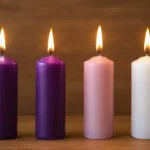
The classic Advent wreath color scheme uses four candles in a sequence that reflects liturgical symbolism. The traditional colors are:
Purple candles for the first, second, and fourth Sundays, representing preparation, penitence, and longing.
Pink (or rose) candle for the third Sunday, representing joy and a temporary shift toward celebration within the season of waiting.
Some Christian traditions adapt the color palette to local customs or to different liturgical calendars. For instance, certain Protestant communities might use blue instead of purple, or they may omit the pink candle and emphasize another color. In Catholic and many Anglican contexts, purple and pink carry their widely understood meanings. In Orthodox practice, Advent timing and color symbolism can differ, since Advent is sometimes observed with a more restrained approach or integrated into other seasonal periods.
The central or final candle, the Christ candle, is a powerful culmination of the Advent wreath’s meaning. Lighting the Christ candle reminds believers that the waiting season points toward the birth of Jesus, and that the divine light has arrived in human form. This candle’s lighting often coincides with Christmas Eve or Christmas Day celebrations, providing a climactic moment in the devotional rhythm.
How to light the Advent wreath: order, technique, and variations
Standard lighting sequence: Sunday-by-Sunday progression
A common Advent wreath lighting pattern is straightforward and easy to follow:
Week 1: Light the first purple candle.
Week 2: Light the first purple candle and the second purple candle.
Week 3: Light the first purple candle, the second purple candle, and the pink (rose) candle.
Week 4: Light all four of the outer candles—the three purple ones and the pink one.
Christmas Eve or Christmas Day: Light the Christ candle in the center, often after all four outer candles have been lit, or as a separate final lighting to mark the birth of Jesus.
In this standard approach, each week adds more light, mirroring the growing expectation of Advent. If you follow this rhythm at home or in a small group, you can pair each lighting with a short reading, reflection, or prayer that corresponds to the candle's theme (hope, peace, joy, love).
Alternative sequences and variations by tradition
Advent wreaths are used in a variety of Christian traditions, and there are notable deviations that reflect different theological emphases or cultural customs:
Blue Advent wreaths: In some Orthodox and some Anglican contexts, blue is preferred as a sign of expectation and repentance, particularly in the pre-Christmas period.
Four purple candles without pink: Some communities choose to omit the pink candle and to emphasize penitence and preparation more overtly.
Five candles including a separate center Christ candle: In many Catholic and Protestant versions, the center Christ candle is lit on Christmas Eve or Christmas Day, after the outer candles have been lit over the four Sundays of Advent.
Separate readings for each week: Some groups pair each candle with a scripture reading or a short devotional tied to the candle’s meaning (hope, peace, joy, love), which can be drawn from the Bible or adapted from family devotion guides.
Practical lighting tips for safety and beauty
Lighting an Advent wreath at home or in a gathering requires some practical considerations to keep people safe and the experience meaningful. Here are some best practices:
Clear space: Place the wreath on a stable, non-flammable surface away from curtains, papers, and other combustibles. Use a sturdy tray or holder that catches wax drips.
Support for candles: Use proper candles holders or a wreath ring with built-in sockets to keep the candles upright.
Ventilation: Ensure the room is well-ventilated but away from drafts that might tilt flames toward the wreath or cause candles to burn unevenly.
Supervision: Never leave burning candles unattended. After lighting, extinguish candles if you must leave the room and relight when you return.
Extinguishing: Use a snuffer or a gentle breath to put out the flames—avoid blowing hard to prevent wax splatter.
Alternative lighting: If open flames are a concern, consider using LED candles or tea lights with battery power that mimic the glow without the risk.
DIY and practical guidance: how to assemble an Advent wreath for home or church
Choosing the materials
When building an Advent wreath, you’ll want to select materials that are safe, durable, and visually appealing. Common choices include:
Wreath base: A metal, foam, or wire ring that provides a stable frame.
Evergreen greens: Fresh greens like fir, pine, spruce, or artificial alternatives for long-lasting use.
Candles: Four (or five) candles designed for outdoor or indoor use, with appropriate holders.
Decorative elements: Bows, pinecones, dried oranges, cinnamon sticks, or decorative ribbons for personalization.
Step-by-step assembly
A simple assembly guide to create a classic Advent wreath:
Set the wreath base on a heat-resistant surface or tray.
Attach the evergreen greens evenly around the ring, securing with floral wire or clips.
Place the four outer candle holders evenly around the wreath, ensuring they are stable and accessible.
Insert the outer candles in their holders and check that all flames will be visible and balanced.
Add decorative touches that do not obstruct candle visibility or flame safety.
Place the Christ candle in the center (if using a central candle) and ensure it has a secure mounting.
If you are building a wreath for a church or a large space, you may want to consult with a safety professional or a priest to ensure compliance with local fire and safety regulations.
Advent wreath across traditions: how different Christian communities observe this symbol
Roman Catholic and many Protestant churches
In Roman Catholic and most Protestant contexts, the Advent wreath is a central devotional piece during the weeks of Advent. The arrangement typically comprises four outer candles and a central Christ candle, with a specific lighting pattern and accompanying readings. The practice emphasizes preparation for Christmas and the light of Christ coming into the world.
Lutheran, Anglican, and some evangelical communities
Among Lutheran and Anglican congregations, the Advent wreath frequently follows the same four-week sequence, though there can be stylistic differences in color emphasis, readings, and musical elements. The shared aim is to cultivate expectancy, repentance, and gratitude as Christmas approaches.
Orthodox and other traditions
In the Orthodox tradition, Advent is observed differently, and not all churches formally use the Advent wreath in the same way as Western Christian communities. Some Orthodox families and parishes incorporate wreaths and candles in local or cultural Christmas preparations, but the liturgical emphasis may center more on the Nativity fast and the feasts surrounding Christmas rather than a uniform four-week sequence. When Advent wreaths appear in Eastern Christian contexts, they are often adapted to align with broader liturgical calendars.
Common questions about the Advent wreath: answers for beginners and seasoned practitioners
What exactly does the Advent wreath symbolize?
The Advent wreath is a symbol of waiting, preparation, and the arrival of Christ. It combines the ideas of time (through the weekly candles) and light (through the candles themselves) to foster contemplation about the journey from anticipation to fulfillment.
Why are there four candles, and what do the colors mean?
The four candles usually represent each week of Advent, marking a step in the spiritual journey toward Christmas. The typical color meaning is:
First week: Hope (purple)
Second week: Peace (purple)
Third week: Joy (pink/rose)
Fourth week: Love (purple)
The Christ candle is lit at the culmination of Advent, highlighting the coming of Jesus as the light of the world.
Is it necessary to use real candles, and are LED options acceptable?
Real candles are traditional and create an authentic atmosphere, but safety and practicality matter. LED or battery-operated candles provide a flame-free alternative that is ideal for families with small children, shared spaces, or environments where open flames are discouraged. The Advent wreath can still convey its symbolic meaning with LED candles, though some purists prefer the classic wax candles for their scent and glow.
Can the Advent wreath be used in worship outside home settings?
Absolutely. While many families use the wreath at home, churches routinely employ Advent wreaths in worship spaces, classrooms, and lobbies. In larger settings, the wreath might be placed on a lectern or altar with readings projected or read aloud by a lector. The lighting can be coordinated with hymns, prayers, and scripture passages to deepen the communal sense of anticipation.
Common myths and clarifications about the Advent wreath
Myth: The Advent wreath is an old, rigid ritual with no room for personalization. Clarification: While rooted in tradition, the Advent wreath is highly adaptable. Families and churches often incorporate personal prayers, family rituals, or community service ideas into the weekly reflections.
Myth: The pink candle is optional. Clarification: Many traditions consider the pink/rose candle a meaningful symbol of joy and a milestone in the Advent journey, though some communities omit it or replace it with an alternate color.
Myth: You must have four candles to observe Advent. Clarification: Some communities use blue or other color schemes, or they may place more emphasis on the central Christ candle rather than on a fixed number of outer candles.
Practical reflections for personal devotion and family practice
Ideas for prayer and readings tied to each week
You can pair each candle with a short prayer or scripture passage. Examples include:
Hope: Readings about waiting, promises, and God’s faithfulness; a prayer for hopeful hearts in uncertain times.
Peace: Passages focusing on reconciliation, forgiveness, and the peace that passes understanding; a prayer for calm and unity in the home or community.
Joy: Verses that celebrate God’s presence in daily life and the joy of God’s good news coming to humanity; a gratitude-filled prayer.
Love: Passages about love in action, service to others, and the gift of Christ’s abiding presence; a prayer for compassion and generosity.
Involving children and family members
An Advent wreath is a natural invitation for family discussions about patience, generosity, and the meaning of Christmas. You can involve children by guiding them to light the candles, choosing a blessing to recite, or selecting a “good deed” for the week. Another approach is to invite each person to share a moment of gratitude or a hope for someone in need.
Connecting the Advent wreath to charitable acts
The Advent season is an opportunity to translate spiritual expectation into tangible acts of love. Consider pairing each week’s candle with a concrete action—such as contributing to a food drive, helping a neighbor in need, or supporting a local charity. This approach ties the symbolic light of the candles to everyday acts of kindness.
Conclusion: embracing the Advent wreath as a living tradition
The Advent wreath explanation highlights a tradition that blends form and meaning: a circle of life that speaks of eternal promises; evergreen branches that symbolize resilience; and candles whose light grows week by week, culminating in the arrival of the Christ candle. Whether you observe Advent in a church setting, in a quiet home space, or in a community center, the practice invites you to slow down, reflect, and connect with the deeper rhythm of the season.
By understanding the meaning behind the symbols and the lighting sequence, you gain a richer experience of Advent as a time of anticipation, penitence, joy, and love. The Advent wreath is not merely a decorative object; it is a spiritual instrument that helps individuals and families mark time with intention, turning the weeks of waiting into a journey toward Christmas. This comprehensive Advent wreath explanation aims to support you in appreciating both the symbolism and the practical steps involved—from selecting materials and constructing the wreath to lighting it with care and devotion and weaving in prayers, readings, and acts of service that reflect the season’s deepest values.
If you would like, I can tailor this article for a specific tradition (Catholic, Anglican, Lutheran, or Orthodox), or provide a printable guide with a week-by-week devotion plan, readings, and prayers aligned to your preferred candle color scheme and lighting order.






Leave a Reply