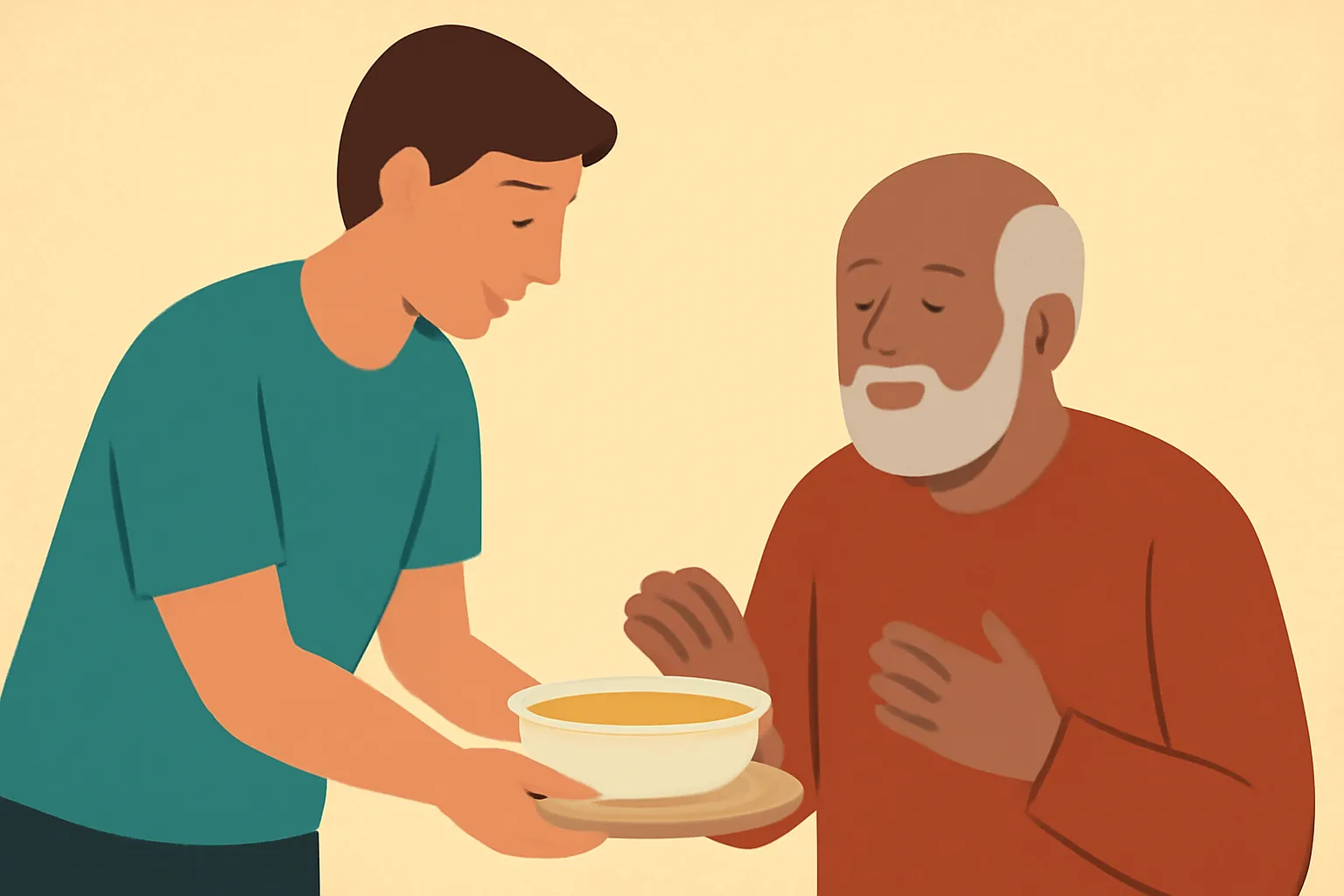
Bible Verses Serving Others: Scriptures to Inspire Acts of Kindness
In a world where quick judgments and hurried routines can crowd out
compassion, the biblical call to serve others remains
clear and compelling. This article gathers a broad tapestry of verses
that point believers toward acts of kindness,
servant-hearted living, and practical care for those in need. From the
life of Jesus to the letters of the apostles, Scripture presents servanthood as not merely an action, but a way of being.
Whether you are looking for motivation, guidance for daily living, or
concrete verses to share in teaching and prayer, the passages below
illuminate how service to others becomes worship, revival,
and transformation in everyday life.
Throughout these sections, you will encounter repeated themes: loving your neighbor, bearing one another’s burdens,
generous giving, hospitality, and a posture of humility. The verses
encourage a life that puts others first, mirrors Christ’s own example,
and practices faith through tangible acts of mercy and support.
You will notice how the language shifts—from attitude to action,
from principle to practice—so you can translate these sacred words into
real-world kindness.
Foundations in Scripture: Why Serving Others Matters
The Bible roots serving others in the character of God and
the mission of Jesus. To serve is not merely a good deed; it is an
expression of love that flows from a trust-filled relationship with God.
In the Gospels, Jesus models humble servanthood in
everyday moments, and His teaching reframes authority as servant leadership. In the epistles, the church learns to
embody that same spirit in community, generosity, and mutual care.
Verses to Inspire Daily Acts of Kindness
Jesus as the Example of Service
The life of Jesus remains the primary template for what it means to serve
others. He redefines greatness as service to the least, and
He gives a compelling example for all who would follow Him.
Matthew 20:28 — “Even as the Son of man came not to be
ministered unto, but to minister, and to give his life a ransom for many.”
Mark 10:45 — “For even the Son of man came not to be
ministered unto, but to minister, and to give his life a ransom for
many.”
John 13:14-15 — “If I then, your Lord and Master, have
washed your feet, ye also ought to wash one another’s feet. For I have given
you an example, that ye should do as I have done to you.”
Matthew 5:16 — “Let your light so shine before men, that
they may see your good works, and glorify your Father which is in
heaven.”
Love Your Neighbor: Practical Compassion
The command to love one’s neighbor echoes through both law and gospel. Neighbor love becomes concrete in daily choices, often
expressed through hospitality, care, and acts of mercy toward those in
need.
Leviticus 19:18 — “Thou shalt love thy neighbor as thyself: I am the
LORD.”
Matthew 22:39 — “And the second is like unto it, Thou shalt
love thy neighbour as thyself.”
Luke 10:27 — “Thou shalt love the Lord thy God with all thy
heart… and thy neighbour as thyself.”
James 2:8 — “If ye fulfill the royal law according to the
scripture, Thou shalt love thy neighbour as thyself, ye do well.”
Care for the Hungry, the Stranger, the Sick, and Prisoners
Caring for vulnerable people is a central facet of serving others. The
Bible links these actions to righteousness and to the presence of God in
our midst.
Isaiah 58:7 — “Is it not to deal thy bread to the hungry, and
that thou bring the poor that are cast out to thy house? when thou seest the naked,
that thou cover him; and that thou hide not thyself from thine own flesh?”
Matthew 25:35-40 — “For I was hungry, and ye gave me meat: I was
thirsty, and ye gave me drink: I was a stranger, and ye took me in… Inasmuch as ye
have done it unto one of the least of these my brethren, ye have done it unto me.”
Matthew 25:36 — “I was sick, and ye visited me: I was in prison, and ye came unto me.”
Hebrews 13:16 — “But to do good, and to communicate, forget not: for with such
sacrifices God is well pleased.”
Romans 12:13 — “Distributing to the necessity of saints; given to
hospitality.”
Galatians 6:2 — “Bear ye one another’s burdens, and so fulfil the law of
Christ.”
Serving with Gifts and Gratitude
The Christian life is not only a set of duties but a place where God’s gifts
enable generous service toward others. When we serve, we practice a form of
worship that strengthens the entire body of Christ.
1 Peter 4:10 — “As every man hath received the gift, even so minister the
same one to another, as good stewards of the manifold grace of God.”
Romans 12:6-8 — “Having then gifts, differing according to the grace that is
given to us… if prophecy, let us prophesy according to the proportion of faith;
or ministry, let us wait on our ministering.”
1 Corinthians 12:25-26 — “That there should be no schism in the body, but
that the members should have the same care one for another. And whether one member suffer,
all the members suffer with it.”
Galatians 5:13 — “For brethren, ye have been called unto liberty; only use not
liberty for an occasion to the flesh, but by love serve one another.”
Mutual Care and Community Life
A church that serves is a church that grows in faith, hope, and love. The New
Testament emphasizes how believers interact with warmth, generosity, and
accountability, creating a community where everyone participates in
helping one another.
Romans 12:9-13 — “Let love be without dissimulation. Abhor that which is evil;
cleave to that which is good; Be kindly affectioned one to another with brotherly love…”
Romans 12:10 — “Be kindly affected one to another with brotherly love; in honor
preferring one another.”
Philippians 2:3-4 — “Let nothing be done through strife or vainglory; but in lowliness
of mind let each esteem other better than themselves; Look not every man on his own things, but
every man also on the things of others.”
1 Thessalonians 5:11 — “Wherefore comfort yourselves together, and edify one another,
even as also ye do.”
The Bible links service with true leadership. The path to greatness is measured not
by how many people serve you, but by how many you serve. Christ’s teaching about
greatness reframes ambition into a rhythm of giving and washing one another’s
feet—literally and figuratively.
Mark 9:35 — “If any man desire to be first, the same shall be last of all, and
minister of all.”
Matthew 20:26-28 — “But it shall not be so among you: but whosoever will be
great among you, let him be your minister: And whosoever of you will be the chiefest, shall
be servant of all.”
John 13:12-15 — “So after he had washed their feet… ye also ought to wash one
another’s feet.”
Practical Ways to Live Out These Verses
The biblical vision of serving others is not only about big, dramatic acts; it is
about daily, intentional choices that reflect a heart transformed by grace. The
following practical pathways can help you translate Scripture into concrete acts of service in your home, church, neighborhood, and
workplace.
Start small but consistently. Small gestures—holding the door, carrying a
heavy bag for a neighbor, listening well to someone who needs to talk—are the seeds of a
lifestyle of service. Consistency matters more than occasional intensity.
Look for burdens to bear. Galatians 6:2 invites you to “bear ye one another’s burdens,” a posture
that invites you to notice hidden struggles—financial stress, loneliness, grief, or
health challenges—and respond with practical help.
Practice hospitality as a spiritual rhythm. Welcoming others into your space can be a powerful way
to demonstrate God’s love, build relationship, and create a culture of care within your circle.
Use your gifts for the common good. Identify your God-given gifts—whether teaching, mercy,
encouragement, administration, or generosity—and devote them to serving others in your local
church and community.
Forgive and reconcile. Service often requires humility and forgiveness
in relationships. When tensions arise, extend grace and seek restorative paths that honor God
and reflect Christ’s mercy.
Practice generosity as worship. Regular, joyful giving to those in need aligns your
life with the biblical call to share resources and support the vulnerable.
Engage in organized service opportunities. Volunteer with charities, food banks, shelters,
or mission initiatives. Structured service channels multiply impact and provide ongoing
opportunities to live out your faith in community.
Serving as a Spiritual Discipline
For many believers, serving others is not only a response to an impulse or a season
of life; it can become a disciplined practice—a spiritual rhythm that shapes character,
strengthens faith, and deepens dependence on God. When service becomes a regular habit,
it forms a witness that demonstrates the gospel in the ordinary routines of daily life.
Prayerful discernment for needs — Begin with prayer to identify where you can
best serve, and seek God’s heart for the marginalized and hurting in your circle.
Accountability within community — Share commitments to serve with trusted friends
or a mentorship group to stay motivated and biblically aligned.
Reflection and gratitude — Regularly reflect on how serving has shaped your heart and
how God has used you to bless others. Gratitude deepens resilience and joy in giving.
Some readers wonder how to balance service with personal boundaries, or how to avoid
the impression that service is a way to earn God’s favor. The Bible offers a balanced
perspective: service is rooted in God’s grace, not in human achievement, and
it should flow from a grateful heart rather than a need for approval.
Service isn’t only about “big” acts. While grand acts of charity draw attention, small,
consistent acts of love often have the greatest, enduring impact over time.
Service should be wise and gracious. Use discernment to avoid burnout, and pursue
opportunities where you can contribute sustainably and with integrity.
Motivation matters. The motive behind service should be love for God and neighbor, not
personal pride or a desire for recognition.
Inspiration for Teaching and Reflection
If you are teaching a Sunday school class, leading a小group, or preparing devotions for
a family, these verses offer a robust backbone for discussion. You can
encourage participants to discover how serving others can be integrated
into different life contexts—home, school, workplace, and church. Use the
verses not merely as quotes to recite, but as prompts to explore:
What does it mean to “bear one another’s burdens” in today’s world?
How can we practically love our neighbors who are different from us?
What gifts has God given you to serve others, and how can you steward them well?
In what ways can hospitality and generosity become daily habits rather than rare exceptions?
Final Encouragement: A Life Marked by Service
The biblical standard for serving others remains a compelling invitation to a life
of courageous kindness. As you study these verses, let your heart be renewed by the
example of Christ, and let your hands be guided by His teachings. The gospel calls
you to be a conduit of grace—to translate faith into works of mercy, to turn belief
into tangible care for the vulnerable, and to cultivate a community where every member
plays a part in the healing, hope-filled work of love.
In times of trial, these scriptures remind us that service is a language that
transcends culture and circumstance. It speaks in deeds: feeding the hungry, clothing the
naked, welcoming strangers, visiting the sick, and supporting the afflicted. In doing so,
you participate in a divine story where generosity, mercy, and justice are woven
together into a life that reflects the character of God and advances the good news of
Jesus Christ.
Whether you are simply starting to explore Scripture’s call to serve, or you want to deepen
an established pattern of acts of kindness, may these verses empower you to live
out a faith that is active, compassionate, and transformative. May your daily choices become
a living testimony to the power of servanthood and the beauty of loving your neighbor as
yourself.

 Por Laura Jara