Empty Tomb Evidence: What It Reveals About the Resurrection
Empty Tomb Evidence: What It Reveals About the Resurrection
The topic of empty tomb evidence sits at the intersection of historical inquiry, theological interpretation, and cultural context. For many readers, the idea that an empty tomb signals a world-changing event is compelling; for others, it raises questions about what can be established by historical methods. This article examines what scholars and students mean when they discuss the empty tomb, how the narrative develops across sources, what kinds of evidence are considered legitimate, and what the various interpretations imply about the claims surrounding the resurrection in early Christian communities.
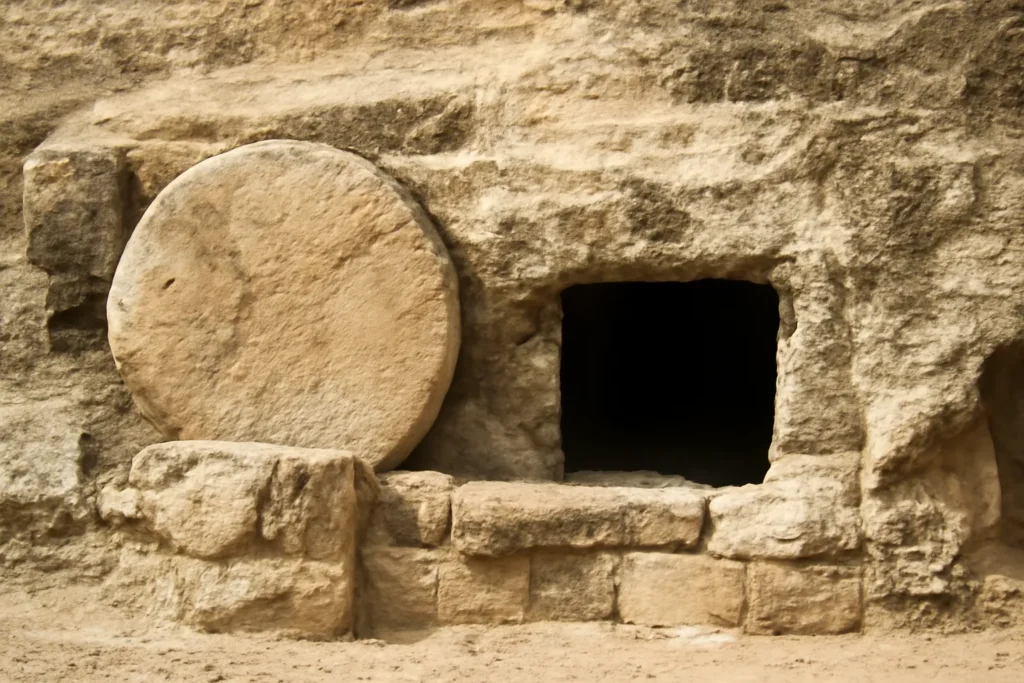
At its core, the concept of the empty tomb refers to the claim that the place where Jesus was buried was found without the body. The significance of this claim is not merely logistical; it is interpreted as a datum that gave rise to or reinforced beliefs about Jesus’ post-death experiences. When a monument, grave marker, or tombstone is empty, questions about what happened to the remains arise. In ancient Mediterranean burial customs, a tomb and the body within were considered not only physical remains but also markers of memory, status, and family lineage. Therefore, reports of an empty tomb were read by early followers as a sign that something extraordinary had occurred, triggering a shift in communal identity and mission.
Sources and the kinds of evidence involved
Evidence about the empty tomb appears in different textual genres and times. Broadly, scholars distinguish between what could be called descriptive reports, interpretive formulations, and liturgical or creedal expressions that reflect belief. The key sources include:
Gospel narratives that recount the discovery of the tomb and related events.
Pauline letters that preserve early confessional statements about the resurrection appearances.
Non-canonical writings and later apocryphal texts that reflect evolving beliefs and community memory.
Historical and cultural context that helps explain how tombs, guards, and Roman procedures could influence the reporting of an empty tomb.
Each type of source offers different kinds of evidence. The empty tomb claim in the four canonical Gospels—Mark, Matthew, Luke, and John—appears within a narrative framework that also emphasizes appearances, confessions, and commissions. Paul’s letters, written earlier than some of the Gospel texts, present a form of belief about Jesus’ resurrection that centers on appearances rather than an explicit tomb description. Interpreting these materials requires attention to genre, audience, and the social dynamics of early Christian communities.
Narrative patterns across the Gospel accounts
Across the canonical Gospels, the description of an empty tomb shares some features but also shows notable differences. These variations are often cited by scholars as evidence that multiple, independent traditions contributed to the overall portrait of the resurrection events. Some recurring elements include:
The discovery of the tomb by women followers, often named specifically (a feature that some scholars consider significant for historical plausibility given the cultural context).
The discovery involves an initial absence of the body, with the tomb reported as empty rather than as containing a visible resurrection appearance.
Subsequent post-discovery experiences include appearances of Jesus to individuals or groups, which are sometimes linked to the proclamation of a risen identity.
These patterns do not always align perfectly between the Gospels, which has led to a common scholarly approach that treats the Gospel accounts as complementary rather than perfectly harmonized narratives. The existence of multiple independent strands that converge on the idea of an empty tomb is considered by some scholars to lend credibility to the possibility that a real event or claim lay behind the stories, even if the exact details differ.
Historical and theological significance of the empty tomb narrative
For many readers, the empty tomb is not simply a historical datum but a fulcrum for theological interpretation. The discovery of the tomb empty, when read within early Christian communities, contributed to shifting understandings of Jesus’ fate and mission. Several dimensions of significance emerge:
Theological significance: The empty tomb is frequently interpreted as a sign of victory over death and as confirmatory evidence of Jesus’ divine identity or messianic role within Christian faith statements.
Christological implications: Reports of an empty tomb interact with accounts of appearances, helping to frame a belief in the continuity between Jesus’ earthly life and his exalted status.
Group identity and mission: The experience of the empty tomb and subsequent appearances often coincide with the formation of preaching, teaching, and missionary activity among early believers.
From a historical perspective, scholars weigh how the narrative context—who reported it, where the reports traveled, and how later communities used the story—contributes to understanding its function within early Christian memory. The empty tomb can be seen as a catalytic element that enabled belief in a transformed reality beyond the grave, which in turn helped anchor the movement’s hopes and practices.
Historical reliability and methodological considerations
Assessing the reliability of empty tomb evidence involves methodological questions rooted in ancient historiography. Important considerations include the following:
Source independence: The degree to which the Gospel writers drew on different traditions without colluding to present a unified account.
Early dating: Some scholars argue that Paul’s letters reflect belief in a risen Jesus prior to the Gospel writings, which can influence how the tomb narrative is interpreted.
Historical plausibility: Given burial customs and the social context, does the report of an empty tomb align with what would be expected, or does it require a different kind of explanation?
Literary design: The way the stories are structured—who reports what, how witnesses are named, and how later appearances are narrated—can inform our understanding of intention and audience.
Different scholarly approaches place different weights on the physical emptiness of a tomb versus the interpretive claims that emerged from the emptiness. Some researchers emphasize the importance of the empty tomb as a narrative catalyst that produced a sequence of appearances and creedal statements, rather than treating the tomb as a conclusively verifiable historical object.
Common explanations and how they are evaluated
Over time, several competing explanations have been proposed to account for the reports of an empty tomb. Evaluating these explanations requires weighing historical plausibility, coherence with the sources, and the broader patterns of early Christian belief. Below are some of the most discussed possibilities, with brief notes on their strengths and weaknesses.
The Swoon Hypothesis
This hypothesis suggests that Jesus did not die on the cross but suffocated or lost consciousness and later revived in the tomb. Proponents argue that a near-death experience could lead to later appearances. Critics note the Roman method of crucifixion and the means of execution, as well as the heavy guard and the severe tomb environment, which would complicate the possibility of a revival and subsequent public appearances.
Disciples Stole the Body
Another common proposal is that Jesus’ followers stole the body and produced claims of resurrection. Supporters point to the rapid emergence of belief and the transformation of the community. Critics highlight the practical difficulties of breaking a sealed tomb guarded by soldiers, the risk to the apostles, and the lack of consistent motive or long-term benefit to a stolen-body narrative in some early communities.
Post-Resurrection Appearances Driven by Visionary Experiences
Some scholars emphasize experiences reported by early believers, framed as appearances, as the core driver of belief rather than a public, physical event. This view suggests that what mattered most to early Christians was the perceived encounter with a risen Jesus, with the empty tomb serving as a symbolic or preliminary cue that made such visions plausible within the communal memory.
Legend or Myth-Formation Over Time
Another line of inquiry considers the possibility that the empty tomb narrative accrued over time through myth-forming processes within communities that desired to preserve a memory of Jesus. Critics of this view stress the early attestation of some form of resurrection claim within Paul’s letters and early creedal formulas, arguing that even if embellished, the core belief emerges from an authentic memory or experience rather than a later fabrication.
Evidence across early Christian memory and creedal formulas
Early Christian memory often expresses itself through creeds, hymns, and confessional formulas that summarize belief about Jesus’ death and resurrection. In many cases, the language surrounding the resurrection appearances is fused with interpretations about Jesus’ identity and purpose. This pattern has led scholars to examine how the empty tomb relates to these confessional statements. Some observations include:
Certain creeds emphasize the risen Christ appearing to witnesses, with the empty tomb often framed as part of the initial proclamation rather than the sole point of evidence.
Different communities remembered different details, suggesting that a shared core belief emerged from multiple, overlapping memories rather than from a single, uniform event.
Paul’s letters show that the proclamation of the resurrection was already a present reality within early Christian communities, sometimes without a detailed narrative of the tomb itself.
In this sense, the empty tomb evidence operates alongside the broader pattern of proclamation that centers on transformed experience, the conviction of a living presence, and the mission that followed. The relationship between the tomb’s emptiness and the theological claim of resurrection is thus best understood as a dynamic interplay between memory, interpretation, and proclamation in early Christian circles.
Non-biblical context and corroborative considerations
Beyond the canonical texts, several factors in the broader historical setting influence the discussion of the empty tomb evidence. These include burial customs in the Roman world, the role of women as first witnesses, and the political and social pressures that shaped religious movements in the first century. Consider these contextual elements:
Burial practices: In Roman and Jewish contexts, tombs were carefully prepared spaces for the body, and the handling of the body was governed by cultural norms. An empty tomb—if it occurred—would require an explanation that could be framed within those norms or challenged them.
Witness testimony: The Gospels highlight women as the first witnesses to the empty tomb in several accounts. In the ancient world, women’s testimony was not always given the same weight as that of men in a court setting, but the presence of women as the earliest witnesses has been taken by some scholars as an indicator of historical plausibility in certain contexts.
Guarded tombs and Roman security: The mention of guards and the fortification of tombs reflects a serious concern about tomb security. This detail raises questions about the logistics and the possible explanations for an emptied tomb.
These contextual observations do not settle the question of what happened, but they illuminate how the narratives functioned within their original milieu. They also help explain why various interpretations—ranging from literal emptiness to symbolic absence—made sense to different communities in antiquity.
Whether understood as a literal physical emptiness, a symbolic sign, or a rallying point for faith, the empty tomb narrative contributed to a powerful shift in early Christian life. Some of the key implications include:
Mission and preaching: The belief that Jesus had been raised and appeared to followers provided material for preaching that spread across the Mediterranean world.
Communal identity: The emergence of distinct Christian communities centered on the message of resurrection helped separate believers from broader Jewish or Greco-Roman religious circles.
Hope in suffering: The resurrection motif offered a framework for interpreting suffering, injustice, and death in a way that resonated with many who faced hardship.
These implications illustrate how the empty tomb evidence functioned as a catalyst for a religious movement that would later shape Western religious thought in enduring ways. The way communities interpreted the emptiness—whether as a physical event or as evidence of a transformed reality—mattered for the shape of their worship, ethics, and eschatology.
Scholars today approach the question of the empty tomb with a spectrum of cautious, evidence-driven methods and interpretive openness. Some researchers emphasize historical credibility by focusing on minimal, testable claims—such as the existence of an empty tomb in a particular location and the presence of certain witnesses. Others foreground theological interpretation, exploring how the empty tomb serves as a narrative device that supports faith claims within specific communities. Still others examine the convergence and divergence of early Christian testimonies to understand how a shared conviction emerged over time. This plural approach reflects a broader goal: to discern what is historically knowable about the tomb event while acknowledging the interpretive layers that have shaped its memory.
Readers who engage with the empty tomb evidence may benefit from a set of guided questions and criteria. These help distinguish what can be claimed with a degree of historical confidence from what remains interpretive or theological in nature. Consider the following approach:
Identify core claims: What is the essential assertion about the tomb—that it was found empty, that certain witnesses saw Jesus after death, or that a combination of events followed?
Assess source variety: Are there multiple independent attestations, or does the claim rest on a single source?
Evaluate chronology: How soon after events were the accounts written, and how might memory or tradition influence the reporting?
Consider cultural context: What burial customs or legal norms could affect how people interpreted or reported the events?
Differentiate levels of interpretation: Separate the description of events from later theological conclusions drawn from those events.
By applying these criteria, readers can better understand what the available evidence supports and where interpretive leaps might occur. This careful approach helps maintain a productive dialogue between historical inquiry and theological reflection.
Authors and scholars use a range of expressions to discuss the same core subject. Terms like tomb emptiness, grave absence, tomb discovery, and burial-site emptiness appear in different scholarly discussions. Recognizing this semantic variation is important because it signals different emphases—some discussions foreground the physical site, others the interpretive impact on faith communities. The diversity of phrasing also reflects the multifaceted nature of the topic, which sits at once in archaeology, literary criticism, theology, and history.
For educators and students, the topic of the empty tomb translates into several learning objectives:
Understand the basic claims associated with the tomb’s emptiness and the origins of Christian belief in the resurrection.
Explore how different sources—Gospels, letters, and later writings—contribute to a composite memory of events.
Examine how historical methods assess reliability, while appreciating the boundaries between history and faith claims.
Analyze how cultural context influences the way ancient communities narrated the events and how those narratives functioned in communities’ self-understanding.
Readers should understand that the archaeological and textual record surrounding the empty tomb does not yield a single, definitive empirical fact in the sense modern science might demand. Instead, it provides a set of interrelated elements that together inform our understanding of early Christian belief. The practical takeaway includes:
There is a recognizable pattern of reports about an empty tomb in early Christian literature that coincides with subsequent proclamation and appearances beliefs.
The strength of the evidence depends on how one weighs textual independence, historical plausibility, and the social function of these reports within early Christian communities.
Different scholarly approaches can yield complementary insights when they acknowledge both the historical texture and the interpretive layers embedded in the narratives.
The discussion of empty tomb evidence invites ongoing exploration rather than a final, absolute verdict. It challenges readers to consider how ancient faith communities conceptualized events surrounding Jesus’ death and believed in a transformed reality that they described in various ways. For students of history and theology alike, the subject remains a fertile ground for inquiry: it asks not only what happened, but how memory, interpretation, and community formation give shape to what counts as evidence in different ages.
In sum, the discourse around the empty tomb is a window into how early Christians perceived Jesus’ death and resurrection, how they shared that belief, and how later generations have read those earliest narratives. Whether approached as a historical puzzle, a theological claim, or a combination of both, it remains one of the most studied and debated topics in biblical studies, with implications that extend into modern discussions about faith, evidence, and the interpretation of ancient texts.










Leave a Reply