Burial of Jesus in the Tomb: Historical and Theological Perspectives
Burial of Jesus in the Tomb: Historical and Theological Perspectives
The burial of Jesus in the tomb sits at the intersection of history, memory, and theology. It is a topic that scholars approach from multiple angles: as a report in ancient sources, as a cultural practice in first-century Judea, and as a foundational symbol for Christian faith. Understanding the entombment of Jesus requires looking at the historical setting, the gospel narratives, and the larger theological claims that early communities drew from the event. In many Christian traditions, the interment of Jesus is not merely a narrative episode but a lens through which the meaning of his life, death, and ongoing significance is interpreted. This article surveys the burial of Jesus in the tomb, offering historical and theological perspectives, and tracing how the story has been read and re-read across two millennia.
Historical context and burial customs in first-century Judea
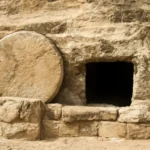
To grasp the burial of Jesus in the tomb, it helps to situate it within the cultural and religious practices of Second Temple Judaism and the broader Mediterranean world. In this period, most families used family tombs carved into rock or cut from local stone. These are commonly described as rock-cut tombs or sepulchers that could house multiple family members. The practice was not only about marking a grave but establishing a secure place for ongoing memory and ritual. The tomb was typically sealed with a stone, which was rolled into place to block the entrance. The site often reflected social status and wealth, since family tombs could require substantial labor and resources to construct and maintain.
Burials were traditionally followed by a period of ritual preparation. In the cultural milieu of Jesus’ time, to anoint a body with spices and oils was a common act to honor the deceased and preserve the body. The use of spices and alabaster jars was a notable practice in several burial rites. The act of anointing, sometimes performed by women or close followers, signified respect and devotion and connected the deceased with biblical motifs of righteous figures who are buried with care. However, the timing of these preparations was constrained by the weekly Sabbath, which began Friday evening and concluded Saturday evening. Thus, some rites were rushed or adjusted to comply with Sabbath observance, adding urgency to the Friday preparations and shaping the narrative around the arrival of the Sabbath.
The region’s political and religious authorities also influenced how burials were conducted. A prominent figure such as Joseph of Arimathea—described in the gospel accounts as a member of the Sanhedrin who is portrayed as a secret disciple of Jesus—emerges in the burial story as a man of wealth who provides his own tomb for Jesus. This act would have carried social and religious weight in the community. The involvement of a respected elder or official in arranging the interment would have lent legitimacy to the burial and allowed for a formal and honorable interment that aligned with Jewish expectations, even as Jesus’ followers were contending with the political implications of his crucifixion.
In addition to the immediate participants, the feet of the burial narrative are shaded by readers’ awareness of the broader messianic expectations of the period. Some first-century Jews anticipated a servant figure who would suffer, be buried with the righteous, and be vindicated by God. The burial of Jesus, then, can be read within a framework of foreshadowing or fulfillment—where the manner of interment resonates with prophetic texts and with the early Christian claim that the Messiah would undergo a form of suffering that culminates in a unique form of life beyond death.
Gospel accounts: a survey of the burial narrative
Each of the canonical gospels offers a narrative about the burial of Jesus in the tomb that shares core elements yet also exhibits distinctive emphases. Put together, the four accounts provide a composite portrait of the entombment, the sealing of the tomb, and the response of those who came to honor him. Writers employing different literary aims and theological concerns shaped the details to highlight particular truths about Jesus’ mission and the dawn of new possibility through resurrection.
Mark: the entombment and the tomb’s sealing
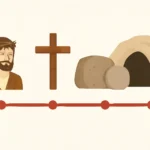
In the Gospel of Mark, the burial of Jesus occurs after the crucifixion and just before the Sabbath begins. A central figure is Joseph of Arimathea, who retrieves the body, places it in a tomb he has hewn out of rock, and rolls a stone across the entrance (Mark 15:42-47). The narrative emphasizes the suddenness of events and the care given to Christ’s body, but it also notes the political and social tensions surrounding Jesus’ death. On the first day of the week, several women who have followed Jesus come to visit the tomb and find the stone rolled away and the tomb empty. Mark’s version is notable for its abrupt ending in many manuscripts, with the women fleeing in fear and saying nothing to anyone because they are afraid (Mark 16:1-8). This open-ended conclusion has prompted extensive scholarly discussion and creative interpretation over the centuries, as early Christian communities sought to explain the meaning of an empty tomb and the subsequent appearances of the risen Jesus.
Matthew: a more triumphant tomb narrative with an angelic visitation
Matthew provides a complementary portrayal that blends concrete detail with symbolic elements. Like Mark, Matthew records Joseph of Arimathea’s act of burial and the placement of Jesus’ body in a rock-cut tomb, with a stone sealing the entrance (Matthew 27:57-61). However, Matthew adds an angelic visitation after the women arrive, declaring that Jesus has risen and instructing the disciples to go and tell the brothers to go to Galilee, where they will see Jesus (Matthew 28:1-7). The narrative emphasizes divine intervention and fulfillment of scripture, casting the burial and the subsequent resurrection as a triumph over death foretold by prophecy. The women’s experience thus becomes a prelude to a larger revelation of Jesus’ ongoing presence and power.
Luke: emphasis on consent, ritual fidelity, and the dawn of the resurrection narrative
Luke presents the entombment with a focus on the generosity of a respected man (Joseph of Arimathea) and on the faithful adherence to religious law, as the women observe the Sabbath according to commandment and then prepare spices to anoint the body (Luke 23:50-56). In Luke, the women who come to the tomb later encounter angels who explain that Jesus has risen, and they report the news to the apostles. Luke’s account foregrounds the continuity between Jesus’ life, his death, and the dawning realization among Jesus’ followers that something unprecedented has occurred. The narrative underlines the communal dimension of belief formation—the way small groups and witnesses become sources of memory, proclamation, and faith for the early church.
John: a closely observed burial with unique details and personal connections
John offers distinctive features in the burial scene. He emphasizes the role of Nicodemus, a Pharisee who brings a mixture of myrrh and aloes for the interment, and he notes that the body is placed in a tomb near the place of crucifixion (John 19:38-42). John’s account stresses a personal and intimate approach to burial, highlighting the care given to Jesus’ body and the proximity of the tomb to Golgotha. The inclusion of Nicodemus mirrors John’s broader emphasis on dialogue with individual figures who encounter Jesus in meaningful ways. John’s gospel also frames the tomb scene as the site where readers will encounter the risen Christ, inviting an encounter that moves from burial to belief in the resurrection.
While each gospel has its own voice, together they present a coherent narrative thread: Jesus dies, his body is laid in a tomb, a stone is sealed at the entrance, and a group of followers arrives at the tomb on the first day of the new week to find the tomb empty and to hear reports of resurrection appearances that signal new life beyond death.
The roles of Joseph of Arimathea and Nicodemus
Two figure types recur across the burial narratives: Joseph of Arimathea and Nicodemus. Joseph is portrayed as a member of the Sanhedrin who acts with courage and compassion, requesting Jesus’ body and offering his own tomb. In this way, burial in Joseph’s tomb becomes a gesture of reverence and social legitimacy at a moment of political and religious crisis. Nicodemus appears most clearly in the John’s version of the story, where he assists with the anointing of Jesus’ body and helps prepare the body for entombment in a tomb that would accommodate a thorough embalming by spices. Together, these figures illustrate that the burial was not merely a private act but a moment saturated with public moral meaning, ecclesial significance, and implications for the community’s memory of Jesus.
In the broader significance of these figures, the burial narrative can be read as a portrayal of discipleship in action. The willingness to provide resources, to risk social standing, or to participate in ritual acts of care—these are framed as steps in a response to Jesus’ call, even in the context of a crucifixion that could easily discredit followers. The interment thus becomes a doorway into the resurrection story, a bridge from death to life that early Christians saw as God's decisive act in history.
The Sabbath, spices, and the preparation of the body
Several consistent motifs recur in the burial of Jesus: the quick end of the crucifixion, the need to honor the body swiftly, and the Sabbath’s constraining rhythm. The Friday crucifixion places Jesus’ entombment within a tight schedule. To avoid violating the Sabbath, the initial handling of the body must be completed promptly, and the spices and perfumes for anointing are arranged around the Sabbath limit. The women’s plan to anoint the body the following day reflects both fidelity to ritual custom and a longing to honor the figure they believed to be the Messiah. The early Christian community’s emphasis on the women’s role at the tomb has been noted by scholars as a striking feature that elevates the status of female witnesses in the earliest Christian memories of the burial and the resurrection.
Materially, the spices used—myrrh and aloes or other fragrant preparations—were part of a traditional practice of preparing the body for burial. These elements carry symbolic weight: they signal devotion, memory, and the late-stage preparation of a body for the tomb. The use of a tomb that is new and unused—one not previously occupied—further emphasizes the significance of the event, marking Jesus as someone whose death and interment call forth a new chapter in the narrative of God’s redemptive work in the world.
One of the most dramatic elements of the entombment in the gospel narratives is the stone—literally a barrier to access and symbolically a barrier to understanding. The stone’s rolling away becomes a sign not merely of physical discovery but of revelation: the tomb is opened to reveal that Jesus is not there in the way that people expect. The women who approach the tomb in all four gospels are presented as brave, faithful, and compassionate followers, whose witness becomes a seed for the proclamation of the resurrection. In some versions, the tomb’s interior appears empty, while in others, angels or figures announce that Jesus has risen. These variations reflect different theological aims—some emphasize divine revelation, others emphasize the witnesses’ call to proclamation, and still others focus on the continuity between Jesus’ life, death, and new life beyond death.
Conceptually, the tomb also presents a space where memory and future hope intersect. To encounter the empty tomb is to encounter a claim about life beyond death, about God’s power to renew creation, and about the cosmic significance of Jesus’ mission. The entombment thus becomes a pivot point that shifts from grief and mourning to astonishment, faith, and evangelistic proclamation.
Theologically significant readings: death, burial, and resurrection
From a theological perspective, the entombment of Jesus has several key implications that theologians and church traditions have explored for centuries. The burial in the tomb is read in light of prophecy, messianic expectations, and the broader scriptural arc that recognizes suffering, death, and then restoration as integral to God’s plan. Several threads stand out:
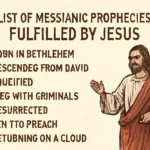
Fulfillment of prophecy: The burial scene is interpreted by many as a fulfillment of biblical passages that describe the righteous suffering and burial of the servant of God, including the idea that the Messiah would be numbered among the wicked but would receive a place with the rich in his death (a theme alluded to in prophetic texts such as Isaiah 53 and echoed in the gospel writers’ rhetoric).
Righteousness and mercy: The act of placing Jesus in a tomb and the care shown in his interment highlight a pattern of mercy toward the vulnerable, especially given the social stigma surrounding crucifixion and its association with shame for those who died in this manner.
Transition from death to life: The tomb functions as a space of transition—from a death that appears definitive to a life that Christians would claim as the resurrection appearances. The entombment foreshadows the belief that God’s power is at work beyond the limits of death.
Covenant faithfulness and witness: The involvement of Joseph of Arimathea and Nicodemus casts the burial as an act that endorses Jesus’ ministry and signals to the early church that discipleship may require risk and fidelity even in the face of political danger.
Foundational memory for the church: The burial narrative becomes a memory that anchors the church’s preaching and liturgy. The physical tomb, the stone, and the subsequent empty tomb become symbols through which the community remembers and proclaims the promise of life beyond death.
From a theological vantage point, the entombment is not merely a historical footnote but a decisive moment that shapes early Christian identity, ritual practice, and the interpretive lens through which Jesus’ mission is understood and proclaimed.
Historical-critical perspectives and debates
Scholars approach the burial narrative from multiple angles, including textual criticism, historical context, and literary analysis. Some debates center on questions such as:
Historical core vs. literary invention: How much of the burial scene reflects historical memory from the first generation of Jesus’ followers, and how much is shaped by later theological agendas? Most scholars acknowledge a historical core—Jesus’ crucifixion and a burial in a tomb provided by Joseph of Arimathea—while recognizing that the gospel writers framed the narrative for faith formation and proclamation of the resurrection.
Differences among the gospel accounts: The variations in who witnesses the empty tomb, the presence or absence of angels, and the precise sequence of events point to distinct narrative aims. Harmonization attempts have ranged from seeking a single chronological timeline to acknowledging a multi-layered account that preserves core facts while allowing for varied emphasis.
The role of women as witnesses: The prominence of women at the tomb in all four gospels is a striking feature that modern scholarship often underscores as a marker of historical memory and fidelity to early Christian communities’ experiences, while also inviting reflection on how gender and authority function in ancient Mediterranean cultures.
These discussions do not reduce the burial of Jesus to a simple historical reenactment. Instead, they illuminate how early communities used the interment to articulate who Jesus was, what his death meant, and how God’s power is made evident in the face of human vulnerability and political threat.
Differences among the Gospel narratives and how scholars approach them
The four canonical accounts share a recognizable thread but differ in details that matter for interpretation. Some of the notable contrasts include:
In Mark, the narrative centers on fear and an abrupt ending that invites readers to consider the reaction to the news of the resurrection.
In Matthew, an angelic figure appears, emphasizing miraculous intervention and the fulfillment of prophecy.
In Luke, the emphasis falls on fidelity to commandments (the Sabbath) and the role of women as credible witnesses who spread the message to the disciples.
In John, the presence of Nicodemus and the logistical details around burial offer a more intimate portrait of interment and care for Jesus’ body.
Scholars often use these variations to illustrate how early Christians navigated the same core event while promoting different theological horizons—such as the expectation of resurrection, the confirmation of Jesus’ messianic vocation, and the continuity of Jesus’ mission with the faith of the people who followed him. The result is a rich tapestry of memory that supports a robust, multi-faceted understanding of the burial and its significance for faith communities.
Impact on Christian faith, liturgy, and art
The burial in the tomb has left a lasting imprint on Christian worship, theology, and culture. Key implications include:
Liturgy and creed: The burial, especially in conjunction with the resurrection, informs readings, creedal formulations, and the way the church narrates salvation history. The entombment and subsequent resurrection became central to the confession that Jesus conquered death and opened a path to new life for believers.
Art and iconography: The scene of the entombment, the rolling of the stone, and the dawn appearance of the risen Jesus has inspired centuries of art, music, and drama. These depictions translate the theological claims into visual and auditory forms that shape popular understanding and devotion.
Devotional practice: Meditations on the burial and resurrection guide personal devotion, inform penitential liturgies, and shape ecumenical dialogues about the meaning of life, death, and hope in the Christian story.
Across traditions, the entombment of Jesus remains a pivotal moment that invites contemplation about what it means to be faithful in the face of loss, to honor the dead, and to trust in the possibility of new life that transcends earthly boundaries.
Interpreting the entombment in a modern context
For readers today, the burial in the tomb invites a set of reflective questions that connect ancient practice to contemporary faith and ethics. Some questions might include:
How does the act of interment in a tomb reflect values such as dignity, care for the vulnerable, and respect for the dead in different cultures?
What does the role of women witnesses at the tomb teach about gender, memory, and trust in religious communities?
In what ways does the entombment narrative challenge or support conversations about power, suffering, and divine intervention in the modern world?
How does the concept of an empty tomb function in a pluralistic religious landscape that seeks to understand meanings beyond death?
These questions show that the burial of Jesus in the tomb is not confined to a single interpretive frame. Instead, it offers a dynamic site where history, faith, memory, and society intersect, continuing to shape theological reflection and ethical discourse in diverse contexts.
Conclusion without a heading: a reflective synthesis
The entombment of Jesus forms a compact but potent chapter in the larger narrative of Christian faith. It is at once an act of historical memory—the careful handling and interment of a crucified figure—and a moment charged with theological significance that points toward the mystery of resurrection. The different gospel portraits—Mark’s stark brevity, Matthew’s prophetic triumph, Luke’s ethical hospitality to the dead, and John’s intimate care with Nicodemus—together shape a robust, multi-layered account of how early communities experienced the end of Jesus’ earthly life and the dawning of a new reality. The burial of Jesus in the tomb thus stands as a hinge in the Christian story: it anchors faith in a concrete historical event while opening a transformative vision of life, hope, and divine power beyond the limits of death.
In studying this topic, readers encounter more than an ancient narrative about a tomb and a stone. They encounter a human story of devotion, risk, and reverence; a civic story about how communities respond to crucifixion with care and memory; and a theological story about God’s action in history to redeem and renew creation. The burial of Jesus in the tomb continues to invite readers to ponder questions about life, justice, and the hope that encircles the Christian proclamation of resurrection.





Leave a Reply