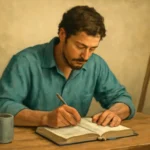
In the conversation between art and faith, scripture often acts as a studio light—revealing form, color, and purpose in equal measure. The idea of an “arts bible verse” or a curated set of inspiring passages for art, faith, and creative expression invites artists to see their work as more than technique, more than a product, and more than personal taste. It invites a posture: to steward talent as a gift, to seek beauty as a reflection of the Creator, and to cultivate meaning that helps others glimpse the divine through color, texture, metaphor, and line. This article surveys some of the most resonant biblical ideas for artists and makers, explains how these verses have shaped artistic movements through history, and offers practical guidance for incorporating sacred passages into daily practice, studio rhythms, and collaborative projects.
Many artists sense a calling that resembles a vocation: a responsibility to train the eye, discipline the hand, and translate inner vision into tangible form. The Bible speaks of skills and artistry as not merely human talents but as divine gifts that can be honed for the good of others and for the glory of God. When we talk about arts bible verse, we are highlighting passages that encourage excellence, responsibility, and a reverence for beauty within the framework of faith. These verses do not reduce art to a sermon, nor do they ante up a formula for every creative choice; instead, they offer a vocabulary for recognizing beauty, stewarding talent, and inviting others into a conversation about truth, wonder, and meaning through art.
Bezalel, Oholiab, and the sacred craft
One of the most cited biblical anchors for artist-craftsmen is the story of Bezalel and his companions, who were endowed with the Spirit of God for cunning workmanship in gold, silver, brass, wood, stone, and fabric. This divine empowerment shows artistic competence as a spiritual gift with vocational purpose—to craft sacred objects, design the tabernacle, and cultivate an atmosphere of worship through beauty. For painters, sculptors, designers, and digital artists alike, the Bezalel motif functions as a reminder that skilled craft can become an offering.
What this implies for modern artists
Vocational identity: Creative work can be pursued with intention, not merely as a hobby, but as a disciplined practice with a higher aim.
Spirit-led artistry: Inspiration can be understood as a form of discernment—seeing what is true and beautiful and translating that insight into form.
Craft as worship: The process of making can become a disciplined practice that orients the maker toward gratitude, humility, and service.
The opening chapters of the Bible present a comprehensive account of creativity: God’s acts of forming, filling, naming, and declaring good. The narrative of creation as an artistic act invites artists to read their own work within a larger arc of beauty and order. It affirms that beauty matters to God and that human beings are invited to participate in the ongoing act of making a world that reflects order, goodness, and awe. The idea that humans are created in the image of God (the divine template for personhood) has long inspired visual artists, writers, musicians, and designers to explore how image-bearing translates into creative voice and tangible form.
Art can become a language for seeing and declaring what is true about the world and about our place within it.
Creativity is not simply self-expression but a response to a God who designed structure, rhythm, and harmony.
We are invited to pursue excellence and to treat materials, time, and community with respect—each decision shaping a larger narrative of beauty.
Scriptures that speak to craft, worship, and beauty
Across the biblical canon, several passages repeatedly surface in conversations about art, beauty, and creative work. The following verses are often cited by artists and theologians for meditating on the relationship between faith and artistic practice. They are presented here with paraphrased meaning to emphasize how they can inform a modern studio life and gallery strategy.
Exodus 31:3-5: The Spirit of God empowers skill and craftsmanship to create sacred objects. This passage invites artists to view technical mastery as a conduit for greater purposes beyond aesthetics.
Genesis 1:26-27 and Genesis 2:7: Humans created in the image of God and formed with intention—implying that creativity is a divine signature carved into human nature.
Psalm 19:1, Psalm 33:3, and Psalm 96:6: Creation itself proclaims God’s glory; art that engages the senses can become a vessel for praise and revelation.
Psalm 150: A call to praise with music, dance, and instruments—illustrating how artful expression functions as worship.
Colossians 3:23-24: In all you do, work heartily as for the Lord; art that serves others can be a spiritual discipline and a gift back to the Creator.
Romans 12:4-8 and 1 Corinthians 12:4-11: The body has many gifts; creative strength arises from diverse forms of grace given to the community for mutual edification.
Isaiah 64:8 and Romans 9:20-21: Clay and potter imagery that speaks to being shaped by a master designer, inviting humility and trust in the process.
Colossians 3:16 and 2 Timothy 3:16-17: The word and wisdom of God dwell in us as we teach, exhort, and foster growth—art becomes a vehicle for education and transformation.
Ecclesiastes 3:11: God makes everything beautiful in its time; the artistic journey can reflect patient shaping and anticipation of beauty’s arrival.
Art as worship: creating with intention
Artistic expression can be a form of worship when it is sustained by intention, gratitude, and service. The Psalms offer a model in which creative worship is not limited to liturgical spaces but infused into everyday life—crafting a painting, composing a piece, or designing a public mural becomes a way of praising and honoring the Creator. In the temple, music and artistry converged to create an atmosphere where the divine could be encountered; in our day, studios, galleries, and stages become analogous spaces for encounter—where viewers engage the work and are invited into contemplation, wonder, and perhaps transformation.
Practical ways to practice worshipful artistry
Set aside dedicated practice time for craft with a posture of gratitude and desire to serve others.
Incorporate spiritual disciplines into the studio routine—scripture reflection, contemplative listening, or prayer before beginning a session.
Collaborate across disciplines—music, dance, performance, and visual art can intersect to create holistic experiences of beauty.
Use sacred texts as prompts for imagery, color, and composition to explore meaning and evoke memory.
Gifts of the Spirit and creative expression
The New Testament describes a diverse array of spiritual gifts that can support creative communities and artistic endeavors. While not every gift is strictly «artistic,» many gifts—such as wisdom, knowledge, interpretation, faith, and exhortation—can inform how artists conceive projects, critique work, and engage audiences. The sense that spiritual gifts operate through a communal body mirrors how artistic practice benefits from collaboration, critique, mentorship, and shared vision.
Historical and theological threads that shaped art and faith
Across the centuries, artists have braided biblical motifs with their practical craft, producing masterpieces that anchor faith communities and reach wider audiences. The medieval cathedrals, the Renaissance workshops, and contemporary galleries each reflect a long-standing conviction: art can mediate truth, reveal beauty, and invite contemplation. The arts bible verse tradition—drawn from both the Old and New Testaments—has informed artists about purpose, discipline, and the moral imagination. Even when a given verse is not about art directly, its themes—order, intention, reverence, and wonder—are readily translatable into creative practice.
Modern implications: translating ancient verses into studio life
For today’s artists, scripture can be a living instrument rather than a static set of rules. The following applications demonstrate how ancient verses translate into contemporary studio life, curatorial decisions, and public engagement.
Purpose-driven practice: Work with a clear intention that aligns with a larger ethical or spiritual aim, not merely personal gratification or market success.
Stewardship of materials: Treat resources with care, echoing the reverence shown in sacred spaces for precious metals, textiles, and sound.
Community-centered projects: Create with and for a community, inviting dialogue, feedback, and shared meaning.
Faith-informed critique: Evaluate artwork not only by aesthetics but by how it communicates truth, goodness, and beauty.
Verse-centered practice: practical steps for artists
Below is a practical framework that artists, designers, musicians, and writers can adapt. It integrates arts bible verse themes into a repeatable routine, encouraging a rhythm of creation, reflection, and rest.
Start with a verse: Select a passage that resonates with your current project or season. Write a brief reflection on how its themes relate to your work.
Set an intention: Translate the reflection into a concrete studio intention for the day or week (e.g., «work toward harmony of color and texture,» or «practice listening to the material’s voice»).
Practice with discipline: Allocate focused blocks of time for study, sketching, or experimentation—much like craftsmen of old dedicated hours to learn and refine.
Share and receive feedback: Present work to peers or mentors and explore how the verse-informed intention is perceived in others’ eyes.
Reflect and adjust: After completing a piece or project, revisit the verse and assess how well it guided choices, what surprised you, and what to carry forward.
Projects and prompts: verse-inspired creative exercises
Engaging with the Bible in a hands-on way can yield compelling, reflective art. Here are several prompts that pair creative prompts with biblical themes.
Bezalel-inspired project: Create a piece that showcases craftsmanship and meticulous attention to detail. Document your process from concept to finish, emphasizing the decision points where skill and intention intersect.
Creation suite: Produce a series of works—paintings, prints, or sculptures—that interpret Genesis 1–2 through color, texture, and form. Consider how light and order emerge in each composition.
Gateways of worship: Design a small installation or mixed-media piece for a worship space that uses sound, color, and space to evoke praise, drawing on Psalm 150 as a sonic and visual model.
Gift and community: Organize a collaborative project where multiple artists contribute different media to a single piece or installation, reflecting Romans 12:4-8 on diverse gifts serving a common goal.
Word as image: Take a single biblical verse and translate its imagery into a visual form—typography, illustration, or abstract sculpture—emphasizing the relationship between word and image.
Case studies: how artists have woven the Bible into their practice
Throughout history, artists have drawn on biblical verses to shape their creative trajectories. While each artist brings a unique voice, several common patterns emerge: a reverence for craft, a devotion to meaning beyond aesthetics, and a desire to invite viewers into a space of contemplation.
Case study A: a painter exploring divine creativity
A contemporary painter selects passages about God as Creator and explores them through layered textures that gradually reveal a “landscape of creation.” The verses guide color choices—cool dawn tones for order, warm tones for vitality—and the process emphasizes patience and deliberate layering, echoing the patient work of divine design.
Case study B: a photographer and the image of God
A photographer uses Bezalel’s example of skill as a springboard for a project about light, shadow, and form. By curating a portfolio that emphasizes precision, care for detail, and the beauty of ordinary things, the photographer invites viewers to notice the sacred in everyday scenes.
Case study C: a musician composing in community
A musician-led ensemble crafts pieces that interweave text from Psalm 150 with instrumental rituals. The project becomes a living example of the verse that praises God with every instrument and every voice, illustrating how worshipful art can foster unity, invite participation, and communicate awe.
Common questions about arts, scripture, and creativity
Artists often ask how to reconcile artistic ambition with spiritual commitments. Here are answers to questions that frequently arise in studio conversations.
Is art a sin if it does not convey explicit religious messages? Art can be a language of beauty, truth, and human experience, which in itself can be a form of spiritual reflection; the Bible often values beauty that leads people toward wonder and exploration of meaning.
How do I balance technical craft with spiritual intention? Treat skill development as a form of stewardship. Allow the craft to become a discipline that frees you to communicate more clearly and generously.
What about critique in faith-based art communities? Healthy critique honors both skill and intention. It helps artists grow in craft while remaining attentive to the message and purpose of the work.
Conclusion: embracing a holistic vision of arts and faith
The conversation about arts bible verse inspiration centers on a holistic vision where creativity, worship, and community enrich one another. The scriptures remind us that art can be a divine-human collaboration—an intersection where talent is cultivated, beauty is pursued, and truth is made present in tangible form. Whether you are a painter, designer, musician, writer, or interdisciplinary artist, the Bible offers a reservoir of motifs and prompts that can deepen your practice, broaden your audience, and nurture your own soul. By embracing verses about creation, vocation, and communal gifts, artists can cultivate a studio life that is not only technically excellent but also morally attentive, spiritually aware, and aesthetically compelling.
Glossary of key terms and phrases
Divine inspiration: The belief that creative energy comes from a source beyond the self, inviting humility and gratitude in the process.
Creative vocation: A sense that artistic work is a calling with purpose beyond personal fulfillment or market success.
Image-bearing: The biblical idea that humans reflect God’s image in creation and relationships, shaping how we approach art and life.
Worship through art: The practice of expressing reverence for God through the arts, whether in private studio sessions or public performances.
Gifts of the Spirit: Diverse abilities given to believers for building up the community, including wisdom, knowledge, and encouragement that can inform creative work.
Stewardship: Managing resources, time, and talent with responsibility and gratitude, honoring the source of one’s gifts.
As you move forward in your own artistic journey, consider placing a few biblically rooted prompts at the center of your practice. Open a notebook with a chosen verse, let it influence your palette, your composition, or the tempo of your studio day, and invite others into your process. In doing so, you participate in a long-standing tradition that treats art not solely as a commodity or spectacle but as a meaningful conversation about truth, beauty, and the ways in which human hands cooperate with the divine purpose of creation.

 Por Laura Jara