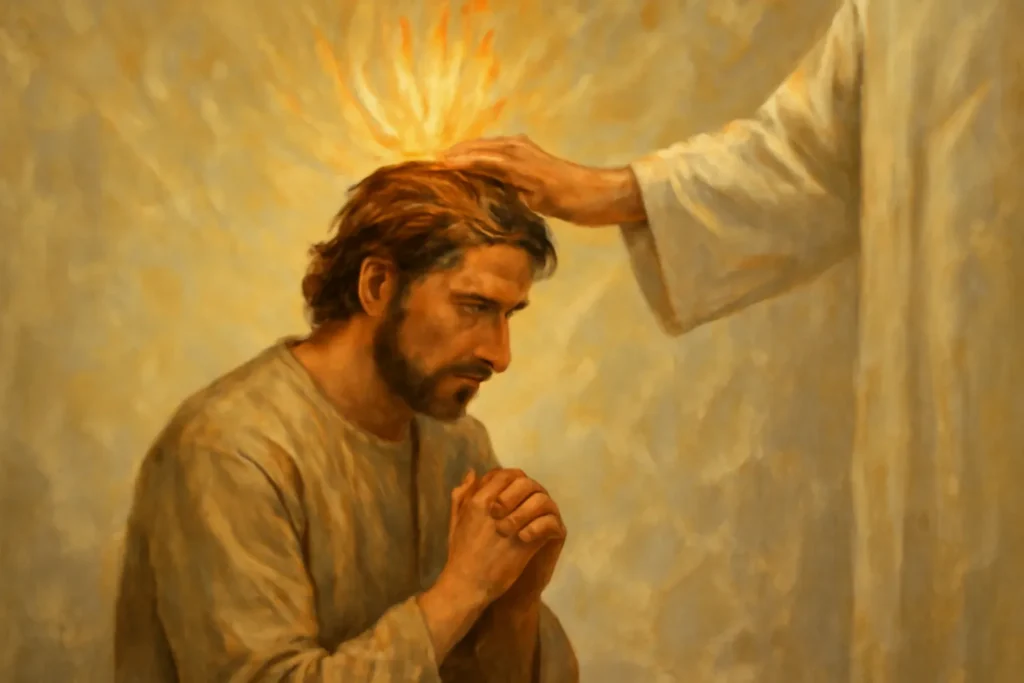
The phrase anointed with the Holy Spirit communicates a divine empowerment that comes from the presence and activity of God the Spirit in a person’s life. In biblical language, to be anointed is to be set apart, commissioned, and equipped for a particular purpose. When believers speak of the anointing, they often mean more than feeling inspired or morally uplifted; they refer to a tangible, ongoing work of God that enables a person to live in alignment with God’s will and to fulfill a unique calling.
Across Christian traditions, there are variations in emphasis and experience, but a common thread runs through most teachings: the Holy Spirit’s anointing marks a transition from human effort to divine enablement. This unction of the Spirit is not simply a momentary sensation; it is an ongoing relationship in which God provides gifts, wisdom, courage, discernment, and power for service, mission, and daily living.
When we speak of being set apart by the Spirit, we are not identifying a single event alone. The biblical idea of anointing often encompasses:
Divine commissioning for a specific task or mission
Spiritual empowerment to endure trials and to witness boldly
Gifts and fruits that manifest God’s character and power in practical ways
Continuous guidance through inner conviction and external circumstances
In many Christian communities, the phrase also carries the sense of a person’s life being permeated by God’s presence in such a way that others can see or sense the shift from self-reliance to reliance on divine help. The Holy Spirit’s anointing is always oriented toward God’s glory and the good of others, not merely personal advantage.
Key distinctions: anointing, baptism, and indwelling
It is helpful to distinguish among several related concepts that often appear together in Christian teaching:
Baptism with the Holy Spirit or the Spirit baptism, traditionally understood as a significant initial pouring out of the Spirit, sometimes associated with public affirmation and empowered witness (as described in Acts 2).
Indwelling of the Holy Spirit, which refers to the Spirit’s permanent presence within a believer from conversion onward.
Filling of the Holy Spirit, which connotes ongoing reception of Spirit-enabled power and guidance for daily obedience and ministry.
Anointing for ministry, the specialized or personalized impartation that equips a person for particular tasks, offices, or callings.
Biblical Basis for the Anointing with the Spirit
The concept of being anointed by the Holy Spirit rests on a robust biblical foundation that spans both the Old and New Testaments. In the Old Testament, anointing with oil symbolized setting someone apart for sacred service. In the New Testament, this symbolism is fulfilled and intensified by the Spirit’s presence and activity in believers.
In ancient Israel, oil represented consecration, favor, and empowerment. Kings, priests, and prophets were anointed with oil to signify God’s commissioning. Although the act was physical, it pointed to a deeper reality—the Spirit of God enabling a person to fulfill a God-given role.
The anointing of Samuel’s anointing of Saul and later David foreshadows a greater, Spirit-led leadership that would emerge in fulfillment of God’s purposes.
Prophetic anticipation of a future anointing that would come upon all who fear the Lord is found in prophetic passages like Isaiah 11 and Joel 2, which speak of a time when God’s Spirit would be poured out broadly and generously.
New Testament realization: the Spirit upon and within
In the New Testament, the Holy Spirit is depicted as the immediate, dynamic presence of God with believers. Key texts describe Jesus’ baptism with the Spirit, the outpouring at Pentecost, and the ongoing experience of being filled with or anointed by the Spirit for service.
Acts 2 describes the outpouring of the Spirit and the bold proclamation of the gospel by the earliest followers, who were visibly empowered for witness and service.
1 Corinthians 12–14 outlines a spectrum of Spirit-given gifts (charisms) and their proper use within the community, illustrating how the Spirit’s anointing equips believers for ministry and edification of others.
Romans 8 highlights the Spirit’s role in transforming believers’ lives, producing the fruit of the Spirit as evidence of divine influence.
Signs That You Are Anointed with the Holy Spirit
Recognizing the anointing can be described in terms of observable changes, inner experiences, and outward effects. It is important to note that the Holy Spirit works in diverse ways, and not every believer will exhibit all the same signs. The presence of genuine fruit and love for God and others is a foundational marker of authentic anointing.
Inner transformation and life orientation
Changed desires and a shift toward godliness, humility, and compassion.
Conviction of sin leading to repentance and renewed dedication to Christ.
Increased longing for prayer, Scripture, and worship as daily habits become more central.
Boldness, witness, and mission orientation
Boldness to share the gospel in challenging contexts or with courage that exceeds natural temperament.
Discernment of truth and a heightened ability to distinguish good from evil, as the Spirit guides conscience and judgment.
Love in action displayed through serving the marginalized, encouraging believers, and pursuing justice.
Spiritual gifts and empowered service
Gifts of the Spirit such as prophecy, teaching, healing, wisdom, knowledge, faith, and miracles present for the building up of the church (as described in 1 Corinthians 12–14).
Ministerial efficacy where the Spirit enables effective ministry in preaching, exhortation, or leadership beyond human capacity.
Creative or extraordinary signs that may manifest in particular settings, always evaluated by Scripture and community accountability.
Fruits of the Spirit and community life
Fruit of the Spirit—love, joy, peace, patience, kindness, goodness, faithfulness, gentleness, self-control (Galatians 5:22–23)—often accompany genuine anointing as a person embodies Christlikeness.
Harmonious community impact where relationships are restored, conflicts resolved, and mutual edification occurs through the Spirit’s influence.
Steadfast perseverance even under trial, showing trust in God’s purposes and a steadfast hope in promises.
Promises Associated with the Anointing
The Bible presents rich and encouraging assurances to those who live under the Spirit’s guidance and empowerment. These promises are not exhausted by any single experience; rather, they describe the ongoing relationship between the believer and the Spirit.
Empowerment for service and mission
Divine enablement for preaching, teaching, evangelism, and acts of mercy. The Spirit equips believers to fulfill their calling with effectiveness that exceeds human strength.
Authority for witness in contexts of weakness or opposition, with the Spirit providing courage, wisdom, and anointing for truth-telling.
Transformation and sanctification
Sanctifying work that renews the mind and reshapes character to align with Jesus’ example.
Fruitfulness in personal holiness and in relationships, as the Spirit cultivates love, peace, and cooperation within a community of faith.
Guidance and wisdom
Discernment to understand God’s will in complex situations, including decisions about vocation, ministry, and relational dynamics.
Divine wisdom applied to daily life, family, work, and church leadership, leading to prudent and effective choices.
Assurance of God’s presence
Affirmation of God’s presence in the believer’s life, often accompanied by a sense of peace, security, and hope even in difficult times.
Unified hope that God is accomplishing His purposes in history and in individual stories, even when circumstances are unclear.
How the Holy Spirit Anoints Believers
The way in which a person experiences anointing with the Spirit can vary. The Holy Spirit’s work is dynamic, and while some experiences are dramatic, others are quiet and gradual. The key is receptivity—opening the heart to God’s activity through faith, obedience, and communal discernment.
Reception — belief in Christ and reception of the Holy Spirit at conversion; the Spirit dwells within the believer, as Paul teaches in Romans 8.
Infilling or continuing indwelling — ongoing empowerment as believers pursue holiness, prayer, and obedience; this is often described as being filled with the Spirit.
Ordination for service — special enabling for particular ministries or callings, sometimes marked by public recognition or commissioning within a faith community.
The language of anointing in the New Testament is often paired with the idea of unction—a divine endorsement that God’s purposes are being accomplished through a person’s life. It is not a private credential; it is a public loan of power that serves the community and bears witness to God’s kingdom.
Practical paths toward seeking the Spirit’s anointing
Prayer and confession—relinquish self-reliance, invite God to work, and seek forgiveness where needed.
Scripture immersion—allow the Word to shape desires, align motives, and reveal God’s will.
Community discernment—seek counsel from mature believers, pastors, or mentors to discern genuine movement of the Spirit.
Faith-filled action—step forward in obedience and service, watching for God’s confirmation and guidance.
Variations Across Christian Traditions
Across Christian traditions, the understanding of the Spirit’s anointing is shaped by historical interpretation, devotional emphasis, and liturgical practice. While the core conviction remains that the Spirit empowers and enables, differences arise in how this empowerment is described, experienced, and integrated into church life.
Pentecostal and Charismatic perspectives
In Pentecostal and many Charismatic communities, the experience of the baptism with the Holy Spirit is often described as a distinct, subsequent encounter that results in enhanced spiritual gifts such as speaking in tongues, prophecy, healing, and miracles. Public testimonies and prayer ministries frequently accompany this experience, and gifts are exercised within a community that emphasizes discernment and accountability.
Catholic and Orthodox perspectives
In Catholic and Orthodox traditions, the Spirit’s work is often described within the sacramental life of the church. The anointing with the Spirit is connected to baptism, confirmation, and the ongoing grace conferred through the Eucharist and the sacraments. The emphasis lies on sanctification, formation in virtue, and the cultivation of a life oriented toward God, rather than primarily on sensational manifestations.
Protestant mainstream perspective
Many Protestant communities emphasize the Spirit’s work in conversion and sanctification, with a strong focus on the fruit of the Spirit and the gifts of the Spirit as expressions of grace for ministry. The emphasis is often on a balanced life where character formation and service accompany any extraordinary signs.
As with any deep spiritual topic, misunderstandings can arise. Here are several common misconceptions about being anointed with the Holy Spirit and how to think about them biblically and theologically:
Gifted equals more spiritual — Not necessarily. Gifts are not a mark of spiritual maturity; character and love are essential measures (1 Corinthians 13; Galatians 5).
Anointing guarantees success — The Spirit enables, but it does not guarantee smooth outcomes in every venture. Trials and persecution can accompany the Spirit’s work as witnesses advance God’s kingdom.
Experience is the same for everyone — The Spirit works in diverse ways; one person may experience powerful inner conviction, another may see external signs through service, and both can be authentic.
It’s only about outward signs — True anointing is primarily about conformity to Christ, love for others, and the Spirit’s fruit in daily life, not just dramatic phenomena.
Practical Steps for Individuals and Communities
If you are seeking to grow in the Spirit’s presence or to cultivate a healthier understanding of the anointing, these practical steps can help guide your journey. They emphasize humility, community, and faithful obedience.
Personal steps
Cultivate prayer as a steady practice, inviting the Spirit to guide thoughts, decisions, and actions.
Study the Scriptures to discern God’s will and to recognize how the Spirit speaks through the Word.
Practice obedience to what you sense God is saying, even when it requires sacrifice or risk.
Engage in confession and repentance as ongoing parts of spiritual growth.
Seek healthy accountability within a faith community to discern genuine moves of the Spirit from personal imagination.
Communal steps
Foster a Spirit-led culture in local churches or small groups through prayerful planning, worship, and preaching that centers on Christ and His mission.
Encourage diverse gifts while maintaining order and accountability in the use of spiritual gifts for the common good.
Practice discernment in a loving, constructive environment to evaluate experiences with Scripture as the standard.
Offer education and training on spiritual gifts, so believers understand their biblical basis, proper use, and ethical boundaries.
What does it mean to be filled with the Spirit? It describes ongoing dependence on the Spirit for daily living, moral formation, and empowered witness, rather than a one-time event.
Can someone be anointed without dramatic signs? Yes. The Spirit can work quietly, shaping character, guiding decisions, and helping believers love others deeply.
Is the anointing only for leaders or clergy? No. While leaders may receive particular commissioning, the Spirit’s anointing is accessible to all believers for various callings and services within the Body of Christ.
How can I know if I’m genuinely anointed? Look for the fruit of the Spirit, alignment with Scripture, humility in leadership, and consistent love and service toward others, in addition to any gifts that may be evident.
Conclusion: Living a Spirit-Anointed Life
To be anointed with the Holy Spirit is to live under the enabling presence of God, who equips, guides, and empowers for God-glorifying purposes. It is a comprehensive invitation to align every aspect of life with God’s will—heart, mind, relationships, work, and worship. Whether described as the Spirit’s baptism, infilling, or unction, the essence remains: God’s life is at work within and through a believer, transforming them into a vessel fit for His service.
As you consider this divine reality, remember that the emphasis is not on chasing extraordinary experiences but on cultivating a heart open to God, a life marked by the fruit of the Spirit, and a community that loves others well. The journey of being anointed with the Holy Spirit is not a solo adventure; it unfolds within the company of believers who continually seek to walk in step with the Spirit, for the glory of Christ and the good of the world.









Leave a Reply