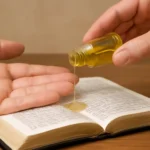
Anointing Oil for Spiritual Warfare is a topic that weaves together biblical imagery, personal faith, and practical devotion. This article explores how the practice—often described in terms of Power, Protection, and Prayer—has shaped lives across generations. While the specifics of practice vary among traditions, the underlying idea remains consistent: anointing oil is a tangible symbol that invites God’s presence, sets apart for holy purpose, and strengthens believers in the face of spiritual opposition.
The Foundations: Historical and Biblical Perspectives
To understand anointing oil for spiritual warfare, it helps to start with its roots. In the biblical narrative, oil is frequently connected with divine commissioning, healing, and authorization. The same symbol that anointed priests and kings also became a sign of God’s blessing and protection for His people.
Old Testament Context
Sacred consecration: The Book of Exodus describes a specific, sacred anointing oil used to consecrate the tabernacle, its furnishings, and the priests who served there. This was a deliberate act that set apart ordinary people for holy service (Exodus 30:22-33).
Authority and service: Kings and prophets were often anointed as a visible sign of divine authority and mission. The oil signified empowerment for a task beyond human ability.
Protection and blessing: While not always named as warfare oil, the symbolism of oil as a protective, sanctifying substance runs through many narratives, foreshadowing its later use in spiritual battles.
New Testament Context
Mission and healing: The Gospels and Epistles connect oil with healing and blessing. Although not every use is framed as a warfare ritual, the authority and grace associated with oil carry over into the broader practice of blessing and deliverance.
Prayer and laying on of hands: The practice of prayer for healing and deliverance often accompanies anointing with oil in the early Christian communities, culminating in the instruction in James 5:14-15: “Is anyone among you sick? Let them call the elders of the church to pray over them and anoint them with oil in the name of the Lord.”
Continuity and variation
Across eras and traditions, the core idea persists: oil functions as a tangible, symbolic conduit for God’s presence, authority, and protection. The variety you see today—from solemn liturgical use to personal, private devotion—reflects the breadth of living faith and diverse church cultures.
What Is “Anointing Oil” and Why It Matters for Spiritual Warfare?
When people refer to anointing oil for spiritual warfare, they are usually speaking about a practice that blends symbolism with spiritual intention. It is not a magic formula; rather, it is a faith-filled action meant to orient the heart toward God, invite His assistance, and empower the believer to stand against opposition.
Definitions and variations
Holy anointing oil: A blessed or consecrated oil used in rites that set people or objects apart for God’s service. It carries a sense of sacred purpose and divine authority.
Blessed oil: Oil that has been prayed over or blessed by a pastor or elder, often used in personal or communal prayer for protection and breakthrough.
Oil of anointing: A phrasing you’ll encounter in liturgical contexts, emphasizing the active role of the Spirit in supplying strength and courage for spiritual conflict.
Anointing with oil: The act itself—placing oil on a person or space—as a visible sign of God’s touch and a way to express faith in His power.
Consecrated oil: Oil that signifies a setting apart from common use to serve a sacred purpose, including spiritual warfare contexts.
The Power, Protection, and Prayer Framework
Three pillars commonly guide the practice of anointing oil for spiritual warfare:
Power: The sense of God’s enabling presence to fulfill a divine calling, meet a spiritual need, or overcome oppression.
Protection: The belief that being anointed invites God’s safeguarding against curses, fear, or assault from spiritual forces.
Prayer: The fervent, faith-filled communication with God that accompanies the anointing, often featuring Scripture, confession, and supplication.
In many Christian traditions, power is not human force but divine empowerment. The oil acts as a sacramental reminder that victory over spiritual opposition comes from God’s strength, not merely from human intention. The process helps believers anchor their faith in God’s promises, hearing afresh that “the Lord is your shield” and that His power is made perfect in weakness.
Protection as Covenant
Protection is linked to the covenant identity of God’s people. Anointing oil is viewed as a sign that the believer stands under God’s protection and that the community has a role in praying for stability, discernment, and deliverance. It is not an escape hatch from responsibility; it is a resource that reinforces courage, wisdom, and steadfastness in the face of spiritual opposition.
Prayer as a Dynamic Force
Prayer in this context is more than polite words; it is a confident stance before God, aligned with His Word. When oil and prayer are combined, the believer seeks alignment with divine will, asks for spiritual insight, and receives God’s peace in the midst of conflict. Prayer shapes the way oil is understood and applied, turning ritual into relationship.
Below is a practical framework for individuals and small groups who want to incorporate the practice of anointing oil for spiritual warfare with care, respect, and discernment. These steps are flexible and should be adapted to your tradition and conscience.
Preparation and discernment
Begin with prayerful discernment to clarify intention: Are you seeking protection, guidance, or breakthrough in a specific area?
If you belong to a church or faith community, consider obtaining blessed or consecrated oil through your pastor, or use a personally consecrated oil with agreement from your spiritual leadership.
Ensure consent and boundaries when involving others—never apply oil to someone without their explicit consent, especially in a group setting.
Materials you might gather
Oil base: Olive oil is a common traditional base, prized for its symbolism and simplicity. Some traditions use other carrier oils if skin sensitivity is a concern.
Aromatics or additives (optional): Small amounts of pure essential oils such as frankincense, myrrh, or cinnamon can be added in very small quantities by those with knowledge of essential oils. Note: essential oils should be highly diluted and used with care; consult an expert if you have allergies or skin sensitivities.
Prayer guidance: Scripture passages, confessions, or prayers appropriate to your tradition.
Clean space: A quiet place free from distraction, with room for a brief ritual or prayer time.
Step-by-step use in personal devotion
Begin with a moment of quiet, inviting God’s presence and asking for wisdom and protection.
Announce your intent in simple, clear language. For example: “I anoint this oil for the purpose of spiritual cleansing, protection, and empowerment for the path God has for me.”
Dip or pour a small amount of oil on your fingertips. If you are new to the practice, use a minimal amount to start and increase only as appropriate to your conscience and tradition.
Apply the oil to the skin with a gentle touch. Common locations include the forehead (center), wrists, or chest in front of the heart. Some traditions also anoint the hands for service or confrontation in spiritual warfare, symbolizing readiness to act in God’s strength.
Speak a concise prayer or decree aligned with Scripture. Examples include declarations of God’s protection, authority in Christ, and faith in God’s deliverance.
Close with gratitude and a moment of listening—be attentive to any impression or leading from the Spirit as you continue your day.
Establish clear boundaries and consent for everyone involved. If someone is uncomfortable, offer alternative forms of blessing or prayer without oil.
Use together as a part of a broader practice that includes prayer, fasting (where appropriate), and Scripture study.
Respect diverse interpretations within the group. Some participants may prefer a symbolic approach rather than a ritualized oil ceremony.
Prayers and affirmations serve as the dynamic engine behind the use of anointing oil for spiritual warfare. They help align the heart with God’s promises and invite His power to work in the believer’s life.
Sample prayers and affirmations
“Lord, anoint me with Your Spirit and Your strength. May Your Power rest upon me for the battle ahead, and may Your peace guard my heart.”
“Father, I ask for Your Protection. Shield me from fear, deception, and every scheme of the enemy that would seek to derail Your purpose in my life.”
“By the authority given in Christ, I stand firm in faith. Let Your Word be my weapon and Your Spirit my guide as I walk through this day.”
“I declare that no weapon formed against me shall prosper, and every tongue that rises against me in judgment is condemned. In Jesus’ name, amen.”
Scriptural anchors for reflection
James 5:14-15: Anointing with oil in prayer for healing and restoration.
Psalm 91 and Psalm 23: Notes of protection and guidance in the presence of the Shepherd.
2 Corinthians 12:9-10: The paradox of weakness and power in Christ; God’s grace is sufficient.
As with any spiritual practice, discernment and respect are essential. Anointing oil is a sacred sign, not a superstition. It works best when paired with ongoing prayer, scriptural study, and a life that seeks holiness and truth.
Discerning outcomes vs. magical thinking
Oil does not “force” a situation but invites God’s presence, guidance, and empowerment.
Expect God to work in ways that honor His wisdom, often through growth, patience, or newfound resilience rather than instant, dramatic change.
If you experience negative physical reactions to oil, discontinue use and consult medical guidance if necessary.
Ethical and relational boundaries
Always respect others’ autonomy. Do not apply oil to anyone against their will or pressure them into a spiritual practice they do not want.
Avoid manipulating outcomes or presenting spiritual warfare as a coercive tool. The aim is fidelity to God and care for others, not control over circumstances.
Be transparent about the purpose of the oil and the scriptures you are using. Clarity builds trust and fosters community.
Several myths can distract from the meaningful practice of anointing oil. Here are some common misunderstandings and clarifications:
Myth: Oil itself contains power apart from God
Reality: The power is considered to come from God, not the oil itself. The oil is a sign, a conduit for faith, and a reminder of divine presence.
Myth: Oil guarantees victory in every battle
Reality: Faithful use of oil does not promise immediate or exhaustive victory. It signals trust in God and invites His help, which may come in various forms—peace, discernment, resilience, or timely breakthroughs.
Reality: Oil is most effective when integrated into a lived life of prayer, obedience, and community. It complements, rather than replaces, spiritual disciplines.
Different faith communities have developed distinct practices around the practice of anointing oil for spiritual warfare.
Liturgy-based approaches
Canticles, liturgical prayers, and hymns often accompany the anointing ritual in church services.
The oil may be consecrated by a bishop or priest in a formal rite, reinforcing the sense of sacred authority.
Charismatic and Pentecostal practices
These communities frequently emphasize explicit declarations against oppressive powers and may pair the oil with laying on of hands and prophetic words.
Personal testimony about deliverance or spiritual breakthrough is commonly shared, reinforcing communal faith.
Orthodox and historic Christian practice
Oil may be used within sacramental or blessing rites, often tied to a broader sacramental life—anointing in baptism or blessing prayers for healing and protection.
If you are exploring anointing oil for spiritual warfare as part of your devotional life, here are suggestions to structure a sustainable and meaningful practice:
Develop a regular, manageable rhythm (e.g., a monthly or quarterly practice) while remaining open to urgent, personal needs that arise between cycles.
Adapt the form of the ritual to suit changing circumstances—more private or more communal, more symbolic or more explicit in prayer language.
Integration with Scripture and worship
Pair the oil with a short reading from Scripture, a meditation on God’s character, and a closing blessing.
Use songs or psalms that emphasize protection, deliverance, and God’s faithfulness to anchor the moment in worship.
Documentation and reflection
Keep a simple journal noting the intention, the prayers offered, and any perceived senses of God’s guidance or peace.
Review entries over time to observe patterns of answered prayer, patience, or spiritual growth.
Anointing oil for spiritual warfare is more than a ritual; it is a pathway to deepen trust in God, to recognize His sovereignty in the midst of conflict, and to stand firm in the identity of faith. The practice invites believers to press into Power, seek Protection, and engage in Prayer with humility, discernment, and love for others.
As you embark on or continue this journey, remember:
The oil is a sign, not a source of power in itself. Its value rests in faith and obedience to God’s will.
Discernment matters. Not every situation requires a ritual; prayerful listening may reveal a different path to resolution.
Community matters. Sharing this practice with trusted mentors or fellow believers can provide accountability, encouragement, and wisdom.
Whether you are exploring anointing oil for spiritual warfare in a traditional liturgical context, a Pentecostal setting, or a personal devotional life, the goal remains the same: to honor God, to draw near to His heart, and to stand firm in the strength He provides. In this light, anointing with oil becomes a sacred language—an outward sign of an inward trust that whispers, in every moment of struggle, that the battle belongs to the Lord.

 Por Laura Jara