Bible Anointing with Oil: Meaning, Scriptures, and Practical Guide
Bible Anointing with Oil: Meaning, Scriptures, and Practical Guide
Across the pages of Scripture, the practice of anointing with oil appears as a powerful, multifaceted symbol. It signals consecration for sacred tasks, serves as a sign of divine empowerment, points toward the coming Messiah, and in the New Testament era is connected with healing and pastoral blessing. This article explores the meaning, the biblical scriptures, and practical guidance for engaging with bible anointing with oil today. We will use varied terminology—biblical anointing oil, the oil of consecration, oil anointing for healing, and other related phrases—to reflect the breadth of usage while keeping the core idea clear: oil is a sign, not magic; a container for faith, prayer, and obedience.
Meaning and Significance: What does it mean to be anointed?
In Scripture, anointing with oil conveys several overlapping meanings. The primary themes are appointment, consecration, and empowerment. When a person or object is anointed with holy oil, they are set apart for a specific purpose by God, and the community recognizes that purpose. The symbolism is rich and layered:
Consecration for sacred work or office—the oil marks a person or object as holy and set apart for service to the Lord.
Empowerment by the Spirit for leadership, prophetic insight, or commissioned mission.
Healing and blessing—oil is used as a vehicle for prayer, comfort, and the invocation of God’s gracious care.
Messianic anticipation—the anointed one is linked to the future King and Prophet who would bring God’s salvation.
Sacred memory—the ritual of anointing leaves a tangible sign that can be remembered and retold across generations.
Throughout the biblical narrative, these themes appear in different shapes. In the Old Testament, oil is poured over priests, kings, prophets, and even sacred vessels. In the New Testament, the practice broadens toward healing prayer and the oil-as-symbol-of-faith in Christian communities. Across both testaments, the core idea remains: oil serves as a visible token of inner faith and divine action, not as a magical remedy or a formula for results apart from God’s will.
Historical and Theological Context: Oil in the biblical world
Olive oil held everyday importance in the ancient Near East, but the biblical use of holy anointing oil elevates ordinary oil into a sacred instrument. The distinction between mundane oil and sanctified oil is crucial. The holy anointing oil described in Exodus was explicitly reserved for God-ordained rites and objects, underscoring that what follows is not superstition but fellowship with the living God.
Anointing in Scripture is often linked to three overlapping practices:
Priestly consecration—Levitical priests are set apart for temple service (Exodus 29; Leviticus 8).
Royal or prophetic commissioning—kings and prophets are marked for leadership or a specific mission (examples include Saul, David, and Elijah’s era).
Ritual healing and blessing—oil is used in conjunction with prayer for restoration and well-being (James 5:14–15; Mark 6:13 in the Gospels shows healing activity linked with preaching and acts of faith).
The Exodus account provides a canonical snapshot of what the oil of anointing looks like in practice: a special blend, prepared for a sacred purpose, poured on the head of the person designated to lead or serve. The text emphasizes that this oil is “holy to the Lord,” marking a boundary between the sacred and the common and inviting the community to recognize the chosen instrument of God’s work.
Old Testament foundations: consecration and appointment
Several pivotal passages lay the groundwork for understanding biblical anointing.
1 Samuel 16:13 — Samuel anoints David, and the Spirit of the Lord rushes upon him from that day forward. This moment signals divine empowerment for kingship and marks a turning point in David’s life and Israel’s history.
1 Samuel 10:1 — Samuel anoints Saul as king, publicly marking him for leadership and responsibility among the people of Israel.
1 Kings 1:39 — Zadok the priest anoints Solomon, affirming his rightful succession and the divine appointment within the royal line.
Leviticus 8 and Exodus 29–30 — the priestly consecration rites that employ oil as part of a larger ceremonial act to set apart the priests and the tabernacle service for Yahweh.
Psalm 45:7 and related passages often speak of God anointing the righteous with the oil of gladness, underscoring the joy and blessing that accompany divine favor.
New Testament and Jesus’ ministry: fulfillment and extension
In the Christian scriptures, the concept of anointing expands in two directions: the person and work of Christ, and the life of the church in following him.
Isaiah 61:1 — the prophetic passage that Jesus quotes in Luke 4:18, announcing the anointing by the Spirit to proclaim good news to the poor, freedom for the captives, and healing for the brokenhearted. This sets a template for the messianic mission and its ongoing relevance.
Luke 4:18 — Jesus identifies himself as the anointed one in the Spirit’s power, embodying the fulfillment of the messianic expectation in his earthly ministry.
Mark 6:13 — the disciples heal many through the practice of preaching, anointing with oil, and prayer, illustrating how the apostolic ministry carried forward the healing aspect of oil imagery.
James 5:14–15 — in the church, elders are urged to anoint the sick with oil in the Lord’s name, inviting prayer and divine blessing for physical and spiritual restoration.
Luke 7:37–38 (the woman’s anointing of Jesus with perfume) demonstrates the broader biblical motif of honoring, worshiping, and preparing one for a significant moment through anointing of some kind, even though it’s not oil in that instance—illustrating the symbolic reach of oil-like rituals in devotion.
Themes to carry forward
Across these scriptures, several enduring themes emerge: the oil is a symbol that points toward God’s presence and favor; it marks people for service; it invites a response of faith from the community; and it resonates with the hope of healing, renewal, and salvation that God promises.
Practical Guide: How to think about and practice biblical anointing with oil today
If you encounter the language and practice of bible anointing with oil in a church setting or in personal devotion, you can engage with it in a way that honors Scripture and avoids superstition. The following guidance reflects a thoughtful, respectful approach to oil anointing for sacred purposes in a contemporary context.
First, recognize the distinction between symbolic act and theological guarantee. Oil is a sign—a tangible, visible reminder of God’s activity and a catalyst for prayer. Do not confuse the sign with the power itself. The power belongs to God, and faith, obedience, and alignment with God’s will are essential to any genuine result.
Choosing the oil
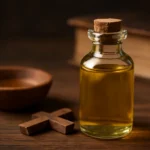
In biblical times, olive oil was the standard material for anointing because it was common, pure, and had particular significance in Israel’s agrarian economy. Some traditions preserve the practice of using a specifically prepared holy anointing oil with spices, as described in Exodus 30:22–33. If you are seeking to follow biblical sensibilities today, consider these guidelines:
Use pure olive oil or a deliberately prepared oil that has a symbolic designation (for example, “anointing oil for sacred use”).
Keep the practice simple and humble; avoid adding anything that distracts from prayer and faith.
Be mindful of allergies and sensitivities; a small amount applied with care is appropriate.
Preparation and posture
A meaningful anointing often begins with prayer, confession, and repentance—each element helping to align the heart with God’s will. The person administering the oil—whether a priest, pastor, or lay leader—should do so with reverence, humility, and clear intention. The recipient should approach with faith, openness to God’s work, and an understanding that the outcome is in God’s hands.
How to apply the oil
When applying oil in a contemporary setting, you may follow a simple, respectful pattern:
Invite a moment of quiet prayer or Scripture reading to center the heart.
Offer a brief intention: “We set this moment apart to seek God’s presence and blessing for this need.”
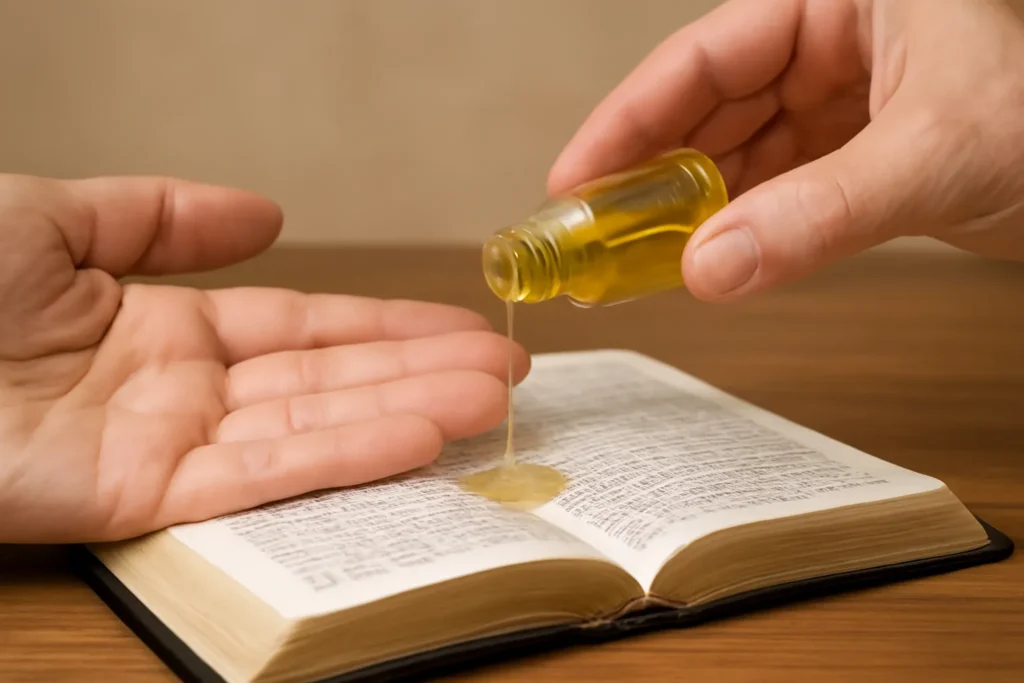
Apply a small amount of oil to the forehead or the top of the head, if appropriate for the setting, while praying in the name of the Lord. You may say a short blessing that agrees with Scripture and the person’s need.
Conclude with prayer, asking for healing, restoration, wisdom, or empowerment as needed, and leave room for God to act in His timing.
Practical applications in daily life
Beyond formal liturgical use, oil anointing for healing or exhortation can become part of personal devotional routines in a way that remains biblical and modest:
Healing prayer—combine oil with prayer for physical or emotional healing, acknowledging God’s role in provision and care (James 5:14–15).
Commissioning for service—use the act to mark readiness for a new ministry, mission trip, or leadership role, while seeking God’s guidance and blessing.
Congregational blessing—in a church setting, anointing may accompany a service of commissioning, baptism, or altar ministry as a communal act of faith.
Boundaries and discernment
Remember that anointing oil is not a magical guarantee. The biblical record shows powerful acts of God that do not depend on a formula, and it also shows times when God’s work occurs through other means. It is wise to:
Seek guidance from Scripture and church leadership to discern appropriate occasions for anointing.
Respect diverse convictions within a community about the use of oil.
Balance symbolic acts with concrete action—prayer, study, repentance, and practical wisdom.
People frequently ask how to understand and apply this practice. Here are concise answers drawn from biblical usage and theological reflection:
Is anointing with oil magical? No. Oil is a sign and a means for prayer and alignment with God’s will. The power for healing, deliverance, or blessing comes from God.
Who can participate in anointing? In Scripture, leaders such as priests, prophets, and kings commonly performed or received anointing. In modern contexts, pastors, elders, or lay leaders can administer it with pastoral care and discernment.
What does the oil signify in healing prayers? It signifies faith in God’s power to heal and to work through the believer’s prayer. It is not a guarantee, but a means to seek God’s compassionate action.
What if someone is opposed to oil for theological reasons? Respect the conscience of individuals and communities. There are many biblical signs of blessing and healing that do not require oil; the core is faith, prayer, and obedience to God.
Can oil be used in personal devotion outside of church? Yes, in a manner consistent with biblical principles—quiet, sincere praying, and a recognizably sacred intent—though it should be done with care and sensitivity.
Conclusion: The enduring contour of biblical anointing with oil
Throughout the Bible, anointing with oil serves as a powerful, tangible reminder that God calls, equips, and blesses his people for a purpose beyond themselves. From the consecration of priests to the commissioning of kings, from the prophetic mission to the healing prayers of the early church, the oil acts as a sign that God’s Spirit is at work in and through human lives. In contemporary practice, engaging with bible anointing with oil can be meaningful when approached with reverence, grounded in Scripture, and oriented toward Christlike service and care for others. By honoring its biblical heritage while recognizing its symbolic nature, modern readers and communities can use the practice to foster faith, unity, and hope—never as a way to control outcomes, but as a way to invite God’s presence into everyday life.
In sum, oil anointing in Scripture points toward a divine initiative: God choosing, blessing, and empowering people for his mission. The practice preserves a link between God’s ancient people and the church today, inviting believers tolive with purpose, trust, and humility as they seek God’s will. Whether you encounter it as a ceremonial rite, a healing prayer, or a personal moment of consecration, the underlying invitation remains clear: be open to God’s Spirit, honor his Word, and respond with faith and obedience.








Leave a Reply