Planning and Preparation for Baptism Coverage in a Church Setting
Effective coverage of a baptism begins well before the ceremony begins. The photographer who masters baptism photography tips for a church environment knows that planning, communication, and respect are the foundation of powerful imagery. This section covers the practical steps you should take in advance to ensure smooth execution on the day of the baptism, whether you are documenting a small family baptism or a larger church service.
Meet with clergy or church staff ahead of time to understand the liturgy, restrictions on flash, where you may stand, and any moments that are considered sacred or off-limits to photographers. Ask about processional seating, where the baptism will occur, and whether there will be an immersion or sprinkling. Knowing the sequence helps you anticipate key moments rather than reacting in real time.
Obtain permission and confirmations in writing if possible. Some churches require a photographer to have a permit or to sign a policy outlining flash use, movement, and the placement of equipment. Respect these boundaries to avoid distraction during the ceremony.
Scout the venue ahead of time if allowed. Visit the church to identify strong vantage points, potential backdrops, and quiet corners for intimate portraits. Look for stable surfaces to set up a camera on a monopod or tripod, if permitted, and map out routes that minimize disruption during the service.
Develop a shot list that reflects both formal and candid moments. A well-crafted shot list helps you cover the essentials—family reactions, the child’s interaction with the water, the priest’s blessing, and the post-ceremony celebrations—without monopolizing the clergy’s time.
In the broader context of church baptism photography tips, consider the cultural or denominational differences that may affect the ceremony. A baptism in a cathedral might feature longer processions or more ceremonial elements, while a small chapel may be simpler and more intimate. Regardless of scale, your goal is to preserve the dignity and spiritual significance of the moment while delivering a compelling visual narrative.
Respect the sacred space by moving slowly, avoiding loud conversations, and minimizing your presence on the altar or near the baptismal font unless you have explicit permission.
Communicate with families about how they wish to be portrayed—coordinating with parents or guardians about portraits they want and the level of formality.
Protect privacy by not sharing images of individuals who have not consented to public display, especially in sensitive settings or community events.
Gear and Settings for Baptism in Church Environments
Choosing the right gear and mastering camera settings are at the heart of successful baptism photography tips church. Churches often feature mixed lighting—natural light from stained-glass windows, artificial tungsten or LED fixtures, and dynamic shadows. A versatile approach to gear and settings will help you capture clean, expressive images without becoming a distraction.
Camera bodies with strong high-ISO performance to handle dim interiors without excessive noise. Modern mirrorless bodies or DSLR bodies with good low-light capability are ideal.
Lenses that cover a range of situations:
24–70mm f/2.8 for versatile, walk-around coverage and environmental portraits.
70–200mm f/2.8 or f/2.8–f/4 zoom for compression and candid shots from a distance.
85mm or 105mm prime for intimate details like hands, water, and expressions with pleasing background separation.
External flash or speedlights with diffusers for controlled lighting. An off-camera flash with a diffuser or bounce card can fill shadows without creating harsh hotspots.
Two light sources or portable strobes for more complex lighting setups, especially if you want to balance mixed lighting or create a subtle mood during quiet moments.
Extra batteries and memory cards, plus a reliable backup memory card. In a church ceremony, you may shoot a lot in a short period, so redundancy is essential.
Tripod or monopod if allowed, particularly for seating wide shots or long exposures in dim light. Some church rules restrict movement, so verify policies in advance.
Lens hoods, rain protection, and microfiber cloths to protect gear and maintain image quality in varying conditions.
Camera settings and shooting techniques
A good starting point is Auto ISO with a ceiling (for example, ISO up to 6400 or 12800 depending on your camera model) to keep shutter speeds fast enough to freeze motion while maintaining image quality.
Shutter speed in the range of 1/125 to 1/250 second for most ceremony action. If there is a lot of movement, you may need 1/320 or faster.
Aperture settings typically range from f/2.8 to f/4 in low light to balance depth of field and light, while keeping faces sharp. Use narrower apertures (f/5.6–f/8) for group portraits if you want all participants in focus.
White balance should be set to a neutral or tuned after a RAW capture. Church lighting can vary dramatically; RAW helps you correct color shifts later without degrading image quality.
Autofocus mode should be set to continuous AF (AF-C or AI Servo) for moving subjects. Use the face/eye detection capability if available.
Metering is best left on matrix/evaluative on most cameras to handle complex lighting, but be ready to adjust exposure if a scene is dominated by bright water or white surplice fabrics.
Silent photography options are worth exploring in some churches, as electronic shutters or quiet modes can reduce distractions during prayerful moments.
Flash usage and lighting strategies
Avoid direct flash during solemn moments; instead, bounce light from a ceiling or wall, or use off-camera flash in a controlled manner.
Off-camera flash with a diffuser provides more natural-looking light. Use a trigger system to place the light at an angle that mimics natural light coming from a window or overhead fixtures.
Color consistency by using gels or white balance adjustments so that skin tones look natural and consistent across images.
Low-light challenges require you to balance ISO, aperture, and shutter speed. If you can’t raise shutter speed without noise, consider a gentle flash fill to restore detail without overpowering the scene.
When discussing baptism photography tips related to lighting, remember that the primary goal is to capture expressions, water interaction, and the solemnity of the rite. The equipment is a means to that end, not the end itself. The best images often come from a combination of planned shots and spontaneous moments, facilitated by thoughtful gear choices and respectful practice.
Composition, Framing, and Storytelling During a Church Baptism
Effective composition turns a routine ceremony into a narrative that families will treasure. The idea is not simply to take pictures of events, but to tell a story through carefully chosen angles, focal lengths, and sequences. This is where your understanding of different baptism coverage in church settings becomes valuable.
Framing for reverence and emotion
Include hands and water to emphasize the sacramental moment. Close-ups of tiny fingers or the priest’s touch can convey tenderness and significance.
Establish context with environmental portraits—a wide shot of the font, the sanctuary, or family members in prayer—to set the scene and mood.
Use leading lines like pew rows, architectural arches, or the edge of the font to direct the viewer’s eye toward the baptismal moment.
Balancing candid and posed moments
Candid moments capture authentic emotion: a parent’s tear, a grandparent’s smile, a godparent’s reverent nod. These are often the most cherished images.
Posed or semi-posed moments include family groups after the ceremony or a quiet moment with the child and the priest. Coordinate with the family to ensure these shots feel natural rather than staged.
Photo sequence planning can help you tell a clear story: arrival, processional, the blessing, immersion/pouring, anointing, exit, and family celebrations.
In the broader category of baptism tips for church ceremonies, consider how cultural or liturgical differences influence posing opportunities. Some traditions favor more formal processions, while others emphasize intimate, quiet moments in the sacristy or near the font. Tailor your storytelling approach to the temperament and expectations of the family and clergy.
Lighting Strategies and Color Management in Lit Church Interiors
Church interiors present unique lighting challenges—dim lighting, backlit subjects near windows, and warm artificial lights. Mastery of lighting strategies for baptisms in churches ensures you deliver consistent color and mood across images while respecting the sacred environment.
Test white balance on arrival using a neutral gray card or a known-white surface to calibrate your camera for the lighting conditions you’ll encounter.
RAW workflow is essential. Shooting in RAW preserves dynamic range and color information so you can fine-tune WB, luminance, and color in post-processing without degrading quality.
Consistent color across frames helps the album feel cohesive. If you use mixed lighting, push a consistent WB in post or shoot a controlled set with a fixed WB preset.
Practical lighting setups
Natural window light combined with bounce can create a gentle, flattering look for faces when the font is near a window. Use a white reflector to fill shadows without flattening depth.
Ceiling bounce or wall bounce with a diffused flash can mimic soft day-light and avoid harsh shadows on faces near the font.
On-axis fill should be minimal during solemn moments to preserve the sacred atmosphere. Use off-camera lighting with controlled angles for dramatic but respectful imagery when required.
Consider baptism photography tips church environment that emphasize atmosphere: the glow from stained glass, the shimmer of water, and the silhouettes of attendees. By balancing ambient and artificial light with care, you produce images that feel authentic and immersive rather than clinical.
Shot List, Timeline, and Workflow for Baptism Day
A well-structured shot list and timeline help you capture the essential moments while allowing space for spontaneous emotion. Below is a practical framework you can adapt to different church services.
Core shot list for church baptism photography
Pre-ceremony arrivals of the family, godparents, and guests; candid interactions, hugs, and quiet prayers.
Processional and seating shots of the family entering the sanctuary and the baby or child’s first appearance near the font.
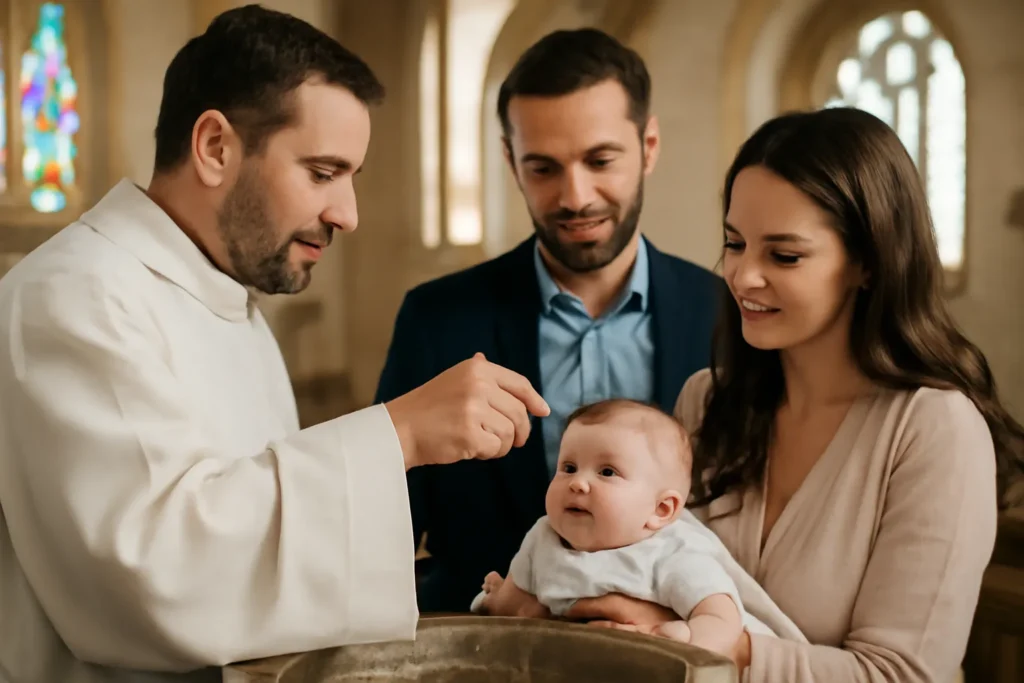
Priest blessing and water ritual—focus on the font, the priest’s hands, and the moment the water is blessed or poured.
Immersion or sprinkling moments from multiple angles: close-ups of water touching the head, the surprised or pious expressions, and the priest’s gentle movements.
Anointing and sign of the cross on the child’s head, if part of the rite, with attention to draft compositions and clarity of emotion.
Family portraits with parents, godparents, and siblings; group shots that are respectful and well-composed.
Details and symbolism such as the baptismal font, holy oils, candles, the font’s decor, infant garments, and ritual objects.
Candid moments after the rite: congratulations, tears of joy, prayers, and quiet gratitude in church or in designated reception areas.
Sample timeline for a typical one-hour baptism service
15–20 minutes before the service: setup, test shots, and liaison with clergy. Confirm where the family will stand and where you can position yourself for the main rite.
During processing: capture the procession, the congregation’s reverence, and the family’s emotions as they approach the font.
The baptism moment: shoot from multiple angles—sides, back, and close-ups of hands and water—with attention to the faces of family members and the child’s expressions.
Post-ritual blessings: document the priest’s final blessings, family embraces, and quiet congratulatory moments.
Group photos and candid mingling: capture both posed family portraits and natural interactions after the ceremony.
In the broader ecosystem of baptism tips church ceremony, you might adapt the timeline based on how long the service lasts, the size of the congregation, and whether there are additional rites or receptions afterward. Flexibility is key; having a flexible plan helps you stay present for authentic moments rather than chasing a rigid schedule.
Post-Processing, Delivery, and Creating a Sacred Narrative
Post-processing is where your images become a cohesive narrative rather than a collection of isolated frames. A thoughtful workflow preserves the sacredness of the moment while delivering polished photographs that families will treasure for generations.
Editing workflow and style choices
Initial culling to select the strongest images from each stage of the ceremony. Prioritize decisive moments, clear compositions, and emotionally resonant expressions.
Color and tonal adjustments to maintain natural skin tones and faithful colors. Use calibration profiles and monitor settings that ensure consistency across your gallery.
Selective editing for dramatic moments—emphasize hands, eyes, water, and faces without over-saturating or introducing artificial looks.
B&W conversions for timeless portraits, especially for the most emotional or reverent moments. Convert selectively to preserve mood without removing warmth from skin tones.
Delivery formats and client experience
High-resolution JPEGs for printing and sharing, with a recommended minimum resolution to ensure clarity in print sizes up to 20x30 inches or larger.
Web-ready gallery with optimized thumbnails and a clean layout that makes it easy for families to browse and select images for keepsakes.
Backup strategy including redundant storage on external drives and cloud backups. Maintain a logical folder structure (by date, church, and ceremony) to facilitate future retrieval.
Print licensing and usage rights clarified in advance to ensure families understand how they may reproduce and share their images.
When applying baptism photography tips church post-processing, aim for a consistent aesthetic that respects the sanctity of the rite while delivering vibrant and emotive images. A well-curated gallery that balances color, mood, and detail will be appreciated by families as their memories mature over time.
Consider a few common scenarios you may encounter and how to apply church baptism tips in practice. These examples illustrate how planning, discretion, and creativity come together to create meaningful imagery.
Scenario 1: A small family baptism in a quiet chapel
Use a fast prime lens (85mm or 105mm) for intimate close-ups of faces and hands.
Rely on ambient light with subtle bounce flash if needed, to preserve the chapel’s mood.
Capture the peaceful atmosphere with wide shots of the font and seating, then move in for thoughtful close-ups.
Scenario 2: A larger church with stained-glass windows and mixed lighting
Prepare with a WB calibration for mixed lighting and shoot RAW for post-processing flexibility.
Alternate between wider environmental portraits and tight details of water, vestments, and the priest’s hands.
Coordinate with ushers or a designated point person to move unobtrusively for key moments.
Adhering to best practices ensures you produce high-quality images while honoring the sanctity of the rite and the comfort of participants. The following guidelines support reliable results across various church environments.
Safety and practicality
Safeguard equipment with discreet straps or harnesses when moving around pews and stairs. Maintain a clear path to avoid tripping or obstructing participants.
Be mindful of crowd control and avoid creating bottlenecks in aisles or near the font. Have a plan to move smoothly between stations without disrupting the ceremony.
Respect restrictions on photography during certain portions of the service. Your sensitivity to these moments reflects your professionalism and integrity as a photographer.
Client communication and expectations
Discuss delivery timelines so families know when to expect proofs and final edits. Transparent communication builds trust and reduces stress on the day of the baptism.
Provide a sample shot list to families so they understand what to expect, what is possible, and what is considered too intrusive during sacred moments.
Offer multiple keepsake options such as a small album, a digital gallery, and a slideshow that family members can share with relatives.
Closing Thoughts: Mastery Through Practice and Respect
Photography at a baptism in a church is as much about ethics and empathy as it is about technical skill. The most memorable images do more than document a ceremony—they convey the warmth, reverence, and joy that families feel during this sacred moment. By integrating practical planning, carefully selected gear, thoughtful composition, and a respectful approach, you can deliver imagery that honors the ritual while offering a timeless storytelling experience.
As you continue to refine your craft, remember that each baptism is unique. Variations of the phrase baptism photography tips church may appear in your notes, but the core principles remain constant: anticipate moments, respect the sacred space, communicate clearly with families and clergy, manage light with care, and present a narrative that families will cherish for generations. With patience, preparation, and a gentle presence, you can create a visual record of sacred moments that communicates reverence, joy, and connection.








Leave a Reply