Behold your God is a phrase that has traveled through time, languages, and genres to function as a potent summons. It invites attention, shifts focus from the ordinary to the divine, and frames the relationship between people and the transcendent. This article explores the meaning of the command, the historical and literary contexts in which it appears, and the diverse ways scholars, theologians, poets, and preachers have interpreted and employed this decisive call. By tracing variations such as Behold the LORD, Behold Him, Behold their god, and related formulations, we can gain a fuller sense of its semantic breadth and enduring significance.
The literal and the symbolic: what the phrase communicates
At a glance, Behold is a verb of attention. It is not a generic instruction to look; it is a conscious invitation to perceive with intention. When paired with a reference to God, the phrase often performs several related tasks at once:
Revelation: it announces that something previously hidden or not fully understood is about to be disclosed.
Recognition: it asks the audience to identify the true source of power, hope, and salvation, distinguishing the true God from idols or false powers.
Judgment and consolation: the call may accompany a vindication of divine sovereignty or a comforting assurance in the midst of danger.
Invitation to trust: by beholding the divine, the faithful are invited to respond with repentance, faith, and obedience.
Taken together, these dimensions show that Behold Your God is not merely a textual cue; it is a theological stance. It says, in effect, “Look carefully, for what you see will shape how you live, whom you worship, and how you understand your place in the world.”
Behold in biblical literature: where the phrase commonly appears
Isaiah and the prophetic summons
One of the most famous formulations occurs in the prophetic corpus, particularly in the book of Isaiah. In certain translations, readers encounter a direct imperative along the lines of “Behold your God” (for example, in Isaiah 40:9). In this context, the phrase functions as a dramatic pivot: it interrupts a series of oracles about exile, punishment, and hope to point to the divine presence who will lead and redeem.
In prophetic rhetoric, the command often follows a period of distress or concealment. The act of beholding becomes an act of trust: the people are urged to fix their gaze on a God who is faithful, not on the surrounding fears or the seductive claims of rival powers. The line can thus be read as a declaration of sovereignty and a calibration of expectation—God is the one who will fulfill promises, intervene decisively, and reconfigure the future.
Other biblical uses and translation variants
Beyond Isaiah, the exact phrase appears in variations, depending on the manuscript tradition and translation. Some English Bibles render it as “Behold, your God”, while others might render it with commas or punctuation that alter emphasis. Still others employ allied forms, such as “Behold the Lord God” or “Behold Him, your God”. Although the precise wording shifts with translation, the core intent remains: to summon the reader or listener to perceive the divine reality in a given moment.
Scholars note that the imperative Behold carries a strong performative force. It is not a neutral statement about God’s existence but an act of commissioning, a call to recalibrate vision in light of revelation. This interpretive key helps explain why the phrase recurs in liturgical settings, sermons, and visual arts—contexts where the power of sight and recognition plays a central role in spiritual formation.
The function of “Behold” in prophetic speech
In ancient Near Eastern rhetoric, commands to “see” often function as a hinge between judgment and deliverance. The prophet’s voice uses sight as a metaphor for understanding, loyalty, and allegiance. Beholding is thus both cognitive and moral: it asks for the mind to be opened and the heart to be redirected toward the divine will. In this sense, the phrase embodies a classic prophetic technique: reveal the truth that exposes idols as hollow, then invite renewed trust in the living God who acts decisively in history.
Beholding as a theological practice: sight, encounter, and transformation
To “behold” God is to participate in a form of encounter that has consequences for belief and action. The act of beholding implies:
Recognition of identity: seeing God as sovereign, merciful, just, or saving—depending on the scriptural frame.
Recalibration of allegiance: aligning one’s life under the authority of the recognized God rather than under idols, nationalism, or self-will.
Witness and testimony: the beholder becomes a witness who communicates what is seen to others, inviting shared trust.
Three recurring motifs associated with beholding
Revelation vs concealment: The divine can be hidden or revealed; beholding marks the moment of unveiling when God’s presence becomes evident.
Power and compassion: Beholding often juxtaposes divine might with mercy, urging readers to recognize strength exercised for the good of the afflicted.
Hope vs fear: The summons to look toward God serves as a counterbalance to despair, encouraging confidence in divine fidelity.
Historical and cultural contexts: why this phrase mattered
The historical settings of the biblical texts provide crucial context for understanding why a phrase like Behold Your God would carry such weight. In the ancient world, communities faced existential threats—invading armies, famine, exile, and political upheaval. In those conditions, a public call to turn attention to the divine presence carried social and political weight. It offered a narrative resource: if people could acknowledge the true God, their orientation toward power, destiny, and communal life could be recast.
In later theological writing and church tradition, the phrase took on additional layers of meaning. It could describe a moment of conversion, a peak of worship, or a turning point in the community’s memory of God’s actions. In art, literature, and preaching, the call to behold became a way to frame personal and communal transformation as a response to divine revelation.
Beholding in liturgy, art, and popular discourse
Liturgy and worship
In worship services, refrains that echo the imperative to behold God serve to center the congregation’s attention on divine reality. Hymns, prayers, and responsive readings may deploy variants of the phrase to invite the faithful to contemplate the nature of God—his majesty, tenderness, justice, and redeeming work. In this setting, Behold is less a historical claim and more a spiritual posture: to look, reflect, and respond in trust.
Visual art and symbolic representation
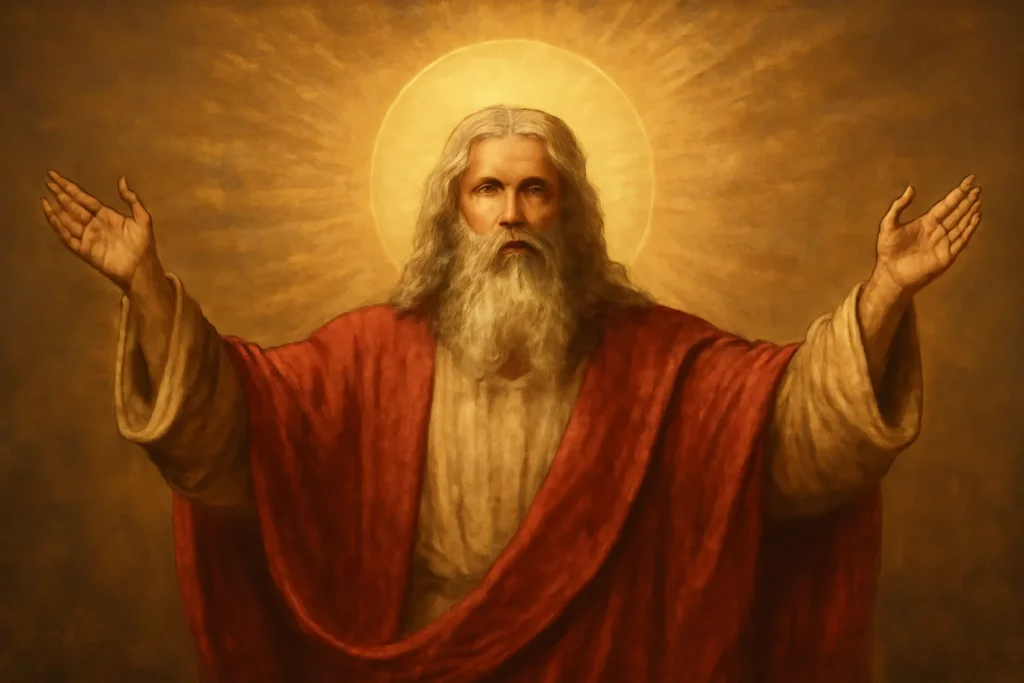
Throughout Christian art, icons and paintings often depict scenes in which the divine is revealed to humanity. The viewer’s gaze becomes an act of beholding that mirrors the divine revelation. While the exact phrase may not always appear in the artwork itself, the symbolic gesture of drawing attention to the divine presence aligns with the intention of Behold Your God.
Teaching and preaching traditions
In sermons and scholarly writings, the language of beholding is frequently used to structure exhortations. Preachers may invite their audience to:
Behold God’s mercy shown in a particular biblical event, Behold the mercy in the prodigal son narrative, for example.
Behold God’s power displayed in creation and history, contrasting it with human frailty and idolatry, via phrases like Behold creation’s Maker.
Behold God’s faithfulness in times of trouble, encouraging steadfast trust.
Behold your god in translation: linguistic nuance and interpretive impact
Translations influence how readers experience the command. The verb to behold carries connotations that may feel archaic in modern English, yet it retains a robust force in many languages. Translators must balance:
Literal fidelity to the original Hebrew or Greek terms
Readability for contemporary audiences
Theological clarity in conveying the divine-human encounter
Consequently, variations like “Behold your God”, “Behold the Lord your God”, or “Behold Him, your God” can carry subtly different emphases on the person, the relationship, and the agency of God. The nuance matters in interpretation: some readers attend first to God’s personal address, others to the communal address (your people), and still others to the act of God’s intervention in history.
Modern usage and interpretation: why the phrase still resonates
In contemporary discourse, Behold Your God remains a resonant call in faith communities and beyond. Its appeal rests on several enduring factors:
Clarity of focus: it is a direct, unambiguous invitation to consider the divine as the primary actor in history and life.
Emotional resonance: the imperative can evoke awe, gratitude, repentance, or reassessment of priorities.
Ethical impetus: beholding the divine often translates into actions such as justice, compassion, and faithfulness to one’s commitments.
In sermons, devotional guides, and even popular media that engage with spiritual themes, variations on this refrain appear as rhetorical devices to re-anchor listeners’ or readers’ attention on ultimate concerns. When used thoughtfully, such phrases can invite a deeper encounter with the divine and a more intentional way of living in the world.
Behold across cultures: how different faith traditions approach the idea
While the precise wording appears in a Judeo-Christian context, the underlying impulse—an intentional gaze toward the divine—occurs in various forms across religions and cultures. A comparable dynamic can be observed in traditions that emphasize revelation, dharma, kensho, or kenosis as moments when ordinary perception becomes transformative through encounter with the sacred. Though the vocabulary differs, the practice of stopping to regard ultimate reality has universal appeal as a spiritual discipline.
Practical guidance for readers: how to study the command and apply it today
For students, teachers, and curious readers who want to engage with Behold Your God in a rigorous yet accessible way, here are practical steps and questions to consider:
Contextual reading: Examine the surrounding verses to understand the situation when the command is issued (who is speaking, who is addressed, what is at stake).
Translation comparison: Compare two or more translations to notice how word choices shape emphasis, nuance, and interpretive possibilities.
Thematic mapping: Identify recurring themes linked to beholding, such as deliverance, judgment, mercy, and faithfulness, and map how they develop across chapters or pages.
Dialogue with tradition: Read patristic, medieval, or modern commentaries to see how different communities have understood the call to behold God.
Personal application: Reflect on moments in one’s life when a shift in perception toward the divine led to change—whether in trust, action, or relationships.
Approaching the phrase with a combination of historical awareness and personal reflection can yield a richer, more nuanced understanding of its meaning and significance in today’s world.
Common misconceptions and careful distinctions
As with many potent phrases, readers should beware of oversimplifications. Some common misreadings include:
Confusing beholding with seeing as spectacle: The call is not a mere aesthetic gaze; it is a meaningful recognition that entails commitment and response.
Reducing God to a singular attribute: Beholding can reveal different facets of God—justice, mercy, sovereignty, compassion—in dialogue with the text and tradition.
Assuming uniform interpretation: Different communities may emphasize prophecy, salvation, consolation, or judgment depending on their historical experiences and theological frameworks.
Recognizing these nuances helps readers engage with the phrase in a way that respects both the complexity of the scriptures and the diversity of modern faith communities.
To cultivate a robust appreciation for the command to behold God, consider the following practical outcomes:
Intellectual humility: Acknowledge that understanding of the divine deepens through study, prayer, and dialogue.
Ethical cultivation: Let what is beholds shape how one acts—toward neighbors, strangers, and the vulnerable.
Communal formation: Share interpretations with a community to test insights and encourage collective growth.
In pursuing these outcomes, the phrase Behold Your God becomes a lived practice rather than a standalone dictum. It becomes a catalyst for faithfulness, hope, and a more attentive life.
Across eras and contexts, the imperative to behold your God has functioned as a hinge between perception and faith. It calls people to shift from distraction and fear toward a disciplined awareness of the divine activity in history, creation, and personal life. By recognizing the rhetorical power of the verb Behold, readers can appreciate how a single phrase has sustained spiritual imagination and shaped communities for generations. The phrase invites us to:
Close the gap between what we claim to believe and what we actually behold in daily life.
Recognize the divine presence in times of hardship, wonder, and ordinary moments alike.
Respond with trust, hope, and responsible action grounded in a vision of God’s character and purposes.
In this light, the declaration Behold Your God remains not only a statement about perception but a call to a way of life—one that prioritizes divine reality as the reference point for understanding, choosing, and living.








Leave a Reply