Summarize the Ten Commandments: A Clear, Concise Guide
Summarize the Ten Commandments: A Clear, Concise Guide
The Ten Commandments have shaped ethical thought, religious practice, and communal life for millennia. While many people encounter them as a compact list, they are best understood as a compact framework that distills hundreds of years of spiritual insight into a practical guide for daily living. In this article, we summarize the Ten Commandments with clarity and structure, offering a concise yet thorough guide that can be used for study, teaching, or personal reflection. Throughout, you will see variations in wording and emphasis across traditions, but the overarching aim remains the same: to describe how to honor the divine and how to live with justice, honesty, and compassion toward others. Bolded phrases highlight the core ideas to help you quickly grasp the essentials while reading in depth.
What the Ten Commandments are and how they function in moral life
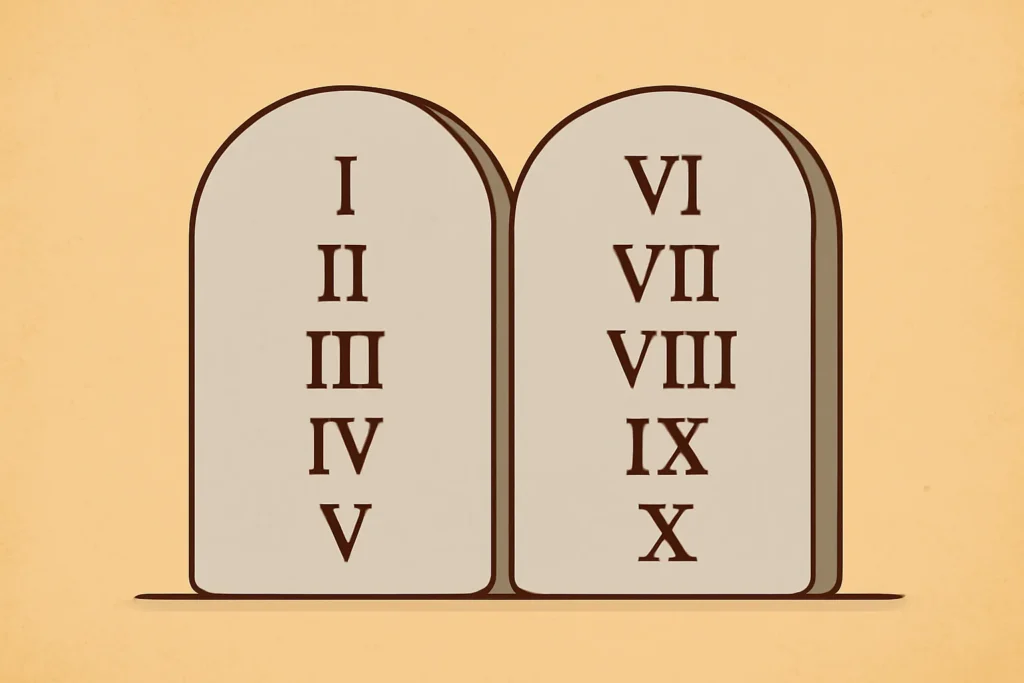
At its core, the Ten Commandments can be described as two complementary axes of moral obligation: a call to allegiance and reverence toward God, and a call to ethical conduct among people. In many traditions they are presented on two stone tablets, often called the two tables of the law, with the first focusing on the divine relationship and the second on human relationships. This structure is not just ceremonial; it helps readers organize their values. Summarizing the idea is easier when you think of it as a short list that instructs how to live in a way that honors the sacred while also honoring fellow human beings.
Across cultures and faith communities, the commandments are interpreted slightly differently in terms of wording and number, but the essential aims are widely shared: keep worship pure, respect the sacred name, observe a day of rest, honor family, and refrain from actions that harm others or undermine social harmony. The practical impact is broad: a framework that can guide personal decisions, community standards, and family life. In the sections below, you will encounter an accessible, structured outline that preserves the spirit of the original while offering modern paraphrase and application. Bold emphasis is used to draw attention to terms that are especially important for recognizing the commandment’s intent.
Groupings that help you “see the forest” and “see the trees”
Many readers find it helpful to separate the commandments into two clusters: duties to God and duties to other people. This division is not just historical; it offers a clear lens for applying the commandments in contemporary life. The first group emphasizes allegiance, worship, reverence, and sanctification of time. The second group centers on rights, truth-telling, fairness, and social responsibility. By distinguishing these two clusters, you can quickly recall the core areas of behavior each commandment seeks to shape. Clarity about the grouping also supports teaching, sermon development, and classroom discussion, where instructors can illustrate how a single principle in one cluster informs behavior in the other cluster.
Commandments about God and reverence
These first four or five entries (depending on tradition) address the sacred relationship at the center of the moral life. They ask adherents to orient their hearts and actions toward the divine reality that they acknowledge as sovereign. The emphasis is on exclusive devotion, dignified speech about the sacred, and regular remembrance. In everyday terms, these commandments matter because they describe how to integrate faith with daily routines and decisions. When people practice these principles, they tend to cultivate integrity, humility, and devotion that keeps life oriented toward meaning beyond personal interest.
The remaining entries focus on how to treat others—family, friends, strangers, and even enemies. These clauses are about personal character as well as social ethics: honesty, faithfulness, generosity, justice, and restraint. Taken together, they offer a practical ethic for community life. The emphasis is not only to avoid harm but to actively promote flourishing for others, from family life to public conduct. This cluster invites readers to consider how private beliefs translate into public behavior and how a community can sustain trust and fairness when individuals choose to live by these standards.
Concise recap and paraphrase of the Ten Commandments
Below is a streamlined, paraphrased version that captures the essence of each commandment. This version uses a simple, direct phrasing suitable for quick study, study aids, or memorization. It also highlights the central intent in each entry. Use it as a quick reference, then consult fuller explanations for deeper understanding.
Worship only the one true God: Do not worship other powers or deities; seek loyalty to the divine that the tradition recognizes as ultimate authority.
Reject idolatry and counterfeit worship: Avoid making images or constructions that replace or distort the sacred; honor the moral boundaries around sacred practice.
Honor God’s name: Speak truthfully and respectfully about the sacred; avoid casual or profane uses of the divine name.
Keep the Sabbath or a regular day of rest: Set aside time for rest, prayer, and reflection; remember that life is not only work but relationship with the sacred and with community.
Honor your parents and family relationships: Show respect, care, and loyalty to family elders; nurture the well-being of your household and kin.
Do not murder: Respect the sanctity of life; avoid causing harm out of malice or neglect.
Be faithful in marriage and personal commitments: Keep vows, be honest about intimate relationships, and protect the integrity of the family bond.
Do not steal: Respect others’ property and rights; practice honesty in all transactions and avoid exploiting others.
Speak truthfully and avoid false witness: Tell the truth, avoid deception, and safeguard the integrity of communal life through honest speech.
Do not covet what belongs to others: Cultivate contentment and gratitude; resist envy that can undermine trust and harmony in society.
Another way to phrase these is to think in terms of precepts about worship and precepts about conduct. In modern language, you can summarize them as: safeguard your relationship with the divine, and safeguard relationships with others. This dual aim helps readers apply the commandments in diverse situations, from personal choices to public policy. For those who like cross-referencing, this paraphrase works well alongside standard wordings found in religious study guides and educational curricula.
Historical context and labeling: why numbers vary and what stays the same
Different religious traditions recount the commandments with slightly different numbers and sometimes varied wording. In Jewish tradition, for instance, several commandments combine prohibitions against idol worship and against misusing the divine name in ways that differ from Christian displays. In Catholic and Protestant traditions, a slightly different sequence is used, though the underlying content is aligned. The variations in numbering can be summarized as follows:
Jewish tradition groups lines 1–4 (or 1–4/5) as commands about God and how to worship, followed by lines 5–10 about interpersonal duties, with a focus on preserving the community’s covenant identity.
Catholic tradition often divides one of the central prohibitions into two separate commands, resulting in a slightly different count but the same practical message.
Protestant tradition generally retains a more compact grouping, with a clear split between duties to God and duties to neighbor, and a commonly used 10-item list.
Understanding these differences is less about choosing a “correct” version and more about recognizing the shared moral aim. The central idea remains constant: devotion to the divine, respect for sacred boundaries, and a neighborly ethic that promotes life, liberty, and justice. For students and teachers, acknowledging these variations can enrich discussion and prevent over-simplified readings that ignore historical development.
How to apply the commandments in daily life
To translate ancient injunctions into modern practice, consider how each commandment speaks to contemporary settings—work, school, family, governance, and community life. The following practical applications illustrate how a person might live out the commandments in practical terms, without losing sight of the deep spiritual aim behind each directive.
Worship and devotion: Prioritize spiritual practices that anchor life in meaning beyond self-interest. This can mean daily reflection, communal worship, or acts of service that reflect a reverence for the sacred in everyday routines.
Guard against idolatry: Be vigilant about what shapes your loyalties and values. If success, status, or possessions begin to displace ethics and compassion, reassess priorities and renew commitments to integrity.
Speak with integrity: Use language thoughtfully about the sacred and about others; avoid flippant or abusive speech that diminishes trust or dignity.
Honor time and sabbath rhythms: Create regular times for rest, reflection, and restoration. This can improve mental health, strengthen family bonds, and prevent burnout.
Family and parental respect: Foster homes where elders are cared for, guidance is valued, and children learn responsibility and compassion.
Life and nonviolence: Uphold the sanctity of life in decisions at work, school, and civic life; promote safety and non-harm in conflicts and disputes.
Commitment and fidelity: Be reliable in commitments; protect intimate relationships from deceit and coercion; model trustworthiness for others.
Property and honesty: Respect others’ property; engage in fair dealing, transparent transactions, and responsible risk management in business and personal life.
Truth-telling and justice: Prioritize honesty in testimony, avoid exaggeration, and stand for the truth in legal, educational, and interpersonal contexts.
Avoid envy and covetousness: Practice gratitude and generosity; cultivate contentment to reduce pressure on others and on social systems to meet impossible standards.
When you translate the commandments into daily behavior, you can use concrete checklists, personal commitments, and family discussions to reinforce learning. For educators and pastors, activity prompts, discussion questions, and scenario-based exercises can help learners see how these timeless principles function in modern dilemmas such as digital ethics, workplace fairness, and community policing. The continued relevance of the commandments lies in their adaptability to new contexts while preserving their core aim: to form a life that honors the sacred and respects other people.
Common interpretations and modern applications: a guide to thoughtful engagement
In contemporary discourse, readers often interpret the commandments through the lenses of ethics, law, and spiritual formation. Here are some popular strands of interpretation and how they can be integrated into practical practice. Each strand emphasizes a different facet of the same coin, revealing the depth of the text when applied in today’s world.
Theological emphasis: The commandments are primarily a covenantal call—an invitation to fidelity, trust, and worship of the divine as the source of moral authority. This approach highlights humility, repentance, and repentance as ongoing practices rather than one-time rites.
Ethical-legal emphasis: The commandments function as a compact code of conduct that informs personal ethics, civil law, and social policy. They can be used to frame debates about human rights, justice, and the balance between individual liberty and communal responsibility.
Pedagogical emphasis: The commandments serve as a teaching tool for children and adults alike, helping people build a vocabulary for virtue, conscience, and civic responsibility. In classrooms and houses of worship, teachers use the tenets to promote critical thinking about behavior and consequences.
Pastoral emphasis: For counselors and faith leaders, the commandments provide a language to address guilt, shame, and moral injury. They offer a path toward healing that includes confession, forgiveness, and reformation of behavior.
When applying these interpretations to real-life situations, you might consider questions like these: How does a decision affect the trust and safety of others? Are there powerful incentives that could tempt me toward self-interest at the expense of neighbors? How can I cultivate a daily practice that aligns my inner beliefs with outward actions? By keeping the questions practical and grounded in everyday life, the commandments become a living guide rather than a distant ideal.
Common misinterpretations and cautions: staying faithful to the spirit
As with any ancient text, there are potential misreadings to avoid. Here are a few cautions to keep in mind when engaging with the Ten Commandments, along with clarifications that preserve their intended message.
Literalism without context: Taking every word as a strict, universal rule can obscure the broader moral aims, such as protecting the vulnerable and honoring life. Pair literal understanding with moral reasoning that considers the impact on real people.
Legalism over relationship: Turning the commandments into a rule-based system without attention to the relationship with the divine and neighbor can produce rigidity rather than virtue. Balance obedience with empathy, mercy, and humility.
Selective application: Focusing on a few commandments while neglecting others can produce an unbalanced life. A holistic approach honors both duties to God and duties to neighbor as part of a single ethical vision.
Cultural appropriation: Reading the commandments through a single cultural lens may erase their historical context. A mindful reader compares sources, acknowledges diverse interpretations, and respects the text’s origins while applying it thoughtfully today.
These cautions are not meant to discourage study; they are meant to deepen understanding. When readers approach the commandments with curiosity, humility, and a readiness to revise assumptions, they often discover that the text speaks in fresh ways across generations, languages, and cultures. The result is a more robust, compassionate, and responsible approach to life in community.
Further resources for educators, students, and curious readers
To deepen study or to prepare teaching material, many traditions offer commentaries, historical analyses, and devotional guides that can enrich your understanding of the commandments. Here are a few practical avenues for exploration:
Commentaries and study Bibles: Look for annotated editions that explain historical context, translation choices, and cross-references to other scriptural passages.
Historical and cultural analyses: Read works that explore how the commandments were understood in ancient Near Eastern cultures and how they influenced law and ethics in later traditions.
Educational curricula: Seek classroom-ready modules that include discussion prompts, activities, and assessment tools tailored to different age groups.
Interfaith perspectives: Explore how Christianity, Judaism, Islam, and other faiths approach the commandments, noting both common ground and respectful differences.
Ultimately, the value of studying the Ten Commandments lies not in arriving at a single, final interpretation but in developing a thoughtful, well-reasoned stance about how to live with integrity, dignity, and care for others. The concise guide presented here is designed to help you begin or continue that journey with clarity and purpose.
Frequently asked questions about the Ten Commandments and their summary
What is the main purpose of the Ten Commandments?
The primary aim is to guide people in their relationship with the divine and with one another, providing a practical framework for worship, ethics, and social harmony.
Do the commandments apply today in the same way they did historically?
Many communities understand them as timeless moral principles, though the exact applications can differ depending on cultural context, legal frameworks, and interpretive tradition.
Why are there differences in how the commandments are numbered?
Different religious traditions group and number the commands according to varying manuscript traditions and theological emphases. The substance remains compatible across these traditions.
How can I teach or learn the commandments with balance?
Approach the text with respect for its spiritual significance and seek to connect each commandment to concrete life situations, using case studies, discussion prompts, and practical examples to illuminate ethical choices.
What are some practical steps to apply the commandments in daily life?
Practice regular reflection, cultivate honesty and integrity in speech and behavior, commit to justice and mercy in relationships, and build rhythms of rest and gratitude into routine life.
Closing thoughts: embracing a living guide for life and community
The Ten Commandments, when summarized and understood in a contemporary light, function as a clear, concise guide to living with integrity, reverence, and care. They invite people to connect the deepest values they hold with everyday choices—whether they are at home, at work, in school, or in public life. By framing the commandments as two interconnected streams—devotion to the divine and fidelity to neighbors—you can approach them in a balanced, practical way. The paraphrased recaps and structured outlines provided in this article are meant to serve as a useful resource for readers seeking an accessible yet robust introduction to the commandments, as well as for teachers and students who wish to engage the text in more advanced study. In a world full of competing voices, this concise guide aims to help you anchor your decisions in a durable moral language that has endured for generations and continues to speak with relevance today.











Leave a Reply