Bible Verse When Jesus Was Born: Birth of Christ in Scripture
Bible Verse When Jesus Was Born: Birth of Christ in Scripture
The birth of Christ stands at the center of the Christian story. It marks the moment when the eternal Word took on human flesh and entered history in a humble, tangible form. This article explores the bible verses about Jesus being born, drawing from the two primary nativity narratives in the Gospels of Luke and Matthew, and connecting them to prophecies from the Old Testament that Christians interpret as fulfilled in the birth of Jesus. The aim is to offer a thorough, Scripture-grounded overview that helps readers understand the significance, the imagery, and the theological stakes of these verses, while providing language variations across translations to enrich study and devotional reading.
The accounts of Jesus' birth are not just simple biographies; they are theological statements that situate the birth of Christ within the plan of salvation, the promises given to Israel, and the universal hopes of humanity. In Luke, the emphasis falls on the shepherds, the angelic proclamation, and the universal offer of joy to all people. In Matthew, the focus shifts to Joseph, moral obedience, and the way Jesus' birth fulfills specific prophecies, including the manner of conception and the location of birth. Taken together, the narratives form a complementary witness that strengthens faith and invites contemplation.
For readers seeking scriptural affirmations about the Incarnation, these chapters are essential. The language of the nativity has shaped Christian worship, art, and liturgy for centuries, and modern readers often encounter the same verses in new translations and devotional practices. Below, we survey the core verses, offer them in a form suitable for study and reflection, and explain the theological echoes they carry.
Luke’s Birth Narrative: Light in Bethlehem
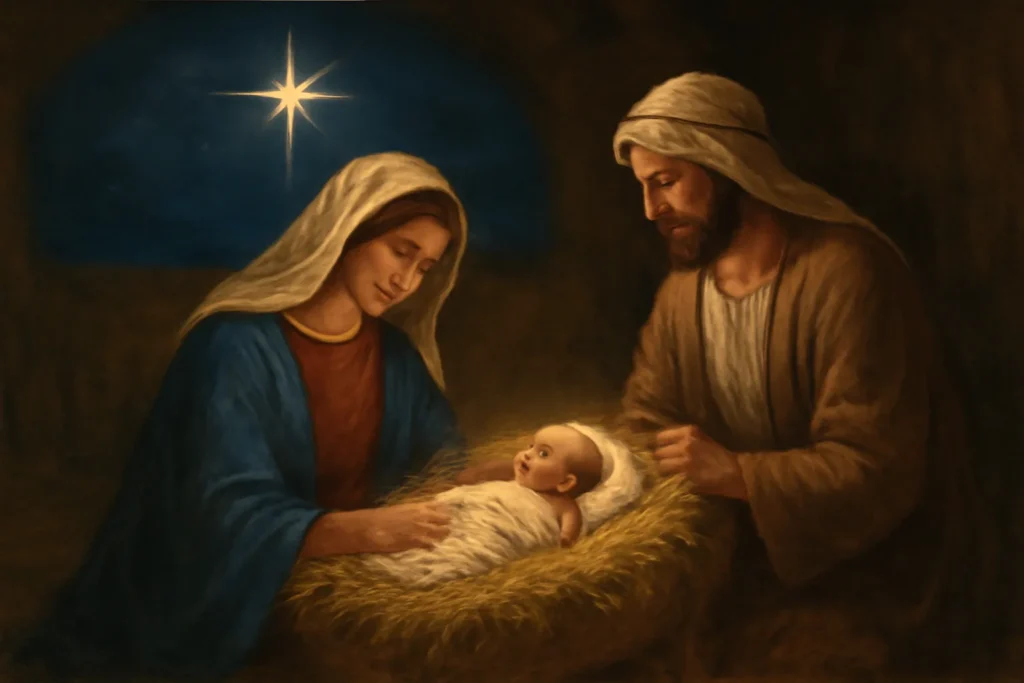
Luke’s Gospel presents the moment of Jesus’ birth with a sequence of events that begins in a crowded, ordinary setting and yields to a revelation that expands beyond Israel to reach “all people.” The verses commonly cited in discussions of the birth in Luke include the familiar scenes of Mary and Joseph, the manger, the angels, and the shepherds. The birth of Jesus in Luke is described with poetic clarity, highlighting the humble circumstances of Jesus’ entry into the world and the cosmic sign announced to those who would hear it.
Luke 2:6-7: The Birth and the Manger
In the KJV rendering, Luke 2:6-7 reads:
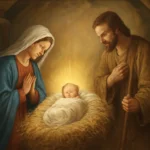
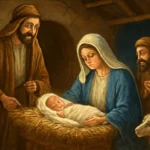
And so it was, that, while they were there, the days were accomplished, that she should be delivered. And she brought forth her firstborn son, and wrapped him in swaddling clothes, and laid him in a manger; because there was no room for them in the inn.
This passage emphasizes humility in the birth setting and the absence of guest accommodations, which many readers interpret as a sign of humanity’s need for the Savior. The imagery of a manger becomes a powerful symbol: divine presence in ordinary, unglamorous surroundings. The repetition of the theme “firstborn” also points toward the larger significance of Jesus' identity as the Son of God, given to a world in need of redemption.
Luke 2:8-14: The Night Visitors and the Heavenly Chorus
Luke continues with the shepherds and the angelic announcement. The text presents a progression from field to temple of truth, moving from mundane life to heavenly revelation. Consider these verses from the KJV as they are commonly cited in teaching and hymnody:
And there were in the same country shepherds abiding in the field, keeping watch over their flock by night. And, lo, the angel of the Lord came upon them, and the glory of the Lord shone round about them: and they were sore afraid. And the angel said unto them, Fear not: for, behold, I bring you good tidings of great joy, which shall be to all people.
For unto you is born this day in the city of David a Saviour, which is Christ the Lord.
And this shall be a sign unto you; Ye shall find the babe wrapped in swaddling clothes, lying in a manger.
And suddenly there was with the angel a multitude of the heavenly host praising God, and saying, Glory to God in the highest, and on earth peace, good will toward men.
The shepherds’ response—going with haste to find the child, and then spreading the word—highlights the immediate recognition of the event’s significance. The phrases glory to God and peace on earth reveal a theological aim: the incarnation inaugurates cosmic revelation and a new order of grace. This portion of Luke has inspired countless Christmas carols and sermons that emphasize joyful proclamation and personal witness.
Luke 2:20 summarizes the shepherds’ reaction: “And the shepherds returned, glorifying and praising God for all the things that they had heard and seen, as it was told unto them.” The verse underscores the responsive posture expected of readers: worship, gratitude, and testimony about what God has done.
Matthew’s Birth Narrative: Conception and the Bethlehem Context
Matthew’s account places emphasis on the legal and genealogical framework surrounding Jesus’ birth, as well as the prophetic expectation that the Messiah would be born of a virgin in Bethlehem. The core verses in Matthew focus on the divine initiative, the dream given to Joseph, and the fulfillment of Scripture in the event itself. For many readers, Matthew’s birth narrative connects the world of Israel’s promises with the universal reach of Jesus’ mission.
Matthew 1:18-25: The Conception, the Dream, and the Name
The opening line, “Now the birth of Jesus Christ was on this wise” sets up the divine plan unfolding in human history. The verses that follow describe a supernatural conception and the angelic reassurance given to Joseph.
Now the birth of Jesus Christ was on this wise: When as his mother Mary was espoused to Joseph, before they came together, she was found with child of the Holy Ghost.
And she shall bring forth a son, and thou shalt call his name JESUS: for he shall save his people from their sins.
The name Jesus (which means “the Lord saves”) anchors the purpose of the incarnation. This verse is frequently cited to explain why the birth matters: salvation is at the center of God’s plan in Christ. The narrative then states the miracle in which Mary’s pregnancy is of the Holy Spirit, a point that theologians stress as the fulfillment of divine promises rather than a mere human event.
Behold, a virgin shall be with child, and shall bring forth a son, and they shall call his name Immanuel, which being interpreted is, God with us.
Matthew 1:23 explicitly frames Jesus’ birth as the fulfillment of prophecy, linking the Incarnation to the Old Testament word “Immanuel” (God with us). The text further notes that Joseph did as the angel commanded and took Mary as his wife, thereby preserving the integrity of the path through which Christ would come into the world.
Then Joseph being raised from sleep did as the angel of the Lord had bidden him, and took unto him his wife: And knew her not till she had brought forth her firstborn son: and he called his name JESUS.
The phrase “knew her not till she had brought forth her firstborn son” is a linguistic detail that has invited theological reflection about the family life of Jesus after birth. Yet the primary theological assertion remains: the birth of Jesus is the arrival of the Messiah, with a name that carries a mission of salvation.
Prophetic Fulfillment and Old Testament Connections
The nativity narratives are deeply interwoven with Old Testament prophecies. Christians often see the birth stories as fulfilled prophecies, linking the advent of Jesus with specific predictions about where and how the Messiah would come. This section highlights some well-known connections.
Isaiah 7:14: The Sign of the Virgin Birth
Therefore the Lord himself shall give you a sign; Behold, a virgin shall conceive, and bear a son, and shall call his name Immanuel.
In Christian interpretation, the verse from Isaiah is read as a prophecy pointing to the miraculous conception of Jesus. The phrase Immanuel—“God with us”—becomes a key name that Christians apply to Jesus, reinforcing the doctrine of the Incarnation.
Micah 5:2: Bethlehem as the Birthplace of the Ruler
But thou, Bethlehem Ephratah, though thou be little among the thousands of Judah, yet out of thee shall he come forth unto me that is to be ruler in Israel; whose goings forth have been from of old, from everlasting.
Matthew and Luke both align Jesus’ birthplace with Bethlehem, fulfilling Micah’s prophecy about the origin of the ruler who would lead Israel. This connection reinforces the sense that Jesus’ birth is not an isolated event but part of a larger divine narrative spanning centuries.
Theological Significance: The Incarnation and Its Implications
The birth of Christ carries profound theological weight beyond the events of a single night in Bethlehem. The incarnation—the eternal God becoming a human being—has implications for how Christians understand God, humanity, salvation, and the meaning of worship.
Emmanuel: God with us—The title signals intimacy, accessibility, and divine solidarity with human beings in their joys and sorrows.
Savior and Lord—The birth names Jesus as the one who accomplishes salvation and exercises sovereign authority.
Humility and Glory—The juxtaposition of a humble birth with angelic proclamation invites believers to consider how God often works through weak things to reveal power (as Paul later writes in 1 Corinthians 1).
New humanity—The nativity marks a new era in which God’s grace enters history in a tangible form, inviting a personal response of faith, worship, and mission.
In addition to the theological themes, the narratives invite readers to reflect on humility, obedience, and trust. Joseph’s role in Matthew 1 shows faithful obedience even when the implications are daunting; Mary’s willingness to bear a child despite social implications embodies radical trust in God’s plan.
Liturgical and Devotional Uses: How the Birth Verse Guides Worship
Across Christian traditions, the nativity verses serve as a cornerstone for worship and devotional life during Advent and Christmas. Public readings, carols, and prayers often draw directly from the same biblical verses about Jesus’ birth, enabling communities to retell the story with reverence and joy. The language of the text itself—whether in the KJV or in modern translations—provides a grammar of thanksgiving and praise that helps believers meditate on the mystery of the Incarnation.
Advent readings often sequence Luke 1–2 to trace the announcements, the birth, and the shepherds’ witness, culminating in a posture of worship and praise.
Christmas Eve services frequently feature Matthew 1 or Luke 2 passages alongside carols that echo phrases such as “Glory to God in the highest” and “peace on earth”.
Private devotionals might focus on the names and titles given to Jesus in the birth narratives—Savior, Messiah, Emmanuel—as anchors for prayer and reflection on God’s redemptive work.
Variations Across Translations and Interpretive Nuances
Readers encounter the same events in different lights depending on the translation they study. The King James Version (public domain) preserves a formal, archaic cadence that many people associate with the nativity. Modern translations—such as the ESV, NIV, and NRSV—offer readability and updated language, which can affect nuance and emphasis in certain phrases.
Some common variations you may notice include:
Differences in how verses are divided or punctuated, which can influence interpretive emphasis in passages like Luke 2:6-14.
Shifts in word choices—for example, “Saviour” vs. “Savior,” or “carpentered” vs. “made” in certain genealogical or prophetic renderings—though the core meaning remains the same.
Variant inclusions of surrounding material: some English translations include the angelic announcements as a unified block, while others present them line by line, which can shape readers’ perception of immediacy and wonder.
Regardless of translation, the central claim remains: Jesus was born, and his birth is presented as the turning point of human history. For scholars and lay readers alike, comparing translations can yield richer understanding of how early Christians understood the significance of the Incarnation and how that meaning translates into faith practice today.
Many readers come to the birth narratives with questions about culture, chronology, and meaning. Here are a few frequent inquiries and concise, scripture-based responses:
Why are there two genealogies and two birth narratives? Luke and Matthew address different audiences and concerns. Luke emphasizes universal shepherds and the social setting of Jesus’ birth, while Matthew emphasizes legal lineage, prophecy, and the fulfillment motif. Together, they offer a fuller portrait of Jesus as Messiah and Lord.
What does “Immanuel” mean in the birth accounts? It means “God with us”, signaling that in Jesus, God dwells among people in a tangible, relational way.
What is the significance of Bethlehem? Bethlehem is prophesied as the birthplace of the ruler in Israel (Micah 5:2), and Jesus’ birth there aligns the narrative with this prophetic expectation.
What is the role of angels in Luke 2? The angelic announcement serves as a heavenly endorsement of the event, inviting a response of faith, worship, and proclamation.
For readers seeking a compact set of anchor verses, the following verses are frequently cited as central to understanding the birth of Jesus. The quotes are provided in the traditional King James text to preserve public-domain accuracy and cadence:
Luke 2:11 — For unto you is born this day in the city of David a Saviour, which is Christ the Lord.
Luke 2:14 — Glory to God in the highest, and on earth peace, good will toward men.
Luke 2:7 — And she brought forth her firstborn son, and wrapped him in swaddling clothes, and laid him in a manger; because there was no room for them in the inn.
Matthew 1:23 — Behold, a virgin shall be with child, and shall bring forth a son, and they shall call his name Immanuel.
Matthew 1:21 — And she shall bring forth a son, and thou shalt call his name JESUS: for he shall save his people from their sins.
Isaiah 7:14 — Behold, a virgin shall conceive, and bear a son, and shall call his name Immanuel.
Micah 5:2 — But thou, Bethlehem Ephratah, though thou be little among the thousands of Judah, yet out of thee shall he come forth unto me that is to be ruler in Israel.
Conclusion: The Birth as a Culmination of Promise and Presence
The birth of Jesus as described in Luke and Matthew is not only a narrative of a single event but a theological claim: God enters history in a way that invites trust, worship, and personal response. The verses about Jesus’ birth invite readers to ponder the paradox of the wondrous humility of a baby who is Savior and Lord, the fulfillment of ancient prophecy, and the assurance of God’s unwavering commitment to be with his people. The nativity invites contemplation of how the divine meets humanity in the most unlikely places and how that encounter transforms perception, relationships, and life purpose.
Whether you read these verses as a pastor preparing a Christmas sermon, a student immersed in biblical study, or a family sharing the Christmas story around a tree, the central message remains clear: the birth of Christ marks the beginning of God’s decisive act of salvation for all nations. The Incarnation—God becoming flesh—calls for both reverent awe and active witness: to tell of what has been seen and heard, to live in the peace that passes understanding, and to share the good news that unto us is born a Savior.





Leave a Reply