Bible Verse: Christ Was Born — Nativity Scripture and Meaning
Bible Verse: Christ Was Born — Nativity Scripture and Meaning
The phrase “Christ was born” has echoed through generations as a proclamation of a moment that reshaped history and reshaped
countless lives. This article explores Nativity Scripture and its meaning, tracing the thread from prophetic anticipation to the ground-level accounts of the birth of Jesus, the Nativity narratives in the Gospels, and the enduring implications for faith, worship, and daily life. By surveying multiple biblical verses and their interconnections, we gain a richer sense of how the birth of Christ functions as a hinge between promise and fulfillment, darkness and light, law and gospel.
The canonical Gospels present the birth of Christ from complementary angles, each contributing to a larger portrait of what it means that God entered human history as a baby in Bethlehem. Two primary accounts anchor the story in the life of Jesus: Matthew’s narrative oriented toward Joseph and royal lineage, and Luke’s narrative oriented toward Mary, the shepherds, and the universality of the proclamation.
Matthew 1:18-25 emphasizes the divine origin of the birth and the fulfillment of prophecy. It states that “the birth of Jesus Christ was on this wise: when as his mother Mary was espoused to Joseph, before they came together, she was found with child of the Holy Ghost.” The passage culminates with the angels’ instruction to Joseph: “thou shalt call his name Jesus: for he shall save his people from their sins.” In this account, the name Jesus signals a mission of salvation, and the text frames the birth as a divinely orchestrated event that safeguards and reveals the Messiah’s identity.
Luke 2:1-20 invites readers into a social and pastoral scene: a census, a stable, a manger, and a chorus of angels who announce the glad tidings. Luke emphasizes the humble surroundings of the Nativity—“born in Bethlehem, the city of David”—and the shepherds who receive a direct divine message: “Fear not: for, behold, I bring you good tidings of great joy, which shall be to all people.” The shepherds’ response—going with haste to see the child, then spreading the word—underscores the contagious nature of the birth narrative and its invitation to witness.
In addition to these two anchor passages, the Gospel of John adds a profound theological statement about the very nature of Christ’s birth and existence. John 1:14 proclaims that “the Word was made flesh, and dwelt among us, and we beheld his glory, the glory as of the only begotten of the Father, full of grace and truth.” This verse links the Nativity to the ancient idea of the Incarnation—that God, the eternal Word, enters humanity in a concrete, personal form.
Together, these verses weave a tapestry: a divine plan unfolds in human history, Jesus is born of a virgin and named to fulfill a salvific vocation, and God’s presence is made tangible in a vulnerable child. Across translations, these verses consistently affirm that Christ’s birth marks an event of cosmic significance and intimate grace.
Key contrasts and complementarities
Audience: Matthew highlights Joseph, dreams, and lineage; Luke highlights Mary, shepherds, and social context.
Theological focus: Matthew emphasizes fulfillment of prophecy and Messiah-identity; Luke emphasizes the shepherds’ witness and universal accessibility of the Gospel.
Locus: Bethlehem as the prophesied birthplace; the manger as a symbol of humble poverty and divine condescension.
Prophetic Foretastes: The Nativity in the Old Testament
The New Testament writers constantly trace the birth of Christ to living prophecies from the Old Testament, presenting Jesus’ birth as the climactic realization of God’s covenant promises. A few pivotal texts shape the expectations and interpretive framework.
Isaiah 7:14 proclaims a sign: “Behold, a virgin shall conceive, and bear a son, and shall call his name Immanuel.” The name Immanuel—often translated as “God with us”—signals that the birth is not merely a human event but a divine presence among people.
Isaiah 9:6-7 paints a regal and redemptive portrait: “For unto us a child is born, unto us a son is given: and the government shall be upon his shoulder: and his name shall be called Wonderful, Counselor, The Mighty God, The Everlasting Father, The Prince of Peace.” This passage provides a constellation of titles that Christians interpret as referring to the child born in Bethlehem, linking the Nativity to enduring kingship and divine attributes.
Micah 5:2 locates the Messiah’s birth in Bethlehem Ephrathah, stating that from this small town shall come one who will shepherd Israel. The verse grounds the Nativity in a specific place within the prophetic geography of Judah.
The continuity between the Old Testament prophecies and the Nativity narratives deepens when readers recognize that the birth of Jesus fulfills both the sign of a miraculous child and the expectation of a ruler who brings justice, peace, and divine presence. The Nativity thus sits at the intersection of promise and fulfillment.
The Nativity Narrative: Settings, Signs, and Responses
The narrative elements surrounding Christ’s birth convey theological truths about how God works and how human beings respond.
Bethlehem as the prophesied birthplace emphasizes the concordance of history and divine plan.
Virgin birth underscores the uniqueness of Jesus’ origin and the holiness of the event.
Angelic proclamation to shepherds reveals that the news is first given to humble, faithful people and is meant for all generations.
Shepherds and Magi illustrate both humility and homage: ordinary observers witness the birth, while wise visitors bring offerings and honor the newborn King.
Emmanuel—God with us—points to the relational and intimate aspect of the incarnation.
The phrase “born to us a child”, echoed in Isaiah and echoed in Luke’s Gospel, signals a bridging of divine promise and human experience. The Nativity is not only a theological claim; it is a narrative that invites contemplation, worship, and mission.
Theological Significance: Incarnation, Salvation, and Light
At the heart of the Nativity is the mystery and the message of the Incarnation: the eternal Word becomes flesh and dwells among humanity. This is not simply a matter of birth; it is the entry of God into the human condition, with implications for sin, redemption, and the reconciliation of all creation.
Incarnation: God assumes human nature without surrendering divine essence, enabling a perfect mediator between God and humanity.
Salvation: Jesus’ birth is the prelude to a life of teaching, atoning death, and a resurrection that open a path to reconciliation with God.
Light in darkness: The Nativity signals a reversal of despair and a dawning of hope for all peoples, including Gentiles, as the Gospel extends beyond Israel.
Peace and righteousness: The angelic proclamation of peace to those of good will reflects the reign of God breaking into a broken world.
Emmanuel: The presence of God with humanity is not a distant idea but a personal reality embodied in a vulnerable child.
The verse that often anchors these reflections is Matthew 1:23, where the prophet’s word is quoted: “Behold, the virgin shall be with child, and shall bring forth a son, and they shall call his name Emmanuel, which being interpreted is, God with us.” This line crystallizes the theological claim of the Nativity: in Jesus, heaven touches earth, and God’s saving plan enters the human story in time and space.
Language Variations: Speaking of Christ’s Birth in Diverse Ways
The Bible uses a variety of phrases to refer to the same foundational event—the birth of Christ—and readers encounter several semantic shades that enrich devotional study and scholarly reflection. Here are some common variations you’ll find across English translations and literary traditions:
“Jesus was born”—a direct phrasing that centers the human name often used in preaching and teaching contexts.
“The birth of Jesus”—a neutral, narrative expression that foregrounds the event without naming in advance the theological titles.
“Christ was born”—a Christological emphasis, highlighting that the Messiah’s birth is the fulfillment of divine plan.
“The Nativity”—a formal designation of the event, frequently used in liturgy and Christian art to denote the entire narrative arc.
“Unto us a child is born”—drawing directly from Isaiah 9:6 and used in liturgical contexts to connect Old Testament prophecy with New Testament fulfillment.
“Emmanuel—God with us”—emphasizing the identity of God dwelling among humans in the person of Jesus.
Each variation highlights a facet of the same central truth: the divine plan of salvation enters the world in a specific time, place, and circumstance, inviting personal response and communal worship.
Historical and Theological Reception: Early Christians and Nativity Faith
The early Christian communities read the birth narratives as the starting point of the Gospel’s public proclamation. They saw in Christ’s birth not only the fulfillment of prophecy but the overt invitation to trust in God’s salvific work in Jesus. Patristic writers often highlighted the paradox of the Incarnation: the Creator of the universe becomes a dependent infant, yet this vulnerability is the site of ultimate power and redemptive victory.
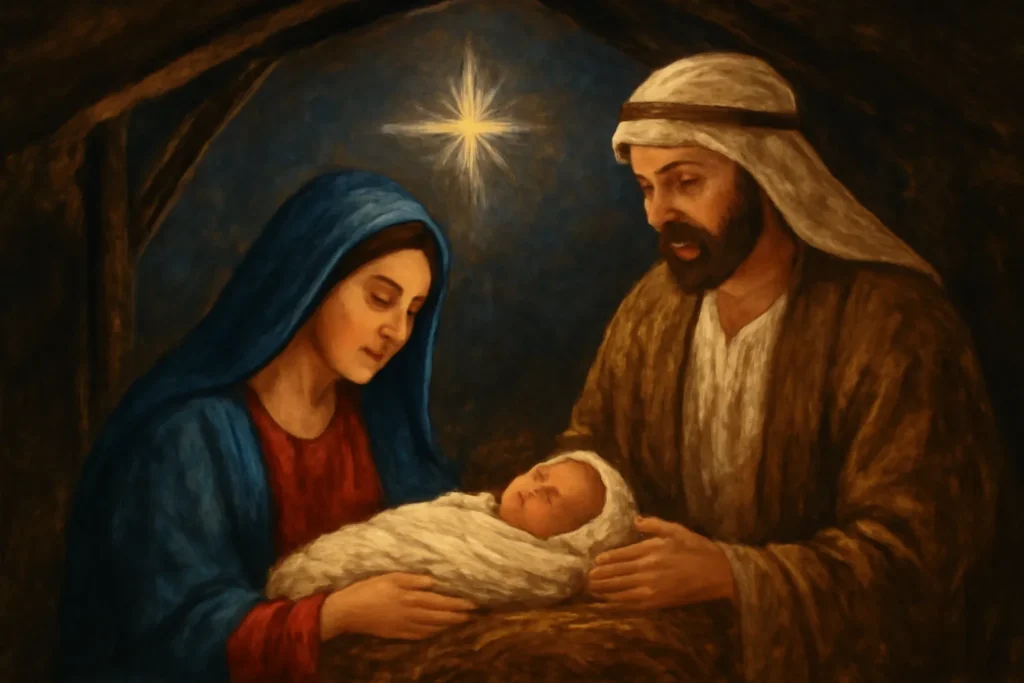
The Nativity also shaped Christian worship and practice. Advent and Christmas celebrations hinge on reflecting upon God’s approach to humanity—humility, grace, and mercy shown in the birth of Jesus. The imagery of the manger, the star, the angels, and the proclamation of peace has long inspired music, art, and liturgy that invite believers to contemplate the mystery of God becoming human.
Practical Reflections: How the Nativity Scripture Shapes Faith and Life
The birth of Christ invites several practical responses for readers and worshipers. Here are some ways that people encounter and apply the Nativity narratives in daily life.
Worship: The Nativity invites new songs, prayers, and meditative practices that center on God’s mercy and the gift of Jesus.
Hope: In a world of uncertainty, the birth narrative offers a reminder that God’s intervention brings light into darkness.
Humility: The humble circumstances of Jesus’ birth encourage Christians to serve others and value those who are overlooked by society.
Mission: The shepherds’ and Magi’s responses—sharing the news and offering gifts—encourage believers to witness and to provide for those in need.
Character formation: The life of Jesus, foreshadowed from the Nativity, models obedience, trust, compassion, and sacrificial love.
When believers say “Christ was born”, they are not only commemorating an historical event but also affirming a living faith that sees God at work in present times. The Nativity becomes a lens through which civilizations can reimagine power, kinship, and mercy through the Gospel.
Verse Snapshots: A Quick Reference for Study and Reflection
For those who want to anchor their study in specific verses, here are concise snapshots that highlight the most pertinent lines related to the birth of Christ.
Matthew 1:18-25 — The birth of Jesus by the Holy Spirit, the naming of Jesus, and Joseph’s faithful obedience under divine guidance.
Matthew 2:1-12 — The visit of the Magi and the early recognition of Jesus’ royal and messianic significance.
Luke 2:1-7 — The birth in Bethlehem, the lack of room, and the infant laid in a manger.
Luke 2:8-14 — The shepherds’ encounter with messengers who declare good news of great joy for all people.
Luke 2:11 — The proclamation that the Savior is born in the city of David, a moment of immediate hope for humanity.
Luke 2:14 — The proclamation of peace on earth and goodwill toward men, a summary of the Nativity’s impact.
John 1:14 — The Word becoming flesh and dwelling among us, revealing the glory of the Father in human form.
Isaiah 9:6-7 — Prophetic titles for the child born and the lasting reign of the Prince of Peace.
Isaiah 7:14 — The sign of the virgin birth, affirming divine initiative in human history.
Frequently Asked Questions About Nativity Scripture
What is the central claim of the Nativity narratives?
The central claim is that God incarnate entered the world as a human being in Jesus, fulfilling Old Testament prophecies and inaugurating salvation for humanity.
Why are there differences between Matthew and Luke’s accounts?
Different authors emphasized different audiences and theological motifs. Matthew stresses fulfillment, lineage, and royal signs; Luke emphasizes shepherds, social justice, and universal accessibility of the Gospel. Together they illuminate multiple facets of the same event.
What does the term “Emmanuel” signify?
“Emmanuel” means “God with us.” It communicates that God’s presence is not distant but near, especially in the vulnerable form of a baby.
How does the Nativity connect to Christmas worship?
Christmas worship centers on the God who humbles himself to redeem humanity. The Nativity provides scripture-based grounding for gratitude, humility, and praise, while also inspiring acts of mercy and solidarity with the vulnerable.
Conclusion: Why the Nativity Scripture Matters Today
The sentence “Christ was born” replays across centuries not merely as a historical fact, but as a living invitation: to trust in God’s mercy, to respond to human need with compassion, and to participate in God’s mission to bring light to every corner of the world. By engaging with the Nativity narratives—through direct verses, prophetic foreshadowings, and their devotional implications—we deepen our understanding of who Jesus is and why his birth matters for faith, hope, and life.
Suggestions for Personal or Group Study
Read Matthew 1:18-25 and Luke 2:1-20 side by side, noting the different emphases and what they reveal about Jesus’ identity.
Reflect on Isaiah 9:6-7 and Isaiah 7:14. How do these prophecies shape the expectation for the Messiah in your understanding?
Consider the term “Emmanuel” in Matthew 1:23. In what ways does God’s presence alter daily life and decisions?
Pray or journal about how the birth of Christ changes your view of power, poverty, and peace in the world.
In exploring the biblical witness to Christ’s birth, we encounter a moment when the divine and human realms touch in a tender, transformative way. Whether one approaches these texts as a believer seeking to deepen devotion or as a student seeking historical understanding, the Nativity offers a compelling invitation: to behold a child who bears the name above every name, and to live in light of the God who chose to dwell with us.
May the ongoing reflection on these verses—whether you encounter them as Jesus was born, the birth of Jesus, or the Nativity—continue to expand your sense of wonder, gratitude, and responsibility to participate in the narrative of God’s redeeming work in the world.




Leave a Reply